

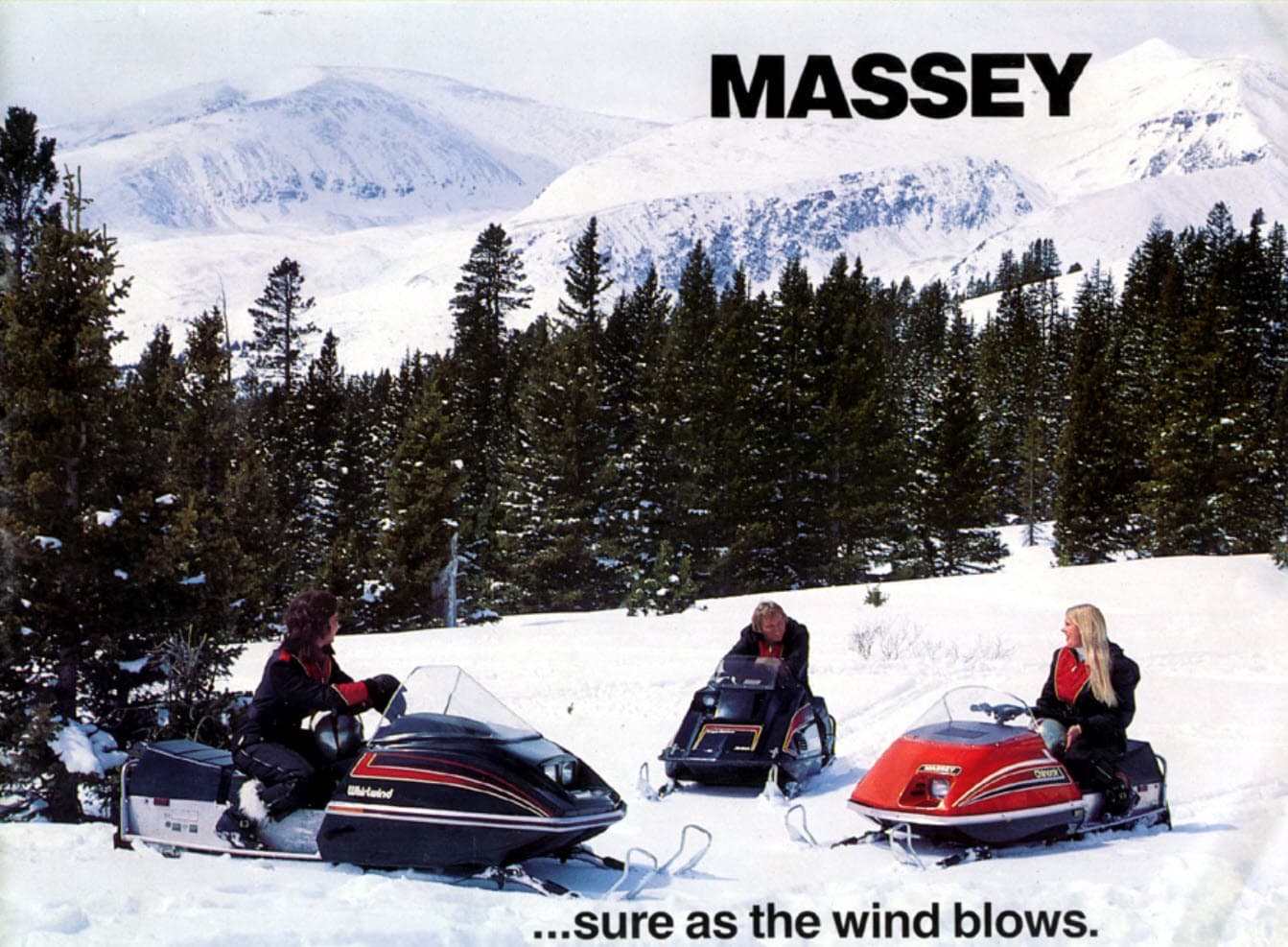

At first glance, the association may seem surprising. Massey Ferguson primarily evokes agriculture, tractors, and heavy machinery. Yet at the turn of the 1970s, the manufacturer took an unexpected detour into the world of snowmobiling with a machine that would leave its mark on the era: the Ski Whiz. This foray into the snowmobile industry occurred within a very specific context. At the time, the market was booming, and several manufacturers from related sectors were attempting to capitalize on a winter sport experiencing rapid growth.
Before Snowmobiling: A Market in Full Expansion
By the late 1960s, the snowmobile was no longer just a utilitarian tool. It had become a popular recreational vehicle, a symbol of winter freedom and, above all, an extremely promising market. Sales were increasing rapidly, trail networks were becoming more structured, and demand was exceeding the production capacity of many manufacturers.
For large industrial groups, the equation was appealing:
- relatively simple mechanical technology
- a rapidly growing customer base
- strong potential for quick diversification
It was in this context that Massey Ferguson took an interest in Ski Whiz, a snowmobile brand already well established on the North American market.
Ski Whiz Before Massey Ferguson: A Recognized Performance Snowmobile
Unlike some manufacturers that developed their snowmobiles from scratch, Massey Ferguson did not arrive with a blank slate. Ski Whiz already existed prior to the acquisition. Originally developed by Ski Whiz Manufacturing, the brand quickly built a solid reputation in the late 1960s.
Ski Whiz snowmobiles stood out in particular for:
- a bold, immediately recognizable design
- high performance for the era
- a clearly sport-oriented focus
At the time, many enthusiasts considered Ski Whiz models to be more aggressive, faster, and more exciting than many competitors of the same generation.
Why Massey Ferguson Acquired Ski Whiz
In 1969, Massey Ferguson acquired Ski Whiz with a clear ambition: to expand its product portfolio and ride the wave of snowmobiling’s popularity without starting from scratch.
For the agricultural giant, the logic was obvious:
- Ski Whiz was already well known to the public
- the product had proven itself in the field
- the snowmobile market was growing rapidly
Massey Ferguson then relied on its industrial capacity, distribution network, and financial strength to grow the brand.
A Strong Ski Whiz Identity, but One That Was Difficult to Broaden
Ski Whiz models produced under the Massey Ferguson era retained a very strong personality. They remained faithful to the original DNA: sporty, aggressive snowmobiles designed first and foremost for thrill seekers.
Among the characteristics often highlighted:
- powerful engines, mainly from Sachs and JLO
- rigid chassis
- dynamic, sometimes demanding handling
- priority given to raw performance over comfort
This approach appealed to a passionate customer base but also limited broader market appeal, as the general public increasingly sought greater stability, versatility, and ease of operation.
A Rapidly Changing Snowmobile Industry
In the early 1970s, the snowmobile industry was evolving quickly. Research and development costs were rising, competition was intensifying, and profit margins were tightening.
For Massey Ferguson, several challenges emerged:
- the snowmobile remained a marginal product within the group
- sales volumes remained insufficient
- the agricultural dealer network was not always well suited to snowmobile customers
The Ski Whiz was competitive, but it operated in a market where tolerance for error was becoming increasingly slim.
Iconic Ski Whiz Models of the Massey Ferguson Era
Despite a relatively short presence on the market, Ski Whiz left a lasting impression with several models that have since become iconic. These snowmobiles clearly illustrate the brand’s philosophy: raw performance, distinctive design, and a strong character.
1970 Ski-Whiz 500 SST
The 500 SST perfectly represents Ski Whiz’s original philosophy: a snowmobile focused on raw performance, with no compromise toward comfort or ease of use. At a time when many manufacturers were still defining their identity, the 500 SST was clearly aimed at experienced riders seeking power and thrills.
It stood out for its nervous character and demanding handling, typical of late-1960s performance snowmobiles.
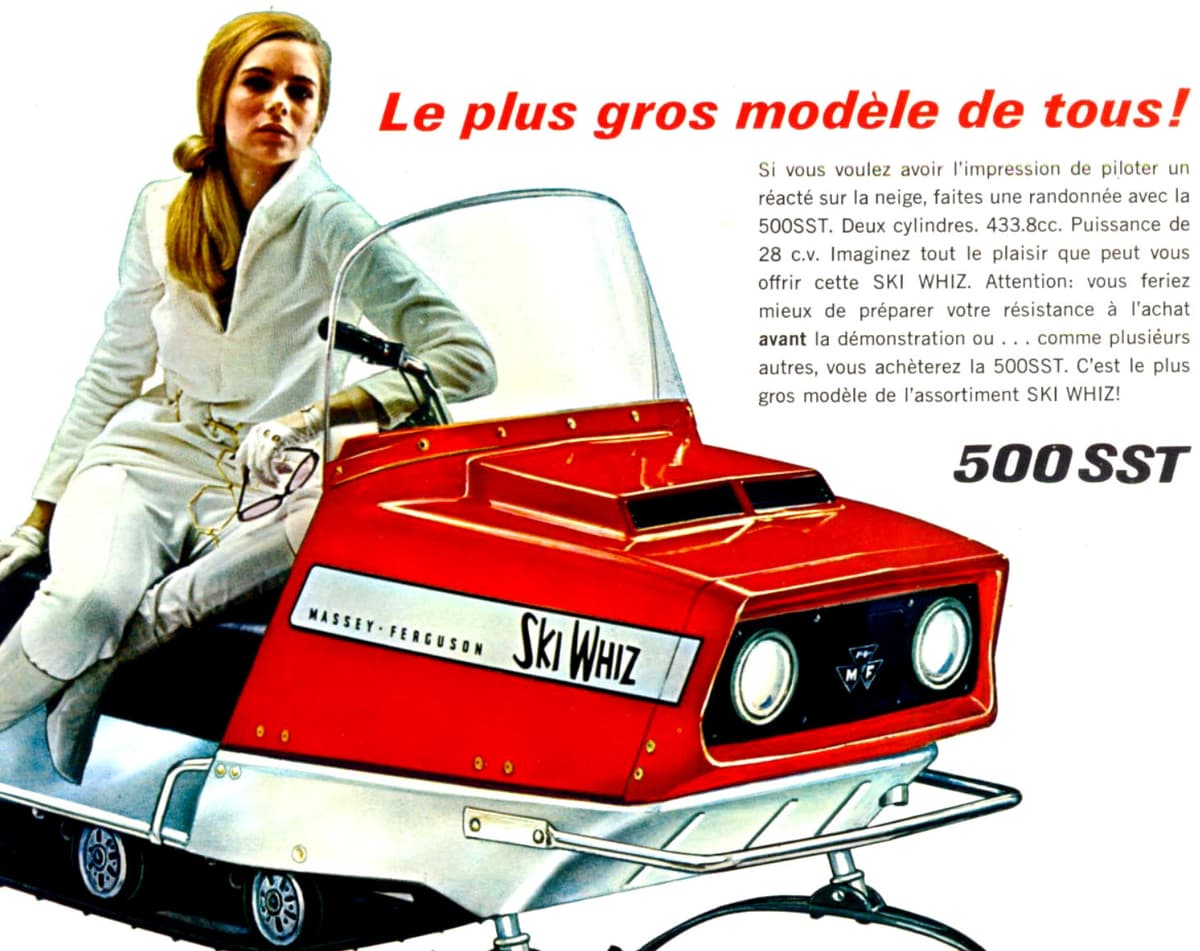
Main specifications:
- JLO L440 engine, 2-cylinder, 2-stroke
- Displacement: approximately 433 cc
- Air cooling (fan)
- Tillotson carburation
- Manual start (electric start optional in some versions)
- Clearly sport-oriented design
1976 Massey Cyclone 340
The Cyclone 340 is undoubtedly one of the most technically interesting models of the Massey Ferguson era. It stands out for adopting a liquid-cooled engine, a technology that was still uncommon at the time in this displacement class.
Defined as a sport-trail snowmobile, the Cyclone 340 combined strong performance with a modern image, serving as a technological showcase for Massey Ferguson in the snowmobile world.
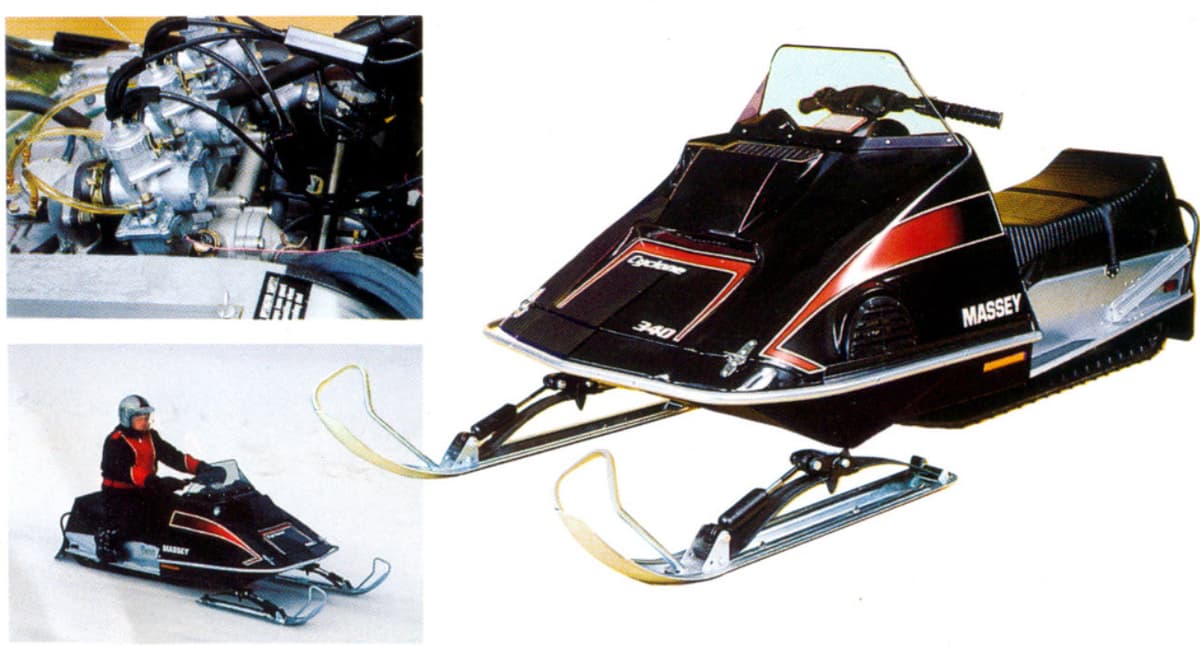
Main specifications:
- Brooten LC 34 engine, 2-cylinder, 2-stroke
- Displacement: approximately 335 cc
- Liquid cooling
- Mikuni carburation
- Advertised output around 40 hp
- Wide track focused on stability and traction
1976 Massey Whirlwind
The Whirlwind occupied a more versatile position in the Massey Ferguson lineup. Built on a platform derived from the Scorpion universe, it sought a balance between performance and ease of use, targeting a broader audience than strictly sport-oriented models.
Less radical than the Cyclone, the Whirlwind aimed to be an accessible, reliable snowmobile suited for regular trail use.
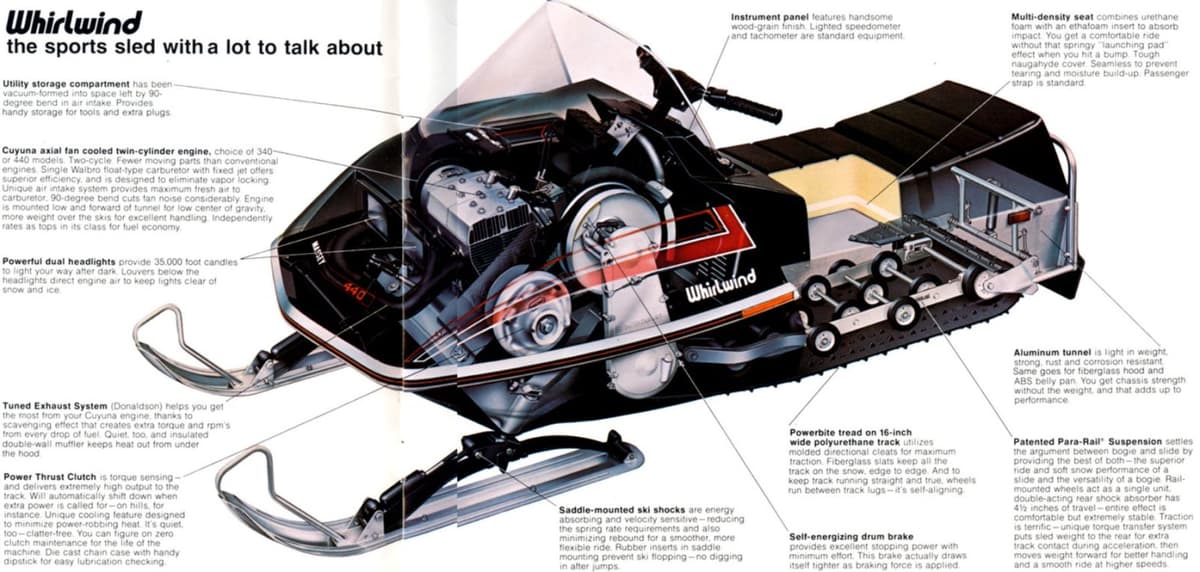
Main specifications (340 version):
- Cuyuna engine, 2-cylinder, 2-stroke
- Displacement: approximately 339 cc
- Air cooling (axial fan)
- Mechanical drum brake
- Bogie suspension
- Trail/recreational orientation
1976 Massey Chinook
The Chinook represented Massey Ferguson’s entry-level model, without sacrificing durability. Designed for more recreational and utilitarian use, it emphasized reliability and ease of maintenance over outright performance.
This model clearly reflects Massey Ferguson’s attempt to broaden its audience by offering a more docile and accessible snowmobile suited to less experienced riders.
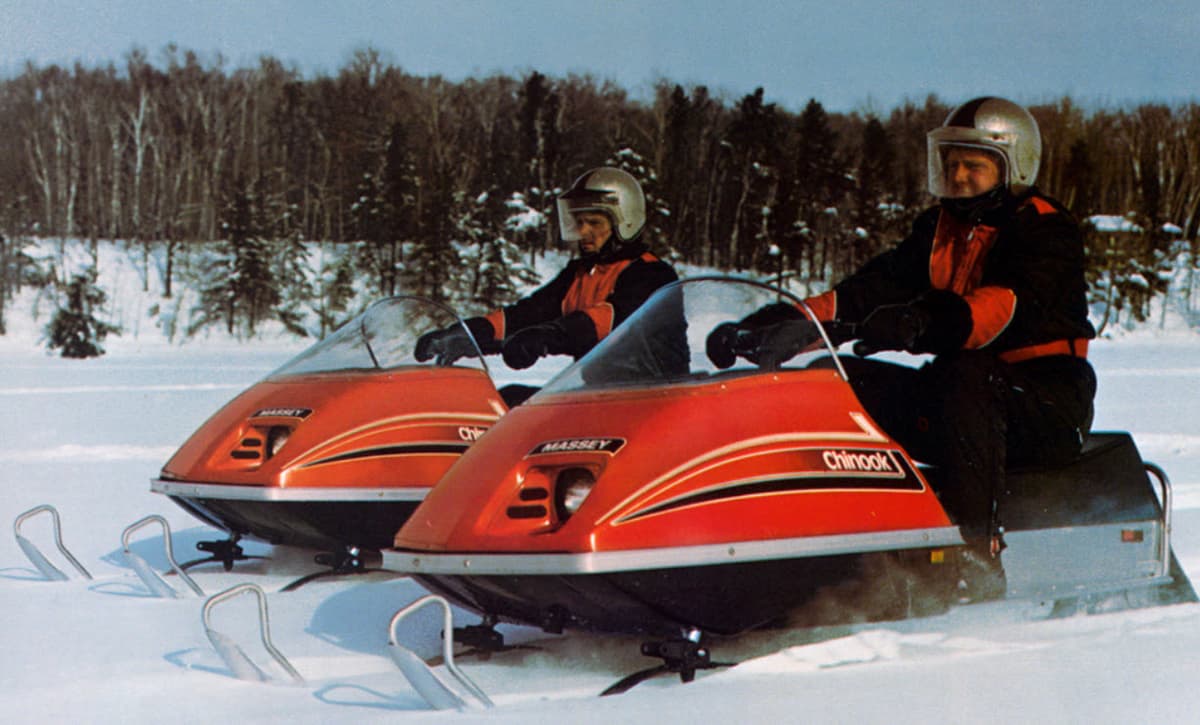
Main specifications:
- Cuyuna 295 engine, 2-cylinder, 2-stroke
- Displacement: approximately 294 cc
- Air cooling (fan)
- Output around 24 hp
- Mechanical drum brake
- Recreational/trail positioning
This diversity of models clearly illustrates Massey Ferguson’s attempt to cover several market segments, from performance snowmobiles to more recreational use, without ever managing to make it a sustainable strategic pillar. The mechanical philosophy of these models firmly anchors Ski Whiz in an era when snowmobiling prioritized sensation and character above all else, sometimes at the expense of smoothness.
Massey Ferguson’s Withdrawal From the Snowmobile Market
As early as 1971, Massey Ferguson ended its snowmobile activities. The adventure was short, intense, and ultimately incompatible with the group’s strategic priorities.
Unlike several snowmobile manufacturers that disappeared after long periods of decline, Massey Ferguson’s exit was quick and deliberate. Snowmobiling simply did not align with the company’s long-term vision.
The Ski Whiz Legacy in Snowmobile History
Despite a relatively brief presence, Ski Whiz left a lasting mark on snowmobile history. Even today:
- restored models are highly sought after
- the brand enjoys true cult status
- it symbolizes a rawer, more radical era of snowmobiling
Ski Whiz snowmobiles are often associated with a period when performance took precedence over everything else, sometimes at the expense of ease of use.
What the Massey Ferguson/Ski Whiz Episode Reveals
The Massey Ferguson/Ski Whiz episode illustrates a fundamental reality of the snowmobile industry:
- a product can be excellent without being viable in the long term
- performance alone does not guarantee longevity
- alignment with a company’s core DNA remains essential
It is a short but striking chapter that reminds us that, even in a rapidly growing market, not all paths lead to sustainability.
Coming Up in the Series
👉 Former Snowmobile Manufacturers: Rupp