

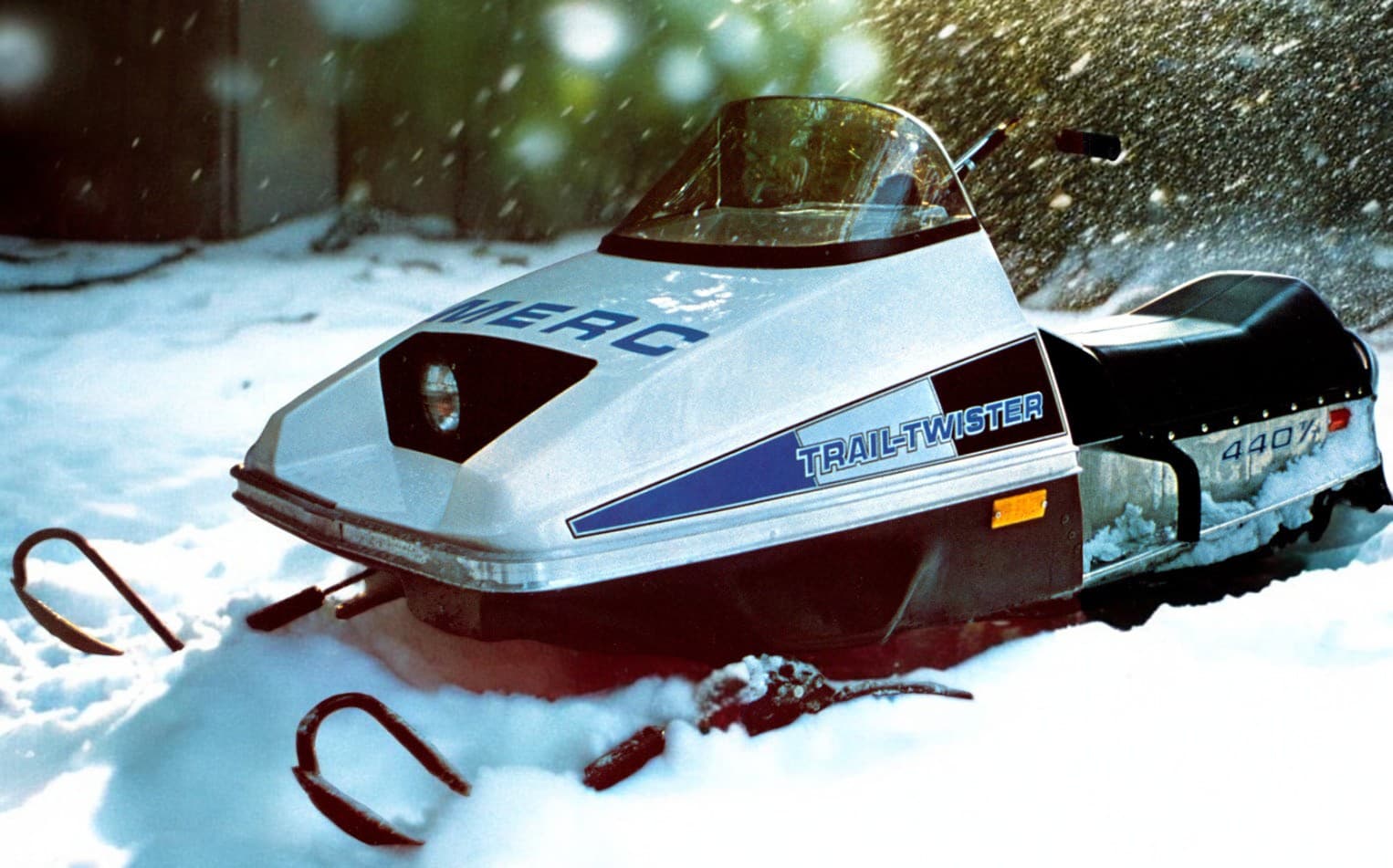

Mercury snowmobile: from marine engines to performance on snow
In North American snowmobile history, few brands have generated as much curiosity and respect as Mercury. Already recognized as one of the world’s giants in marine engines, the American company ventured onto snow in the late 1960s with a clear ambition: to apply its mechanical expertise, industrial strength, and performance-driven image to a rapidly expanding market.
Mercury’s adventure on snow would be intense, technically credible, and marked by direct involvement in competition. Yet despite solid products and a strong reputation, the brand quickly withdrew from the snowmobile market, perfectly illustrating the challenges faced by many manufacturers of that era.
Mercury Before Snowmobiles: Industrial Power in Service of the Engine
Mercury was not a newcomer when it entered the snowmobile industry. Founded decades earlier, the company already dominated the outboard engine sector across North America and internationally. At the time, it possessed:
- advanced research and development capabilities
- modern industrial facilities
- recognized expertise in high-performance two-stroke engines
- strong distribution networks
In a still-young snowmobile market, this industrial foundation placed Mercury in a class of its own. Unlike many emerging manufacturers operating on a smaller scale, Mercury entered with resources comparable to the largest industry players.
Mercury’s Entry Into the Snowmobile Market
By the late 1960s, the rapid growth of snowmobiling attracted not only local entrepreneurs but also major industrial players. Mercury chose to invest in this new territory by focusing on what it knew best: the engine.
Rather than producing minimalist or improvised machines, Mercury developed full, well-built snowmobiles clearly oriented toward performance and reliability. From the outset, the brand demonstrated its intention to compete with established leaders, both technically and in terms of image.
A Snowmobile DNA Centred on Engine Performance
The DNA of Mercury snowmobiles was directly inherited from the marine world. The company’s engineers approached snowmobiles primarily as a mechanical platform designed to harness a high-performance engine.
This philosophy translated into:
- powerful and torque-y two-stroke engines
- careful attention to heat dissipation
- designs favouring high engine speeds
- a distinctive engine sound and character
Chassis and suspensions were engineered to handle this power, sometimes at the expense of weight or handling finesse compared to more specialized competitors.
Mercury snowmobiles: a lineup focused on performance
Mercury did not attempt to cover every market segment. Unlike other manufacturers offering utility, family, and entry-level models, the brand adopted a more targeted approach.
The Mercury lineup emphasized:
- sport and performance snowmobiles
- models capable of sustaining aggressive riding
- machines built for competition or racing inspiration
This positioning strengthened the brand’s image but also limited its potential customer base in a market that was rapidly diversifying.
Iconic Mercury snowmobile models
Mercury Sno-Twister
The Sno-Twister is undoubtedly the brand’s most iconic model. It perfectly embodied Mercury’s vision: a powerful, responsive snowmobile clearly oriented toward performance.
The Sno-Twister stood out for its vigorous engine, rapid acceleration, and high-speed stability. It was aimed at experienced riders seeking thrills rather than comfort.
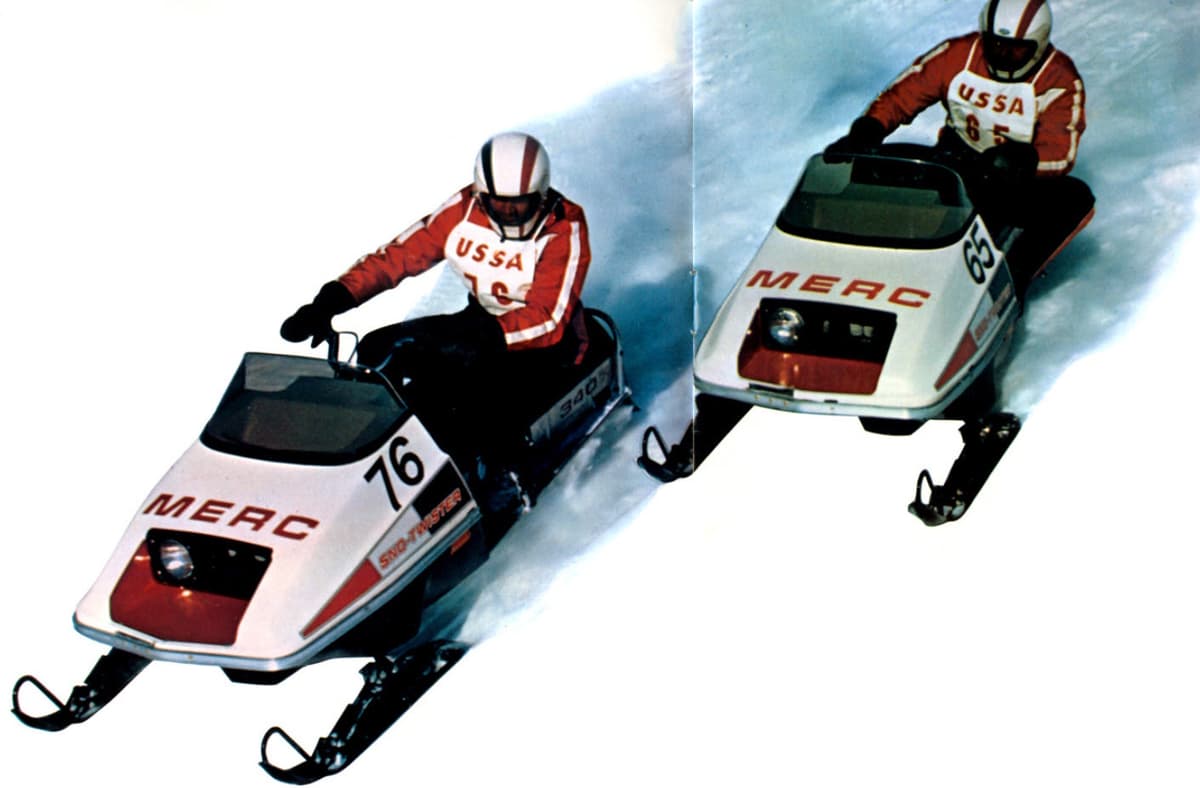
1975 Mercury Sno-Twister
Key features and innovations
- high-performance two-stroke engine
- strong acceleration and sporty character
- image directly associated with competition
- robust design built to withstand high engine speeds
Mercury Trail Twister
The Trail Twister logically followed the Sno-Twister concept, designed to slightly broaden the target audience without compromising Mercury’s performance identity.
More trail-oriented, it retained a strong engine while offering a more forgiving approach and ergonomics better suited to longer, fast-paced rides. It represented Mercury’s most credible attempt to deliver a sports-trail snowmobile suitable for everyday use.
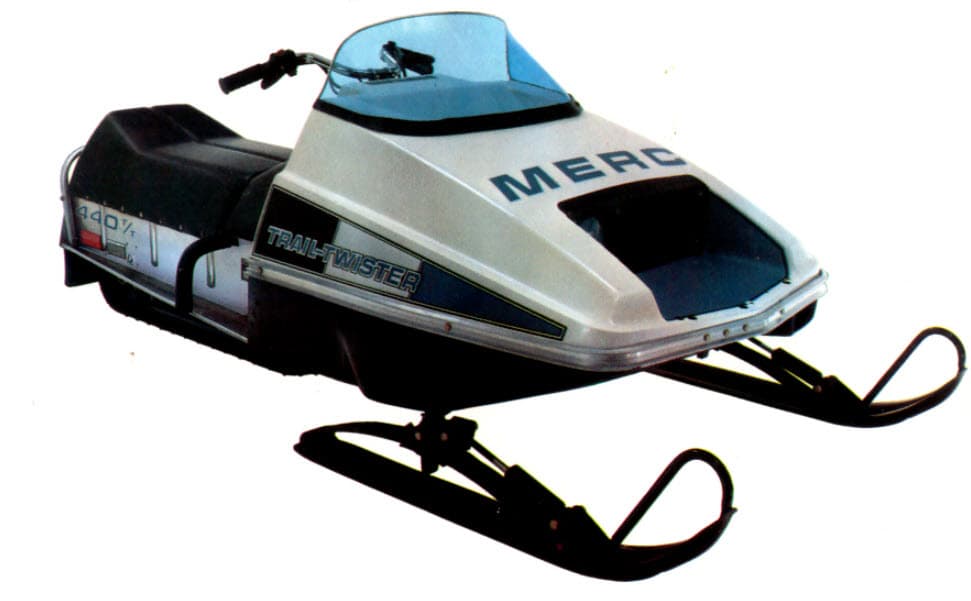
1975 Mercury Trail Twister
Key features and innovations
- more versatile sport-trail orientation
- proven mechanics derived from performance models
- improved stability at sustained speeds
- balanced compromise between pure sport and recreational use
Mercury Hurricane Mark II
The Hurricane Mark II perfectly illustrated Mercury’s desire to refine its sporty offering while maintaining a strong engine-focused identity.
More developed than earlier generations, the Hurricane Mark II benefited from mechanical refinements and improved overall handling. It targeted experienced riders looking for a lively machine capable of maintaining a sustained pace over long distances without being strictly for racing.
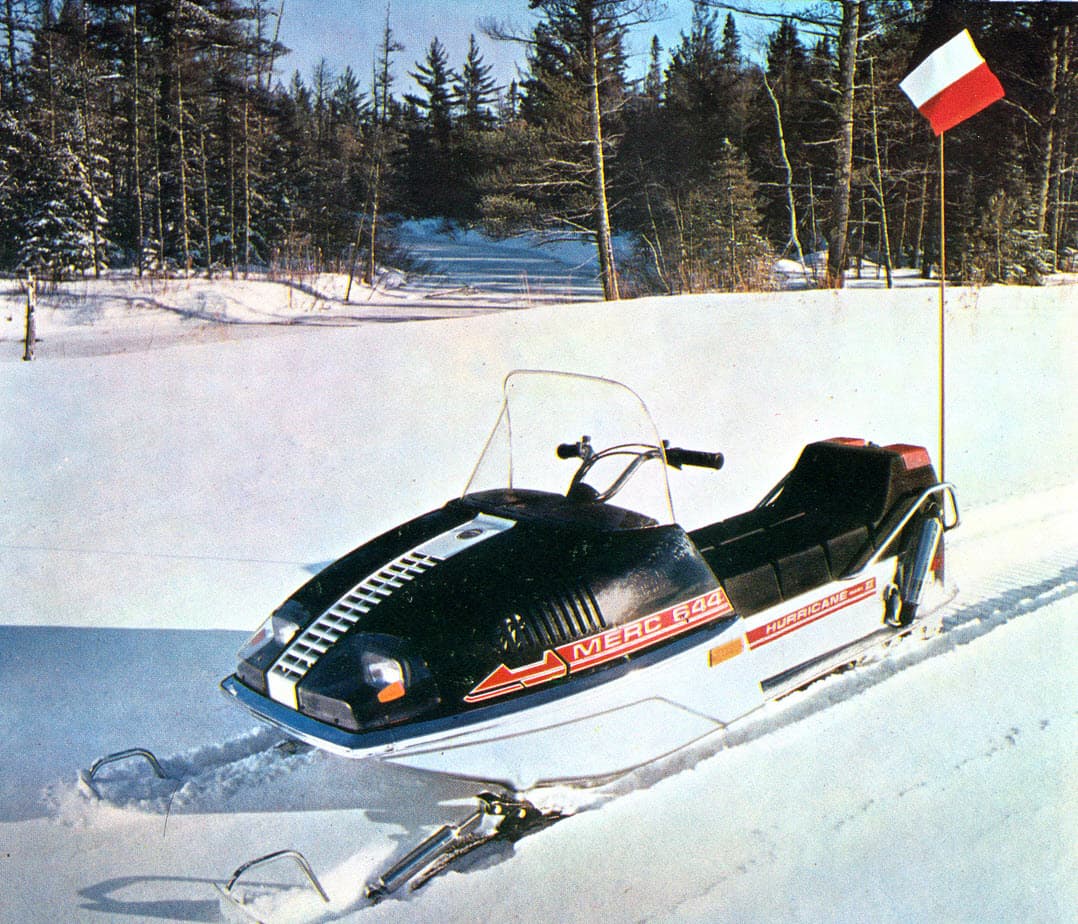
1973 Mercury Hurricane Mark II
Key features and innovations
- technical evolution of early Mercury sports platforms
- high-revving performance-oriented two-stroke engine
- improved stability and handling
- aggressive sport-trail positioning for its era
- model now sought after by Mercury collectors
Mercury snowmobile: direct and credible involvement in competition
Mercury quickly understood that racing was an essential driver for their credibility. The brand actively participated in:
- oval circuit racing
- drag racing
- regional and national events
These efforts allowed Mercury to test its engines under extreme conditions and reinforce its performance-driven image.
The limits of a snowmobile focused solely on performance
Despite its technical strengths, Mercury faced structural challenges as the market shifted toward more versatile and comfortable snowmobiles.
The 1970s crisis and Mercury’s withdrawal from the snowmobile market
In the early 1970s, the snowmobile market experienced a sharp slowdown due to weaker winters, rising energy costs, and widespread overproduction.
Mercury ultimately chose to refocus on its core marine business, leading to its relatively swift exit from the snowmobile industry.
Mercury’s legacy in snowmobile history
Today, Mercury snowmobiles hold a special place among collectors and retro performance enthusiasts.
An emblematic chapter in the history of former snowmobile manufacturers, where mechanical passion collided with harsh economic realities.
Coming next in the series Former Snowmobile Manufacturers
In the next article, we will examine another major American industry player known for its expertise in powered equipment: Ariens.