

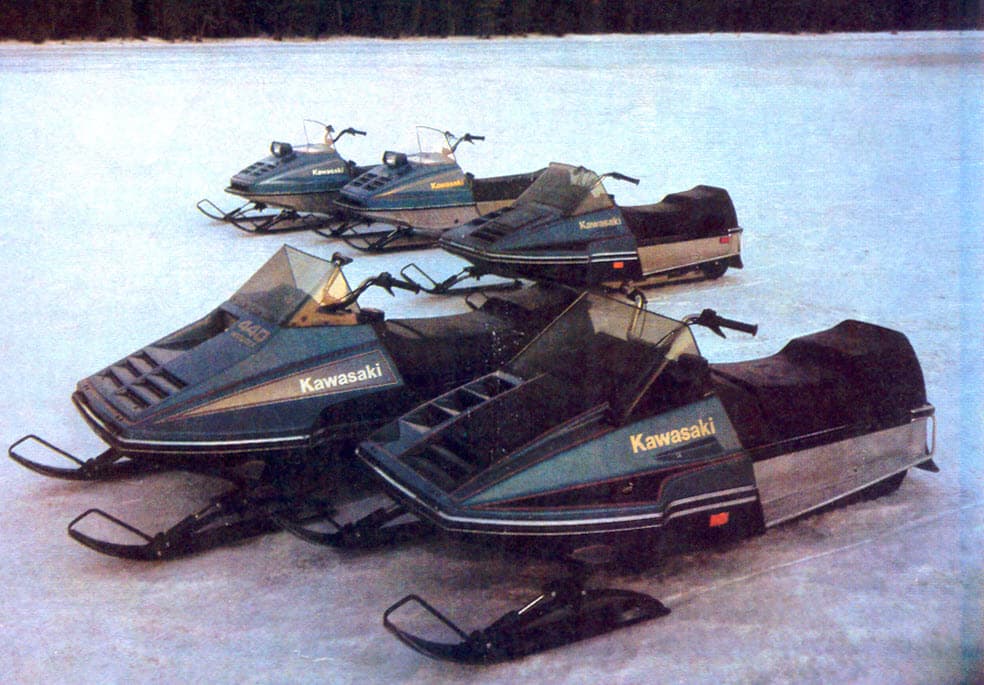

Kawasaki in the North American Snowmobile Market
In the history of former snowmobile manufacturers, Kawasaki holds a unique place. Unlike most North American brands born directly from the snowmobile boom, Kawasaki entered the market with an industrial culture already firmly established in motorcycles, precision mechanics, and high-performance engines.
When Kawasaki turned its attention to snowmobiles in the late 1960s, the market was already highly competitive. The Japanese brand did not arrive intending to copy existing players, but rather with a clear conviction: a rigorous engineering approach, focused on performance and mechanical durability, could still make a difference in a rapidly maturing industry.
Kawasaki’s Industrial Origins Before Snowmobiles
Kawasaki did not originate in the world of winter recreation. Its DNA comes from heavy industrial sectors where reliability, precision, and performance are essential requirements. This culture directly influenced its vision of the snowmobile, viewed not as a seasonal product but as a machine expected to meet demanding mechanical standards.
From its earliest involvement in the market, Kawasaki applied structured design methods. Engines were built to operate at high RPM for extended periods, chassis were engineered to withstand significant stresses, and the entire machine was designed to support intensive use. This level of rigour contrasted sharply with the more opportunistic approach adopted by some North American manufacturers of the era.
Sno-Jet and Kawasaki: The Partnership That Changed Everything
Before producing its own snowmobiles, Kawasaki played a key role as an engine supplier for Sno-Jet, an American manufacturer known for its high-performance machines and strong involvement in racing.
By the late 1960s, Sno-Jet built much of its identity around Kawasaki two-stroke engines, known for their power and lively character. This collaboration allowed Sno-Jet to quickly stand out, particularly among experienced riders and within racing circles.
However, this relationship also created a technical dependency. Observing the success of Sno-Jet machines powered by its engines, Kawasaki realized it already controlled the central element of performance: the engine. Backed by its industrial capacity and mechanical expertise, the Japanese manufacturer decided to take a decisive step and become a full-fledged manufacturer.
When Kawasaki launched its own snowmobiles—sometimes still associated with the Sno-Jet name during a transitional period—the American company suddenly lost its primary competitive advantage. Unable to reposition itself quickly without its key supplier, Sno-Jet ceased operations almost at the same moment Kawasaki established itself as a manufacturer. This transition remains one of the clearest examples from the golden age of snowmobiling of a supplier becoming a competitor and triggering a domino effect within the industry.
The DNA of Kawasaki Snowmobiles
The DNA of Kawasaki snowmobiles is built around a clear philosophy: performance above all else. The two-stroke engines developed by the brand were distinguished by strong power output for their displacement, sharp throttle response, and a demanding engine character.
This orientation resulted in machines that required careful maintenance and precise tuning. In return, they delivered impressive performance and uncompromising mechanical behaviour. Kawasaki fully embraced this positioning, even if it meant appealing to a smaller but highly knowledgeable audience.
Kawasaki in Competition
Like many major manufacturers of the era, Kawasaki viewed racing as a true laboratory. Participation in competition—particularly oval racing and Sno Pro-type categories—allowed engines, cooling systems, and chassis designs to be tested under extreme conditions.
The data and lessons learned from racing directly influenced production models, especially in terms of high-RPM reliability and structural rigidity. This culture of validation through competition helped build Kawasaki’s technical reputation in the snowmobile world.
Five Kawasaki Snowmobiles That Became Iconic
Kawasaki adopted a relatively clear product lineup structure. Models were differentiated by their orientation—trail, sport, or performance—while maintaining a shared mechanical foundation. This technical continuity strengthened the brand’s identity but also limited its ability to quickly adapt to the changing trends of a highly competitive North American market.
Kawasaki Sno-Jet
The Sno-Jet marked Kawasaki’s beginnings as a manufacturer of complete snowmobiles. A direct heir to the transition period with Sno-Jet, it laid the foundation for the brand’s mechanical identity.
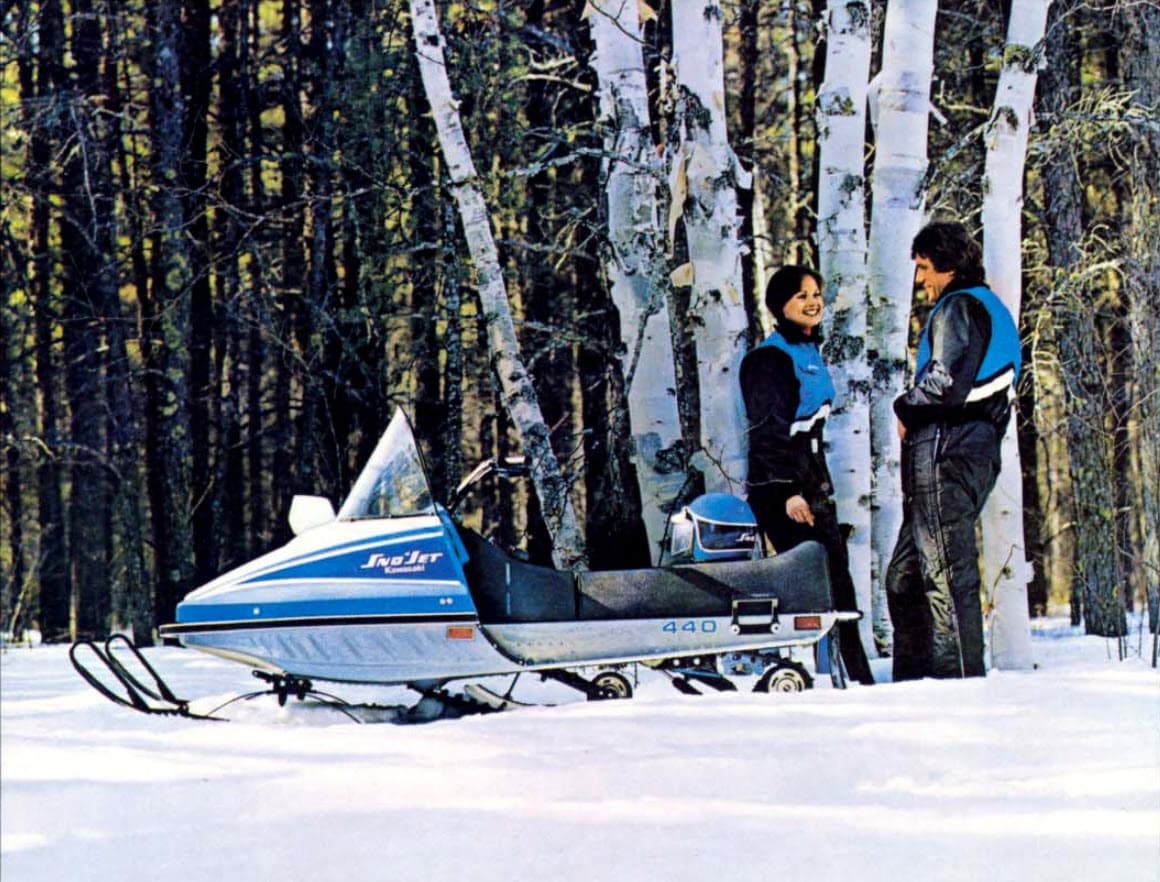
Main characteristics/key contributions
- Production years: late 1960s
- Positioning: trail
- Key contribution: turning point from engine supplier to full manufacturer
Kawasaki Invader
The Invader quickly became one of Kawasaki’s best-known models. Powerful and fast, it perfectly embodied the brand’s performance philosophy.
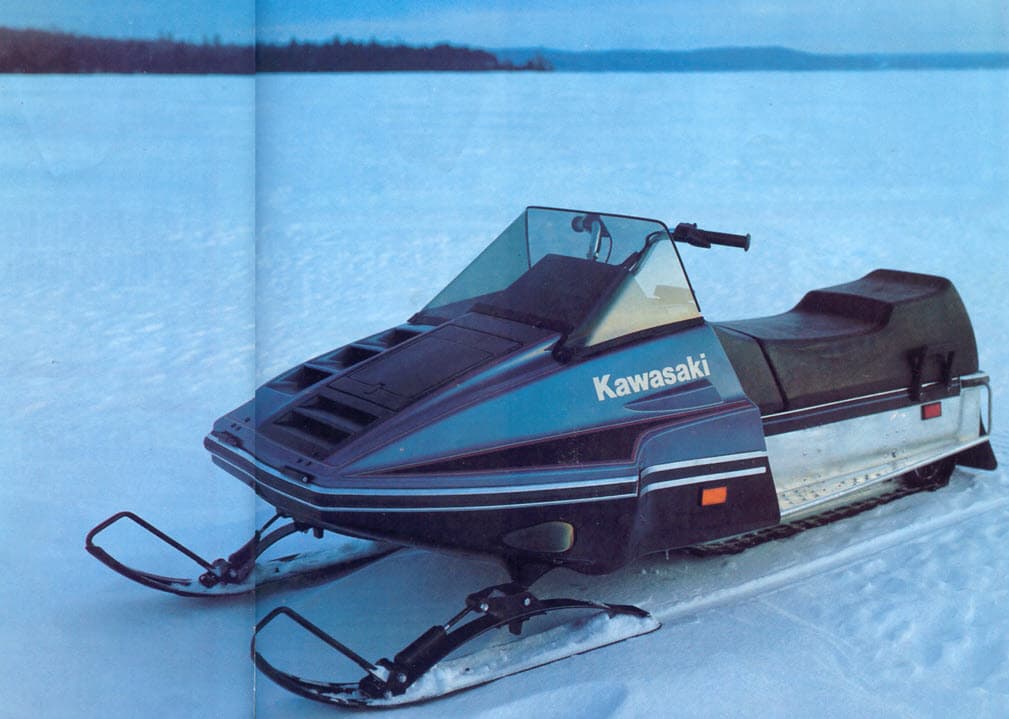
Main characteristics/key contributions
- Production years: early 1970s
- Positioning: sport
- Key contribution: symbol of Kawasaki’s raw performance
Kawasaki Intruder
The Intruder positioned itself as a high-end sports snowmobile known for its rigid chassis and precise engine response.
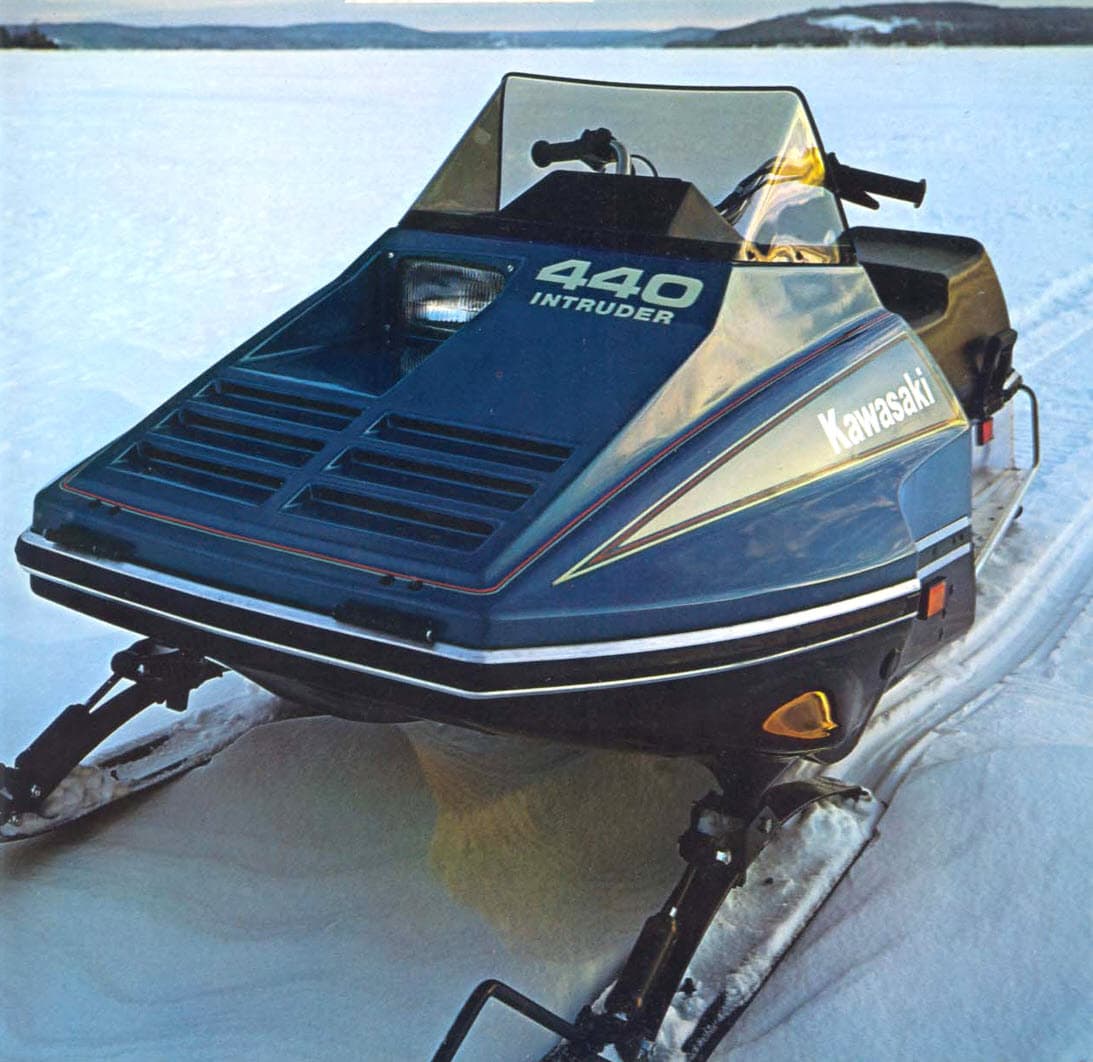
Main characteristics/key contributions
- Production years: 1970s
- Positioning: sport/performance
- Key contribution: steering precision and structural rigidity
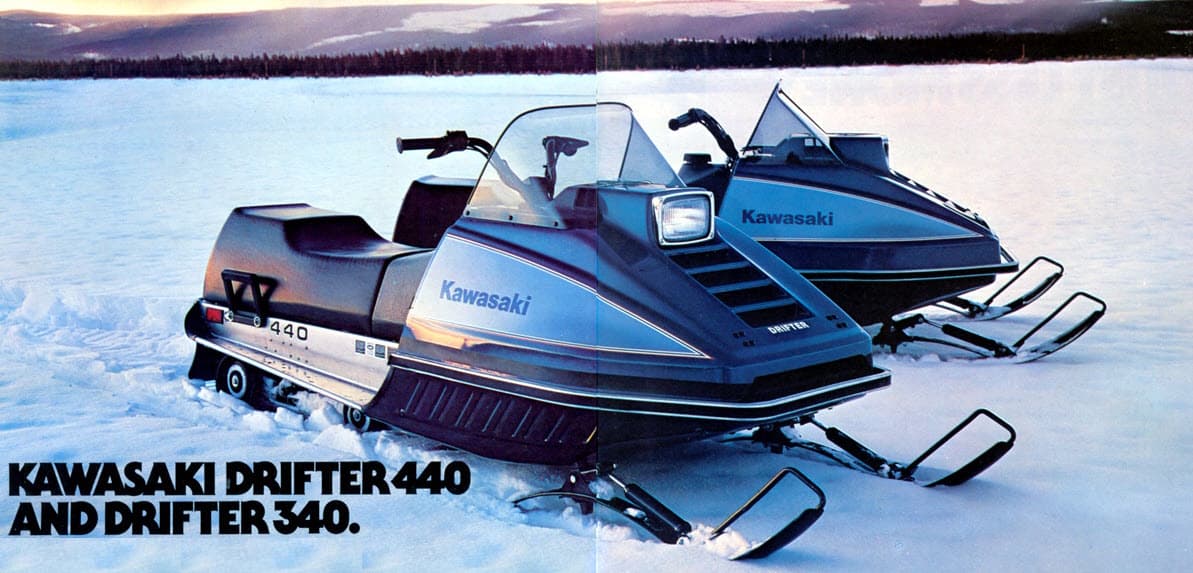
Kawasaki Drifter
The Drifter targeted riders more focused on trail riding while maintaining Kawasaki’s mechanical character.
Main characteristics/key contributions
- Production years: 1970s
- Positioning: trail
- Key contribution: attempt to broaden the lineup
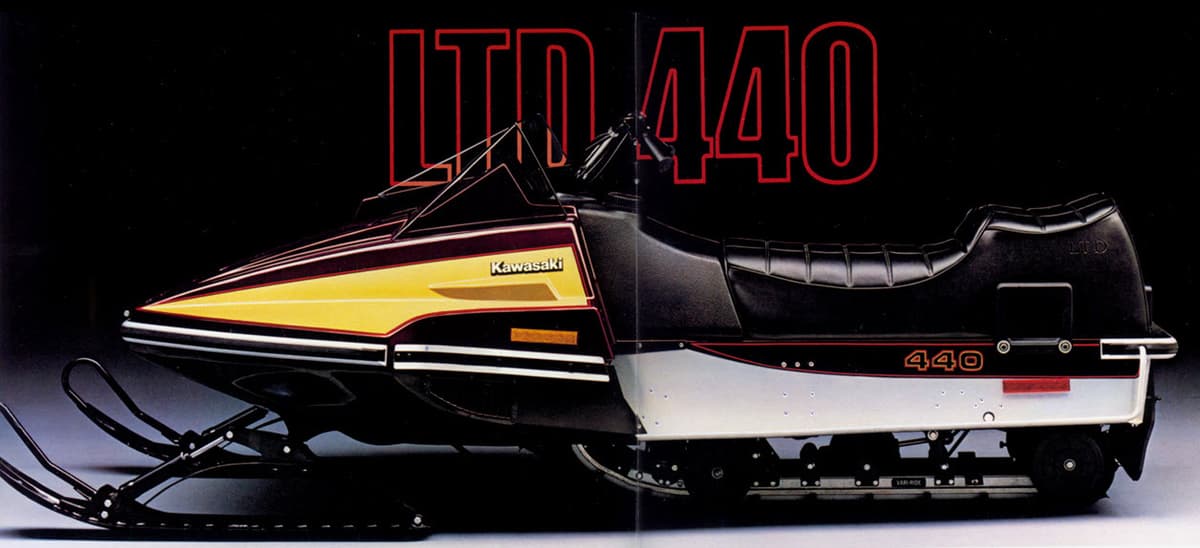
Kawasaki LTD
The LTD versions represented the top of the lineup, combining maximum power with higher-end equipment.
Main characteristics/key contributions
- Production years: mid-1970s
- Positioning: high-end
- Key contribution: technological showcase for the brand
Why Kawasaki Left the Snowmobile Market
Despite technically solid products, Kawasaki faced several structural realities: a slowing market, inconsistent winters, industry consolidation, and high production costs linked to its engineering standards.
For a global group operating across multiple sectors, snowmobiles gradually became a marginal segment that no longer justified the investments required relative to expected returns.
The End of Kawasaki Snowmobiles
Kawasaki ended snowmobile production in the late 1970s. This withdrawal was strategic and gradual, driven by broader industrial considerations rather than an immediate technical failure.
The Legacy of Kawasaki Snowmobiles
Today, Kawasaki remains one of the most respected former snowmobile manufacturers. Its machines are recognized for their distinctive engine character, manufacturing quality, and strongly performance-oriented design. They hold a special place in vintage snowmobile collections and events, often associated with demanding and passionate riders.
Series Conclusion—Former Snowmobile Manufacturers
Through this series, we revisited a defining period in snowmobiling history marked by intense creativity and profound industrial instability. These brands, now gone, nevertheless played an essential role in the evolution of the sport and winter recreation.
Their disappearance was not due to a lack of ideas or expertise, but rather to an unforgiving context shaped by consolidation, economic pressure, overproduction, and unpredictable winters. Even so, their legacy remains alive, both in preserved machines and in the technical DNA passed on to the modern industry.
Telling the story of these manufacturers is a reminder that the golden age of snowmobiling was shaped not only by those who survived, but also by those who dared… and ultimately disappeared.