

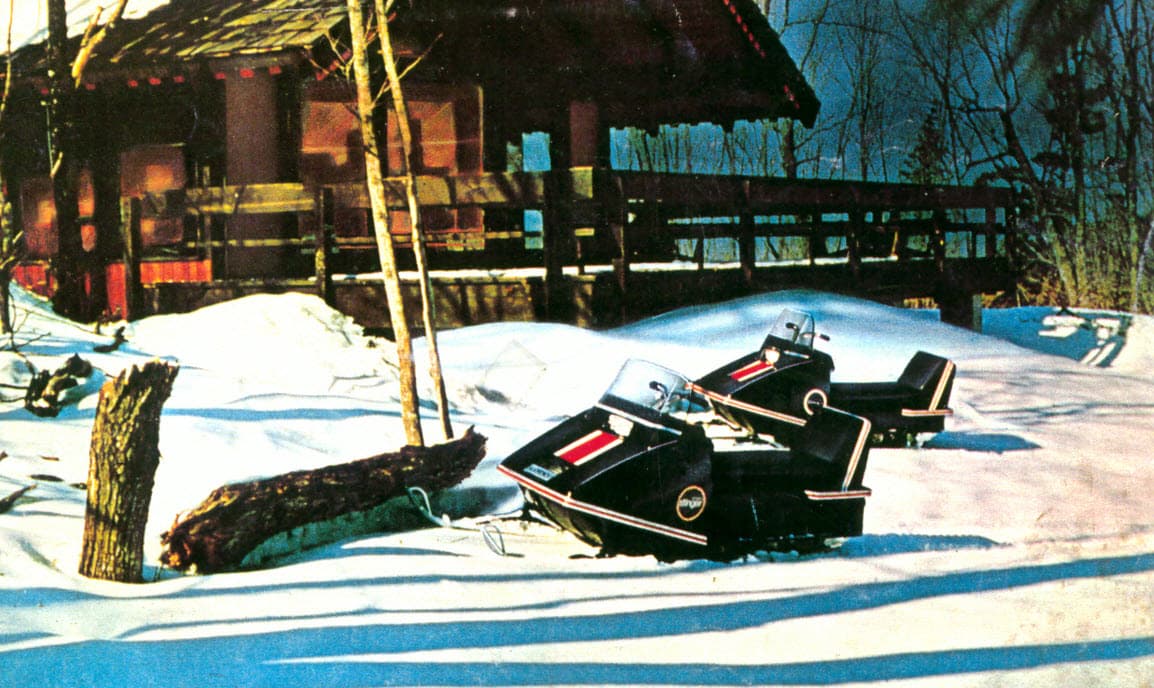

In the history of discontinued snowmobile manufacturers, Scorpion holds a unique place. The brand was born in Minnesota, at the heart of a mining region where winter is not a backdrop, but a daily reality. For a few intense years, Scorpion embodied a different approach: a snowmobile designed as a serious industrial product, with a clear obsession for traction, durability, and mechanical efficiency.
The paradox is that Scorpion was often ahead of its time—in technology, in production philosophy, and in the very idea of a strong brand identity—yet it was ultimately caught by the same forces that swept away dozens of manufacturers: economic cycles, overproduction, poor snow years, consolidation… and corporate decision-making.
Strong foundations: Trail-A-Sled and the “rubber track” revolution
Before becoming Scorpion, the company was first built under the Trail-A-Sled name in the Crosby–Ironton area of Minnesota. Its original DNA was clear: develop practical technical solutions for snow travel, with a strong emphasis on the track and traction.
A recurring milestone in the brand’s history is the acquisition of a U.S. patent in the mid-1960s for a continuous rubber track. At a time when the industry was still defining its standards, this ability to manufacture—and sell—rubber track components at scale helped distinguish Scorpion very early on.
A real manufacturer, not a “garage brand”
Scorpion did not resemble many of the short-lived brands of the era. The company grew quickly, invested in facilities, and became a major local employer. This matters: in Minnesota, snowmobiling was not just a product—it was a regional industry, an economy, and a source of jobs.
This industrial structure gave Scorpion a rare advantage: the ability to produce in volume, standardize products, and maintain consistency—while also carrying heavy fixed costs when the market turned.
The corporate shift: when strategy dictates destiny
By the late 1960s, the company entered a new phase through acquisition by an external group. In the snowmobile industry, such moves can be accelerators—or traps. When sales rise, capital fuels expansion, broader lineups, and stronger dealer networks. When the market slows, the logic flips: a recreational product suddenly becomes a line to cut, a risk to eliminate, an inventory to liquidate.
In the early 1970s, the industry was hit hard: milder winters in many regions, inventory buildup, overproduction, followed by economic shock and rising energy costs. For a structured brand like Scorpion, the pressure was immense—sell quickly, or warehouses become debt.
The Scorpion DNA: traction, stability, efficiency… and a strong identity
Scorpion was long associated with a simple, instantly recognizable visual identity. But beyond colors and styling, the brand built its reputation around three core ideas:
- Traction and track technology: an obsession with putting power to the snow and maximizing grip;
- Durability: construction designed to last and perform in harsh conditions;
- Stability: wider ski stance and platforms intended to inspire confidence at speed and in rough trails.
At times, Scorpion also pursued bolder breaks with convention: aluminum chassis on key models, mechanical repositioning, and improved handling to align with a market increasingly focused on sporty trail performance.
Scorpion’s flagship models
Scorpion produced several memorable machines. The following models frequently appear among collectors and vintage enthusiasts, along with the key technical and conceptual elements that define them.
Scorpion Super Stinger (series)
The Super Stinger name is nearly inseparable from Scorpion. It is the brand’s signature snowmobile, embodying its early-1970s performance orientation: a machine built to be fast, stable, and unmistakably Scorpion.
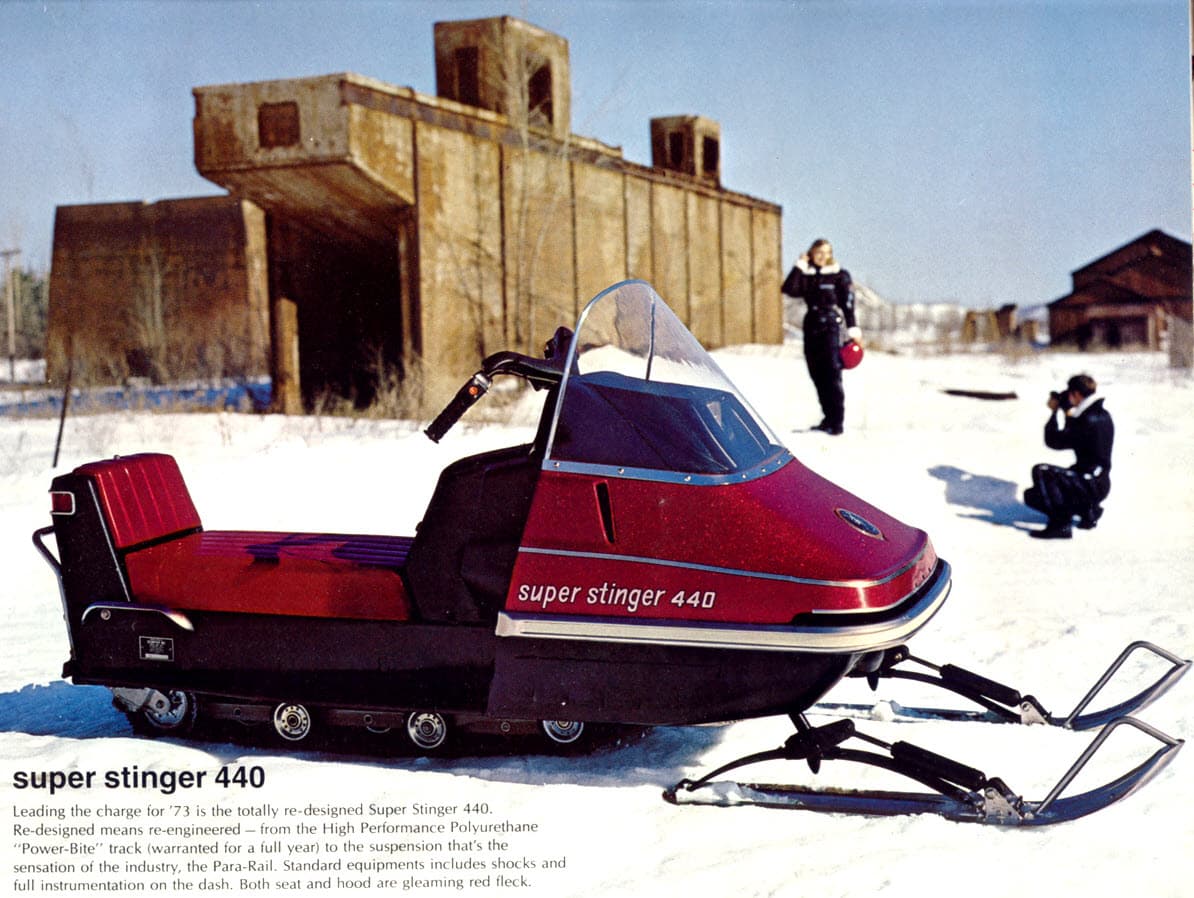
1973 Scorpion Super Stinger 440
Key takeaways:
- Sport / trail performance positioning;
- Stability-focused approach (wide stance and coherent geometry);
- Strong association with the racing culture of the era.
Scorpion Whip 440
With the Whip, Scorpion pursued a more “modern” evolution: a snowmobile that was more comfortable and family-friendly, yet still capable of genuine performance. The Whip reflects a deliberate effort to improve product quality at a time when the industry needed to rebuild consumer confidence.
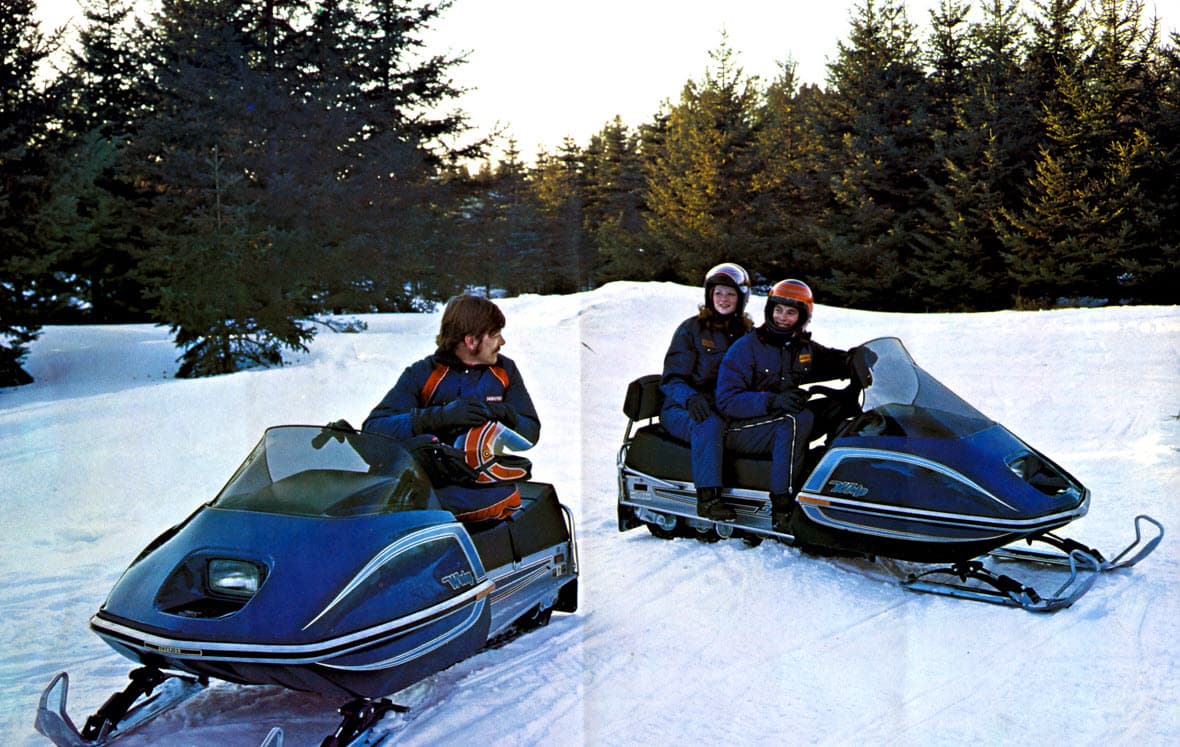
1977 Scorpion Whip
Key takeaways:
- Revised platform aimed at modernizing the lineup;
- More accessible trail focus, yet still responsive;
- Noticeable efforts toward weight reduction and overall efficiency in certain versions.
Scorpion 440X “Odd Job” (racing)
In the Discontinued Snowmobile Manufacturers series, competition is always revealing—and the Odd Job is a defining symbol of Scorpion’s racing culture. Built for oval racing and extreme efficiency, it reflects an era when manufacturers experimented with radical ideas to gain tenths of a second—and credibility.
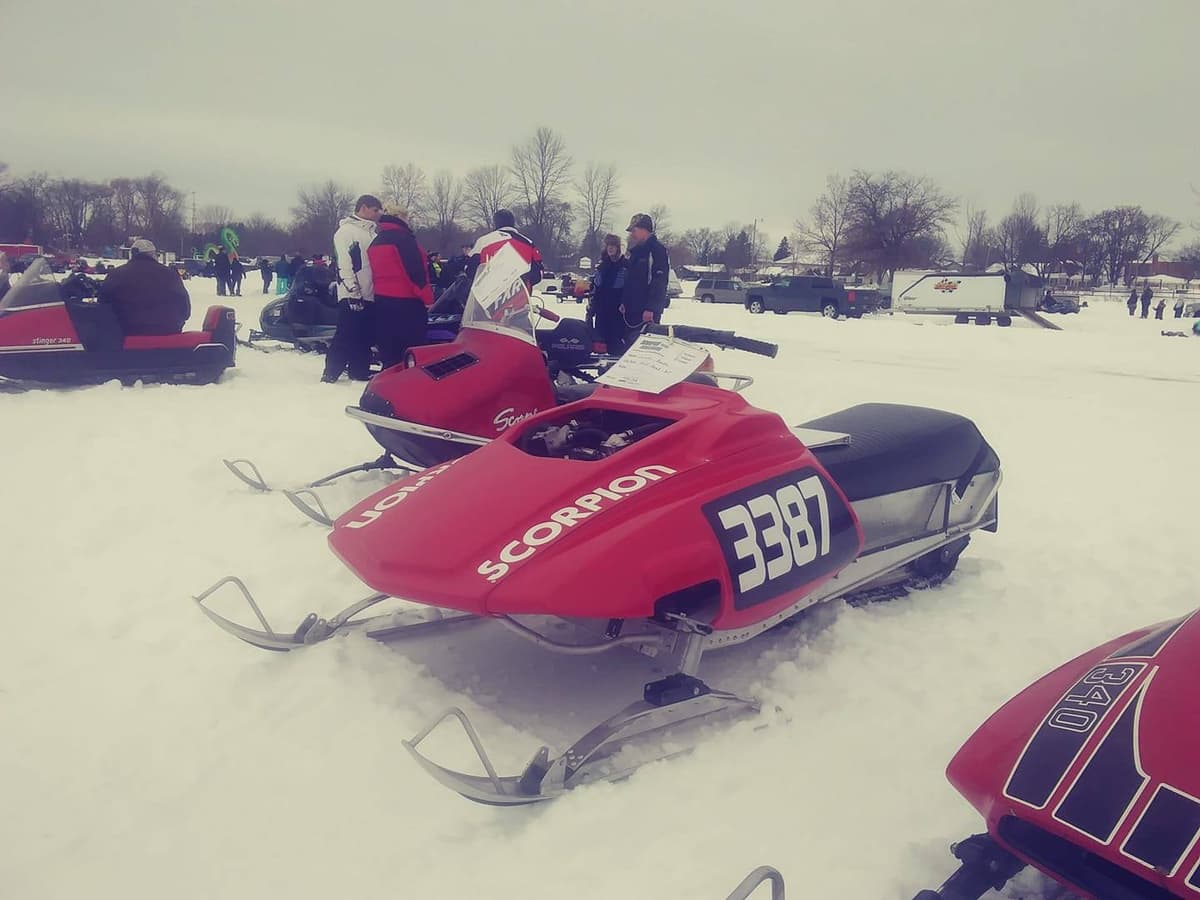
Scorpion 440X “Odd Job” – Credits Facebook
Key takeaways:
- Oval racing–focused snowmobile;
- Highly specialized performance platform;
- Technology showcase for the brand.
Scorpion Sno Pro (racing heritage)
Scorpion also left a strong mark in the world of Sno Pro racing. These competition machines—and the structure around them—served as rolling laboratories: setup, endurance, cooling, drivetrain, geometry. This explains why many Scorpions remain highly respected among vintage enthusiasts today.
Key takeaways:
- Competition-driven development and real-world validation;
- Platforms designed to withstand sustained high RPM;
- Direct contribution to the brand’s historical credibility.
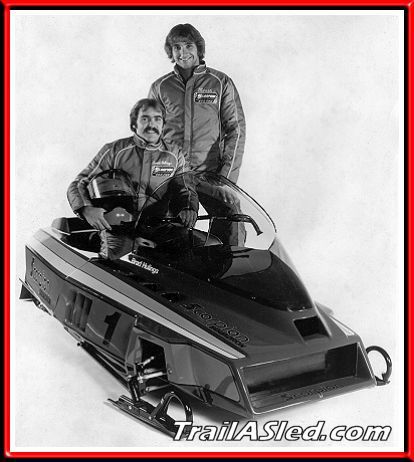
Scorpion Sno Pro (Credits TrailASled.com)
Racing as both catalyst and showcase
At Scorpion, racing was not a marketing sticker—it was a core development tool. Competition allowed the brand to test technical solutions and prove durability. In the 1970s, a snowmobile’s credibility was built as much on race results as on showroom sales.
The problem: racing is expensive. And when the market contracts, “image” budgets are often the first to go—even though they fuel long-term reputation.
Why Scorpion disappeared: a textbook consolidation scenario
Scorpion did not disappear because its snowmobiles lacked merit. Its story reflects a pattern common among discontinued snowmobile manufacturers:
- Overproduction and costly inventory;
- Economic slowdown and rising energy costs;
- Inconsistent winters that crushed demand;
- Corporate logic: when profitability becomes uncertain, decisions come fast.
Scorpion ultimately entered a consolidation dynamic. And in such industrial mergers, a brand may survive—or be gradually absorbed, rationalized, and shut down.
The Scorpion legacy: a cult brand, a true piece of history
Today, Scorpion remains a vibrant name among collectors. Restored machines, dedicated gatherings, and an engaged community keep the brand’s story alive as regional heritage. In the broader narrative of snowmobiling, Scorpion symbolizes an era of rapid innovation, undefined standards, and a time when a Minnesota manufacturer could boldly challenge industry giants.
A discontinued brand—yes. But far from forgotten.
Coming up in the series Discontinued Snowmobile Manufacturers
In the next article, we will revisit another notable manufacturer of the era: Mercury.