

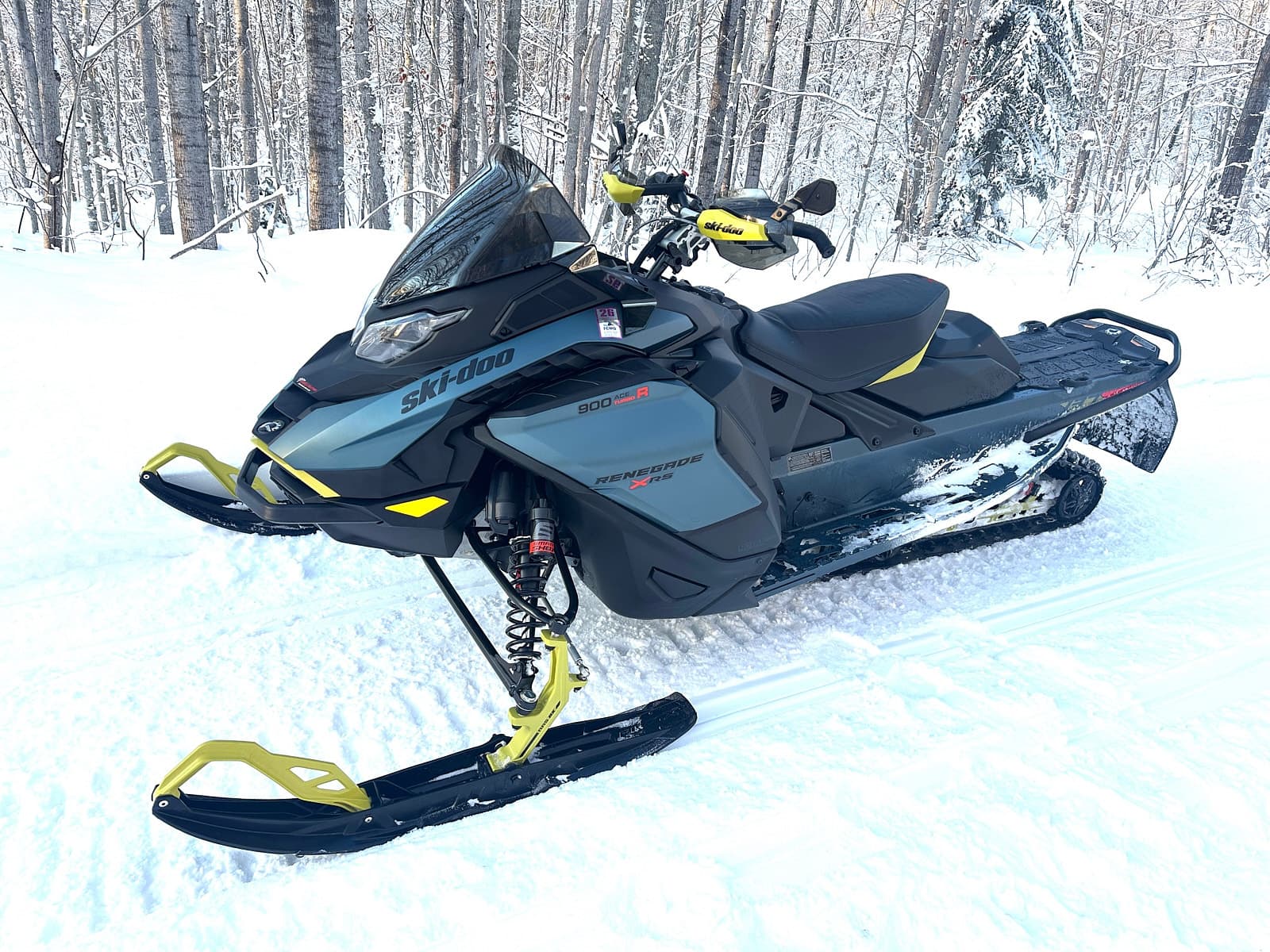

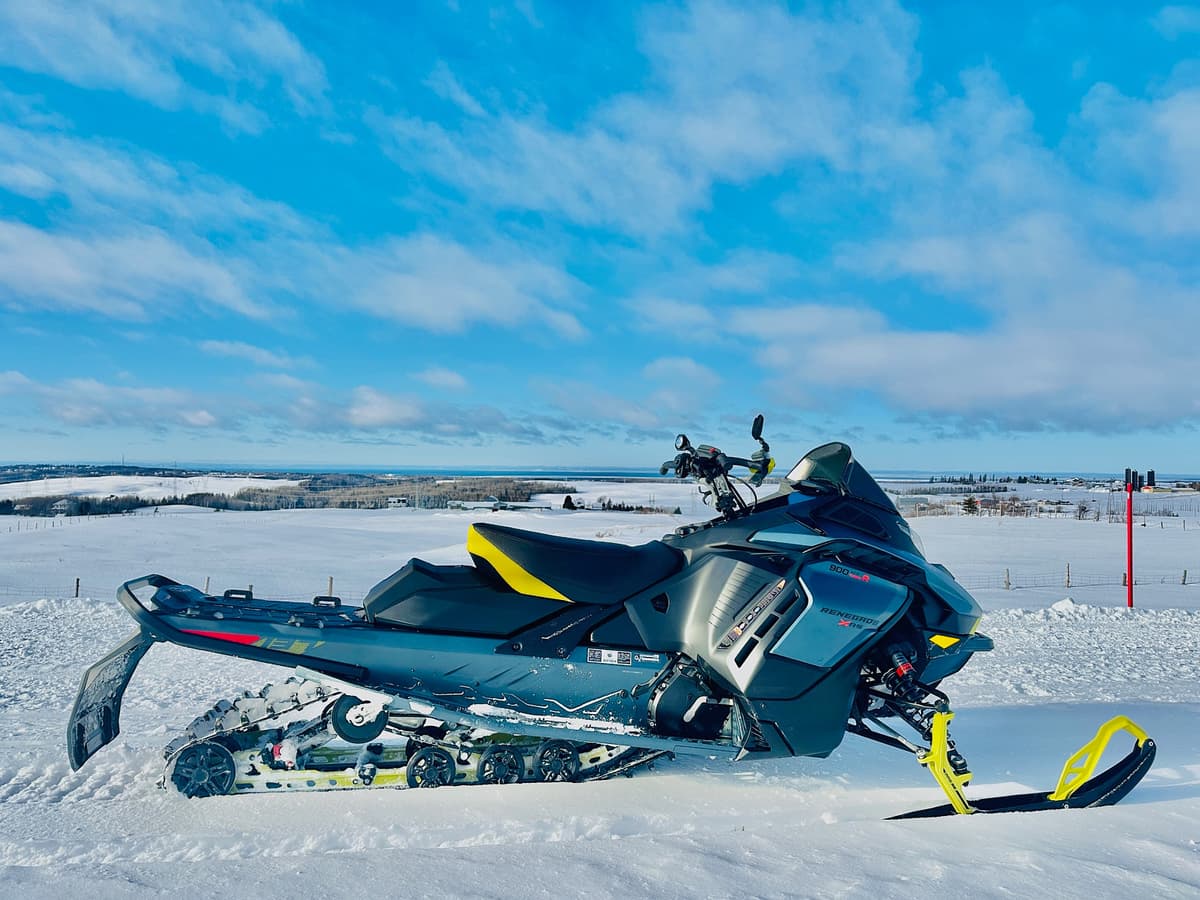
My snowmobile season was once again cut short this year due to a jaw injury. Unfortunately, I wasn’t able to ride as much as I would have liked with my 2026 Renegade X-RS. Still, I managed to log close to 1,500 km this winter! I rode mostly on Bas-Saint-Laurent club trails, which gave me a solid understanding of the machine. I experienced a variety of snow conditions, but overall, both trail conditions and temperatures were excellent. It’s now time to share my season recap of this snowmobile. To do so, I’ll compare it directly with the MXZ X-RS 850, a sled I’ve logged many miles on over the past few years.
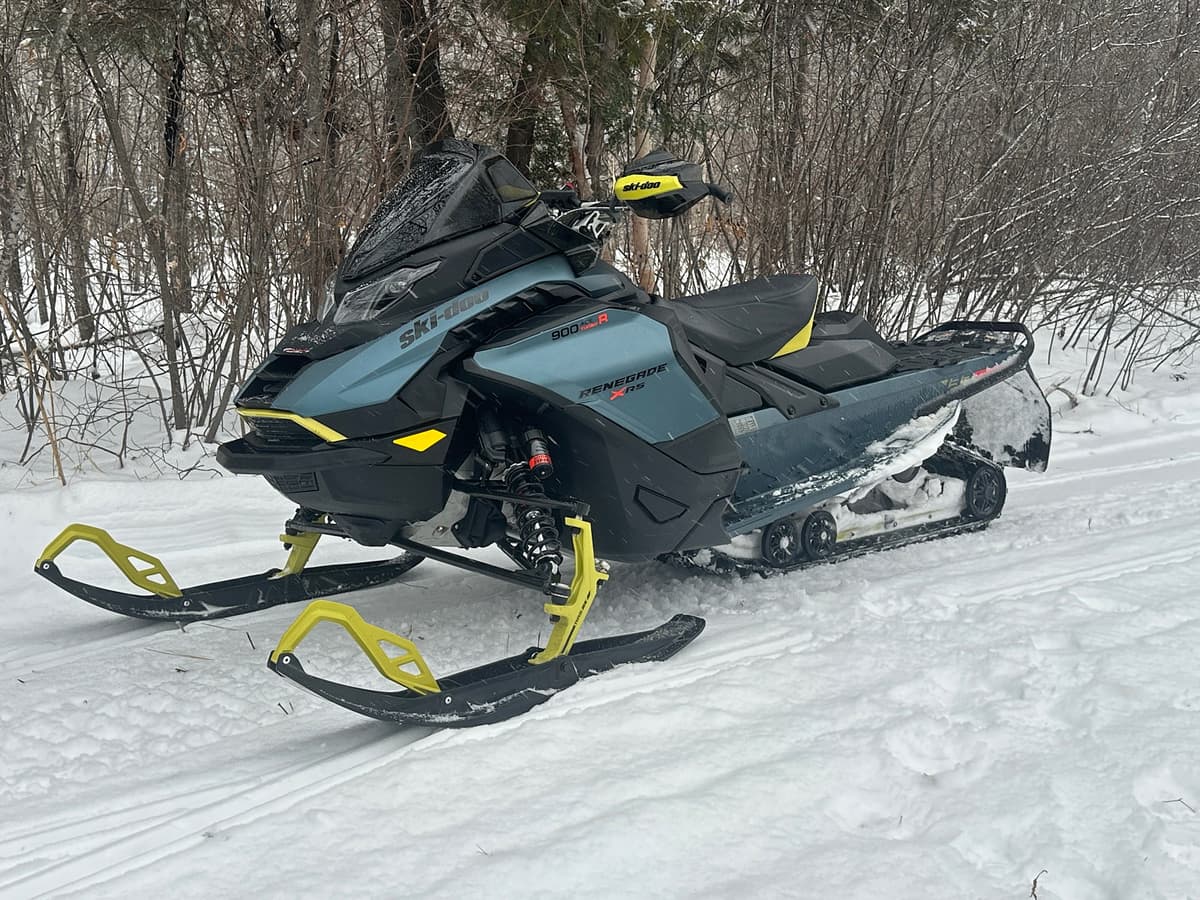
900 ACE Turbo R Engine
First, let’s talk about the engine in my 2026 Renegade X-RS. It’s powered by the 4-stroke 900 ACE Turbo R. From my very first rides, both the engine performance and CVT efficiency stood out. The advertised 180 hp is very real, as is the 17.4 psi of turbo boost.
Being a 4-stroke, it delivers strong torque. Compared to a naturally aspirated 2-stroke, the difference is obvious—especially when you pin the throttle.
Acceleration from a standstill impressed me greatly after a few suspension adjustments. As for the Ice Ripper XT track with its 1.5-inch lugs, I believe there are better options from Ski-Doo for this type of launch performance. That said, it still does the job.
When launching from a stop, I noticed the 900 ACE Turbo R isn’t as immediate as the naturally aspirated 2-stroke in my MXZ. There’s a slight delay in power delivery, and it’s less linear. However, the lag is short before the turbo kicks in, and the engine delivers a full boost. At that point, the power is impressive, and the Renegade X-RS becomes notably more explosive and ultimately faster than the MXZ.
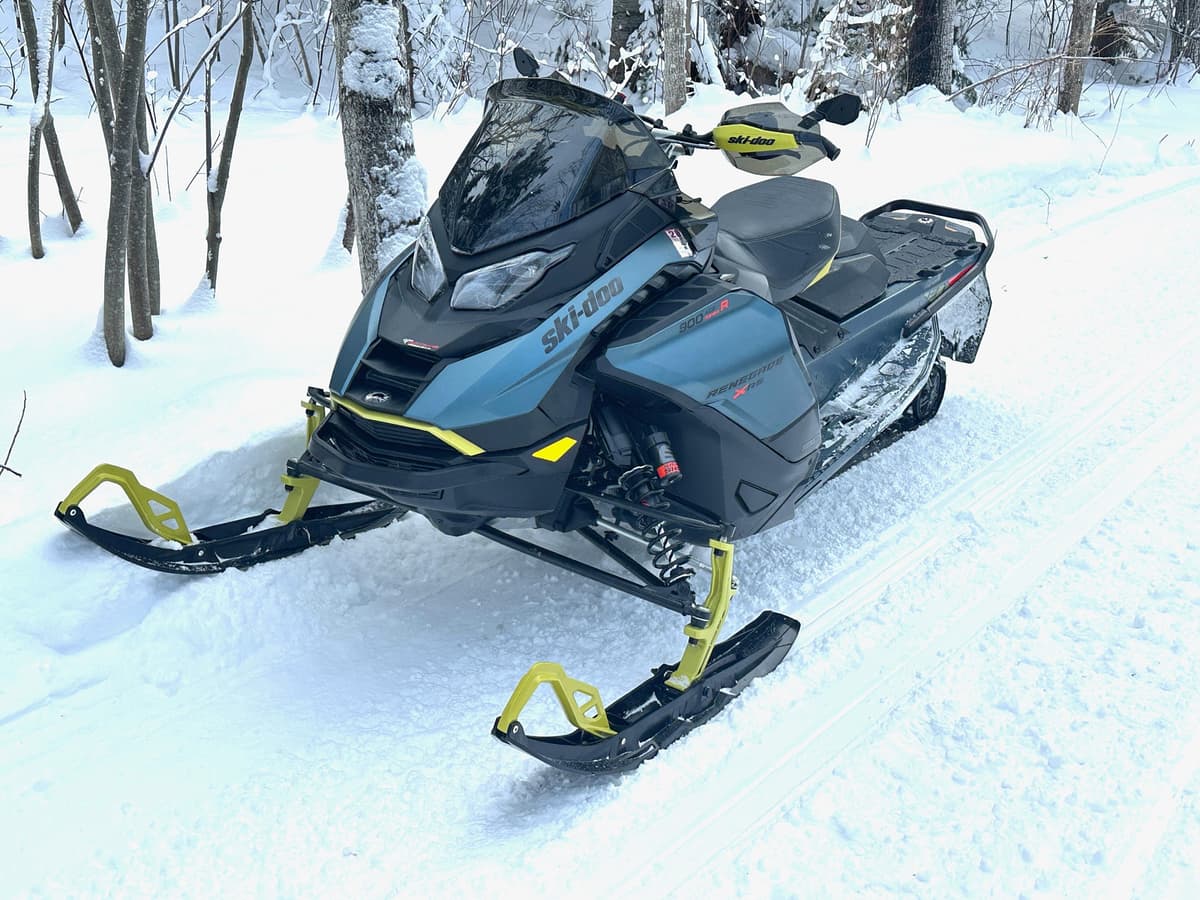
Performance becomes even more interesting when using Launch Mode on trails. By holding both the throttle wide open and the brake lever, turbo pressure builds and engine RPM reach an optimal range. Release the brake, and the sled launches aggressively.
Make sure you hold on tight—this thing takes off quickly. Of all the sleds I’ve ridden, the 2026 Renegade X-RS is undoubtedly the fastest Ski-Doo on a long straight.
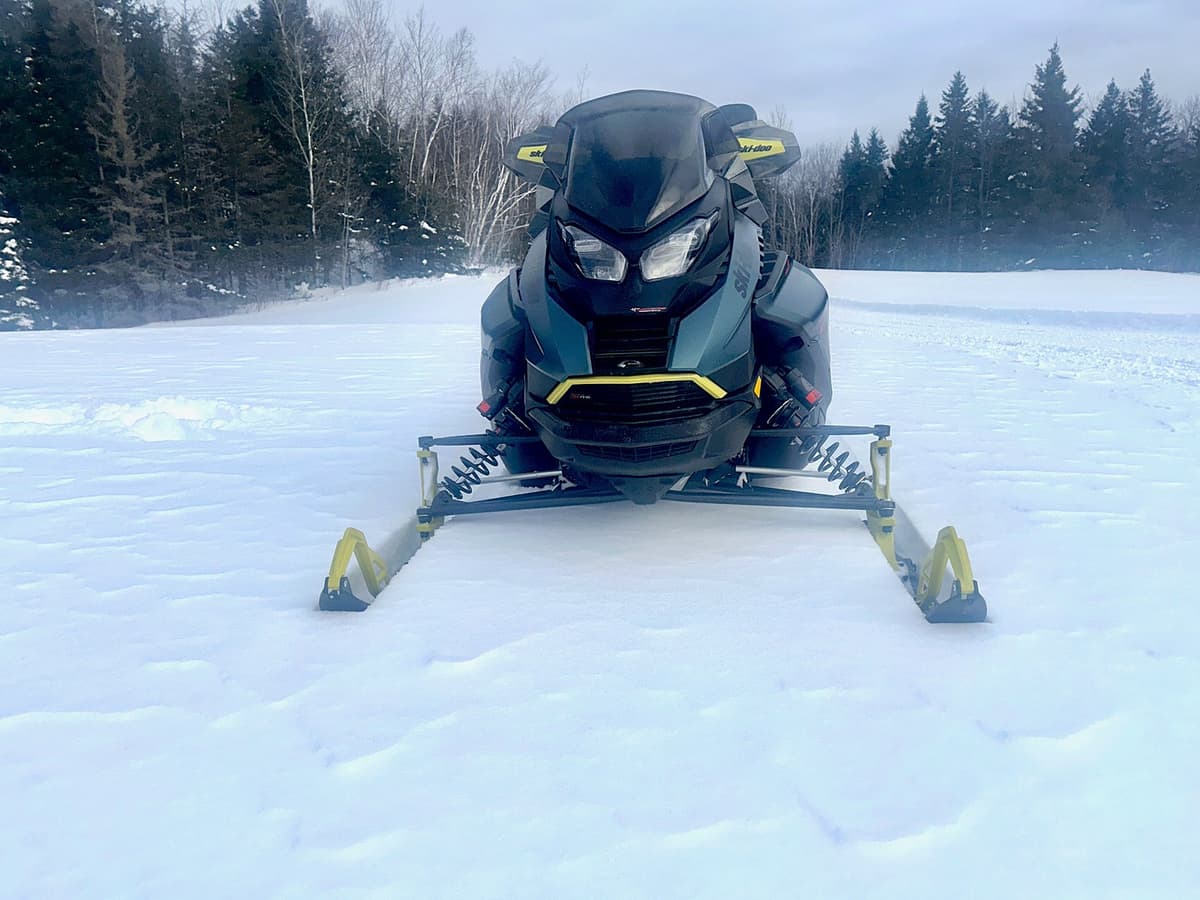
Another point worth mentioning: I enjoy the sound of the 900 ACE Turbo R. The distinctive tone comes mainly from the blow-off valve when letting off the throttle. When I was in the mood to play, I found it addictive without being overwhelming. Even on long rides, it never became irritating. For me, that’s a definite plus.
REV Gen5 Chassis: How the Renegade X-RS 2026 Handles
The 2026 Renegade X-RS is built on the REV Gen5 chassis, benefiting from all its improvements. I covered this in detail in my pre-ride analysis and my first impressions article, so I won’t go into depth here.
In short, it features an excellent fit and finish, narrower body panels, an additional engine mount that reduces handlebar vibration, and improved insulation panels that lower noise and enhance airflow for cooling components like the CVT.
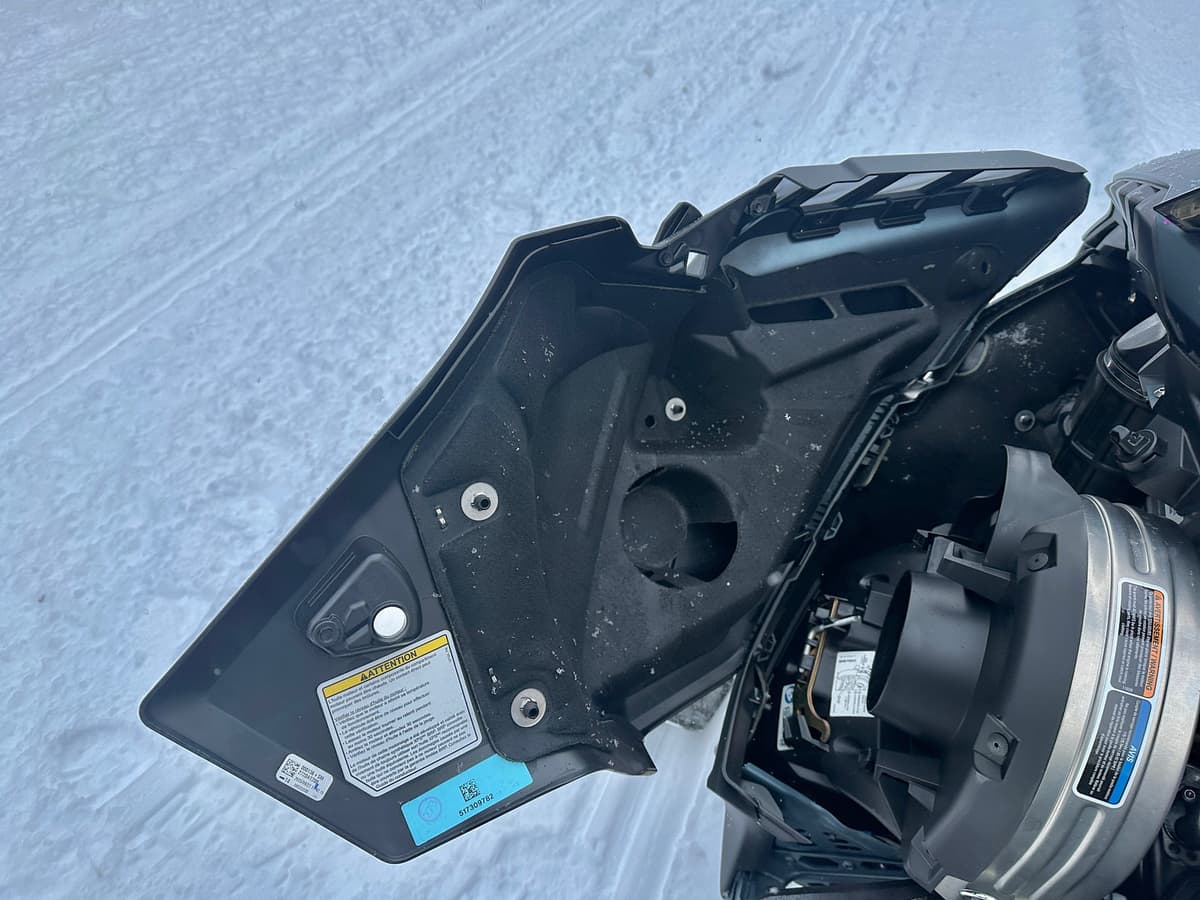
In everyday riding, this is the most refined chassis I’ve experienced across all manufacturers. The panels are slightly wider than on the MXZ, and the suspension geometry differs due to engine placement.
On trails, even though the Renegade X-RS is slightly wider than the MXZ, it never felt like a drawback. That’s a testament to how effectively Ski-Doo implemented this platform. Considering the 36 lb weight difference between the Renegade X-RS and the MXZ with a 137-inch track, their trail behaviour remains quite similar—though not identical.
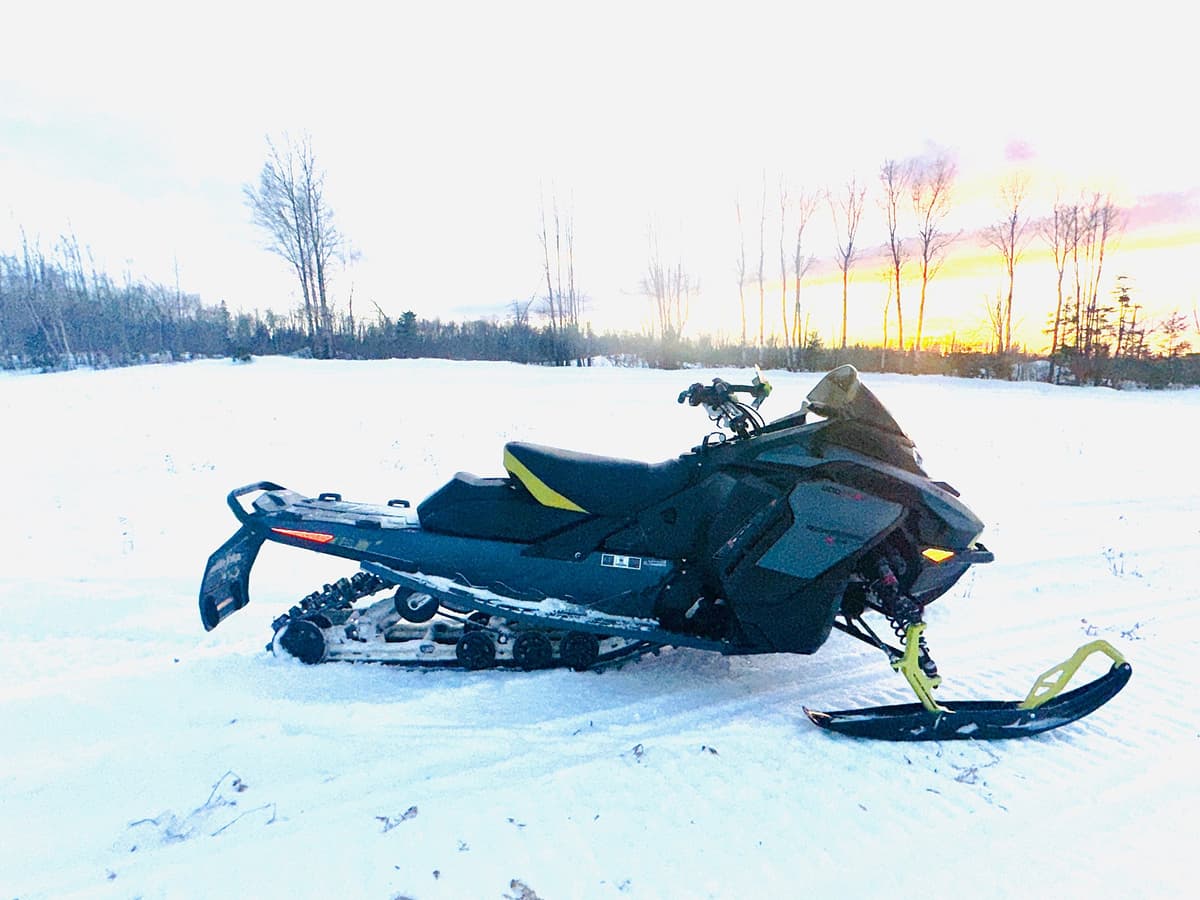
RAS RX Suspension: Stability and Trail Precision
I had high expectations for the new RAS RX front suspension on my 2026 Renegade X-RS—and after several rides, mostly at a sporty pace, it delivered.
I enjoy pushing a sled to its limits, and in my experience, the RAS RX adds stability and reduces body roll. For a 4-stroke Renegade, it’s a meaningful improvement. Compared to the MXZ, it’s slightly less precise but still very close. Across all the snow conditions I tested, I noticed the sled could break loose a bit more often and felt slightly less planted in corners. The skis also tended to lift more frequently than on the MXZ.
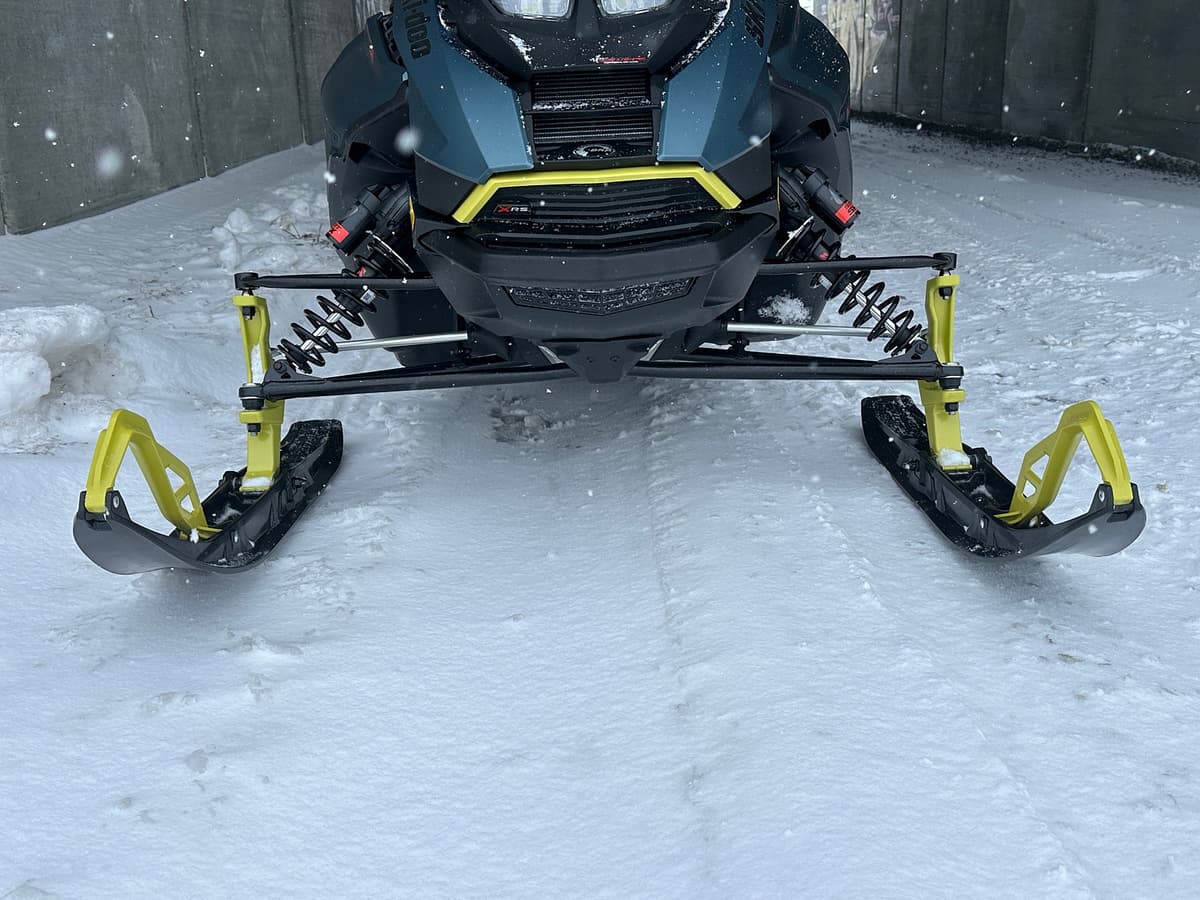
As for shocks, the semi-active Smart-Shox system performs well. Combined with the RAS RX suspension, it provides a strong sense of control both in corners and over bumps. While it doesn’t match the MXZ’s razor-sharp precision with its Pilot RX skis, the Renegade X-RS still delivers.
The Pilot X skis also do their job effectively. Overall, I believe the main limitation between the two sleds comes down to weight and the physically larger engine. Given that, Smart-Shox is a major advantage and likely the best shock setup for the Renegade X-RS. It helps stabilize the sled and prevents excessive pitch or drift in corners. In the end, the overall performance of this Renegade is both impressive and satisfying.
Renegade X-RS 2026 Ergonomics: Comfort and Technology
The 2026 Renegade X-RS offers an excellent riding position. I found myself seated upright on a comfortable seat. Ergonomics are similar to the MXZ in many ways. Controls are intuitive, and adjustments are easy thanks to the 10.25-inch display, which is clear and provides all necessary information. I appreciated the different layout and customization options.
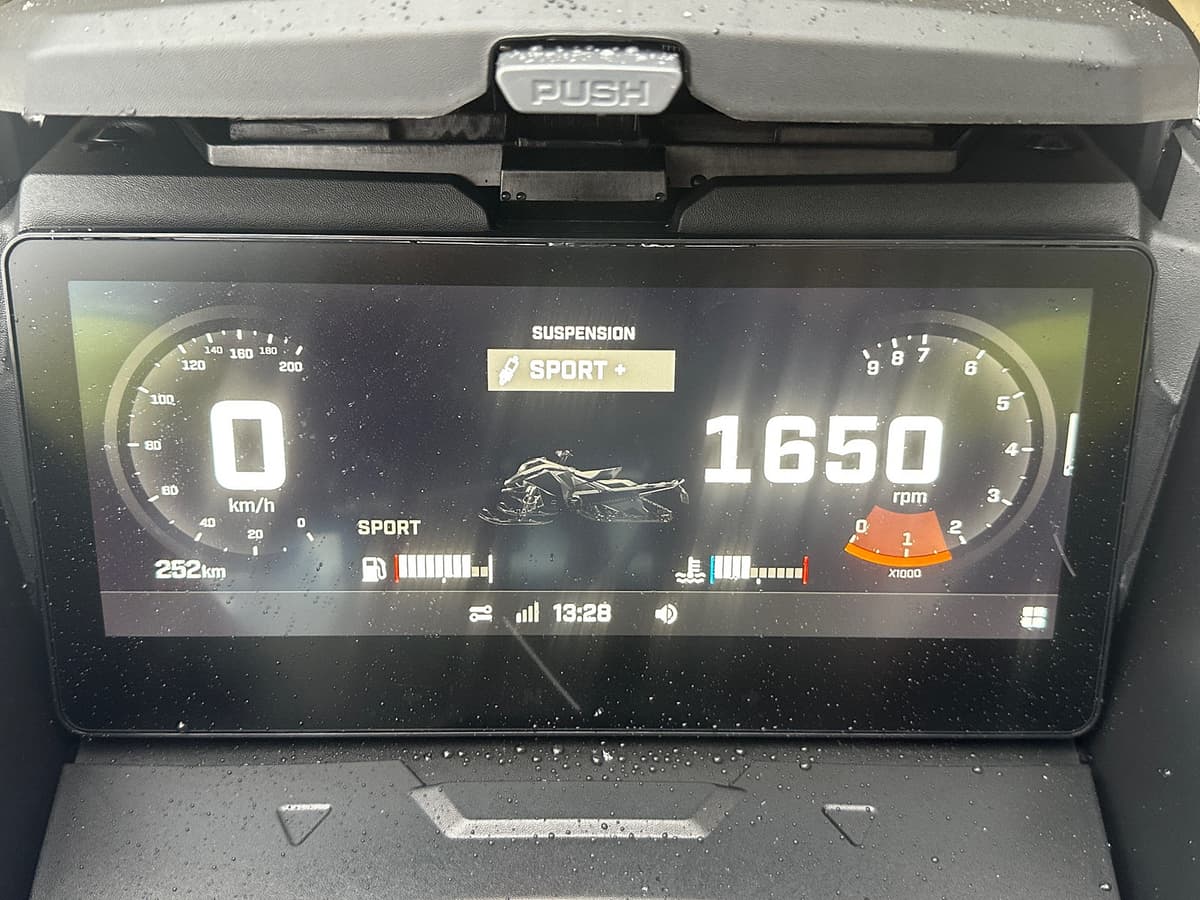
In terms of comfort, the Renegade X-RS allows tool-free handlebar height adjustment—something my MXZ didn’t offer. Another standard feature is the heated seat. It was my first time using one, and I really liked it, although it could get quite hot even on the lowest setting.
Areas for Improvement on the Renegade X-RS 2026
Navigation System
Once again this year, I was disappointed with the navigation system, even though it looks great visually. My phone frequently disconnected from the app when using GPS features—even when plugged in. I also continued to experience issues with updates. In short, I’d like to see more focus on improving core stability rather than adding new features.
Heated Visor Plug Location
The heated visor plug is poorly positioned, too close to the key. While using a heated helmet, I experienced inconsistent connections, and the plug was difficult to access without stopping.
EPS Steering Integration
Another improvement I’d like to see is the addition of electronic power steering (EPS). While the sled is relatively easy to steer for a 4-stroke, fatigue still builds up on longer rides. Other manufacturers already offer this feature.
LED Headlights

The 2026 Renegade X-RS comes with LED headlights, but during night riding, I found them lacking in brightness.
Renegade X-RS 2026: Final Verdict
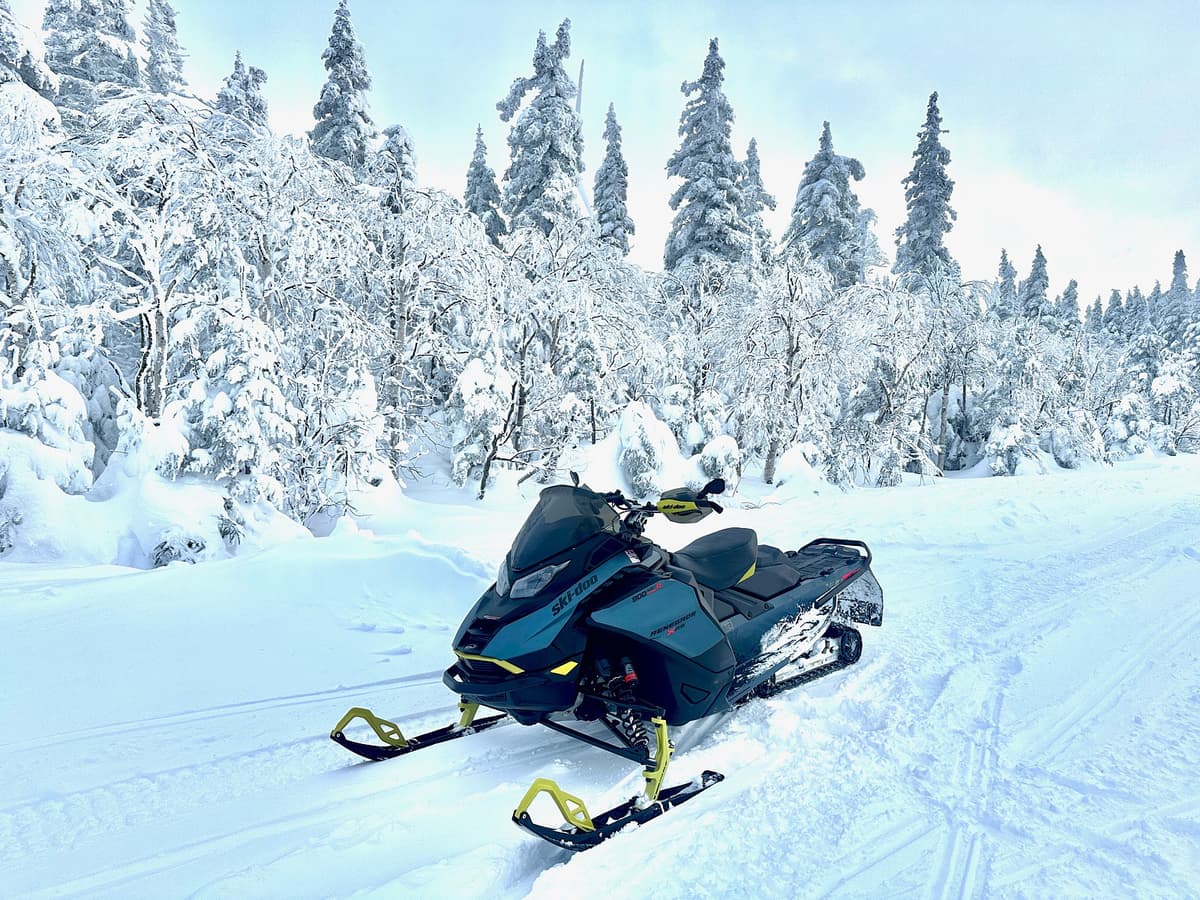
In conclusion, the 2026 Renegade X-RS exceeded my expectations. I appreciated its handling and the performance of the 900 ACE Turbo R engine. While I had some preconceived notions, real-world testing proved them wrong.
Yes, 4-stroke snowmobiles are still heavier than 2-strokes—but that gap is much smaller than it used to be. The latest improvements on the Renegade X-RS significantly reduce that feeling of heaviness. When you factor in the additional standard features compared to the MXZ X-RS, along with the recommended oil change interval of once per year (or every 6,000 km), the Renegade stands out as a very strong overall choice.