

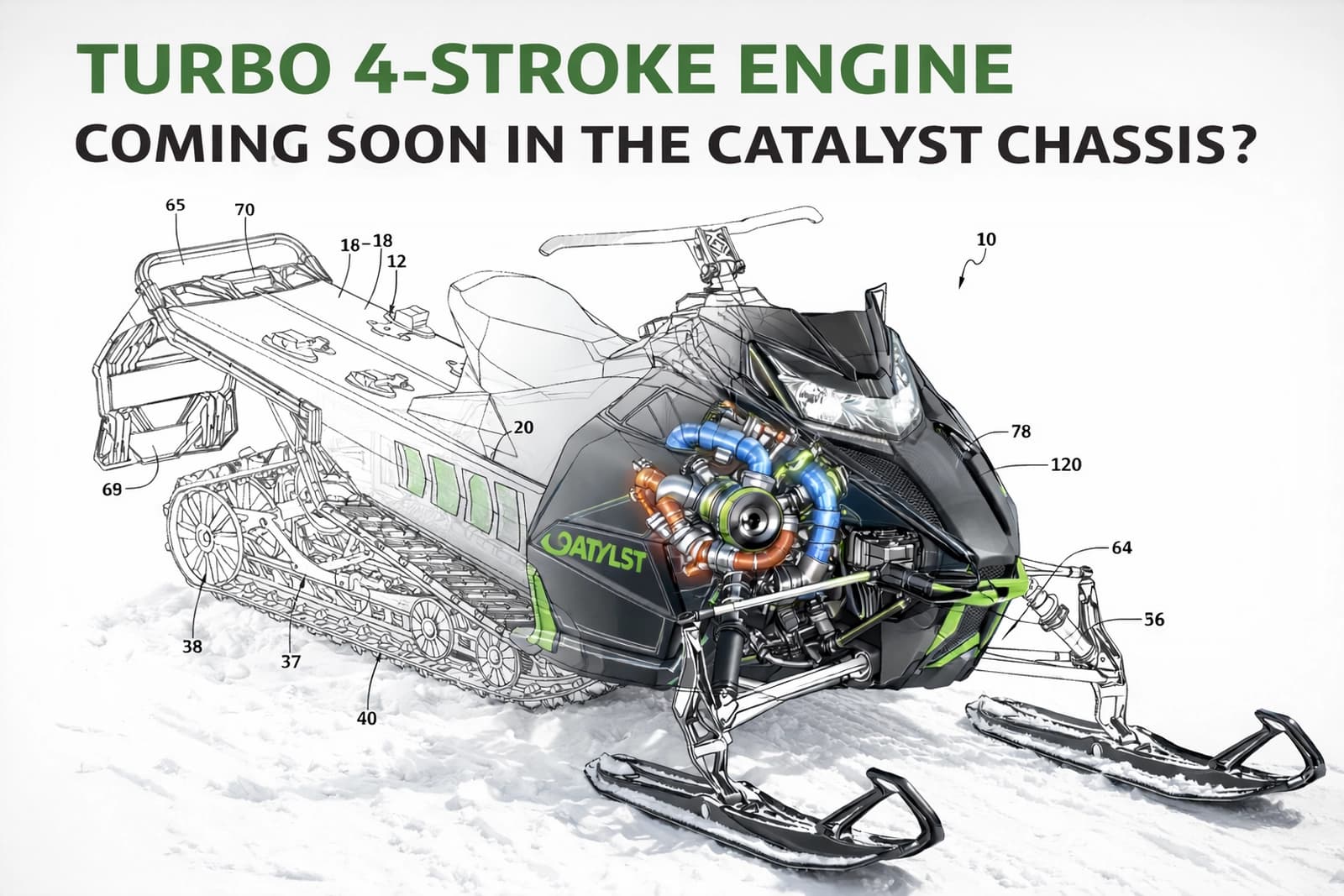

Since the arrival of the Catalyst chassis (click here to read), something feels different at Arctic Cat. We’re not simply talking about a new frame or a marketing repositioning. We’re talking about a shift in philosophy. And whenever a platform arrives with such a high level of integration, one question naturally comes to mind: is this truly the end point… or the beginning of something much bigger?
The Catalyst was designed with a clear obsession: lowering the centre of gravity, centralizing mass, and eliminating anything that could compromise riding precision. The laid-down engine position, the tight packaging of components, and the overall compactness of the vehicle are far from accidental choices. These are major engineering decisions that typically require years of planning.
And when a manufacturer invests this heavily in a new architecture, it is rarely for a single engine.
An analysis that raises more questions than answers
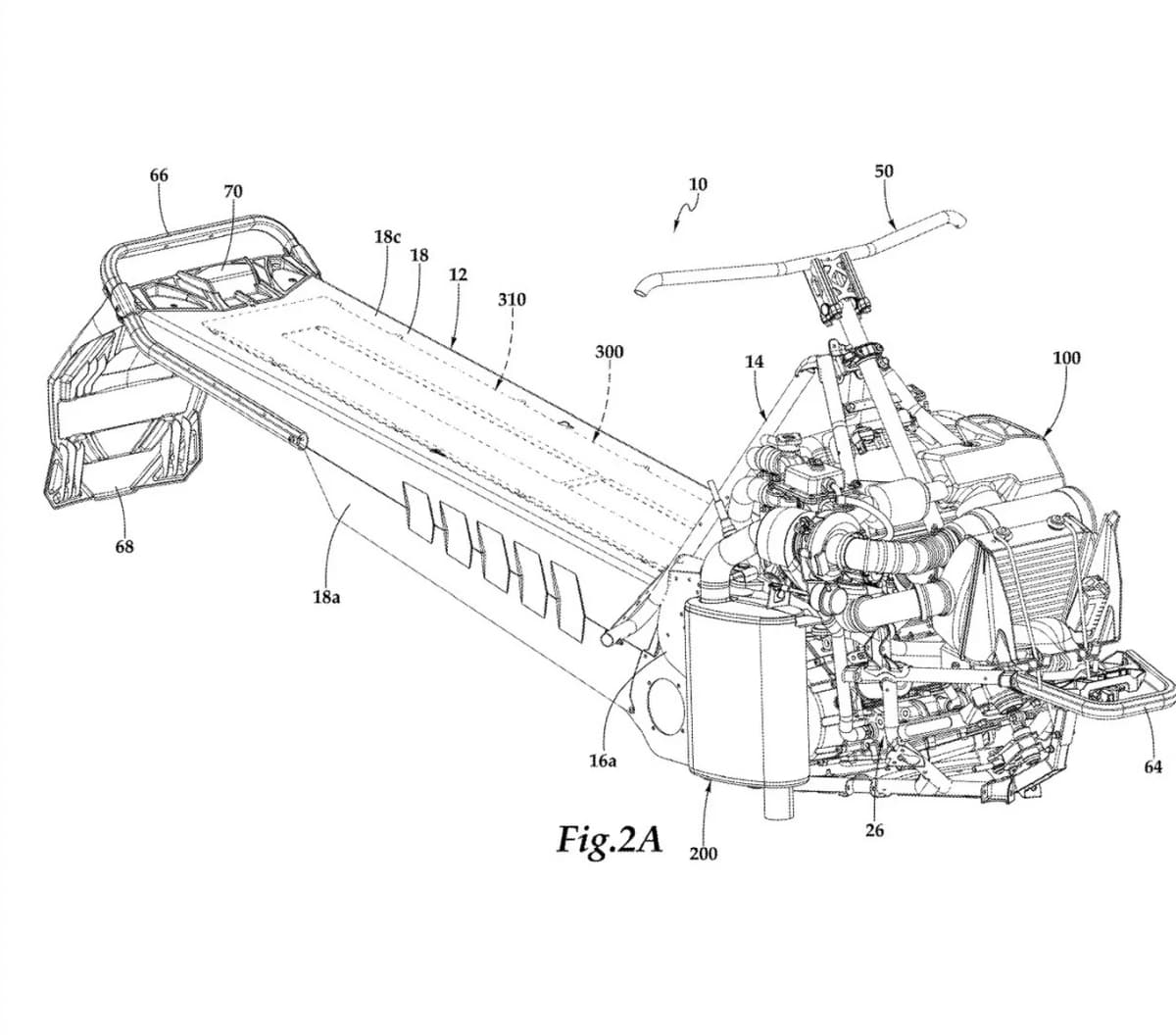
Recently, while analyzing a patent published by Arctic Cat, one element particularly caught our attention. Officially, the document focuses on the integration of a turbo system and its exhaust routing. But when you take the time to study the diagrams and the mechanical logic behind them, it quickly becomes clear that the subject goes far beyond the simple question of a muffler.
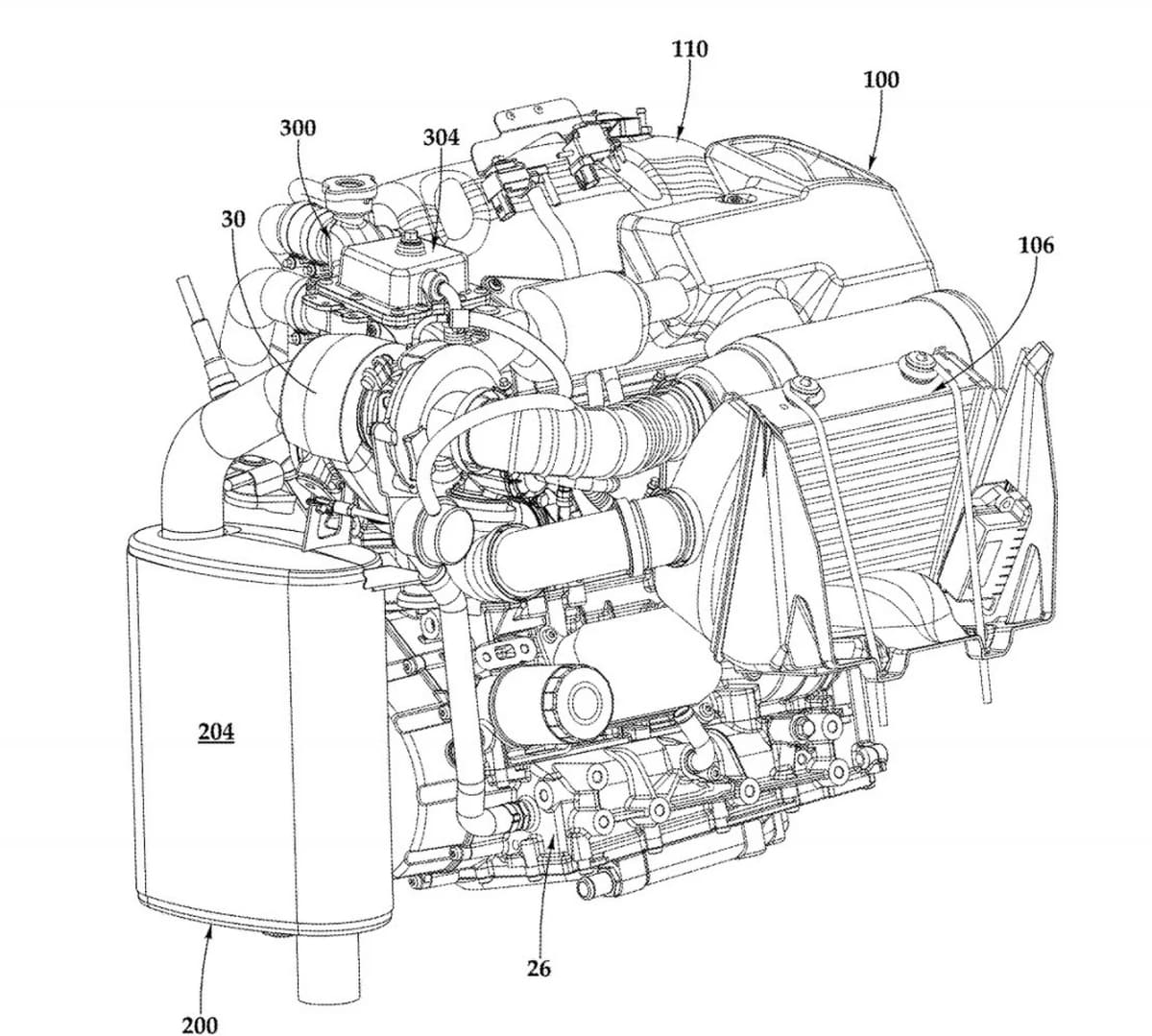
What stands out is a complete reflection on integrating a full-turbo system within a limited space. The positioning of the turbocharger, the proximity of the piping, thermal management, vibration isolation… everything appears designed as part of a coherent system.
This does not look like a turbo that was added afterward. It looks like an architecture built around that reality from the start.
In our industry, this kind of engineering work usually appears when the engine already exists internally, or, at the very least, when development has progressed far enough for the engineering team to work on its final integration.
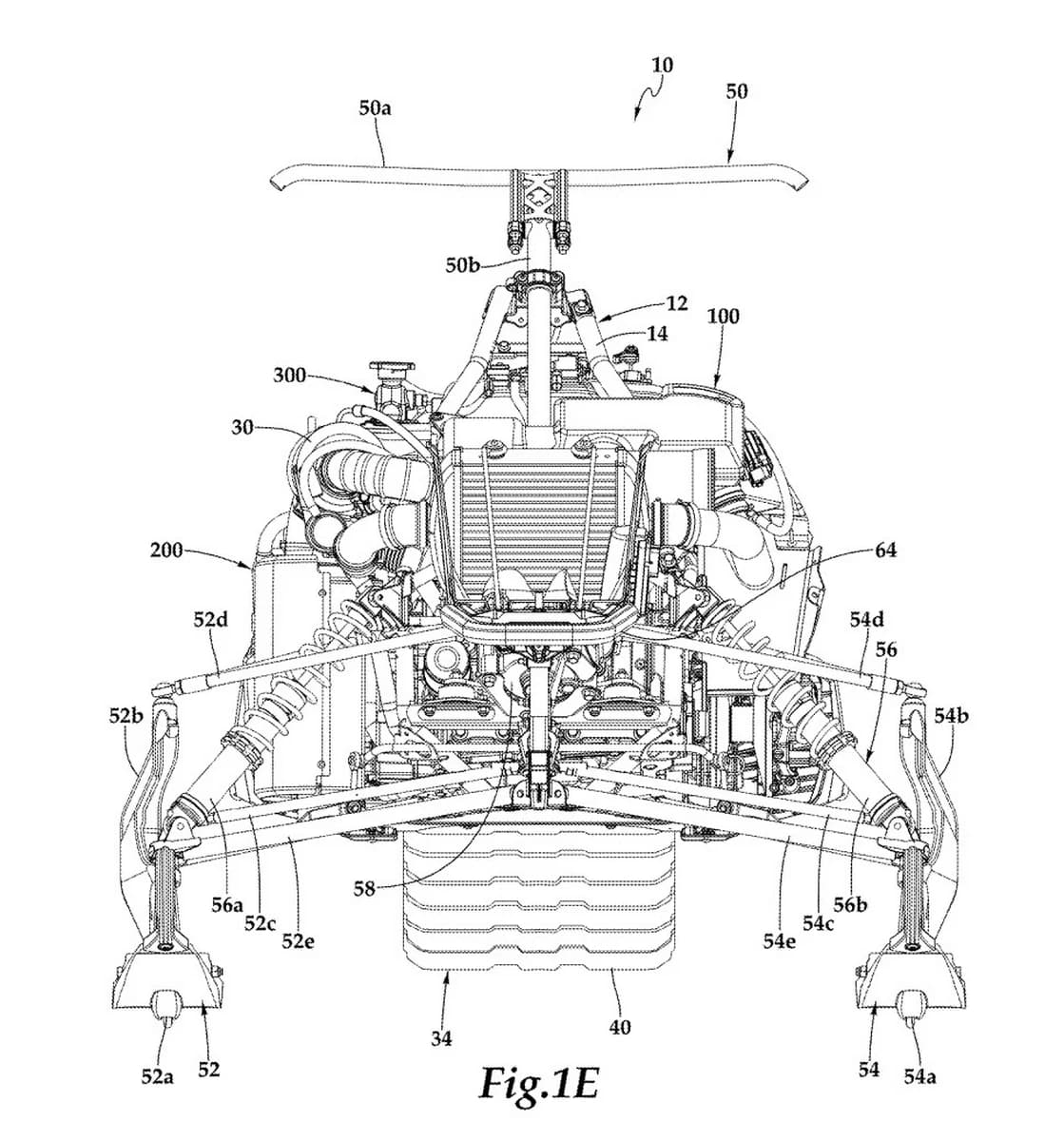
The Catalyst naturally calls for a different engine
Since its launch, the Catalyst has sparked the same thought among many observers: this chassis feels ready for more. It gives the impression of having been designed with room to evolve.
However, when discussing four-stroke engines, a well-known challenge reappears. The Yamaha engines historically used by Arctic Cat in certain four-stroke applications are well known for their reliability, but they are also large, long, and relatively heavy. Integrating that type of powerplant into a chassis as compact and centralized as the Catalyst quickly becomes an engineering puzzle.
The more you study the Catalyst geometry, the clearer one conclusion becomes: if Arctic Cat truly intends to exploit this platform with a modern four-stroke powertrain, the engine will need to be specifically designed for that environment.
A more compact engine. Lower. More integrated.
Arctic Cat already has a solid foundation
One aspect that is often forgotten in public discussions is that Arctic Cat is not new to four-stroke engines. The St. Cloud facility has been producing four-stroke engines for the brand’s ATVs and side-by-sides for several years. That means the company already possesses in-house expertise in engine design, calibration, and manufacturing.
Of course, that does not guarantee anything for snowmobiles. But it significantly changes the perspective. The brand already has the technical capabilities required to develop a dedicated engine if it chooses to move in that direction.
And in a context where the new ownership clearly wants to reposition Arctic Cat at the centre of the technical conversation, an in-house engine would become a powerful symbol.
Why the turbo three-cylinder hypothesis makes sense
Even though the patent does not explicitly describe the internal engine architecture, several clues suggest a compact configuration. In the power sports world, a turbocharged three-cylinder engine often represents a particularly interesting compromise. It offers smoother operation than a twin while remaining shorter and more compact than an inline-four.
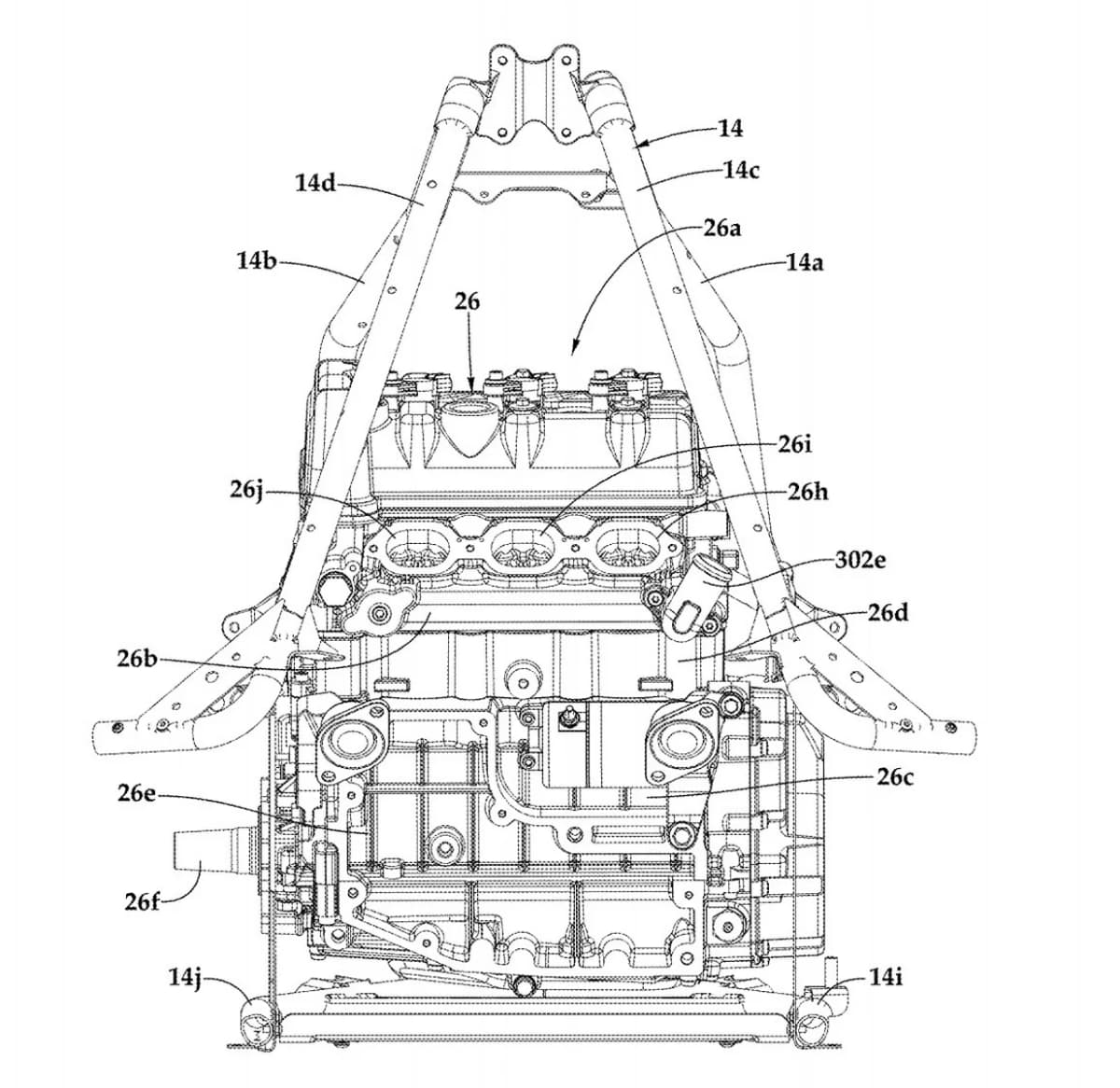
This type of architecture would allow the engine to sit very low in the chassis, fully respecting the Catalyst design philosophy. It would also make it easier to integrate the accessories and peripherals required by a turbo system without compromising mass centralization.
And that is where everything starts to make sense. The real challenge of a turbocharged four-stroke snowmobile is not just power. It is everything surrounding the engine: cooling, intake routing, exhaust management, thermal control, and long-term durability. The patent analysis shows very specific attention being paid to these aspects.
An Industry in Transition
It is also important to place this within the broader context. Arctic Cat recently experienced a change in ownership. The new leadership includes individuals deeply rooted in the industry, and the early signals suggest a clear desire to restore a strong and distinctive identity to the brand.
Historically, when a manufacturer truly wants to reposition its image, it does so through technology. A modern engine, developed internally and perfectly integrated into a platform like the Catalyst, would send an extremely powerful message.
A Realistic Timeline
We should remain cautious. A patent, no matter how intriguing, does not mean a production model will appear next season. Development cycles in this industry are long. Between prototypes, field testing, real-world validation, and industrialization, the process can easily stretch over several years.
Based on typical timelines, a potential four-stroke Catalyst model would more realistically appear somewhere between 2028 and 2030. Not tomorrow—but certainly not out of reach either.
The Puzzle Is Starting to Take Shape
The Catalyst never really looked like a simple transitional platform. It feels more like a foundation. When we carefully examine the technical clues currently available, it becomes reasonable to believe that Arctic Cat is actively exploring a new approach to four-stroke engines—possibly turbocharged, compact, and designed specifically to integrate naturally within the modern architecture of the chassis.
Nothing is confirmed. Nothing has been announced.
But in our industry, major evolutions rarely begin with a press release. They begin with technical clues that, once assembled, already point in a direction.
And right now, that direction seems to be pointing toward something significant.