

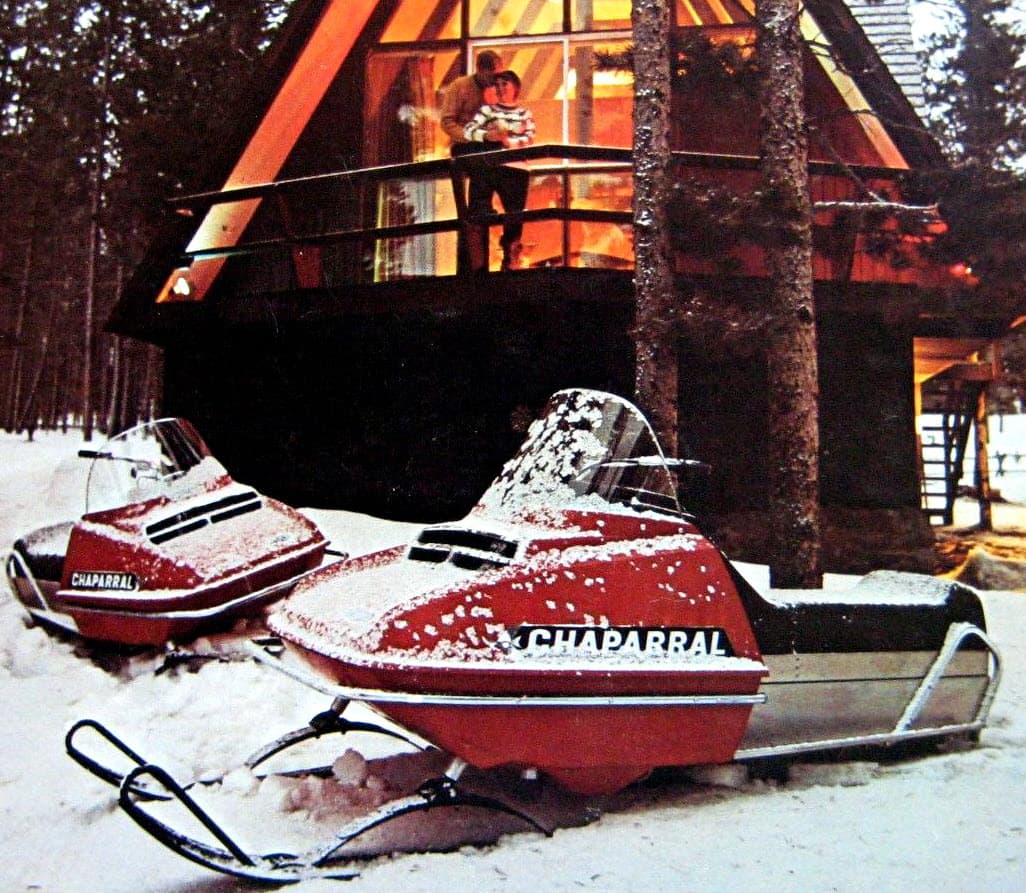

In the history of North American snowmobiling, Chaparral occupies a unique place. Active for only a few years in the early 1970s, the brand nonetheless built a strong reputation thanks to snowmobiles that were high-performing, innovative, and firmly oriented toward sports riding.
Chaparral never sought to become a mass-market manufacturer. Instead, it targeted a niche audience of enthusiasts drawn to lightweight, powerful machines that were technically more advanced than the industry average of the era. Though its existence was brief, Chaparral’s legacy remains very much alive among vintage snowmobile enthusiasts and collectors.
Solid and Well-Structured Industrial Origins
The Chaparral brand took shape in the late 1960s, amid explosive growth in the North American snowmobile market. At the time, many manufacturers were emerging, but very few had a truly structured industrial foundation from the outset.
Chaparral was part of that minority. Its first production facilities were located in Colorado, initially in the western part of the state and later in the Denver area. This choice was far from accidental: altitude, harsh climate, and proximity to mountainous terrain provided an ideal environment for testing snowmobiles under demanding conditions.
The brand also benefited from the backing of an external industrial group rooted in heavy manufacturing. This support allowed Chaparral to quickly access capital, modern production tools, and engineering resources that far exceeded those of many small, independent builders. From the start, this reality set Chaparral apart.
Chaparral’s DNA: Performance, Lightweight Design, and Advanced Engineering
From its earliest models, Chaparral embraced a no-compromise philosophy: reduce weight, improve handling, and push technical boundaries.
At a time when many snowmobiles still relied on heavy chassis and simplified designs, Chaparral chose to explore alternative paths:
- Extensive use of aluminum;
- Riveted and extruded tunnels;
- A more rigorous approach to chassis rigidity and weight distribution.
This engineering-driven mindset resulted in machines that were more agile, quicker to accelerate, and often more precise at high speeds. Chaparral clearly targeted sport-oriented riders—often experienced—seeking real performance rather than simple winter transportation.
A Model Lineup Structured Like That of an Established Manufacturer
Unlike many short-lived brands of the era, Chaparral did not offer a hastily assembled lineup. By the early 1970s, its range was clearly organized into series. Distinct models addressed specific uses: trail performance, versatile sports riding, and competition-focused experimentation.
This structured approach reflected a long-term vision and a clear intention to position Chaparral as a credible manufacturer capable of competing technically with already well-established brands.
Chaparral’s Landmark Snowmobiles
Although the brand existed for only a few seasons, Chaparral left behind several standout models that are now recognized for their technical approach and unapologetically sportive character.
Chaparral Firebird
The Firebird is, without question, the brand’s most iconic model. It perfectly embodies Chaparral’s philosophy of high-speed trail performance.
Designed for sports riders, the Firebird clearly set itself apart from the competition. Its relatively lightweight chassis for the time featured geometry that favoured agility. It was powered by lively two-stroke engines, and its riding position and setup emphasized precision and responsiveness over comfort.
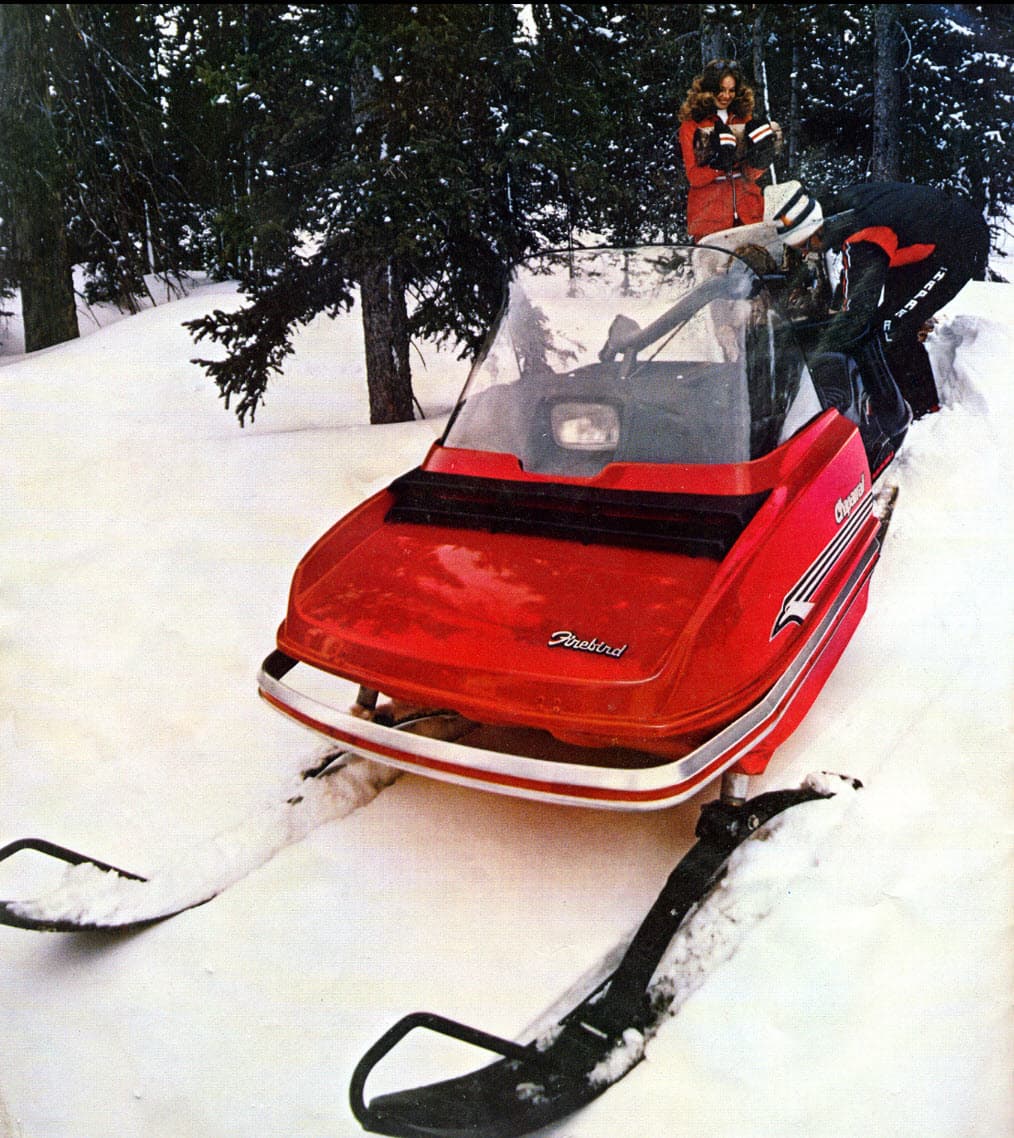
1973 Chaparral Firebird.
Key Features and Innovations:
- Trail-focused performance orientation;
- Lightweight chassis with extensive aluminum use;
- Steering and suspension tuned for agility;
- Image closely tied to amateur racing.
Chaparral SS III
The SS III represents the technical pinnacle of the Chaparral lineup. It is the model that pushed the pursuit of an optimal strength-to-weight ratio the furthest.
Offered in several engine displacements, the SS III stood out for its meticulous design, careful attention to geometry, and optimized weight distribution. It was aimed at experienced riders seeking a demanding but extremely effective machine at sustained speeds.
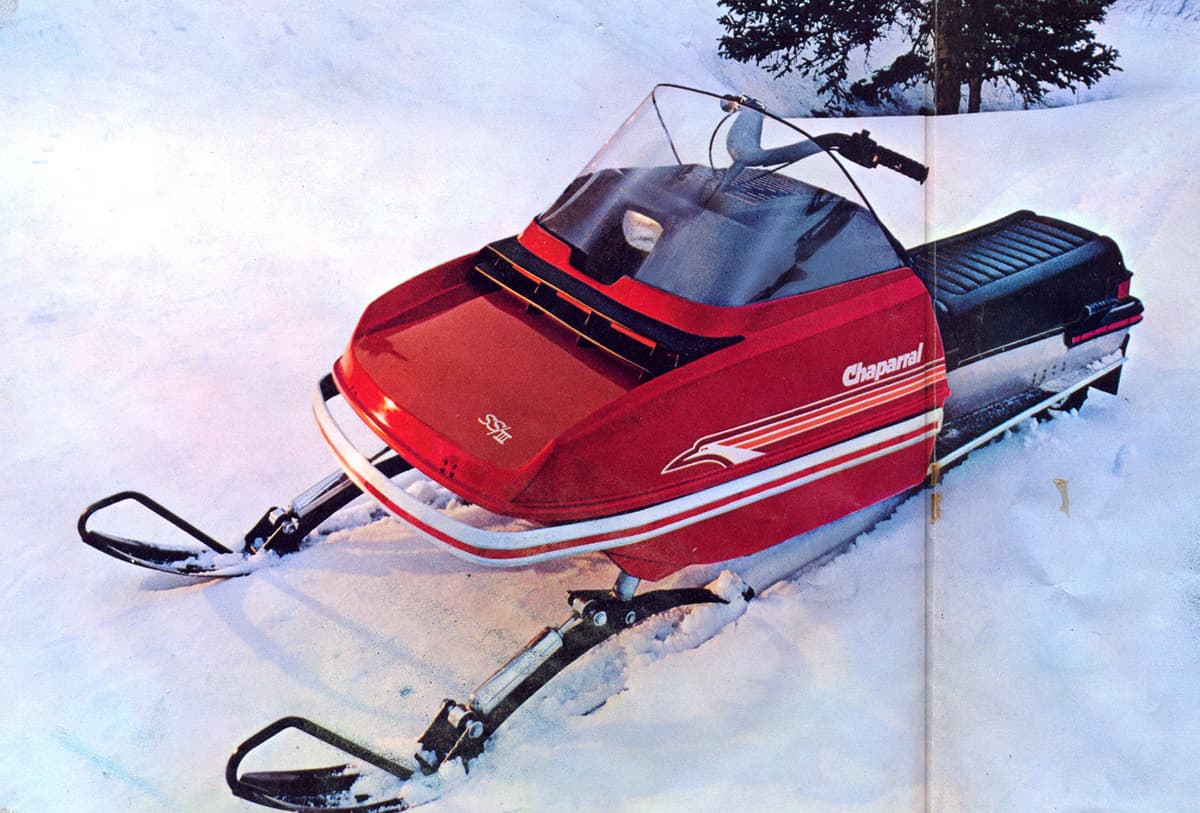
1973 Chaparral SS III.
Key Features and Innovations:
- Chassis optimized for pure performance;
- Lightweight components and rigorous design;
- Geometry favours high-speed stability;
- Widely regarded as the most technically refined Chaparral.
Chaparral Thunderbird
The Thunderbird adopted a more versatile approach while retaining the brand’s sportive DNA.
It struck a balance between sustained performance and longer trail rides. The riding position was slightly more comfortable without sacrificing dynamic handling. This model appealed to riders seeking a fast machine that was more forgiving over extended distances.
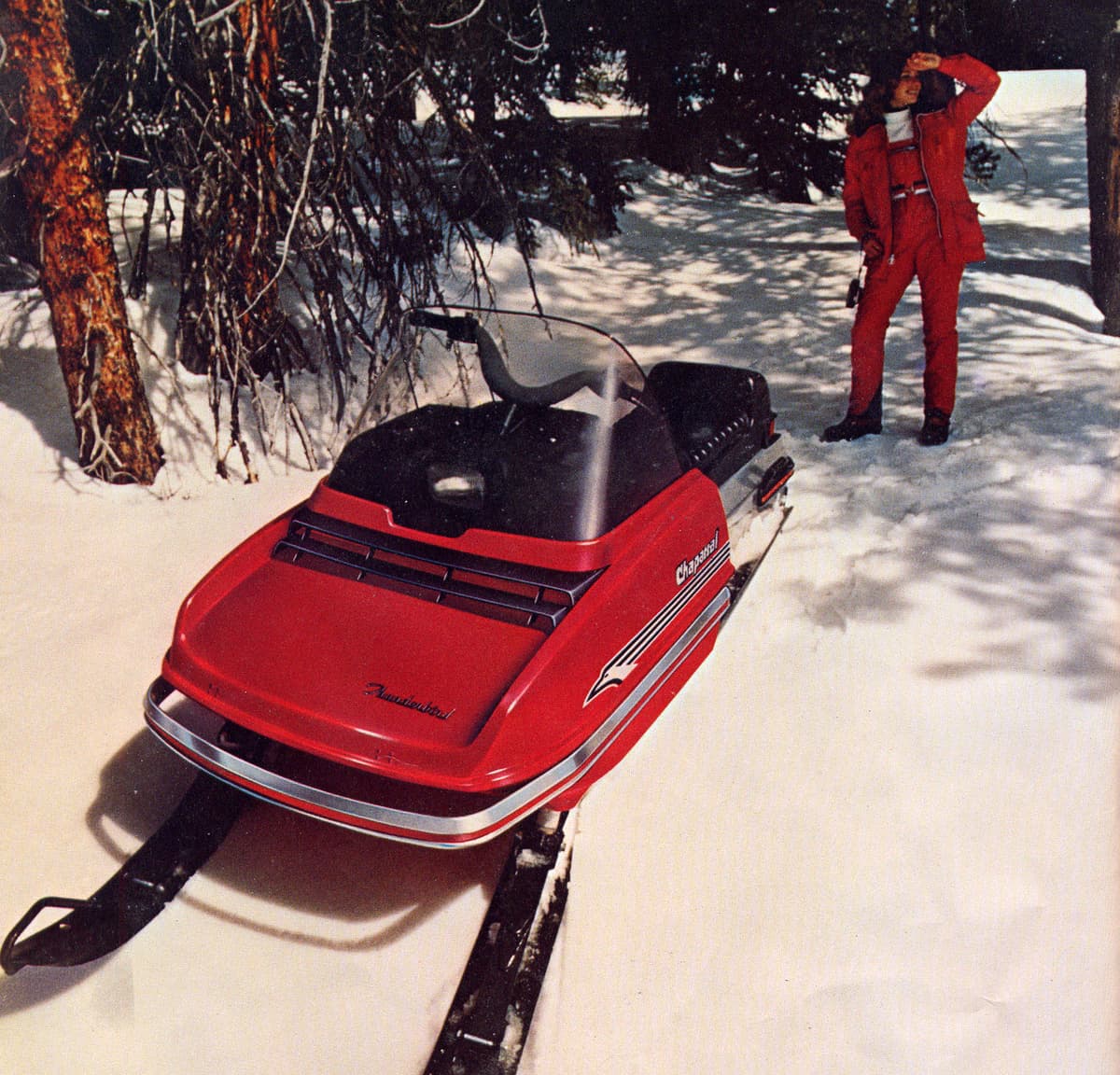
1973 Chaparral Thunderbird.
Key Features and Innovations:
- Versatile model within the lineup;
- Stability and predictability at trail speeds;
- Improved comfort compared to pure sports models;
- Designed for sports touring.
Chaparral SSX (Racing and Experimentation)
The SSX models were the most radical snowmobiles developed by Chaparral, built primarily for competition and technical experimentation.
These machines served as rolling laboratories, allowing engineers to explore advanced solutions in geometry, suspension, and chassis rigidity. Some versions tested forward-thinking concepts, including early forms of independent front suspension—extremely rare in the industry at the time.
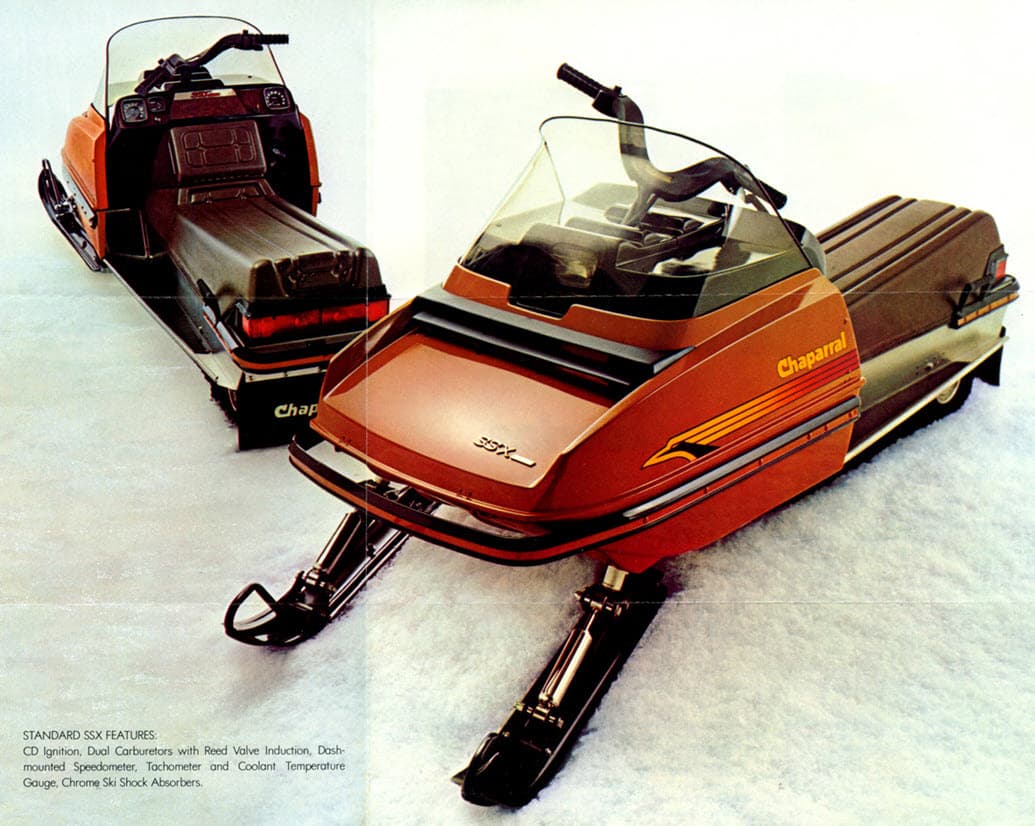
1974 Chaparral SSX.
Key Features and Innovations:
- Development focused on racing and experimentation;
- Test platforms for future innovations;
- Bold technical solutions, sometimes ahead of their time;
- Direct contribution to the brand’s sporting credibility.
Racing as a Development Driver
Although Chaparral lacked the financial resources to dominate major professional racing series, competition played a central role in its development. Local and regional races served both as showcases and test beds.
Lessons learned through racing directly influenced production models, particularly in terms of chassis rigidity, high-speed behaviour, and the durability of components under extreme stress.
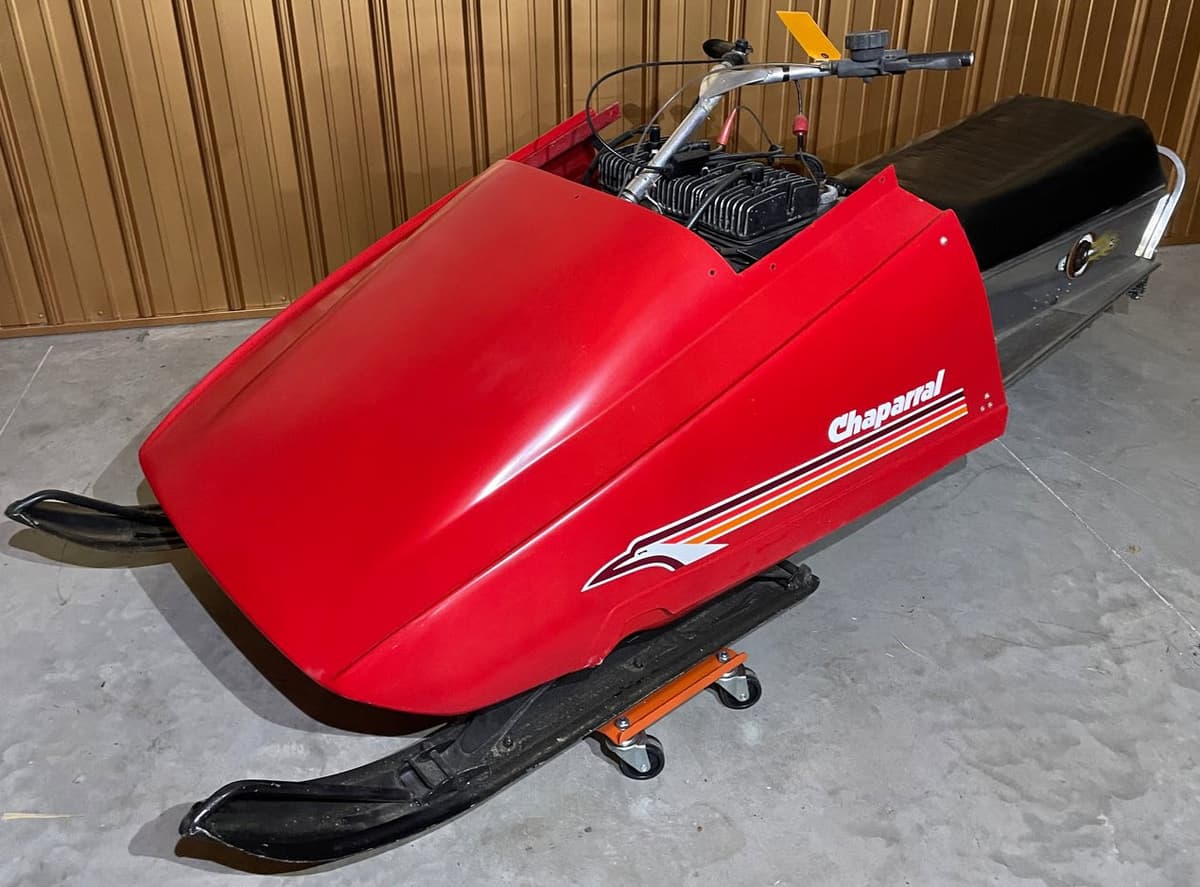
1972 Chaparral Race Sled.
An Unfavourable Economic Climate
Chaparral’s disappearance occurred within a particularly difficult economic context. After several years of rapid growth, the snowmobile market experienced a sharp slowdown in the early 1970s.
Rising energy costs, widespread economic uncertainty, and less favourable winters led to a sudden drop in demand. Manufacturers were left with large inventories, high fixed costs, and increasing financial pressure.
For emerging brands—even those with strong technical foundations—room to maneuver became extremely limited.
An Abrupt End Driven by Industrial Logic
In this environment, Chaparral abruptly ceased operations in 1974. Backed by an external industrial group, the brand lacked the flexibility of an independent builder willing to absorb prolonged losses.
As soon as profitability prospects dimmed and risks increased, the decision to shut down the snowmobile program was made quickly. This disappearance was not the result of a technical failure, but rather a strategic decision typical of an industry undergoing consolidation.
The Chaparral Legacy
Today, Chaparral snowmobiles are highly sought after by collectors and industrial history enthusiasts. They symbolize an era when technical innovation sometimes moved faster than the market’s ability to absorb it.
Chaparral left behind the image of a bold manufacturer. Firmly focused on performance, the company disappeared too soon to fully realize its potential.
Chaparral: A Shooting Star in Snowmobiling History
Chaparral existed for only a few seasons, but it left a lasting mark. In the history of former snowmobile manufacturers, it embodies those visionary brands that dared to push technical limits, even when confronted by unforgiving economic realities.
A shooting star—brilliant… and all too brief.
Coming Up in the Series Former Snowmobile Manufacturers
In the next article, we will examine a very different kind of player: OMC (Johnson/Evinrude).