

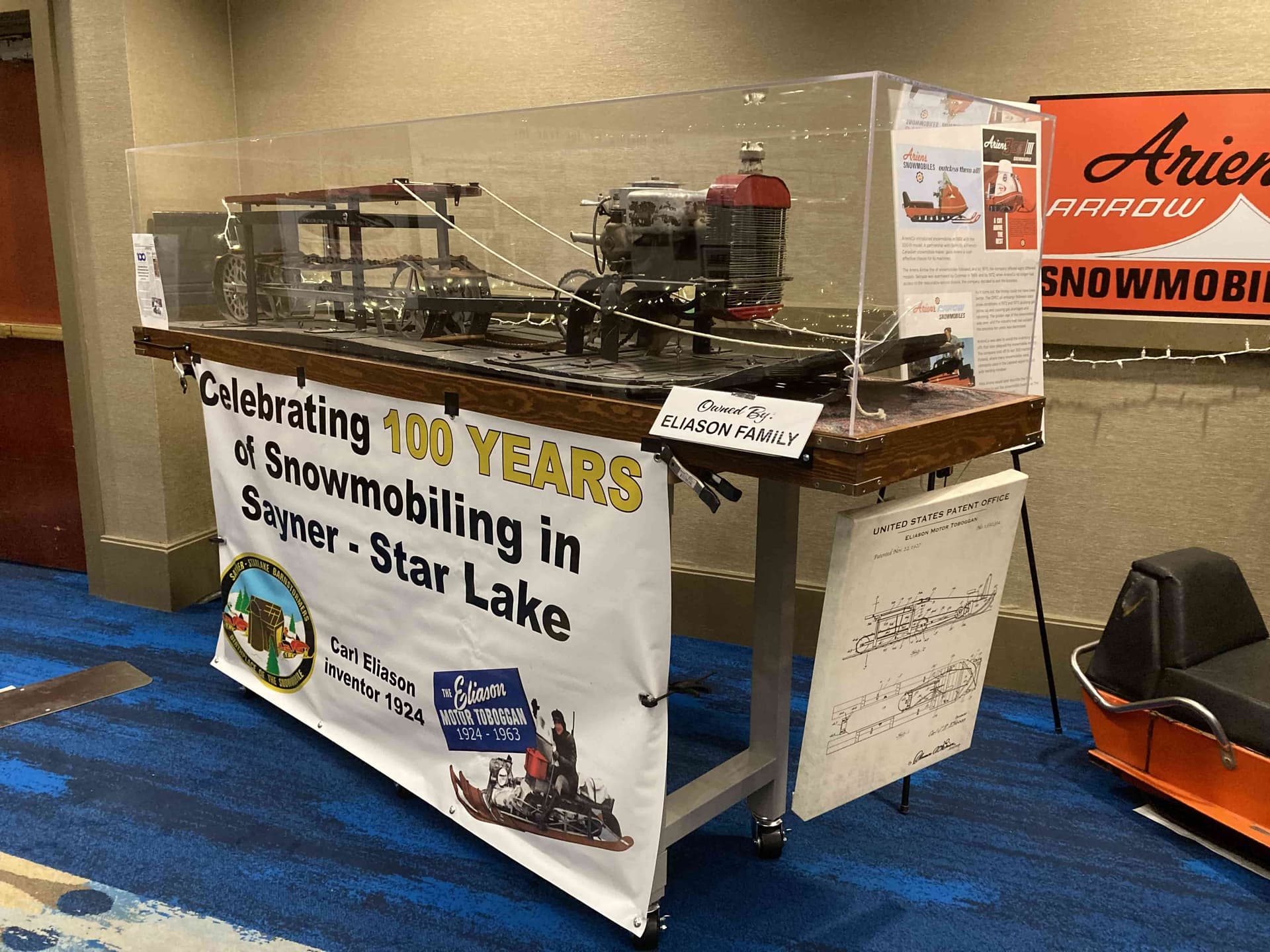

The story of the Eliason Motor Toboggan, a machine that forever shaped snowmobile history, continues in this second and final chapter of our series. After exploring the origins of Carl Eliason’s invention and the very first Eliason snowmobile in Part 1 (click here to read it), we now turn to the years that transformed a homemade prototype into a true industry milestone.
In this concluding article, we trace the commercial leap of the Motor Toboggan, the evolution of its models, and the growing impact of Eliason’s design on the development of modern snowmobiles.
Eliason Motor Toboggan Phase 1: Sayner, Wisconsin (1924–1939)
After the creation of the first Eliason snowmobile in 1924, there were 15 continuous years of production at Sayner, WI. The first machine was comparatively small to the “snowmobiles” built in the 1950s and early 1960s by others. It took Carl two years to build the first, while he also worked in his general store.
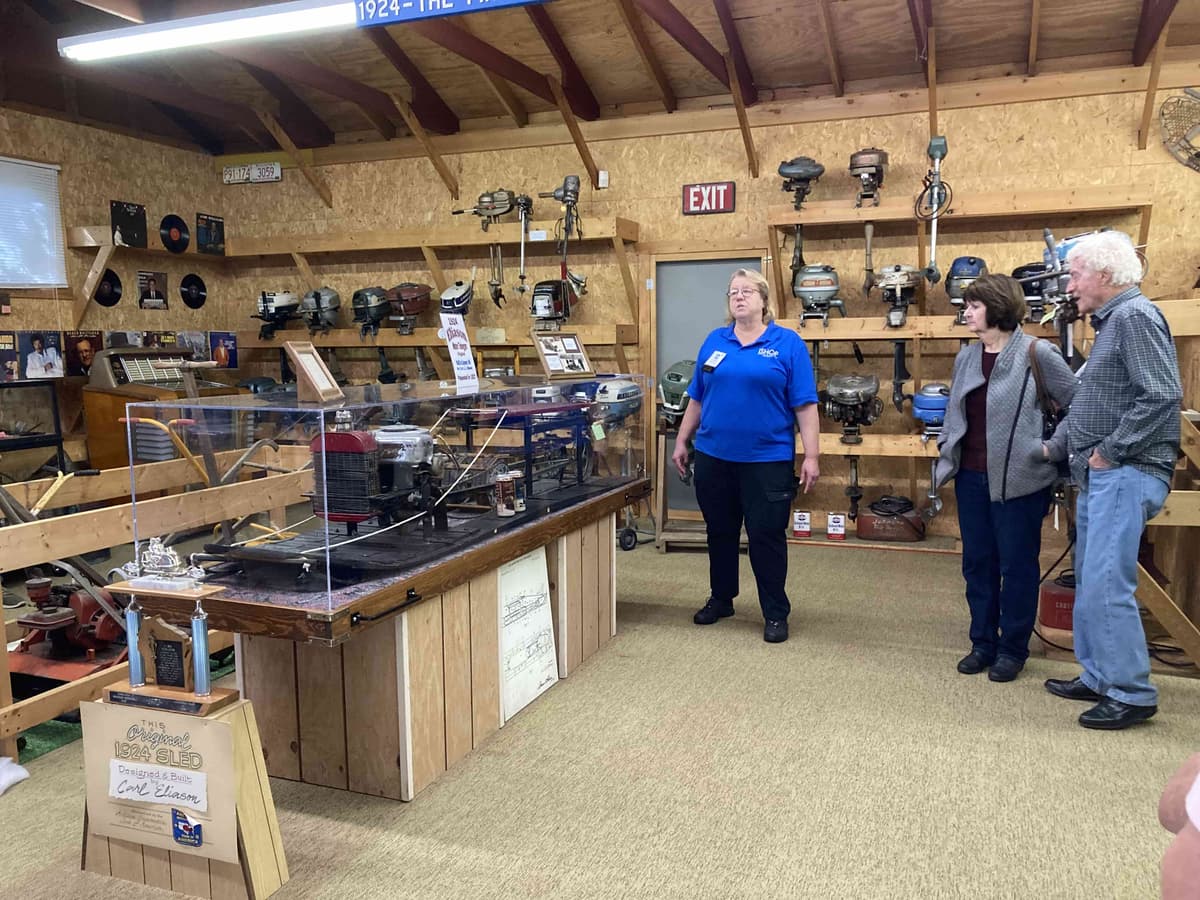
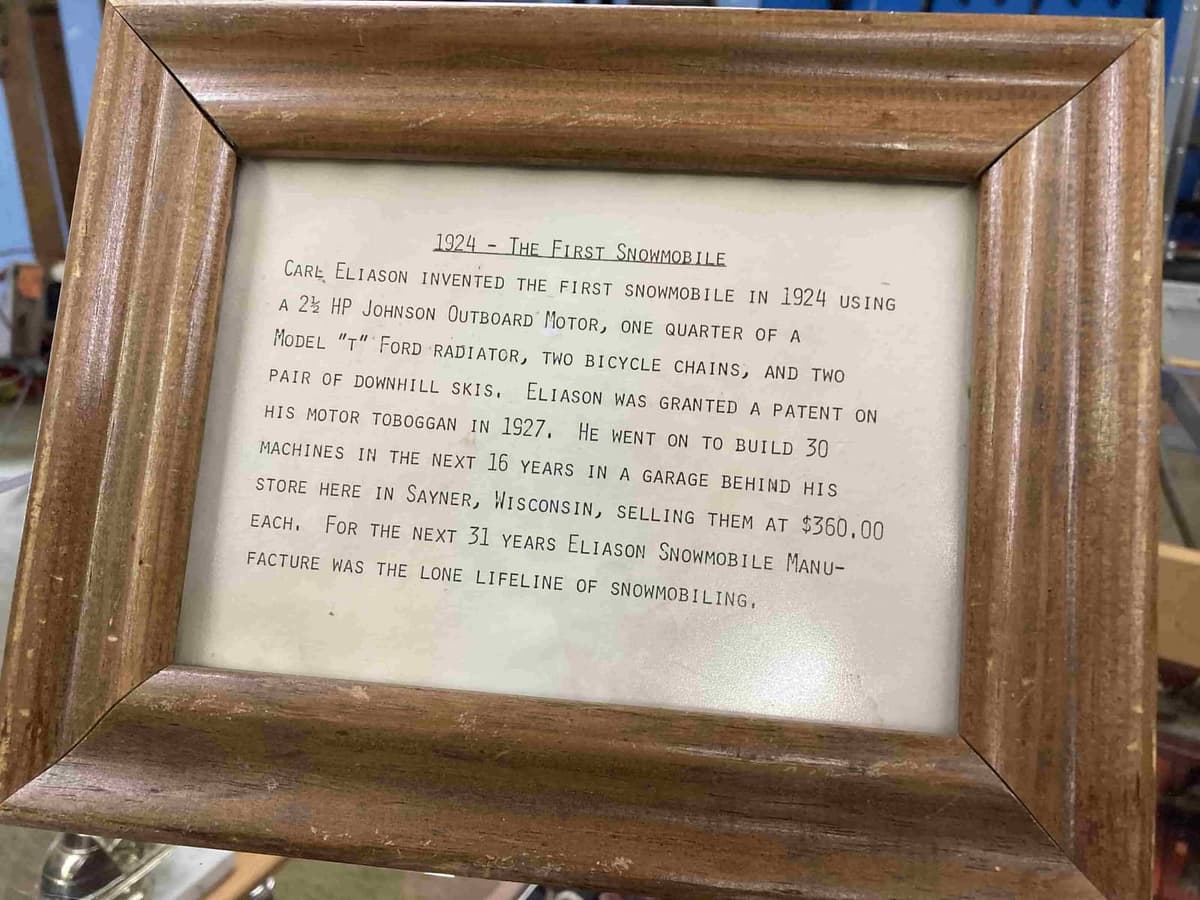
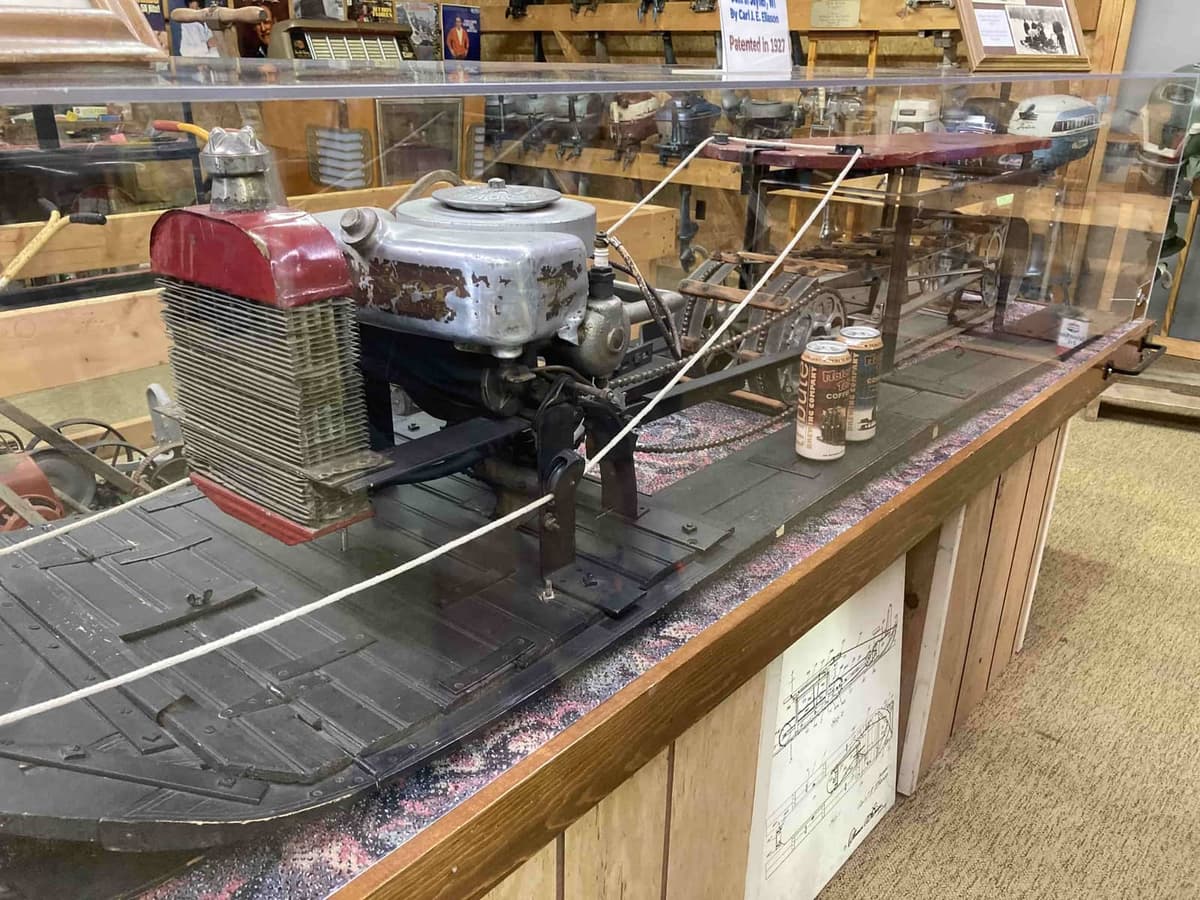
“It incorporated a front-mounted liquid-cooled 2½ horsepower outboard engine, endless track drive fashioned with bicycle sprockets and chains, wood slide rails and cleats, conveyor belt webbing for flotation. A section of a Ford Model T radiator was used for cooling the outboard engine. Four snow skis formed the major portion of the toboggan. Two shorter skis, mounted under the front of the toboggan and controlled by a rope, steered the machine. A seat was installed over the length of the floating track.”—Carl Eliason & Co. Inc. @ Copyright 1998
It worked as intended.
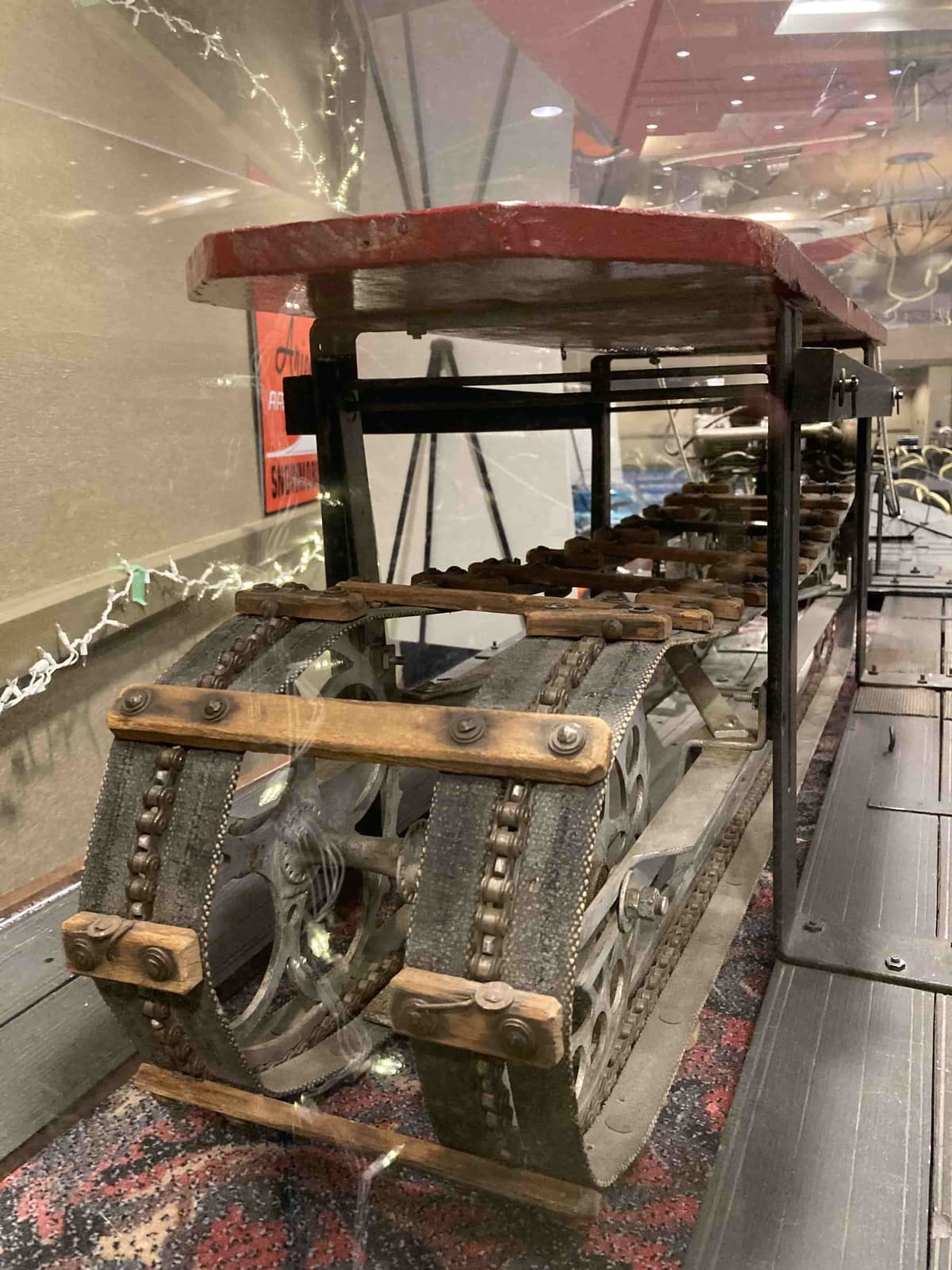
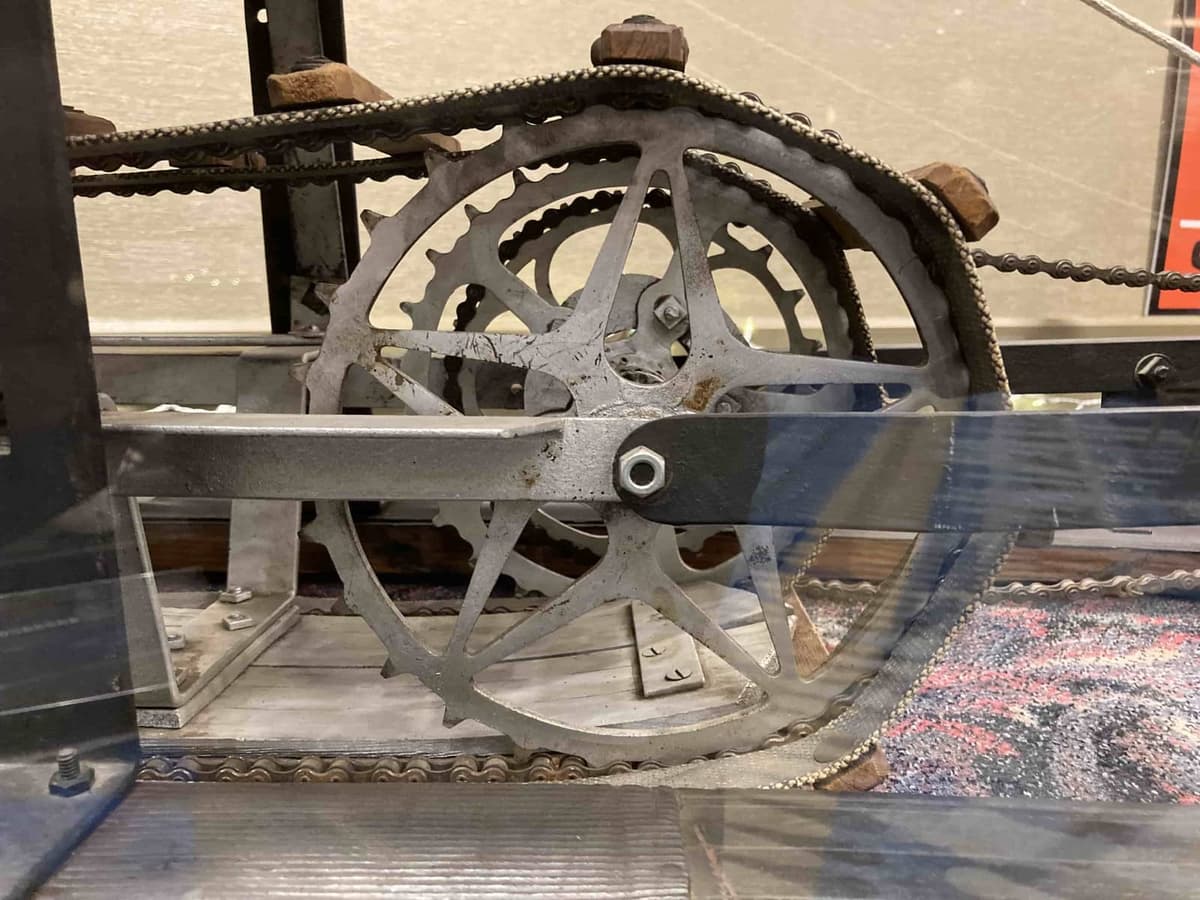
In the 15 years of production at Sayner it is estimated that approximately 40 units were produced. Records indicate that no three units were alike.
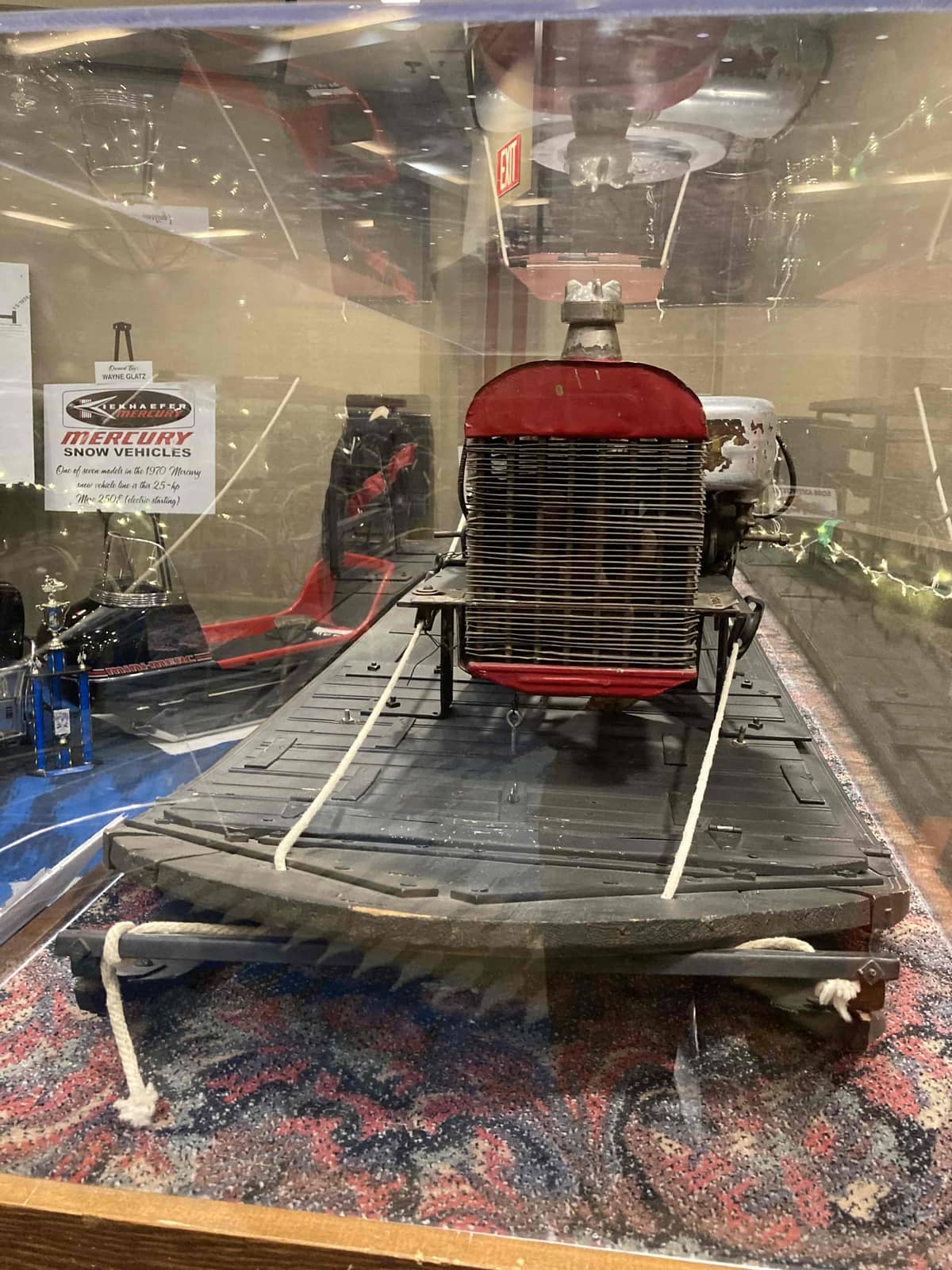
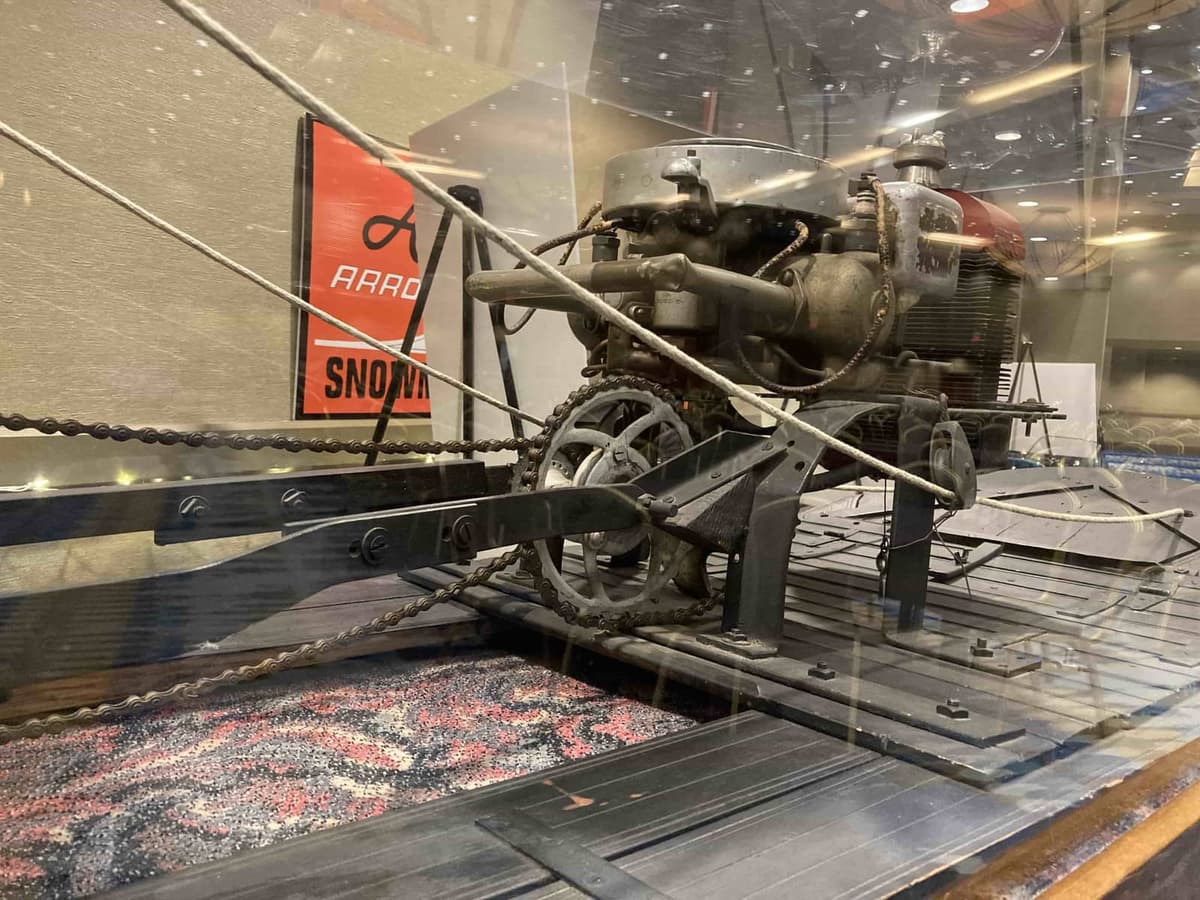
I have had the pleasure of seeing the original 1924 Eliason a couple of times now. On both occasions I was accompanied and educated by Jona Eliason, Carl’s granddaughter.
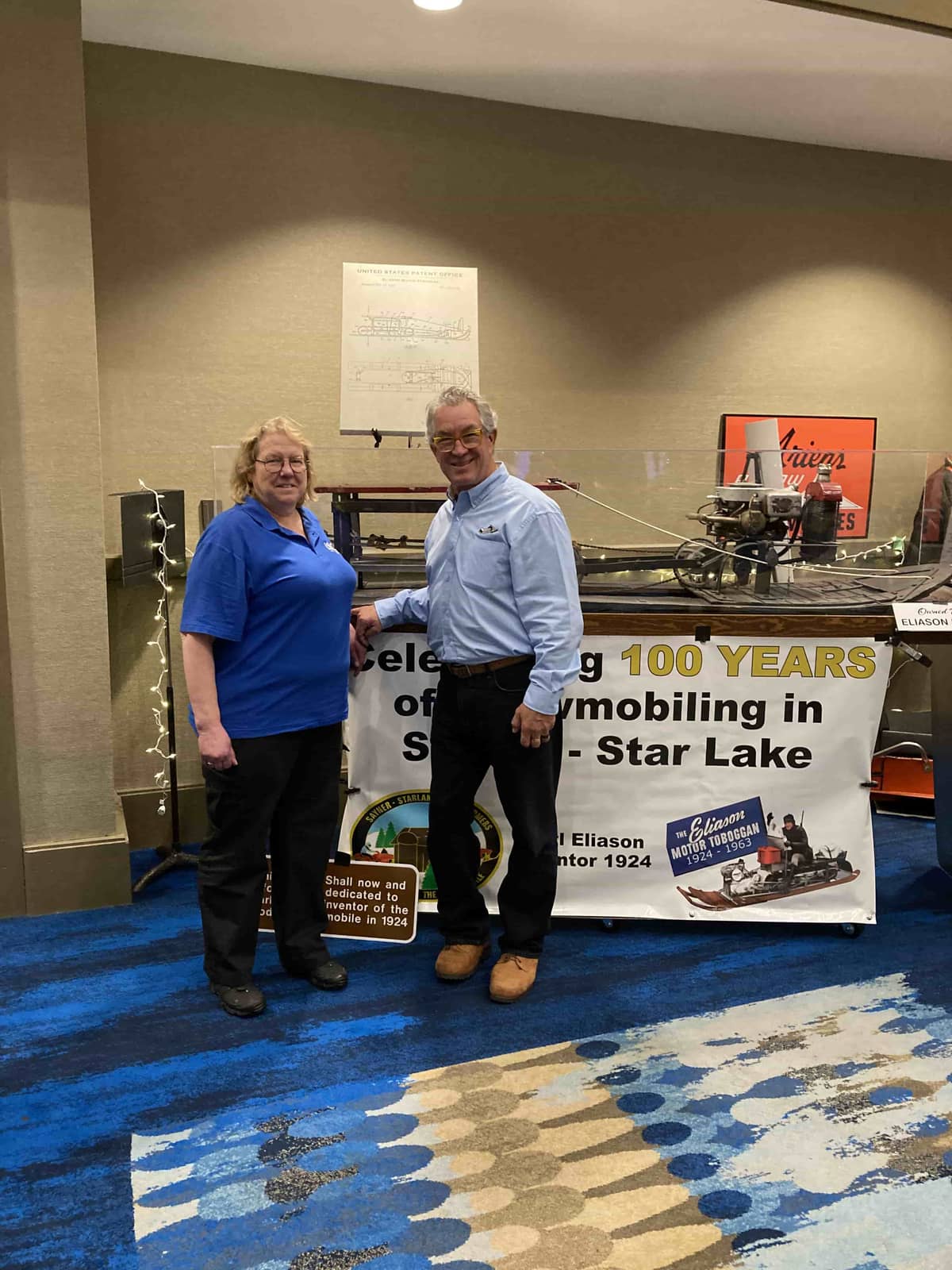
Jona explained; none of the snowmobiles were identical for a few reasons. First, Carl’s customers were always asking for improvements; for hunting, trapping, fishing and more capacity. There also was not a consistent supply of available engines. What was available for motorcycles is what had to be utilized, whether it be a 2 cylinder or 4 cylinder. Some were better performing than others. It was availability or the lack thereof, which determined what the next snowmobile would be manufactured with.”
One thing that can be seen in the older photos owned by the Eliason family today is the progression of the size of some units. Seating climbed to be able to accommodate up to four adults. Smaller units were powered by the Excelsior 2-cylinder power plant. Larger units received the Henderson 4-cylinder engine. Like today, the larger (4-cylinder) engine was sold for more than the smaller (2-cylinder); $550 vs. $350.
And like today, the Henderson (Eliason) had a go-fast name. Carl called the machine the “Frigid Flyer” and claimed it reached speeds of up to 70 miles per hour.
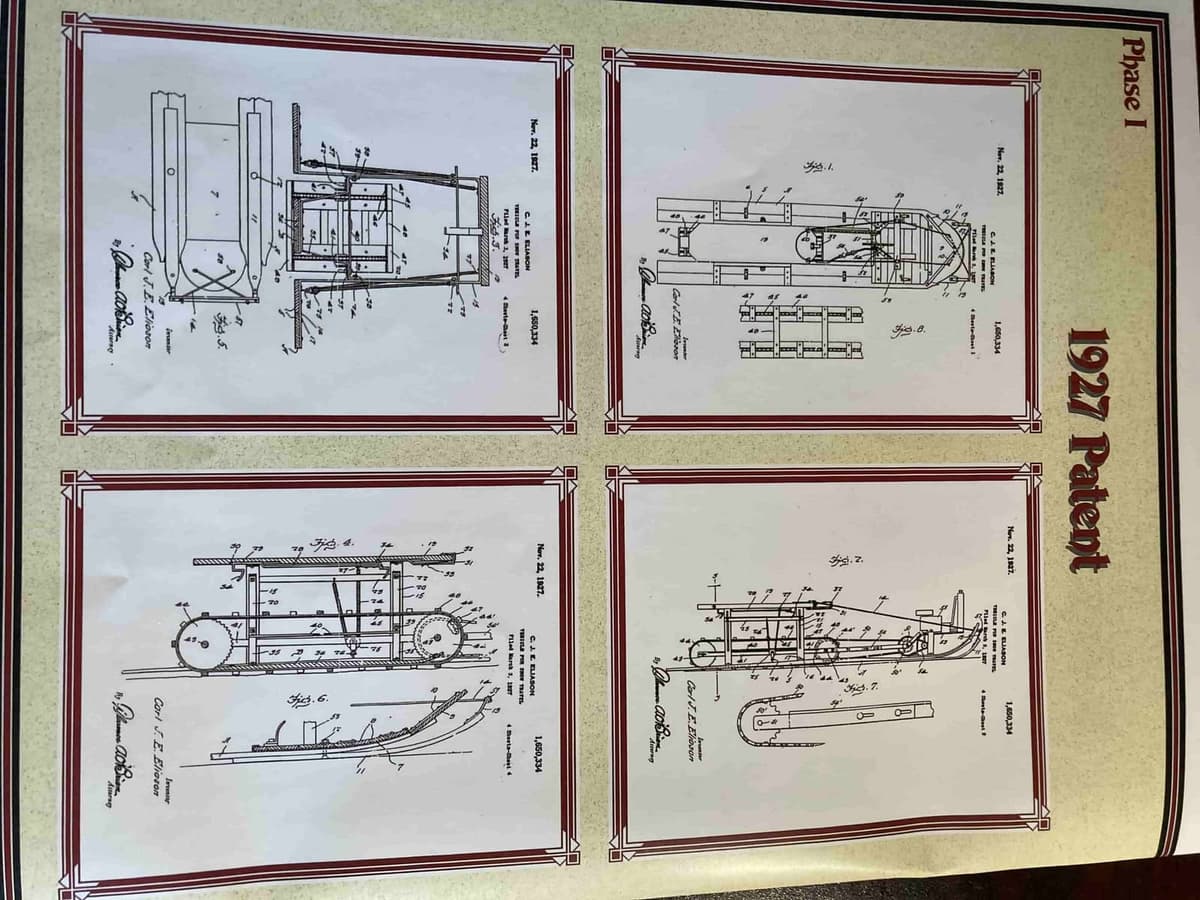
Throughout this period, however, the Eliason track and suspension concept—from his 1927 patent—was carried over on all units.
Eliason Motor Toboggan Phase 2: Clintonville (1940–1946)
The Eliason motor toboggan—snowmobile was gaining attention and familiarity beyond Wisconsin. For 15 years it had been marketed to the needs and interests of hunters, trappers and fishermen.
It was a large order from outside North America that changed the direction of Carl’s invention and the way his snowmobiles would be manufactured. At this time – 1939—an order for 200 units from Finland was received. Carl had himself and nine employees in his small shop.
Carl contacted the Four Wheel Drive Auto Company (FWD) of Clintonville, WI. He reached an agreement with FWD in 1940. Carl agreed to assign his patents. He would also remain as a prime consultant to the FWD Company.
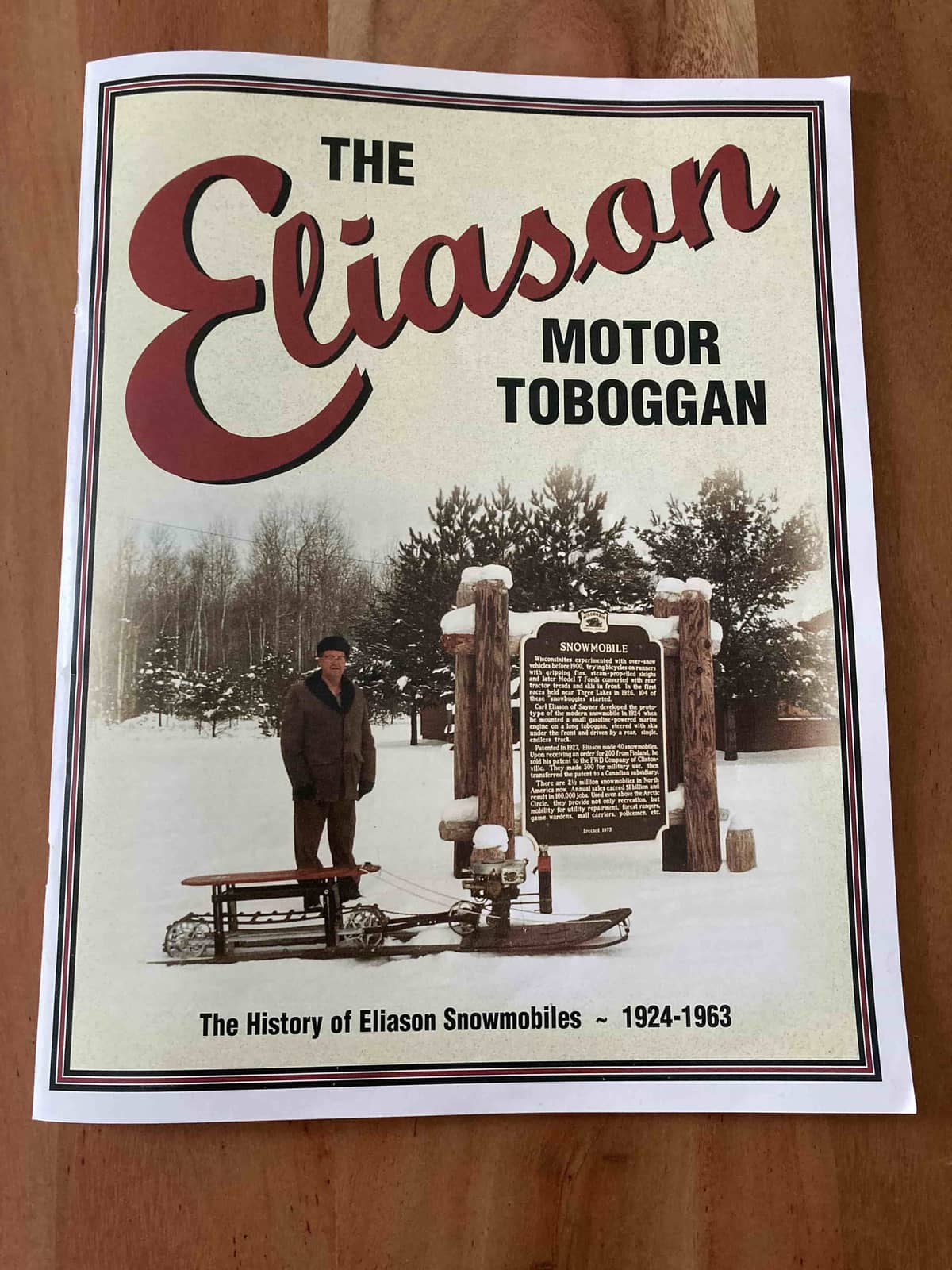
FWD would pay him a 2% royalty on all the units manufactured and sold by them. They would also provide all the marketing, worldwide. The name agreed upon was the Eliason Motor Toboggan.
FWD and the Commercial Expansion of Eliason Snowmobiles
“Four models were built by FWD from 1940 through 1946 in Clintonville, WI. The first was the Model ‘A’ which was virtually a copy of Carl’s smaller Sayner design. FWD made use of some tubular steel in its construction. The 25 hp Indian 45 Scout engine was selected due to its integral transmission. A pilot model ‘A’ machine was completed in the fall of 1940 and twenty-three (23) more were built shortly thereafter. […]The (Eliason) model ‘A’ is the first known factory produced single track snowmobile.”—Carl Eliason & Co. Inc. @ Copyright 1998
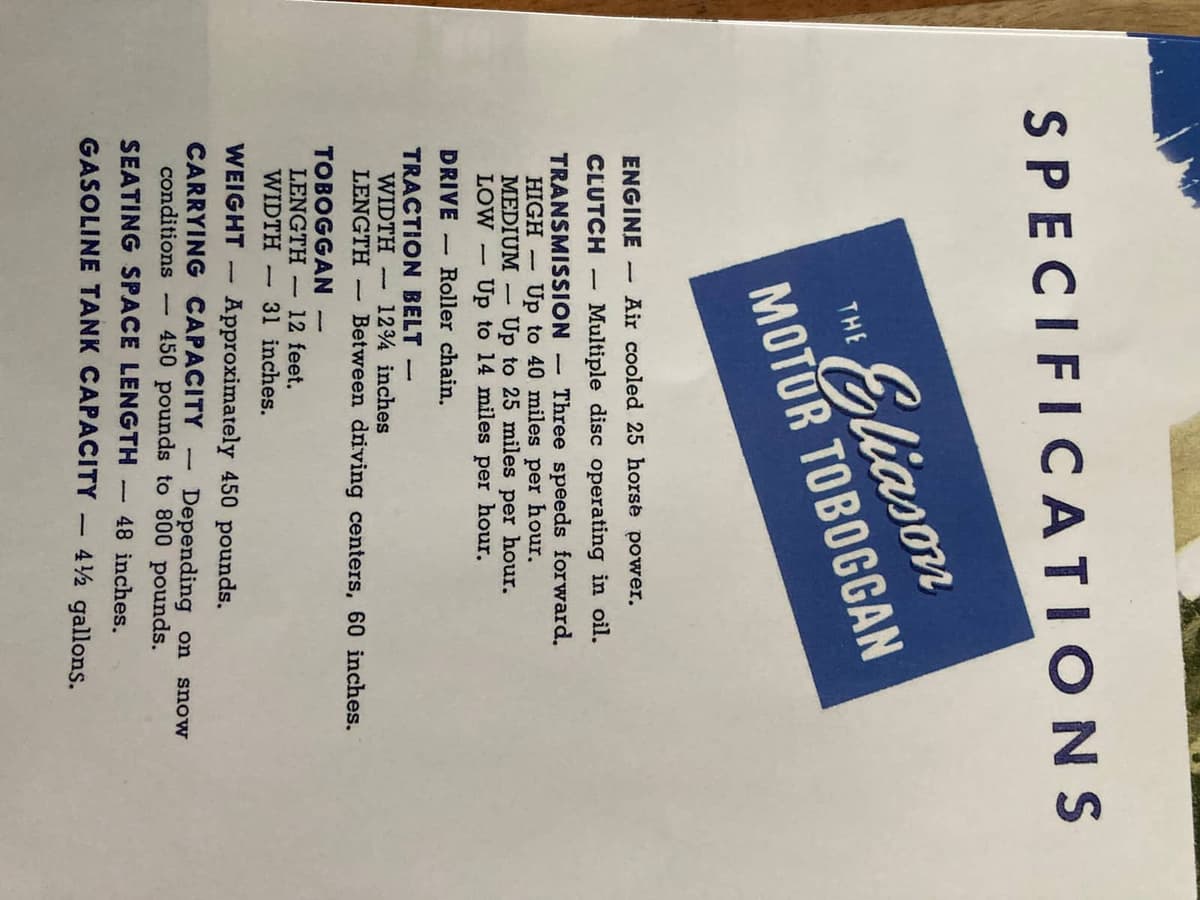
FWD immediately introduced promotional brochures for the Model A. They began by advertising the machine as The Eliason Snowmobile. This first brochure was produced by FWD in August 1940. A second brochure, later in 1940, marketed the machine as The Eliason Motor Toboggan. The machines in the brochures were based on the pilot Model “A”. This was the last model built by Carl Eliason at his shop in Sayner, WI.
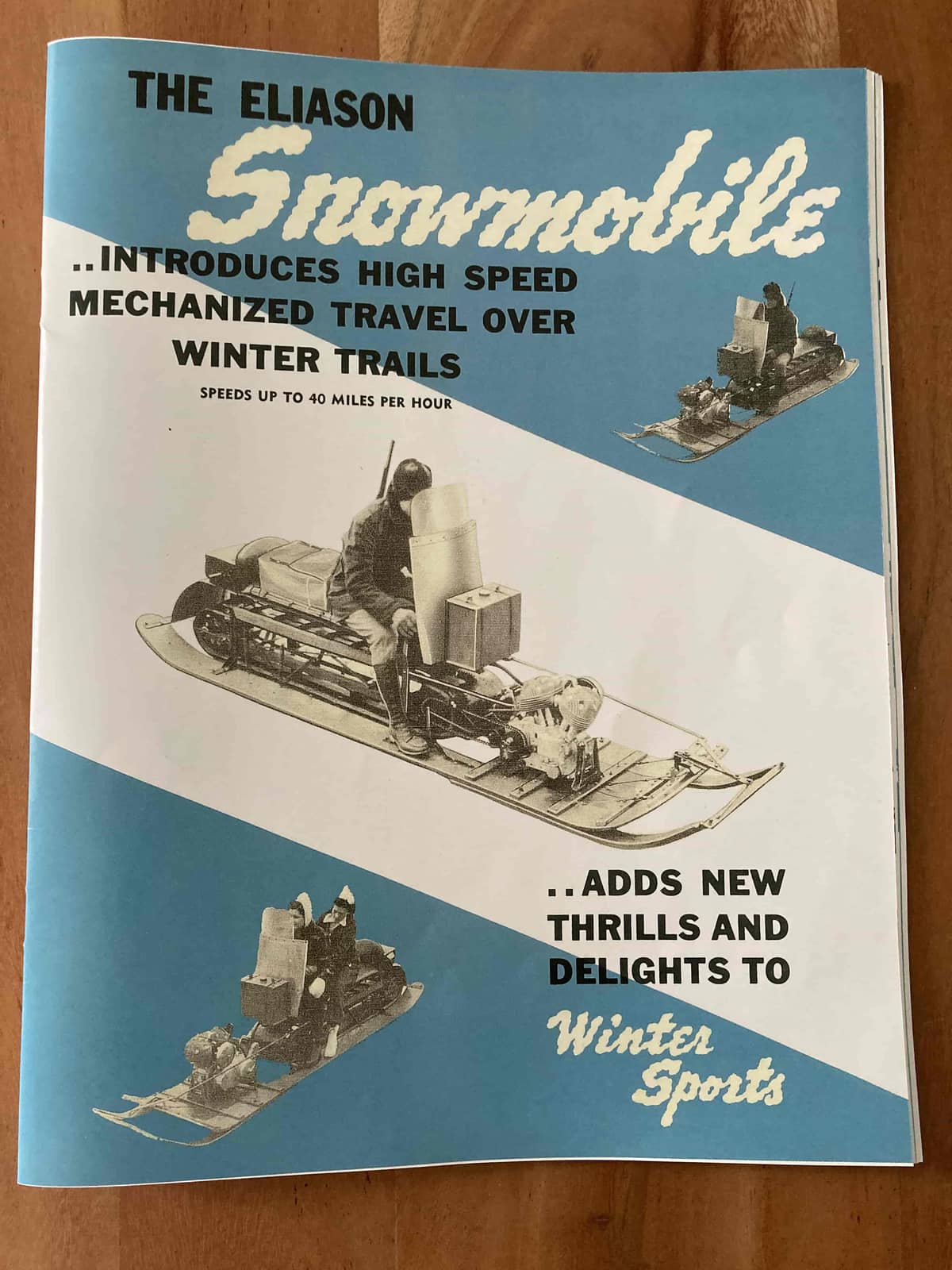
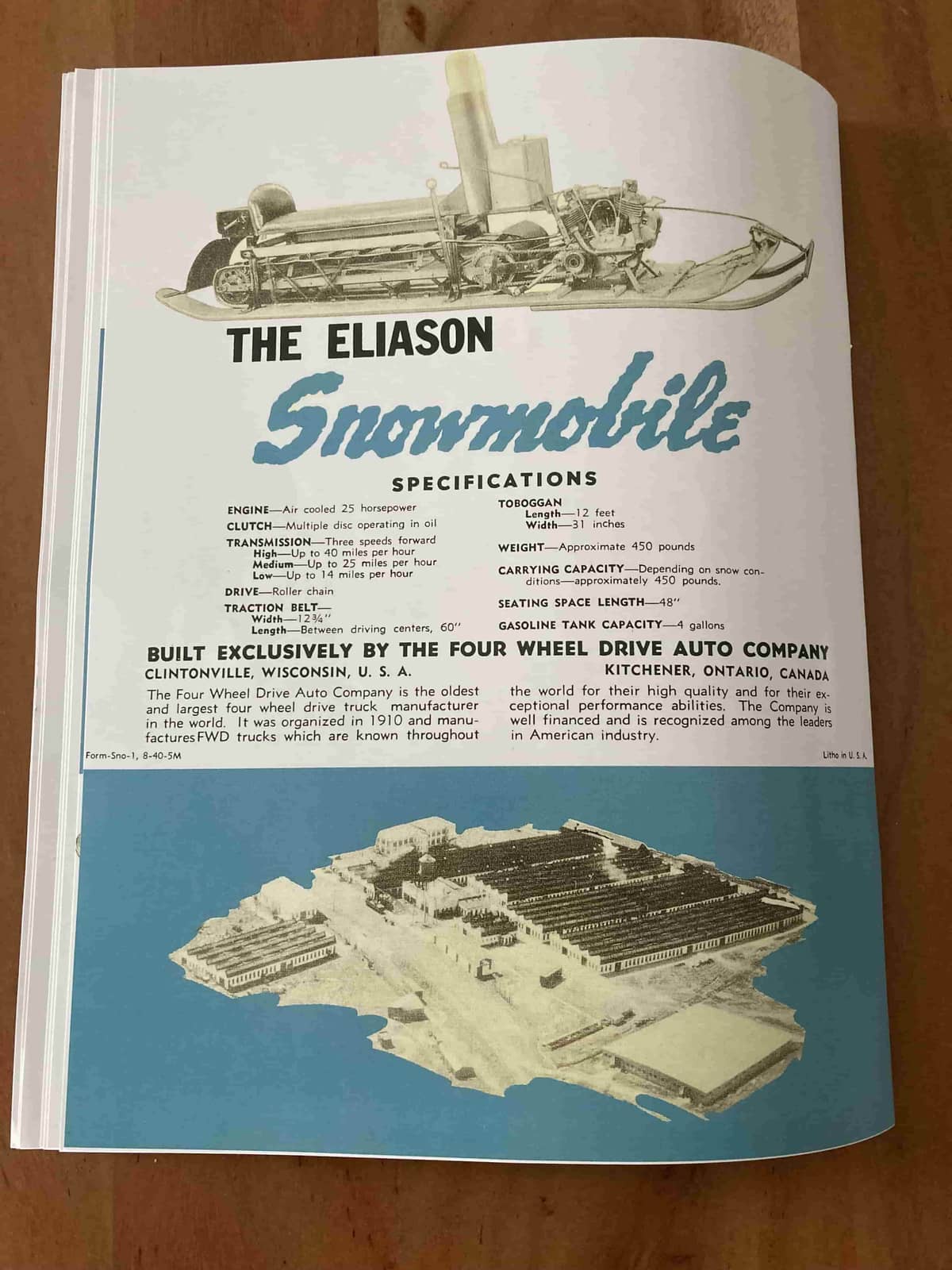
In addition to the Model A, there were also Models B, C, and D manufactured at Clintonville.
The year 1942 saw the introduction of Model B. Some of the modifications were a combination fuel and oil tank. There was a toolbox installed. The seat was modified and a second backrest was added.
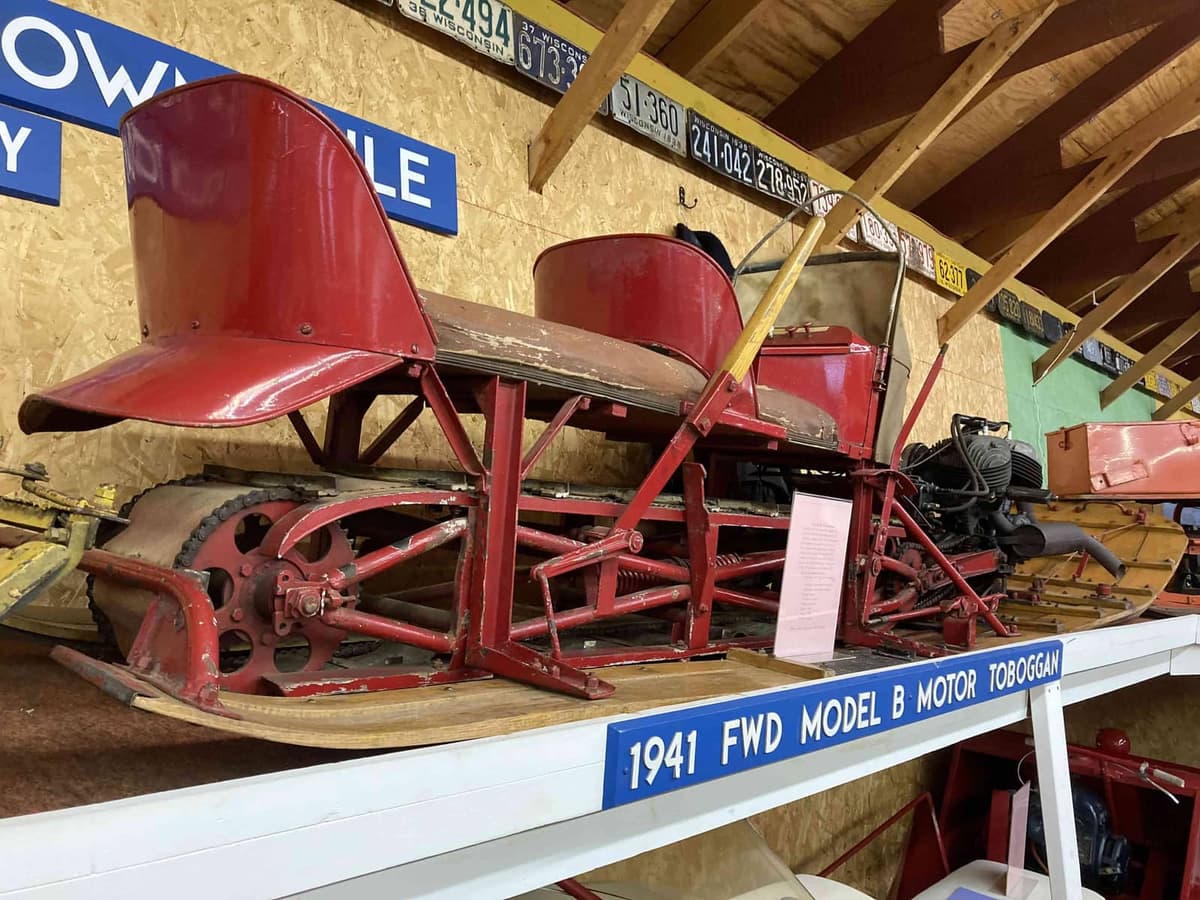
Model C, in 1943, made further improvements. Fuel capacity reached 10 gallons. The oil tank was repositioned. The new model had a tiller-type steering arm, while the units used an Indian Motorcycle twist-grip throttle. Both Models B and C were used during World War II. They were slightly designed with improvements to cover the exposed engine and sometimes added width to create better flotation.
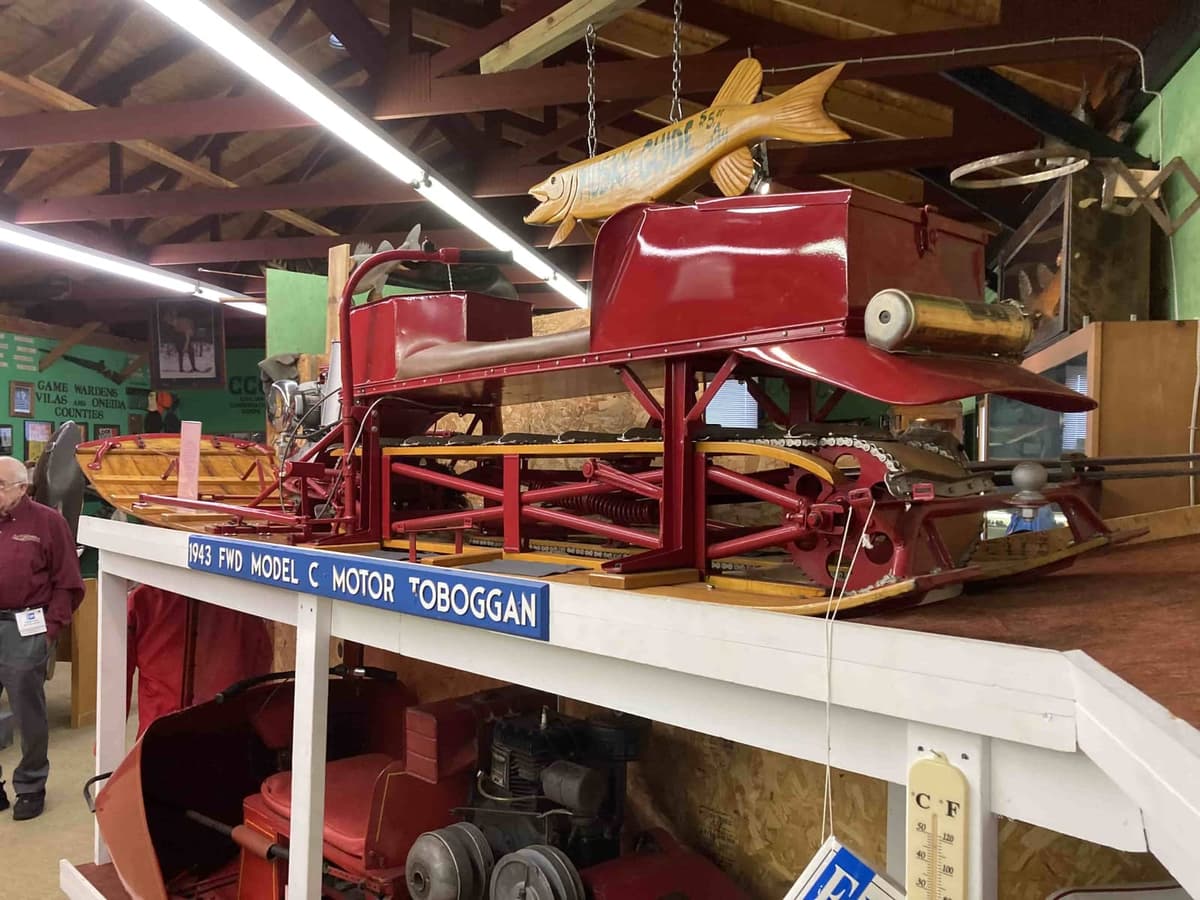
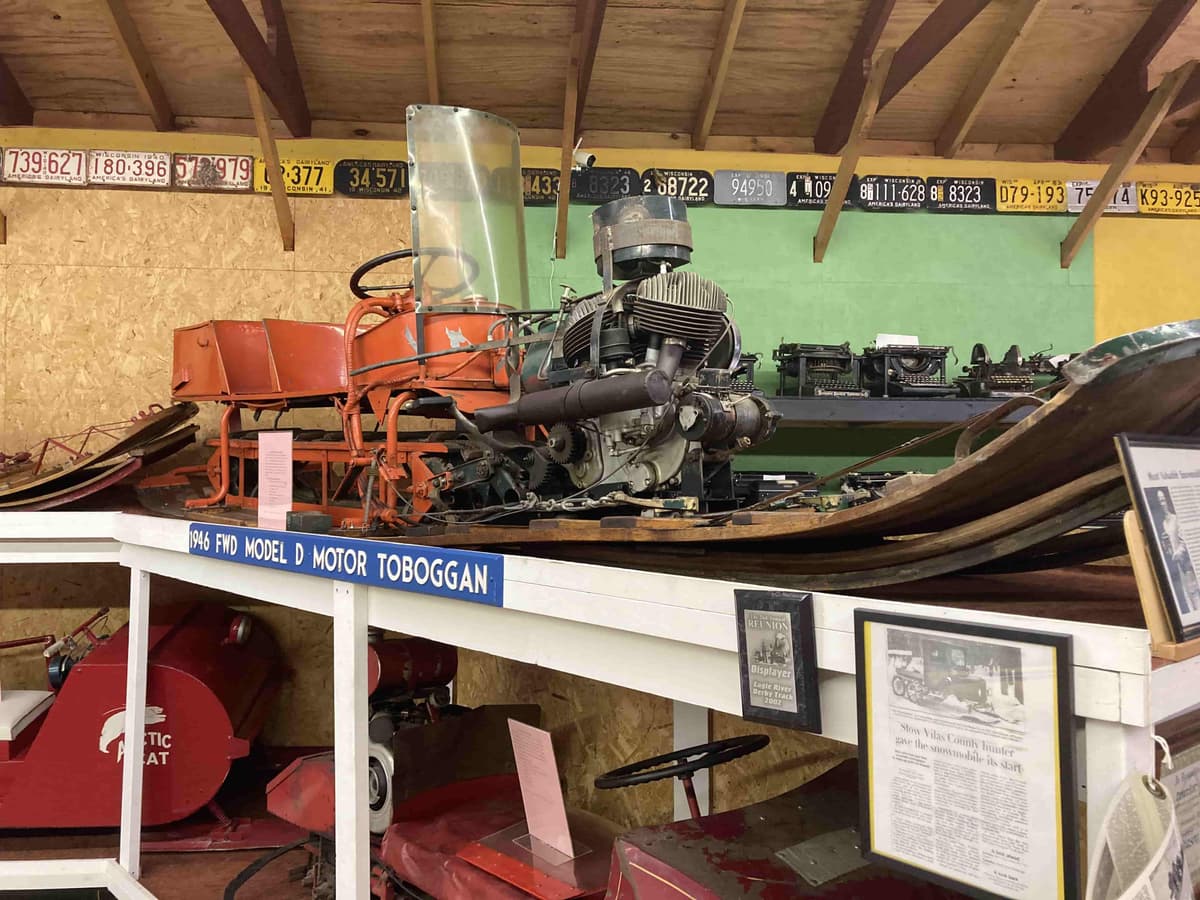
Model D was introduced in 1945. It was the very last model built in the United States. The final production of this model was relocated to the FWD company’s Kitchener plant in Ontario, Canada. Between 1940 and 1946, Clintonville’s total production was estimated at 300 units.
Phase 3: Rear-Engine Evolution, Kitchener, Ontario (1947–1963)
After Model D was transferred to Canada, there would be another change. The very last Model D units would be produced with a new Indian Vertical Twin engine. Overall the move was an attempt to revive slower sales after WWII and to bring the Eliason snowmobile closer to more customers. The very last Model D units were also stamped with a “K” at the end of their serial number.
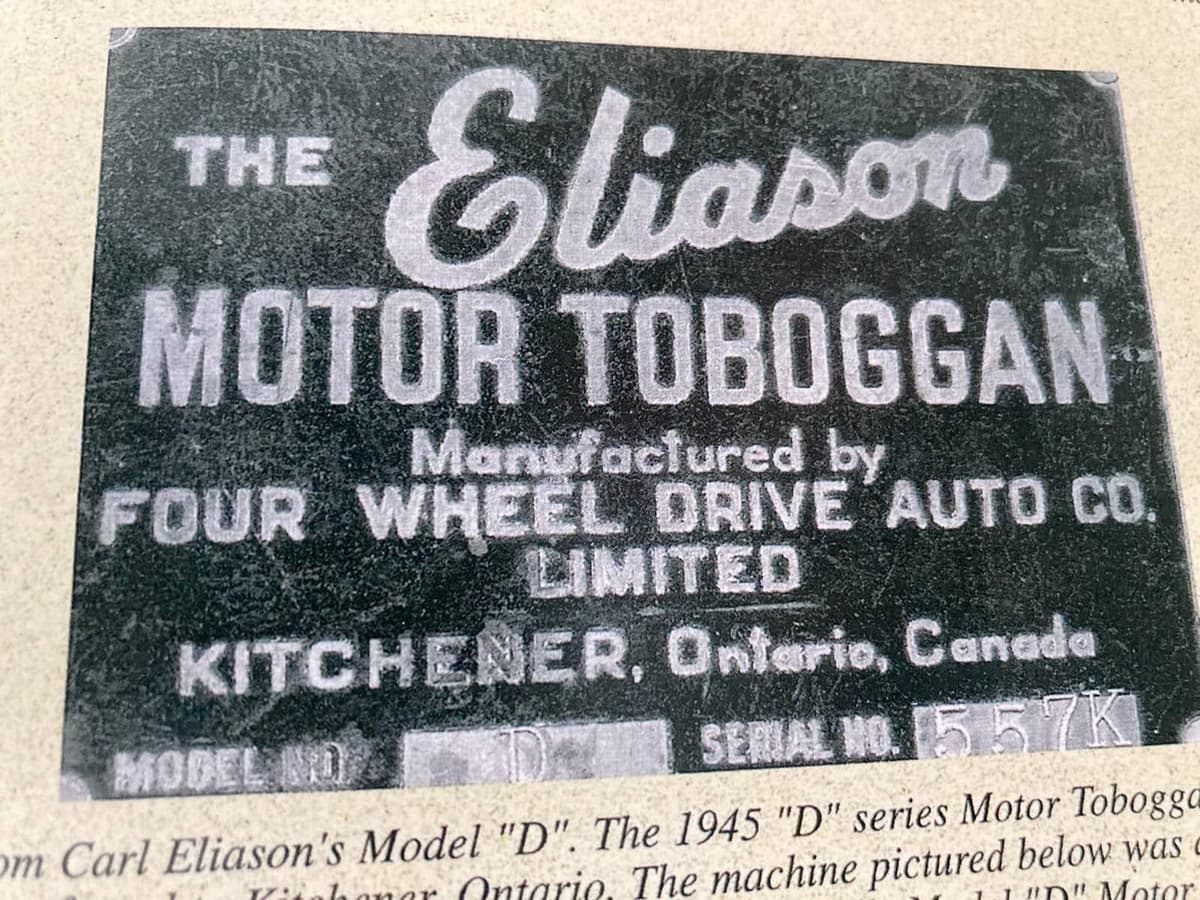
It was in Kitchener where the last two Eliason models would be engineered and manufactured. Before these two, all Eliason-produced vehicles had front-mounted engines.
In a quick glance at snowmobile history, the story is often incorrectly perceived. The first snowmobiles produced were not rear engine “over the snow” vehicles. They were Eliason snowmobiles, with front-mounted engines. Then, rear-engine snowmobiles began to be mass-produced. This morphed into the first (front engine) Ski-Doo in 1959. It was then copied by hundreds of other manufacturers.
Historical research confirms that all “snowmobiles” produced before Eliason’s Kitchener units had front engines, a single drive track, and two skis under the toboggan from 1924 to 1950. Thus, it was after 1950 that the FWD subsidiary in Kitchener introduced their first rear engine Eliason snowmobile.
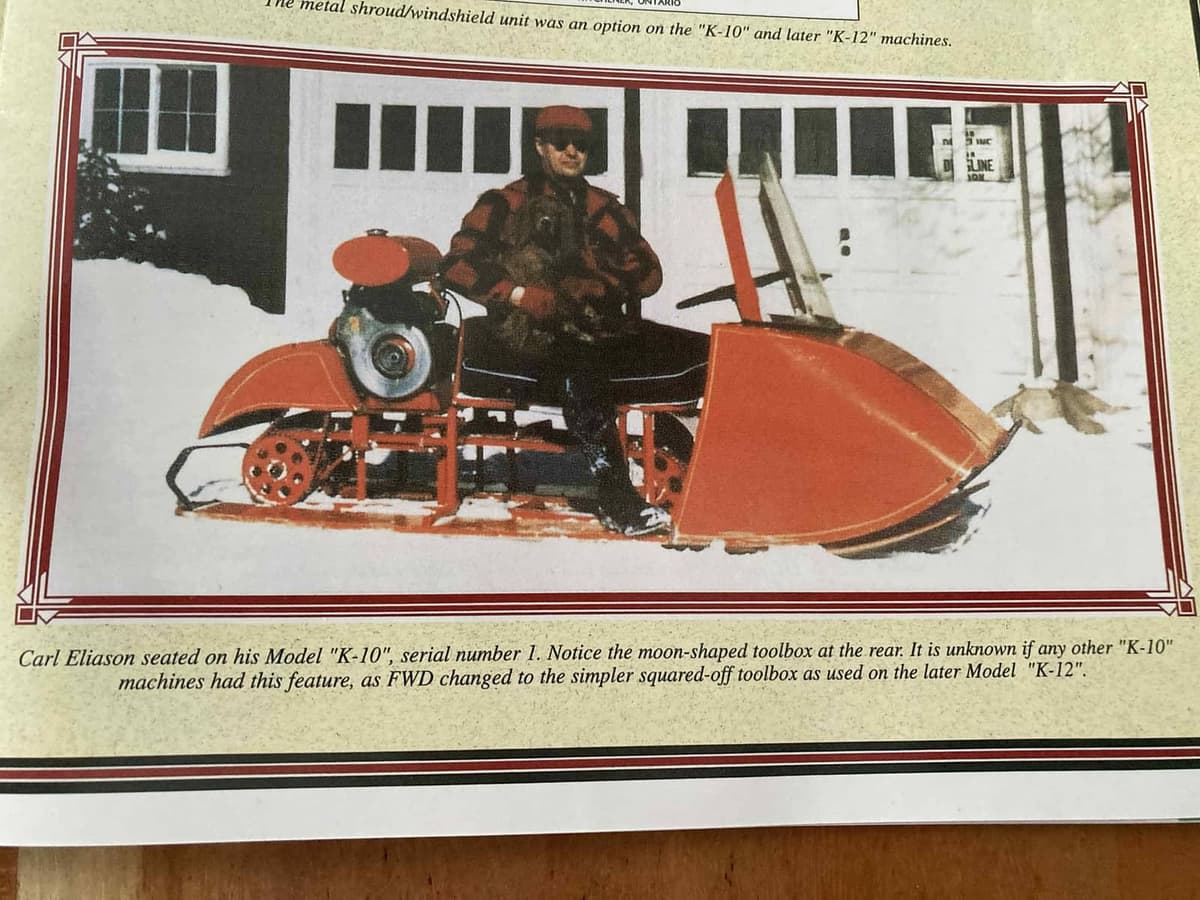
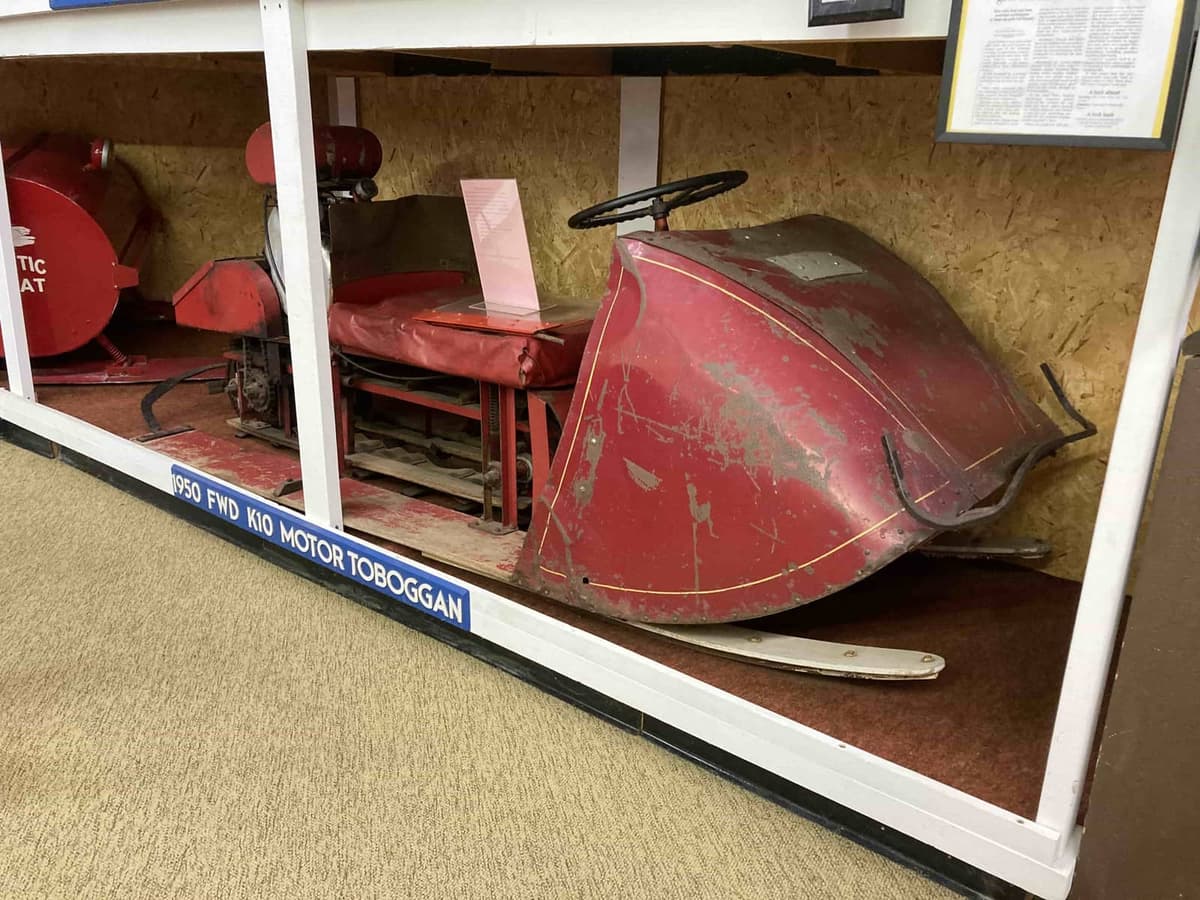
“In 1951, the smaller, all new model ’K-10’ was introduced. This new design had a rear mounted 6 hp. Salisbury engine complete with variable speed belt driven clutch. Engine weight was placed directly over the track, with the driver seated at the front. A steering wheel controlled the small flipper type skis. Early ’K-10’ machines carried a distinguished moon shaped toolbox at the rear. Options included a front hood and windshield.”—Carl Eliason & Co. Inc. @ Copyright 1998.
The last Eliason model introduced in 1953 was the K-12. Power was now from a Briggs & Stratton, 8.5 hp. It was essentially an improved Model K-10, but it also holds further significance in snowmobile history.
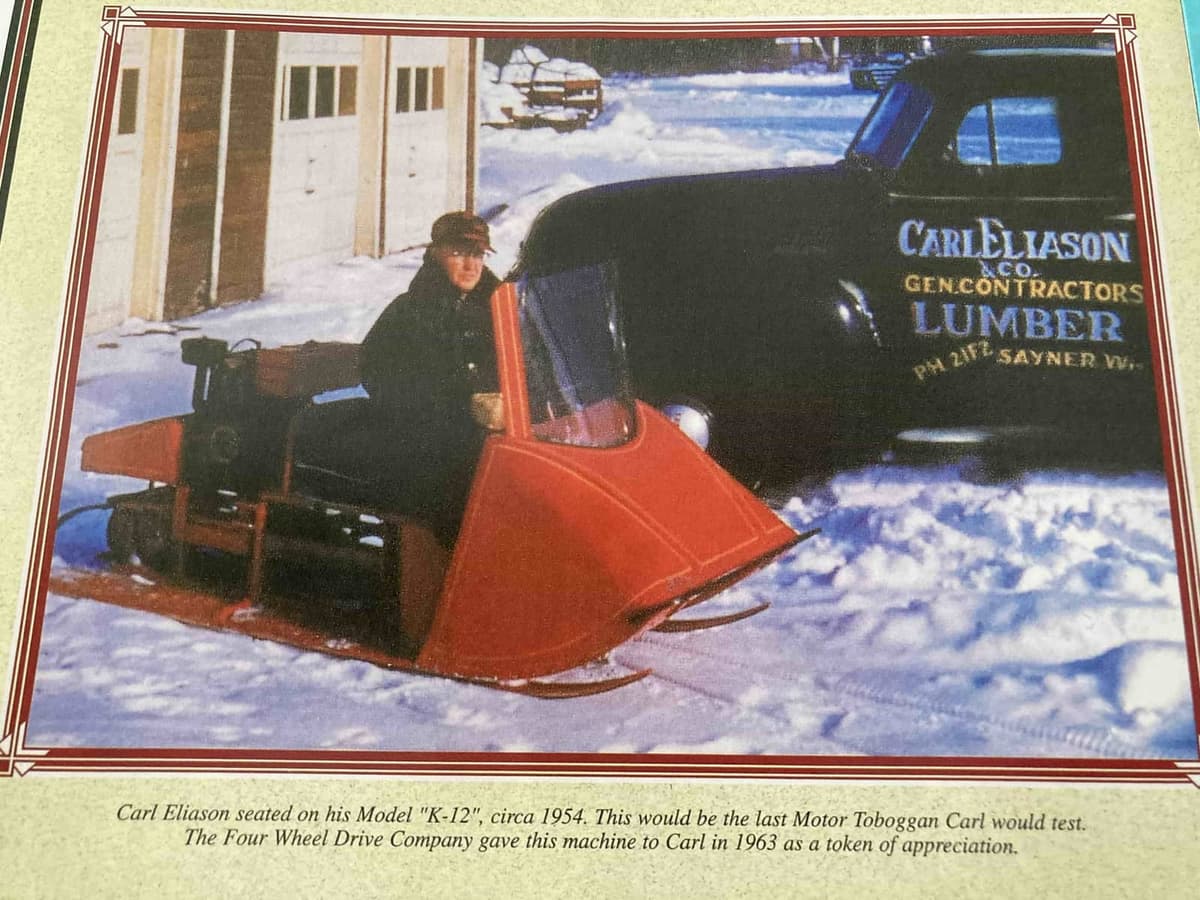
The K-12 model was manufactured continuously from 1953 to 1963 with no major modifications.
“It was the last model Eliason produced, and was the snowmobile that future manufacturers would use as a guide in designing rear engine machines. When Polaris began in 1955, the FWD Motor Toboggan patents (from Carl Eliason) were expiring. Production of the ’K-12’ started to fall.”—Carl Eliason & Co. Inc. @ Copyright 1998.
February 12, 1963
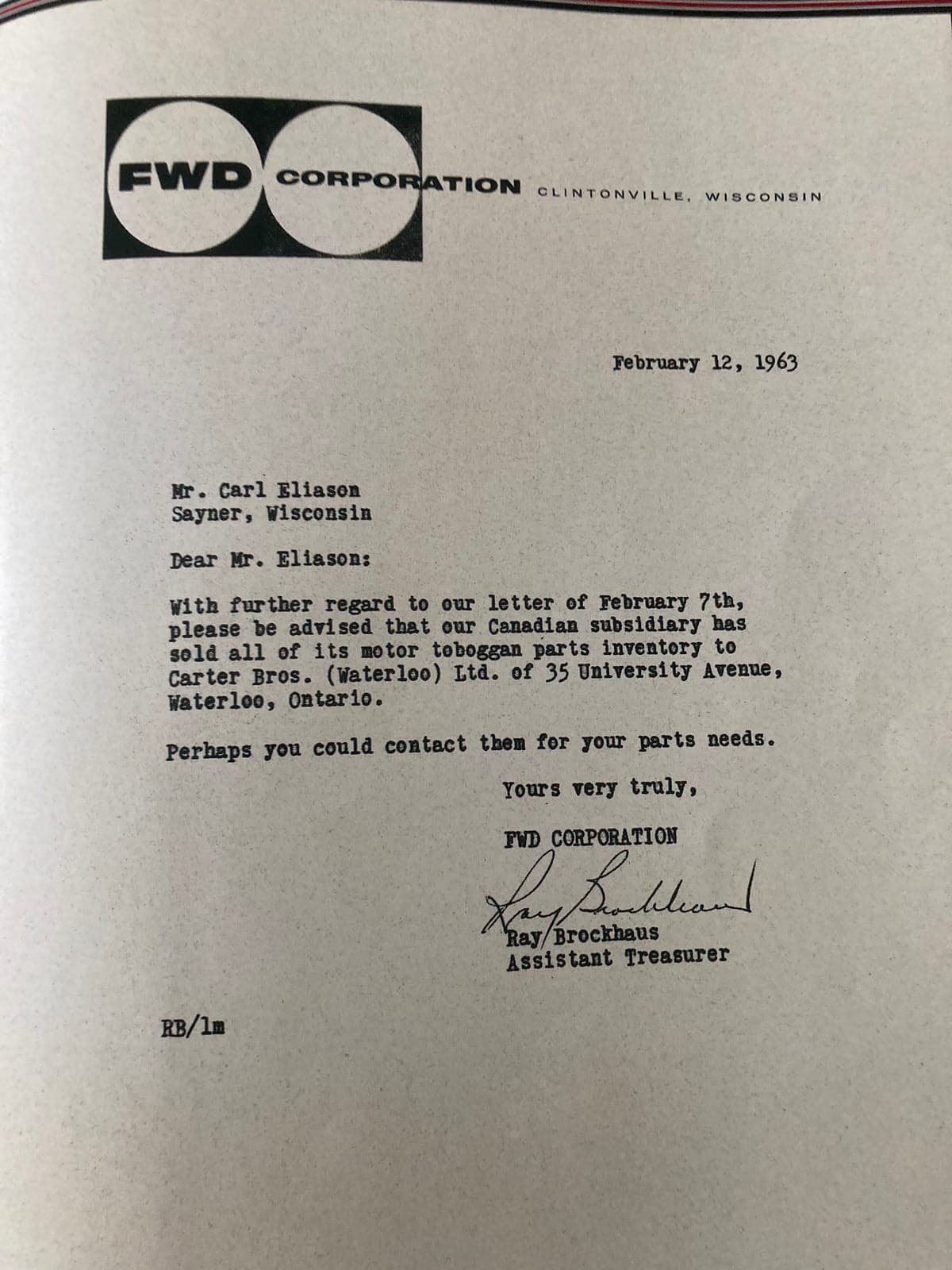
Eliason’s production ends quite abruptly with a letter dated February 12, 1963, from the FWD Corporation in Clintonville, WI. Carl was advised that the FWD company had sold its parts and rights to another Canadian company in Waterloo, Ontario. The last Eliason Motor Toboggan was manufactured in 1963.
Canadian Distribution of Eliason Snowmobiles (1941–1963)
The records of the Eliason family, specifically those recorded by Jona Eliason, show the coast to coast to coast distribution.
From west to east, the most recent (June 2024) statistics show the following;
- British Columbia: 3 units
- Yukon: 1 unit
- Northwest Territories: 2 units
- Alberta: 3 units
- Saskatchewan: 6 units
- Manitoba: 5 units
- Ontario: 35 units
- Québec : 15 units
- Labrador: 3 units
- New Brunswick: 2 units
- Nova Scotia: 2 units
- Newfoundland: 5 units.
The total units of record (locations) in Canada are 82 Eliason Motor Toboggan—Snowmobiles.
The Original 1924 Eliason Snowmobile Still Exists
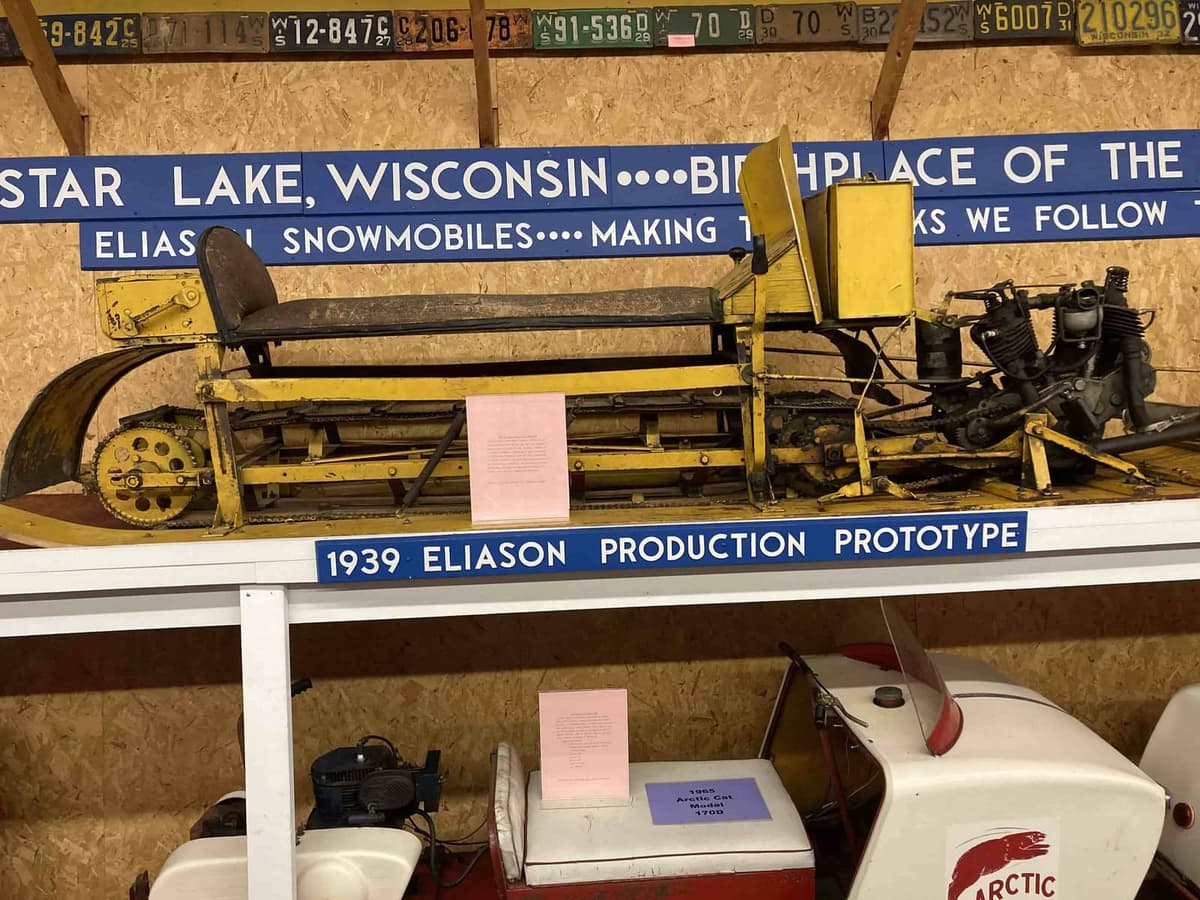
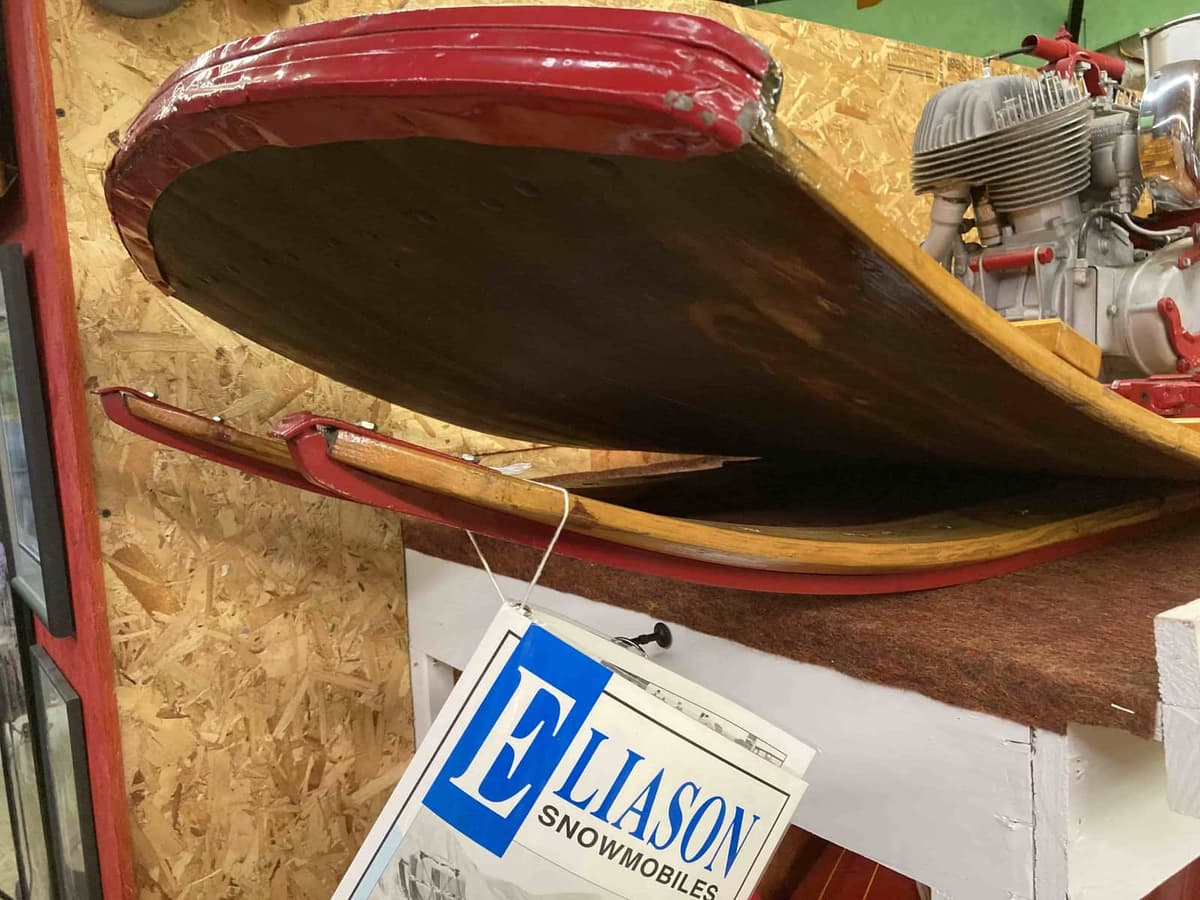
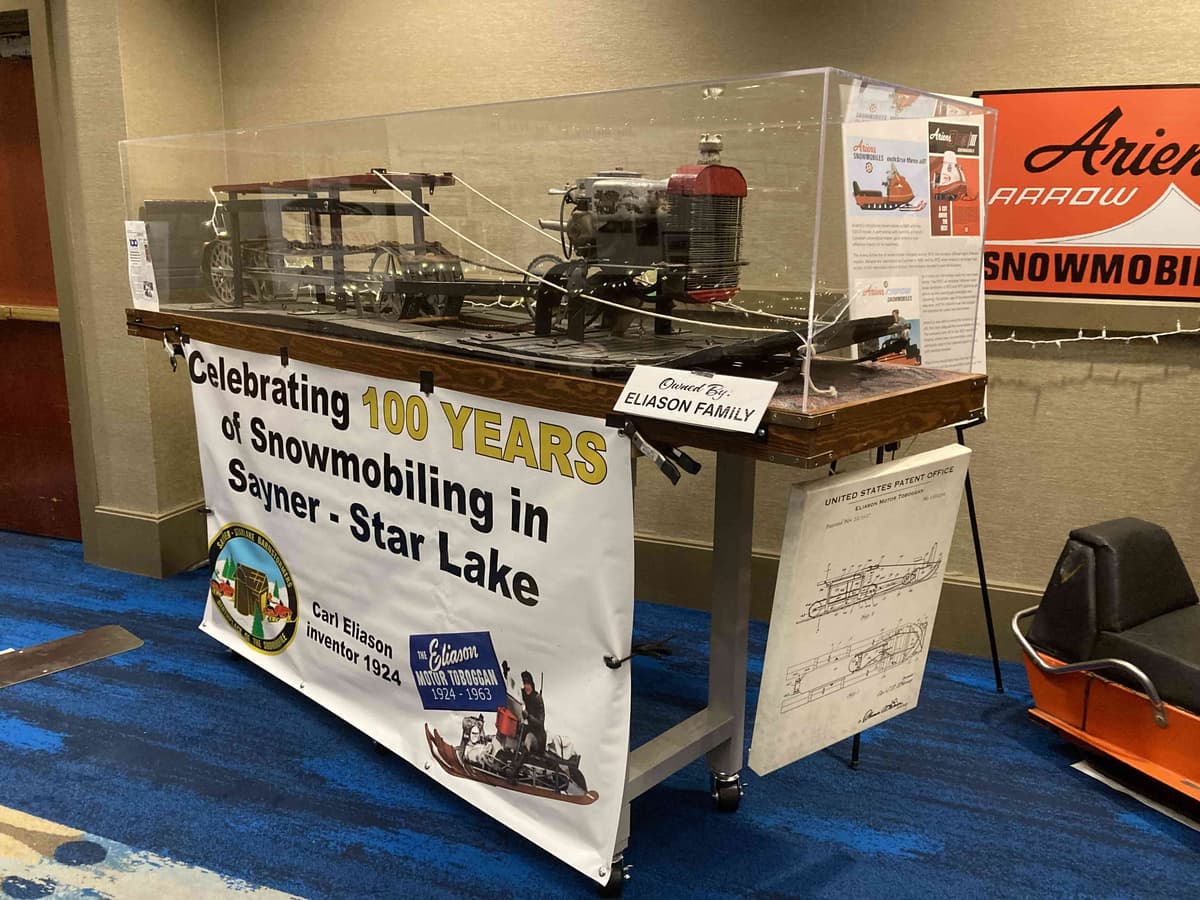
I have had the pleasure of visiting with Jona in Sayner, Wisconsin and also spending time with her in Green Bay and Eagle River, WI, in the summer—autumn of 2024. The very first Eliason snowmobile is proudly displayed with many other Eliason snowmobiles not far from their birthplace. They are viewable with other historical snowmobile brands in the Vilas County (WI) Historical Museum.
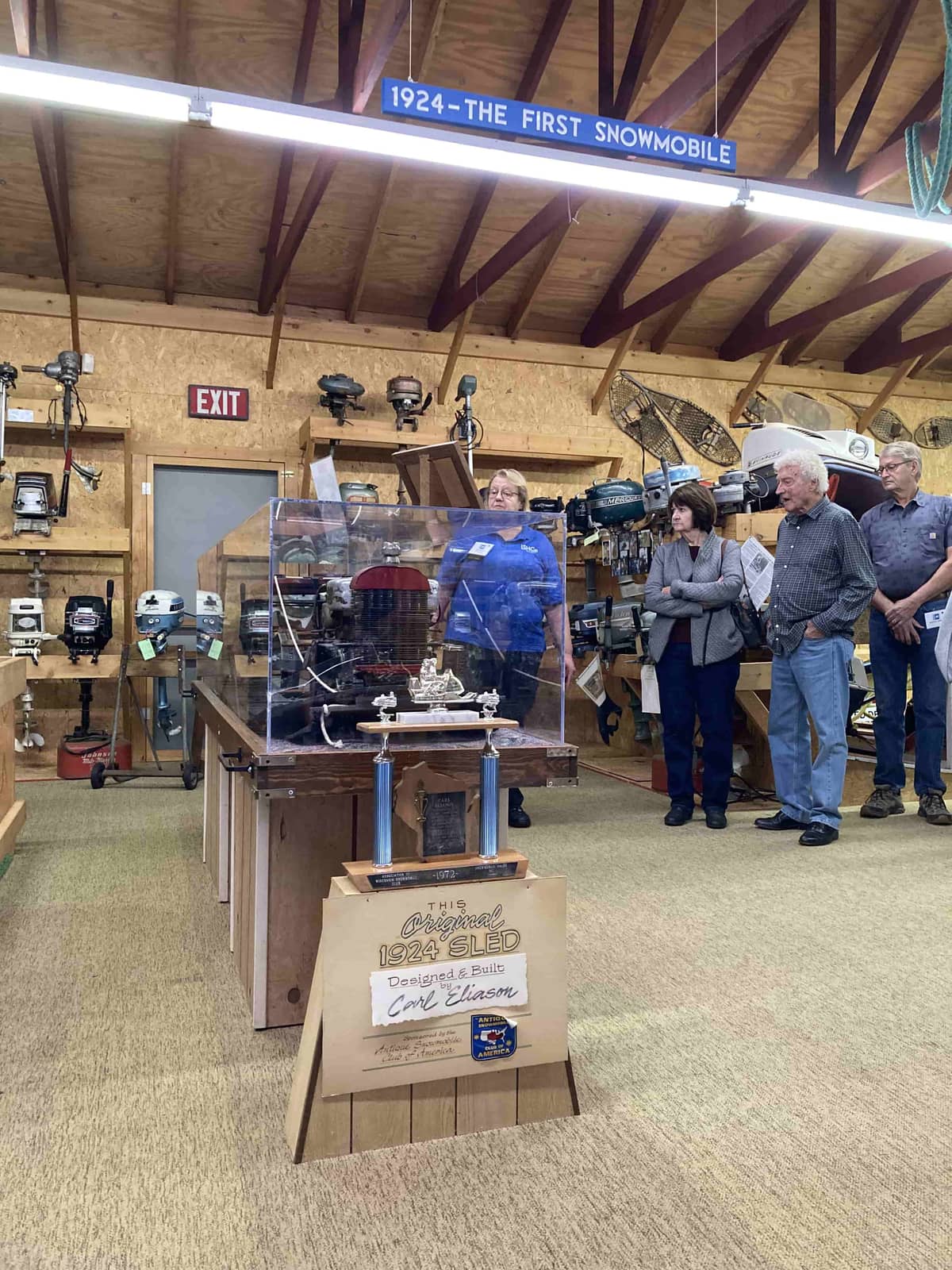
I was amazed at what I saw. I originally thought this over the snow vehicle was just a toboggan, driven by a motor. My perceptions were inaccurate. When you are up close and can touch these units, you realize that they have two skis up front, a single track at the back, with a front-mounted motor. While rudimentary, it worked, and it still does more than 100 years later.
Tracing the Birthplace of the Snowmobile: The Eliason Legacy
As I wrote at the beginning of this two-part story, “this article does not claim to know who was first. Rather, it lists the facts that exist and looks specifically at the Eliason snowmobiles and motor toboggans that finished their 39-year run before the wide acceptance of snowmobiles in North America.”
I thought I knew a lot about snowmobiles and their history before preparing this text. I had a lot to learn and have attempted to communicate this to the rest of those so interested.
I believe the following statement from the summary of the Eliason Story:
“Modern snowmobiles are directly traceable to the original hand built 1924 Carl Eliason machine. The final ‘K’ series Eliason directly influenced Polaris, which in turn influenced Arctic Cat and all rear engine designs that came along in the early 1960s. The 1960 Ski-Doo further guided the nature of snowmobiling that allowed recreational opportunities to develop.
The pioneering efforts of Carl Eliason and the Four Wheel Drive Auto Company (FWD) wrote one of the earliest chapters in snowmobiling history. Their Motor Toboggans made the winter tracks we follow today.”—Carl Eliason & Co. Inc. @ Copyright 1998
Thank You
This article would not have been possible without the immense assistance, time and contributions of Jona Eliason, Carl’s granddaughter. Her openness, passion and interest in this project were heartwarming and appreciated. I also wish to thank Denis Lavoie, of Sledmagazine.com, for allowing me the opportunity to explore and publish this story.
I have done my best to only present the historical facts that are available and verified. Not everyone may not reach the same conclusion. No matter, snowmobiling is important to all of us, and I encourage you to continue the passion and tenacity displayed by Carl Eliason and now his granddaughter, Jona Eliason.