


A Quebec icon born in Wickham—mechanical audacity, bold styling, and a racing culture
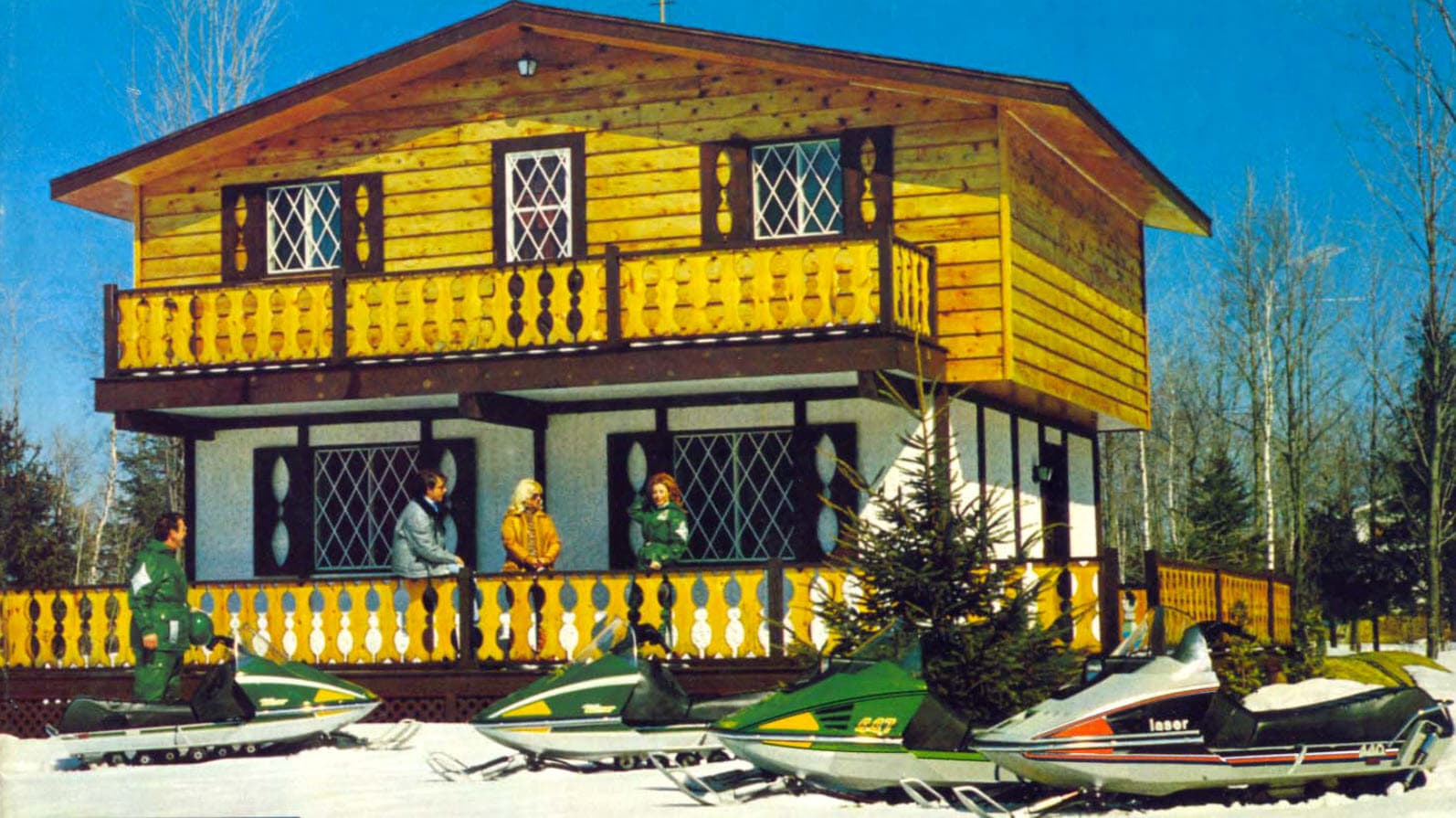
In the history of former snowmobile manufacturers, Skiroule holds a truly unique place in Quebec. The brand didn’t simply build snowmobiles—it embodied a strong identity, a confident styling approach, and a real desire to belong to the performance culture of the golden era. For many enthusiasts, Skiroule represents one of the rare moments when a Quebec company tried to rival the major North American players—not only through engineering, but also through image and sheer audacity.
Unlike many short-lived regional manufacturers, Skiroule left a lasting mark. Its name remains linked to iconic models, credible involvement in racing, and a strong cultural connection to Quebec’s sporting history. That combination helps explain why, decades after production ended, Skiroule is still one of the most respected and sought-after names in the vintage snowmobile world.
Ambitious Beginnings—And Real, Structured Production
Associated with the community of Wickham and the name Réjean Houle, Skiroule entered the scene with genuine ambition. In the late 1960s, as snowmobiling experienced explosive growth, the brand did not limit itself to small-scale assembly. It established structured production, a recognizable lineup, and a functional dealer and distribution network.
Skiroule therefore doesn’t fit the “garage brand” myth. It operated in an in-between space: more organized and more visible than many small independent builders, yet without the financial and industrial muscle of the big American groups. That position enabled creativity and a strong identity, but also left the company more vulnerable when the market turned.
The Skiroule DNA: Desirability, Aerodynamics, and Visual Identity
One of Skiroule’s most distinctive traits was its aesthetic approach. At a time when many snowmobiles remained highly utilitarian in design, Skiroule adopted lower hoods, more aerodynamic lines, and an aggressive stance that suggested speed and modernity.
This design effort wasn’t superficial. It aimed to position Skiroule as a desirable brand—one that could attract riders drawn to performance and sporting image. That strategy played a major role in Skiroule’s cult status: even today, many enthusiasts associate Skiroule with an instantly recognizable “look” that stands apart from the competition.
A Clear, Structured Model Lineup
Skiroule understood early the value of a coherent naming system. The RT and RTX designations became clear reference points for buyers and enthusiasts: RT for production models and RTX for higher-performance variants, often tied to a sport or competition orientation.
This structured lineup made the offering easier to understand and strengthened brand identity. In a market where many manufacturers multiplied models without obvious logic, Skiroule stood out with a more readable approach—one that boosted its commercial credibility and historical significance.
Racing as Both Laboratory and Showcase
Like Chaparral, Scorpion, and Mercury, Skiroule viewed racing as a key strategic lever. Competition served as both a marketing showcase and a technical test bed. Involvement in the Sno Pro world made it possible to test reliability, cooling, and mechanical tuning under extreme conditions.
The lessons learned on the track didn’t remain confined to race machines. They directly influenced production sleds—especially in chassis rigidity, thermal management, and high-rpm behaviour. This culture of real-world validation contributed strongly to Skiroule’s technical reputation.
Gilles Villeneuve and Skiroule: A Real and Symbolic Connection
The link between Gilles Villeneuve and Skiroule is both real and highly symbolic. Before becoming a legend of motorsport, Villeneuve made his name as a top-level snowmobile racer. He won numerous events and built an exceptional reputation in the sport—so much so that snowmobile racing became a major source of income and visibility early in his career.
Skiroule is among the brands associated with that pivotal period. For Villeneuve, snowmobiling was a true driving laboratory: mastering controlled slides, reading terrain, and balancing aggression with precision. He would later acknowledge that those winter racing years shaped the spectacular style he became famous for in cars.
In terms of results, Villeneuve’s snowmobile career was remarkably successful, with recognition that extended well beyond the regional scene. The Skiroule Association therefore adds a powerful cultural layer to the brand’s legacy: it became tied to the rise of one of Quebec’s greatest sports figures.
Five Skiroule Models That Became Iconic
Skiroule’s popularity is reflected today in private collections, museums, and vintage snowmobile events. Certain models come up again and again in discussions among enthusiasts.
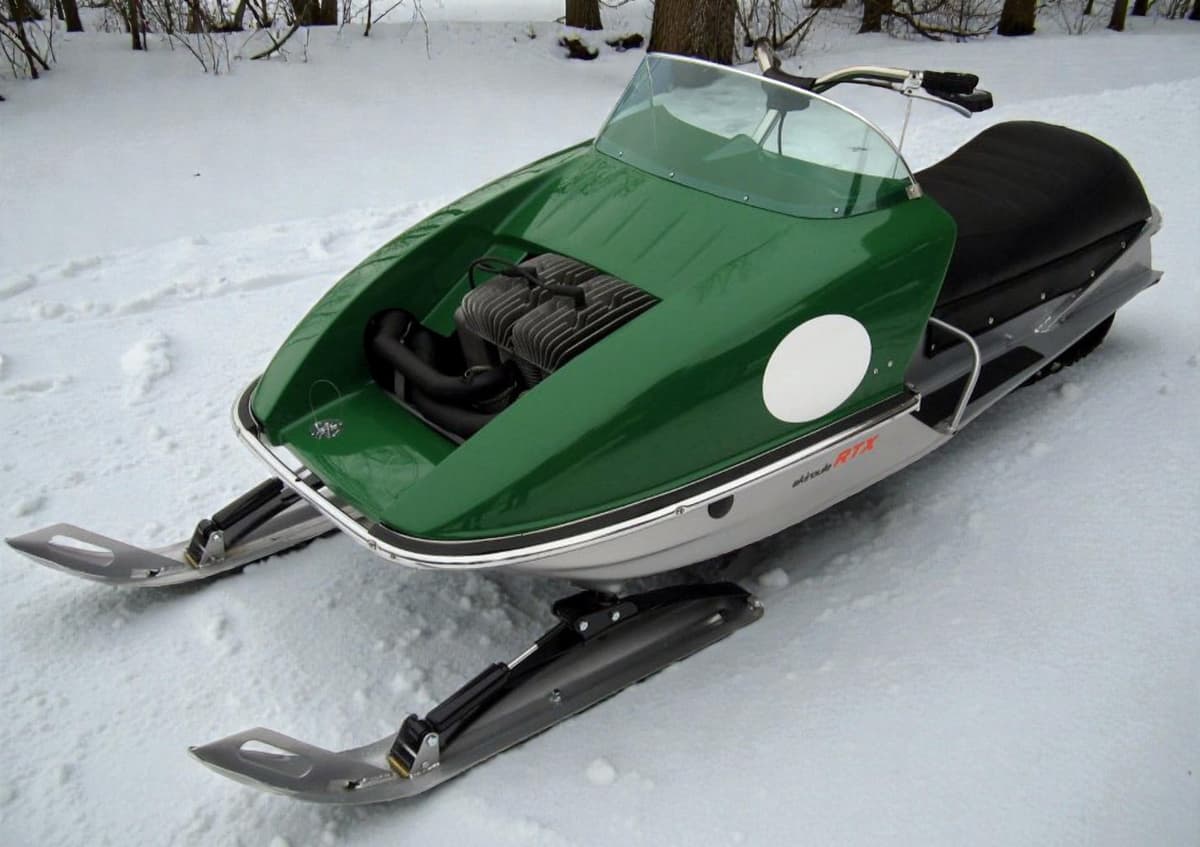
Skiroule RTX
Description
The RTX is generally regarded as the pinnacle of the Skiroule lineup in the early 1970s. It embodied the brand’s confident move into the sports segment, combining a striking look with a clear performance-oriented trail position. More than a simple top-trim model, the RTX quickly became an icon of Skiroule’s identity, blending character, aggressive styling, and a dynamic ride.
Key Specs/innovations
-
Production years: 1971–1972
Positioning: Sport/performance snowmobile
Design: Aggressive silhouette, distinctive lines, and bold graphics
Chassis: Built for stability and control at sustained speed
Handling: Reactive and sporty, aimed at experienced riders
Key contribution: Flagship model that defined Skiroule’s sporty DNA and brand image
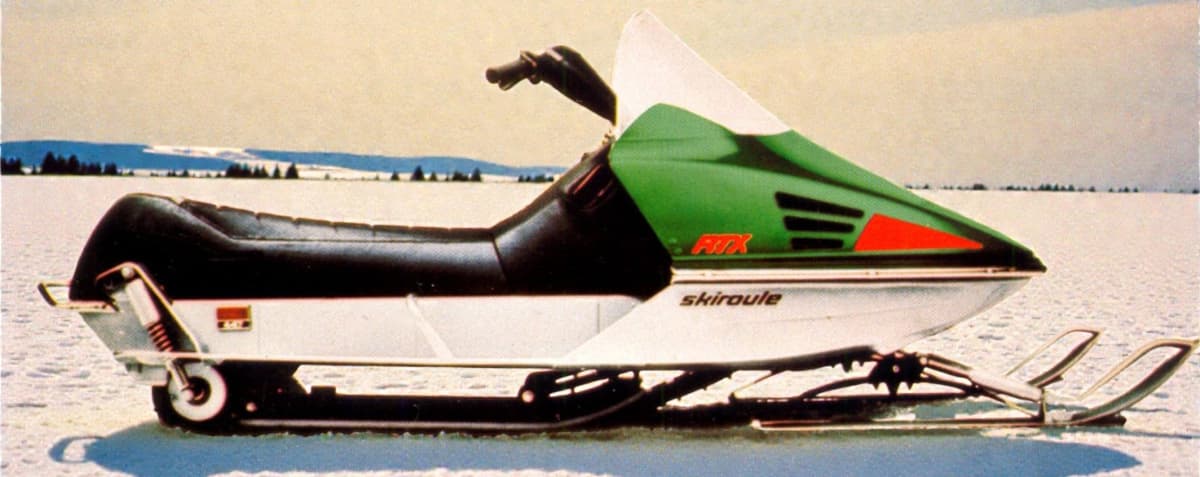
Skiroule RTX Series III
Description
The RTX Series III was the final evolution of the RTX line and one of the last sports models developed by Skiroule before the brand’s operations ended. Designed for sports trail riding, it featured a stiffer chassis, improved high-speed stability, and a more predictable feel than earlier RTX versions. It reflected the manufacturer’s determination to remain competitive against major brands, despite an increasingly difficult industry environment.
Key specs/innovations
-
Production years: 1975–1976
Positioning: Sport Trail snowmobile
Engine: Piston-ported 2-stroke, around 440 cc (depending on version)
Chassis: Improved geometry, increased rigidity, lower centre of gravity
Suspension: Revised front and rear for better stability and control
Key contribution: A more stable, mature ride—representing the technical peak of the RTX lineage
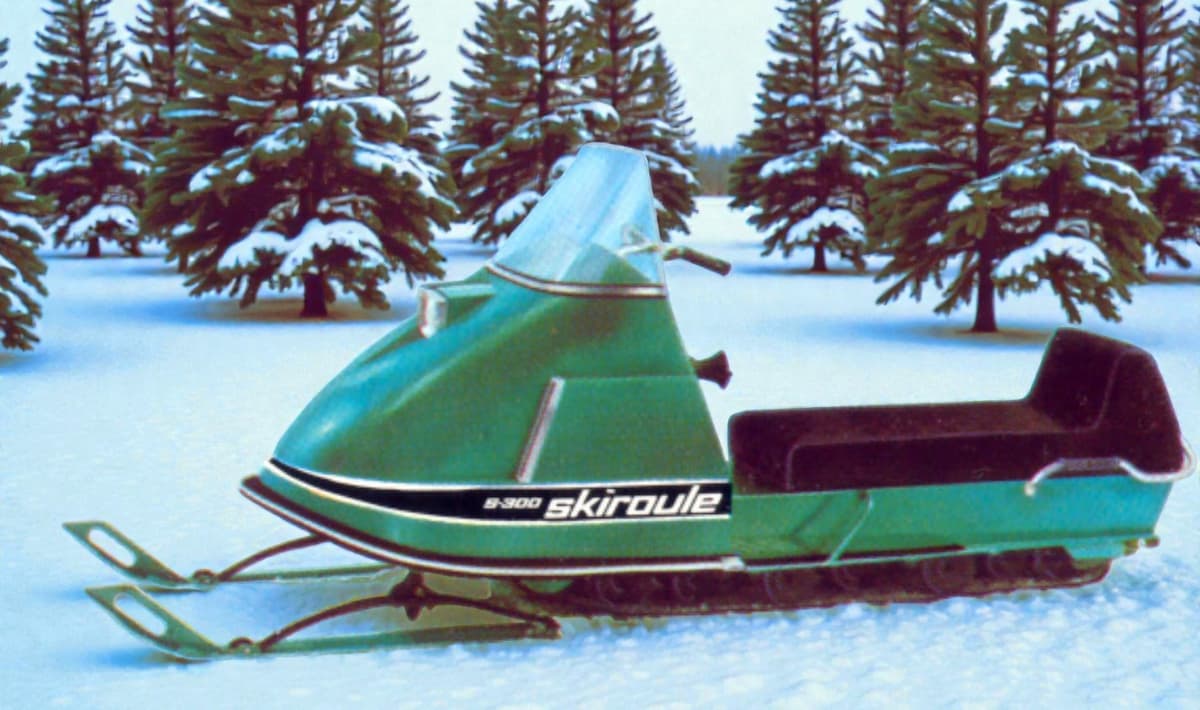
Skiroule S-300
Description
The S-300 is a strong example of Skiroule’s regular production—at the heart of its mainstream lineup. More robust and slightly more capable than smaller-displacement models, it showed the brand’s ability to deliver snowmobiles that were simple, effective, and built for real trail use. The S-300 wasn’t an “image” model, but a period-correct machine that helped establish Skiroule’s real presence in the marketplace.
Key specs/takeaways
-
Production years: Early 1970s
Positioning: Trail/general-purpose snowmobile
Engine: Piston 2-stroke, approximately 300 cc
Design: Simple, rugged layout consistent with the era’s standards
Ride character: Predictable, approachable, and easy to maintain
Key contribution: A signature “core lineup” Skiroule model—valued today for authenticity and frequently found in collections
Skiroule RTW with rotary engine
Description
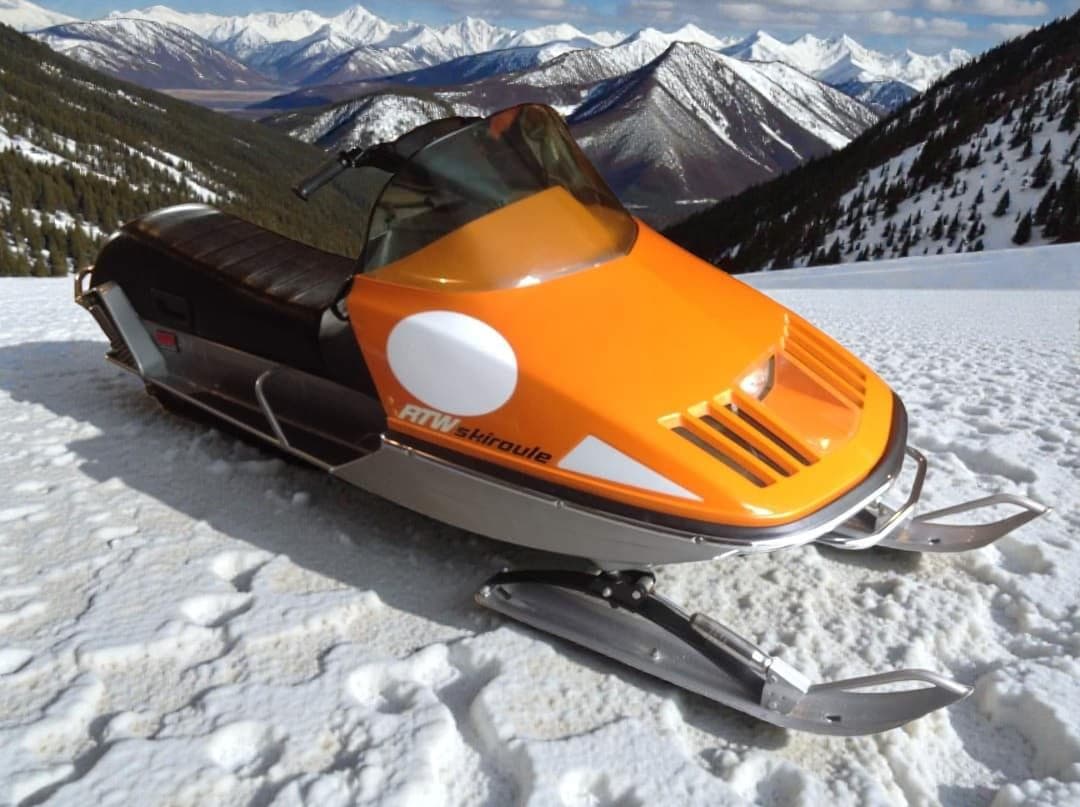
The RTW remains one of the boldest projects in Skiroule’s history. By adopting a Wankel-type rotary engine, the company ventured into territory that was extremely rare in the snowmobile industry. This experimental model aimed to demonstrate the rotary engine’s potential in terms of compact packaging, smooth operation, and performance—at a time when very few manufacturers were willing to step outside conventional designs.
Key specs/takeaways
-
Production years: Mid-1970s
Positioning: Experimental project/technology showcase
Engine: Wankel rotary—an unconventional solution for the industry
Production: Extremely limited
Special feature: Compact engine packaging and a genuinely novel concept
Key contribution: One of the rarest and most audacious technology attempts in snowmobile history—now considered a major collector piece
Skiroule RT 500
Description
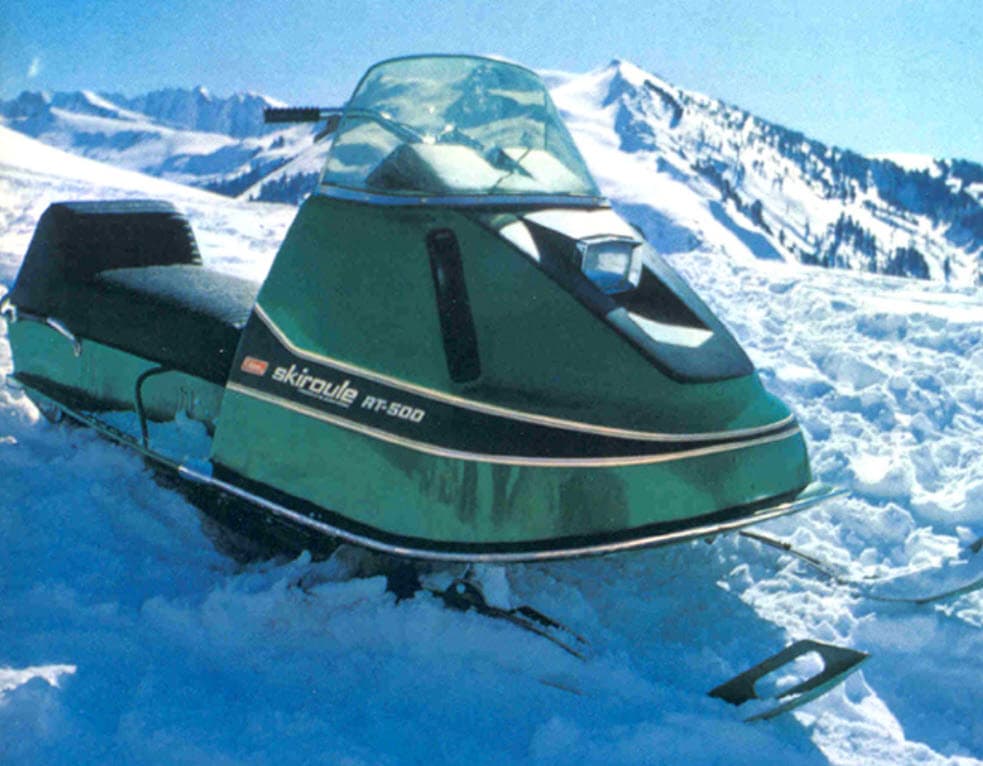
The RT 500 illustrates Skiroule’s push toward a more powerful, more versatile trail machine as the market matured. With its larger displacement, the RT 500 positioned itself as a serious sled for trail use—delivering more torque and stability—while retaining the brand’s rugged, functional DNA.
Key specs/takeaways
-
Production years: Early 1970s
Positioning: Trail snowmobile with a performance focus
Engine: Piston 2-stroke, approximately 500 cc
Chassis: Solid design suited to higher-output engines
Ride character: Stable and confidence-inspiring at sustained speed
Key contribution: A key step in Skiroule’s move upmarket—blending performance with real-world usability
Why Skiroule disappeared: the unforgiving logic of industry consolidation
Skiroule’s disappearance fits into the broader consolidation wave of the mid-1970s. A slowing market, inconsistent winters, overproduction, and inventory pressure weakened even technically credible brands.
For a company that was structured but limited in capital, every season became a financial gamble. When sales slowed, industrial logic and corporate decisions quickly overtook passion and innovation.
What happened to Skiroule: acquisition, limited continuity, and the end of operations
In the late 1960s, Skiroule was acquired by Coleman, which sought to capitalize on the snowmobile boom and its own distribution network. That period helped the brand gain greater visibility.
However, as the market tightened, snowmobiles became less strategic for the group. The brand was later sold to private interests. Continuity was mainly maintained through existing platforms—especially the RT and RTX series—without major reinvestment in new architectures.
Skiroule ceased operations after the 1976 season. Very few later units are believed to have been produced, marking the brand’s effective end.
The Skiroule Legacy
Today, Skiroule remains one of the most respected Quebec brands in snowmobile history. Distinctive styling, iconic models, technical audacity, and the association with Gilles Villeneuve—every ingredient of a cult brand is there.
Gone too soon, Skiroule still left a lasting imprint, both technically and culturally.
Next in the Former Snowmobile Manufacturers series
The next and final article in the series will focus on Kawasaki, a major player that left its mark on snowmobiling through a strong engineering-driven approach and a clear technology-focused DNA.