

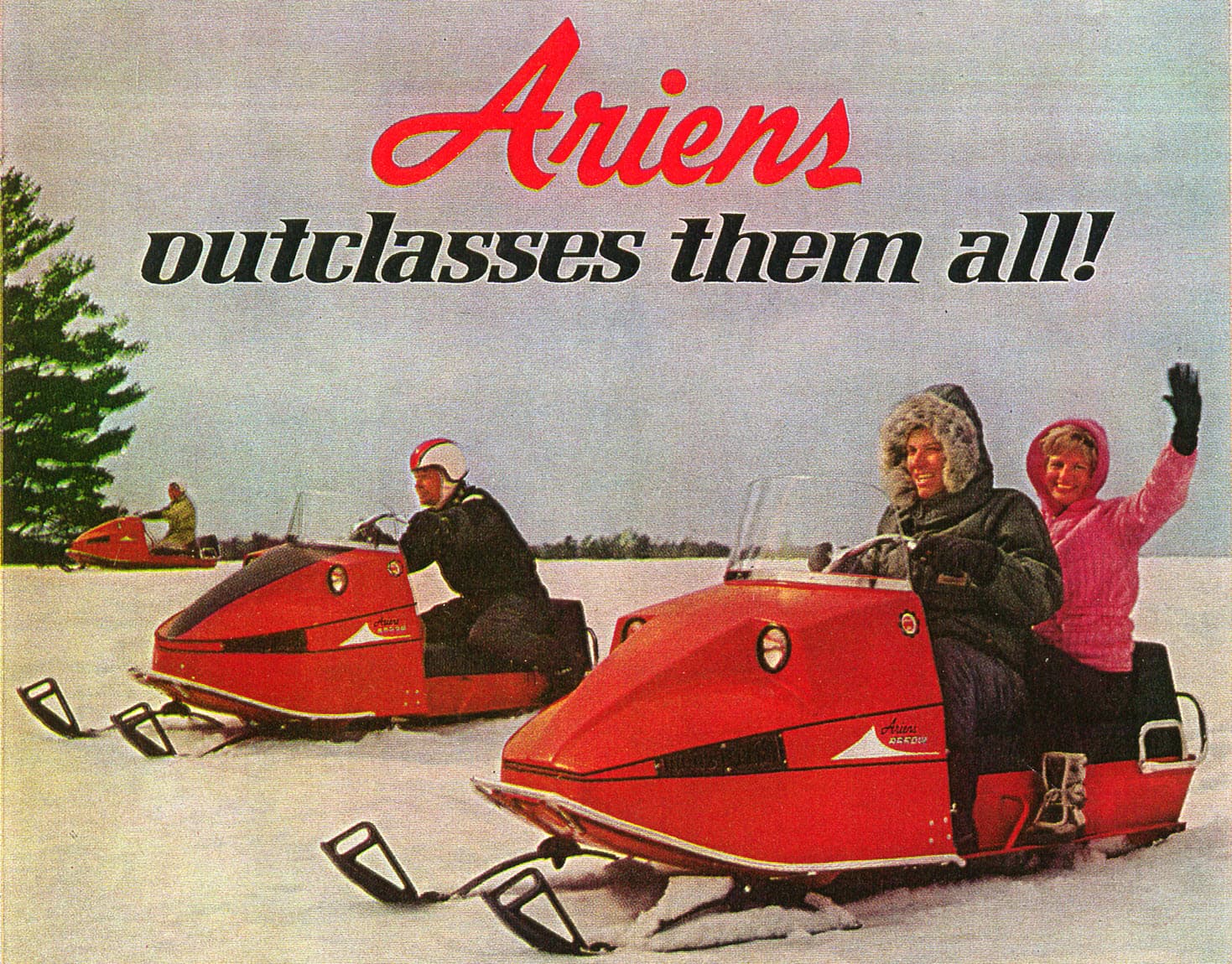

When Industrial Rigour Meets the Reality of Snowmobiling
In the history of former snowmobile manufacturers, Ariens holds a unique position. Unlike brands such as Chaparral, Scorpion, or Mercury—born from or deeply shaped by snowmobile culture—Ariens came from a much broader industrial background: robust, utilitarian, and durable powered equipment.
In the late 1960s, as snowmobiling experienced rapid growth across North America, Ariens chose to enter the market in a structured way. The company possessed the technical resources, winter expertise, and industrial capacity required. Yet despite real, documented production between 1970 and 1972, the venture would be short-lived.
Ariens Before Snowmobiles: A Strong Industrial Foundation
Founded in 1933 in Brillion, Wisconsin, Ariens had already established itself as a major North American powered equipment manufacturer long before entering snowmobiling. The brand built its reputation on products designed to last: snowblowers, lawn equipment, and utility machines intended for intensive use.
Even before entering the snowmobile market, Ariens had mastered:
- proven mechanical system design
- large-scale industrial manufacturing
- robust chassis and drivetrain construction
- a strong and structured distribution network
This industrial foundation directly shaped the approach Ariens would adopt on snow.
The Entry of Ariens Snowmobiles into the Market (1970–1972)
Unlike some companies that never moved beyond the prototype stage, Ariens did, in fact, commercialize production of snowmobiles in the early 1970s. Manufacturing spanned a short period, primarily between 1970 and 1972.
Their strategy was clear: offer machines that were reliable, well built, and rational, without attempting to compete directly with more performance-oriented or racing-focused brands. At Ariens, the snowmobile was conceived as a logical extension of existing winter products rather than as a radical image-driven machine.
The Industrial DNA of Ariens Snowmobiles
Ariens snowmobiles perfectly reflected the company’s industrial DNA. While Chaparral or Scorpion emphasized agility and performance, Ariens prioritized:
- structural strength
- mechanical simplicity
- ease of maintenance
- long-term reliability
This philosophy produced reassuring, durable machines, though they were sometimes perceived as conservative in a market rapidly shifting toward performance and emotion.
Ariens Snowmobiles Produced Between 1970 and 1972
Although the production window was brief, Ariens introduced several clearly identified and documented models, now recognized by collectors and industry historians.
Ariens Arrow
The Arrow was among the first models associated with Ariens’ entry into snowmobiling. It embodied the brand’s philosophy: a simple, accessible, and durable machine intended for recreational use without sporting pretensions.
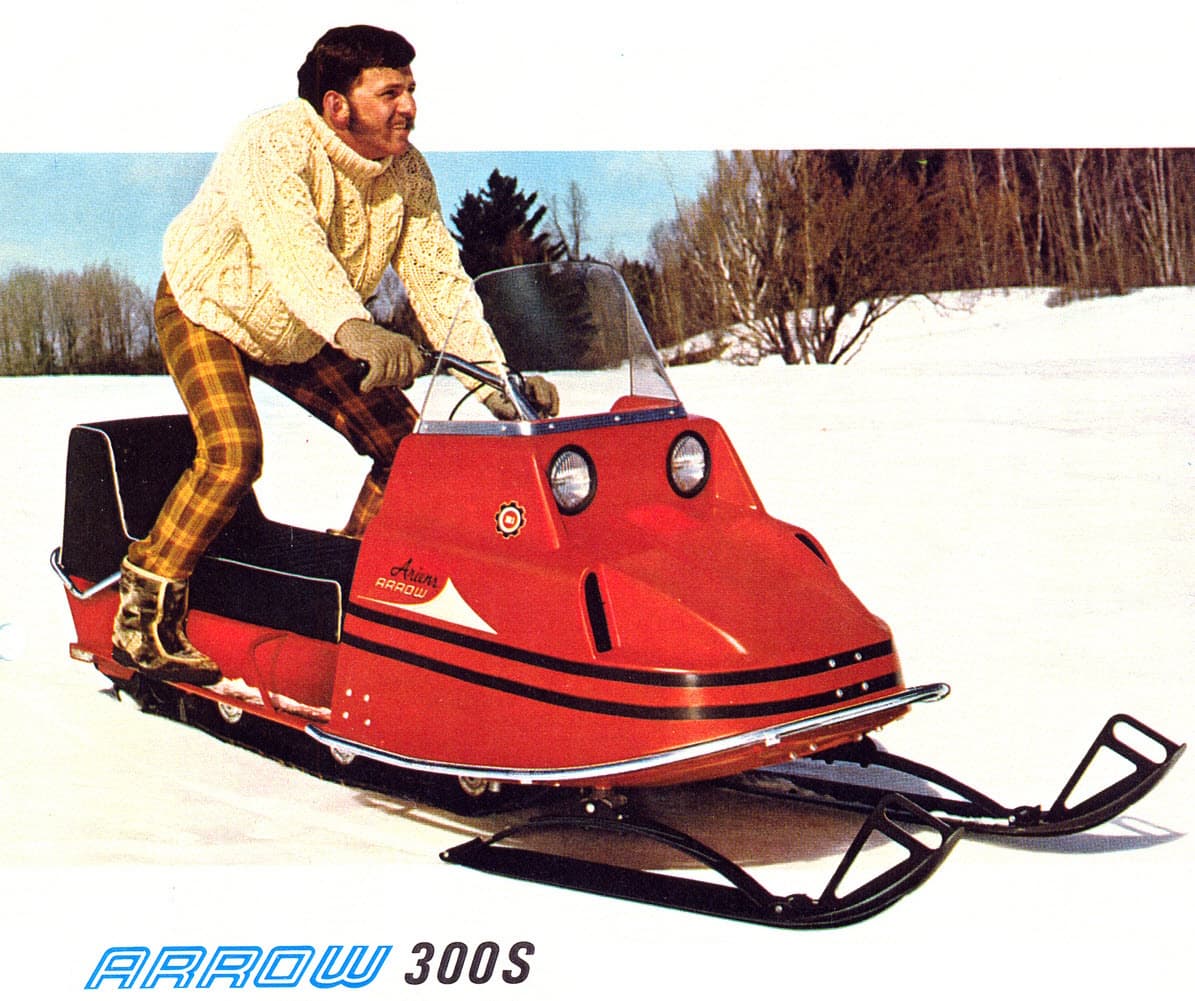
Key Points:
- conservative design
- oriented toward winter trail riding
- proven mechanical components
- easy maintenance
Ariens 350SX
The 350SX represented a moderate step up in the lineup. It targeted riders seeking slightly more performance while retaining a stable and durable platform.
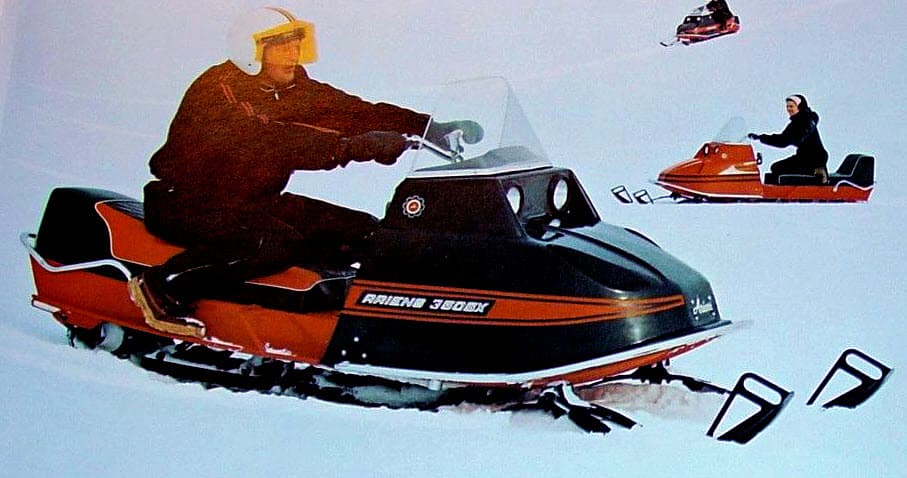
Key Points:
- mid-range displacement
- balance between performance and reliability
- robust chassis
- designed for recreational trail use
Ariens 400SS
With the 400SS, Ariens moved closer to the sport-trail segment, though without abandoning its philosophy of control and stability.
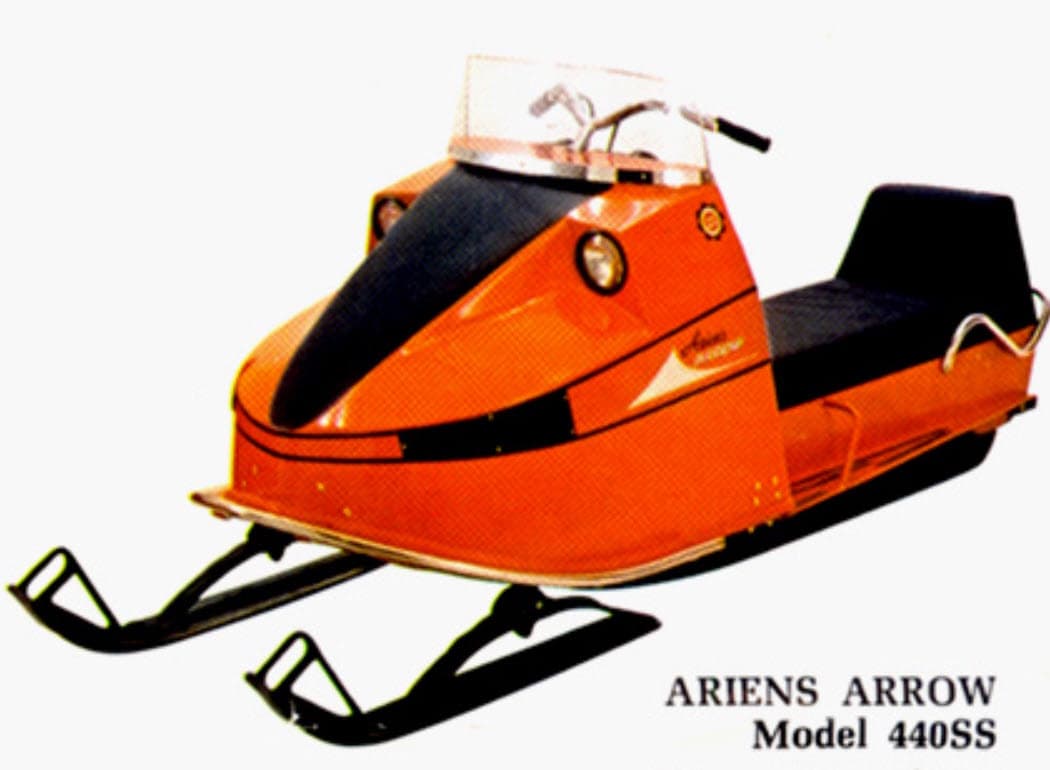
Key Points:
- higher performance than entry-level models
- predictable trail behaviour
- recreational sports orientation
- durability-focused construction
Ariens 450SX
The 450SX is generally considered the most developed model of Ariens’ brief snowmobile history. It represented the brand’s maximum effort to deliver a competitive machine while remaining true to its industrial principles.
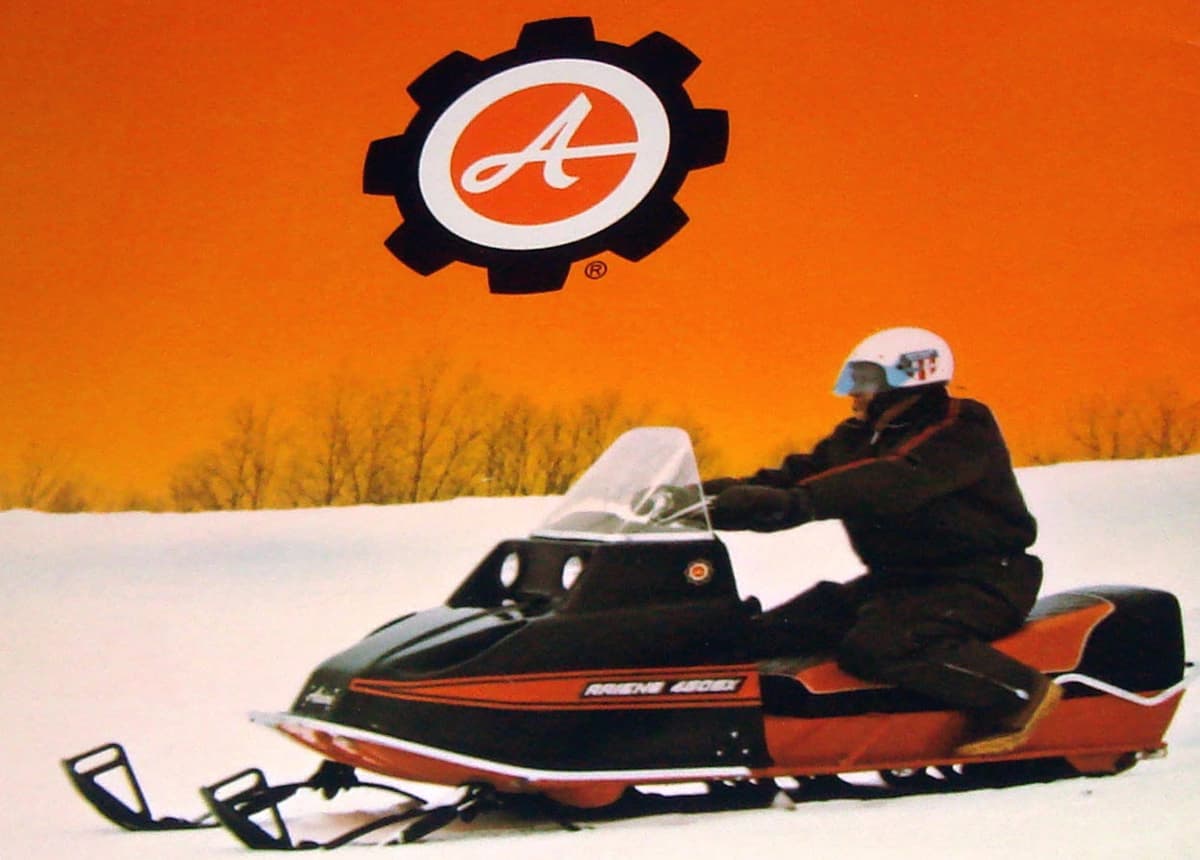
Key Points:
- larger displacement
- asserted sport-trail orientation
- stability prioritized at higher speeds
- now sought after by collectors
Commercial Limits of Ariens Snowmobiles
By the early 1970s, snowmobiling had become a highly emotional product category, influenced by racing, sporty image, and rapid innovation. Compared to bolder competitors, such as Scorpion or Chaparral, Ariens snowmobiles were viewed as reliable—but less exciting.
This perception limited their ability to establish a lasting foothold in an increasingly competitive market.
Ariens and the Economic Shock of the Early 1970s
The sharp market slowdown in the early 1970s—irregular winters, overproduction, and rising energy costs—accelerated strategic decisions.
For Ariens, snowmobiles remained secondary to its dominant sectors. The company therefore chose to withdraw quickly and cleanly, refocusing resources on powered equipment lines where it would continue to thrive.
The Legacy of Ariens Snowmobiles in Industry History
Ariens did not leave behind mythical models comparable to those of Mercury or Scorpion. Yet its passage remains meaningful. It illustrates the case of a solid industrial manufacturer that chose not to force its place in a market that did not fully align with its DNA.
In the series Former Snowmobile Manufacturers, Ariens represents:
- the boundary between utility equipment and recreational leisure
- the importance of corporate culture
- a strategic withdrawal rather than a technical failure
Ariens: A Measured Incursion into the Golden Age of Snowmobiling
Between 1970 and 1972, Ariens produced a genuine series of snowmobiles before withdrawing without disruption. A brief, structured venture consistent with the company’s philosophy.
A discreet yet fully legitimate chapter in the history of former snowmobile manufacturers.
Coming Next in the Former Snowmobile Manufacturers Series
In the next article, we will turn our attention to Skiroule, a bold Quebec manufacturer that attempted to carve out its place during snowmobiling’s golden age with original solutions and a distinct identity.
A local story shaped by innovation, the industrial realities of the time… and the challenges of a consolidating market.