


👉 The in-depth analysis of the Ski-Doo 2027 lineup is now available — essential reading for anticipating the brand’s future. Click here to see what’s really new for 2027
Every year, as official manufacturer announcements approach, the same question fuels the snowmobiling community: what new features will the next model year bring? At Ski-Doo, an iconic brand in the snowmobile industry, this period is always marked by high expectations and passionate speculation. The 2027 model year is no exception.
My colleague Maxime Fortin and I decided to take a serious look at the subject. In this article, we share our predictions for Ski-Doo snowmobiles in 2027. Our analysis is based on current market trends, recent technological evolution, and the directions taken by the competition. Of course, we are fully aware of the current economic and industrial context. Supply-chain challenges, regulatory pressures, and the energy transition are not always conducive to major revolutions. That said, the snowmobile industry has often proven its ability to reinvent itself, even during more complex periods.
It is important to clarify from the outset that this article is strictly an exercise in projection and analysis. We do not have any privileged or confidential information regarding Ski-Doo snowmobile models for 2027. Still, dreaming, anticipating, and debating are integral parts of the passion that surrounds this sport.
In this article, we present the changes and innovations we believe are plausible for Ski-Doo in 2027. We examine engines, technologies, platforms, and equipment, always from a critical, forward-looking perspective.
Ski-Doo 2027: A 900 ACE Turbo RR Engine Producing More Than 200 hp?
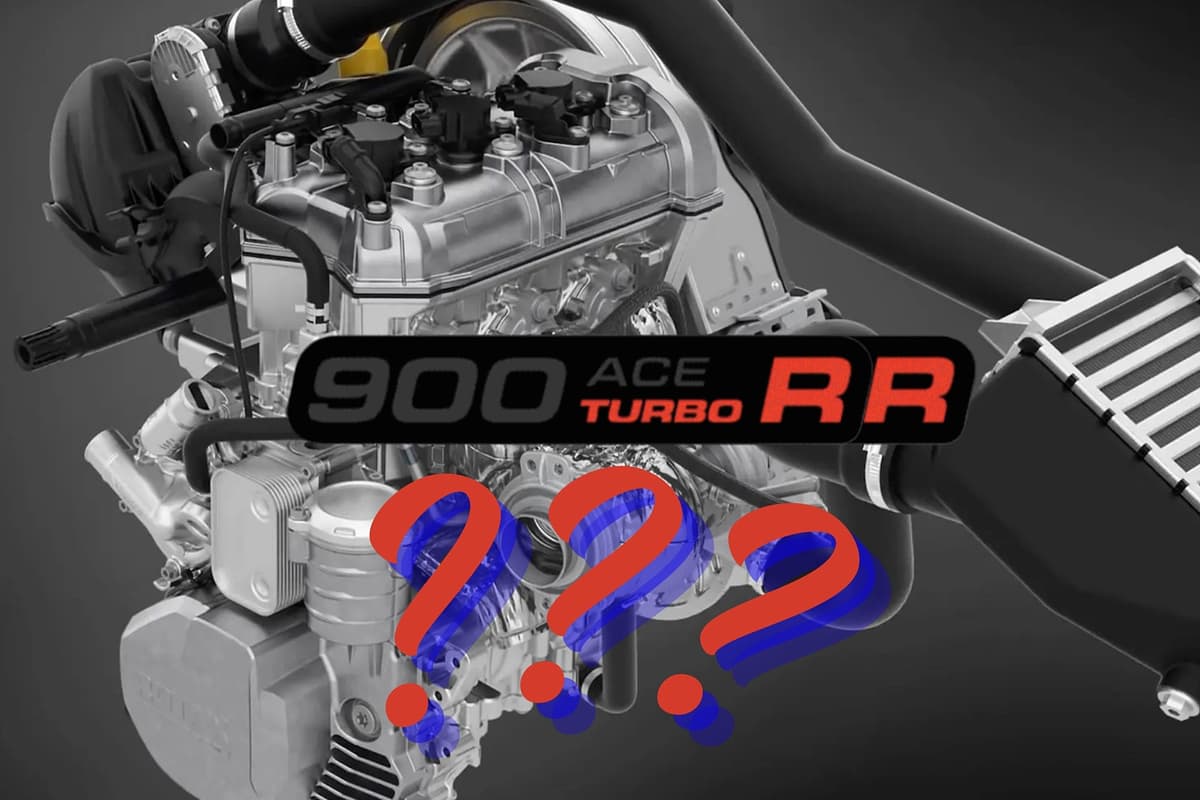
Let’s start with a prediction involving an iconic engine. The Rotax 900 ACE Turbo R has already redefined the standards for high-performance four-stroke snowmobile engines. With roughly 180 hp, a robust architecture, an efficient turbocharger, an intercooler, and advanced electronic management, this engine successfully balances power and reliability. Looking toward 2027, however, industry discussions could take a far more ambitious turn. What if Ski-Doo were preparing a 900 ACE Turbo RR capable of pushing well beyond the 200-horsepower mark?
From a technical standpoint, such an evolution is becoming increasingly credible. To reach that level, Ski-Doo would need to significantly revise the forced-induction system. In my view, this would require higher boost pressure, a more efficient intercooler, and far more aggressive electronic management. Engine mapping, precise turbo control, and thermal optimization would play key roles in extracting substantially more power than the current Turbo R, while still preserving the durability for which Rotax is known.
A 900 ACE Turbo RR producing over 200 hp would represent more than a mechanical achievement—it would be a statement of intent. As we all know, buying a snowmobile is a deeply emotional decision. Enthusiasts want what is most extreme, most advanced, and most exclusive. Such an engine would instantly become an object of desire, capable of inspiring awe both on paper and on the snow.
Installed in a performance-oriented model like the Renegade X-RS, this engine would serve as a true technological showcase. Crossing the 200 hp threshold in a four-stroke platform would have a massive marketing impact for Ski-Doo, further cementing its status as a benchmark in the high-end segment. Once again, the Canadian manufacturer would be pushing the boundaries of modern snowmobiling.
Ski-Doo 2027: Electrification Moving Toward More Versatile Snowmobiles?
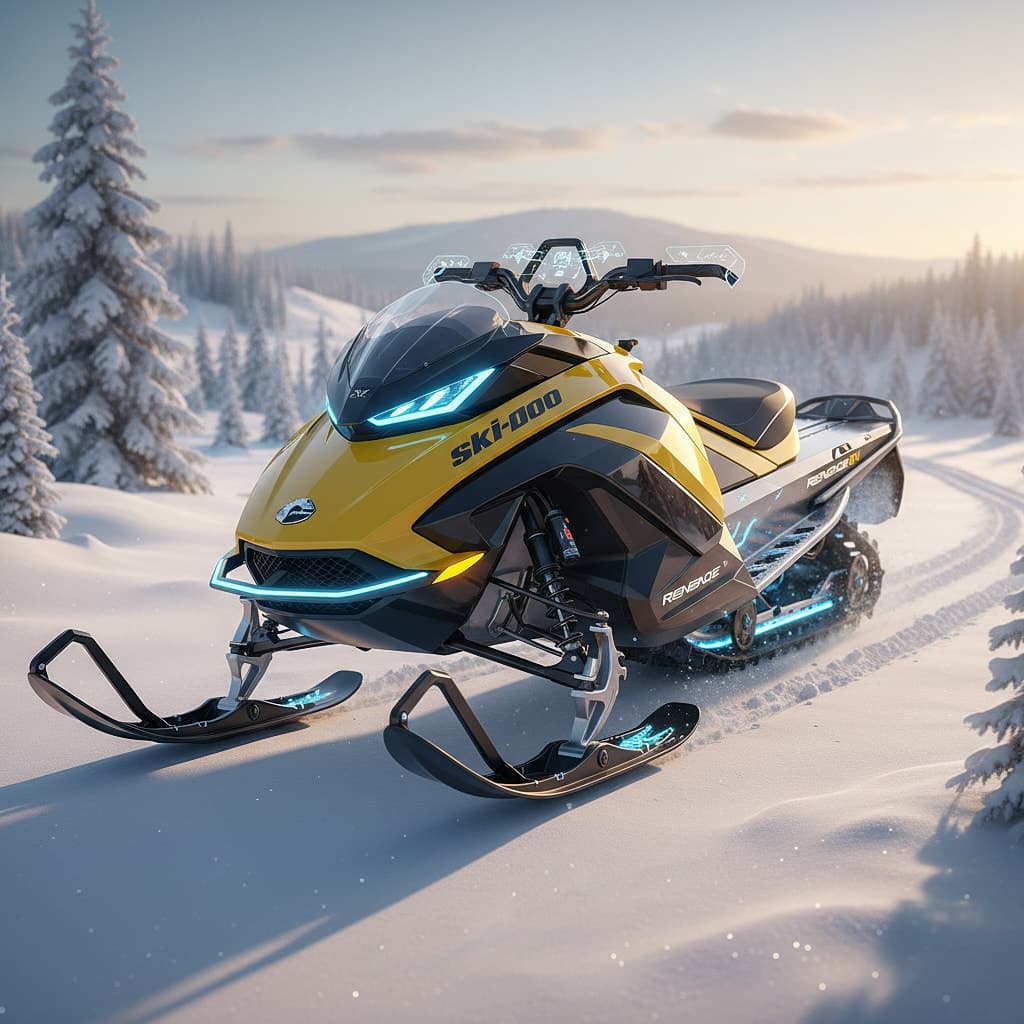
As powersports enter a major transition, Ski-Doo could continue expanding the electrification of its lineup in 2027. Following the introduction of its first electric models—such as the Grand Touring Electric and Expedition Electric, powered by Rotax E-Power technology—BRP has clearly signalled its intention to broaden this approach across additional segments.
Current electric models already deliver a zero-emission experience, with an estimated range of 30 km to 50 km per charge, depending on usage and conditions. This solution has found its audience in very specific applications: short-distance travel, commercial use—particularly at ski resorts—and recreational outings where quiet operation and simplicity take priority.
For 2027, Ski-Doo could take the concept further. Electrifying more versatile or mainstream-oriented models would likely involve higher-capacity batteries and more efficient energy management systems. The goal would be clear: increase range without sacrificing baseline performance.
By extending this technology to utility snowmobiles or certain touring models, Ski-Doo would address the growing demand for more environmentally responsible vehicles that remain functional and well-suited to real winter conditions.
This electric shift is part of a broader strategy. It aims to reduce product carbon footprint while opening the door to new ways of experiencing winter, whether on groomed trails, in commercial settings, or close to home base.
Will the Rotax 600R Be Replaced by a 650 or 700 cc Engine?
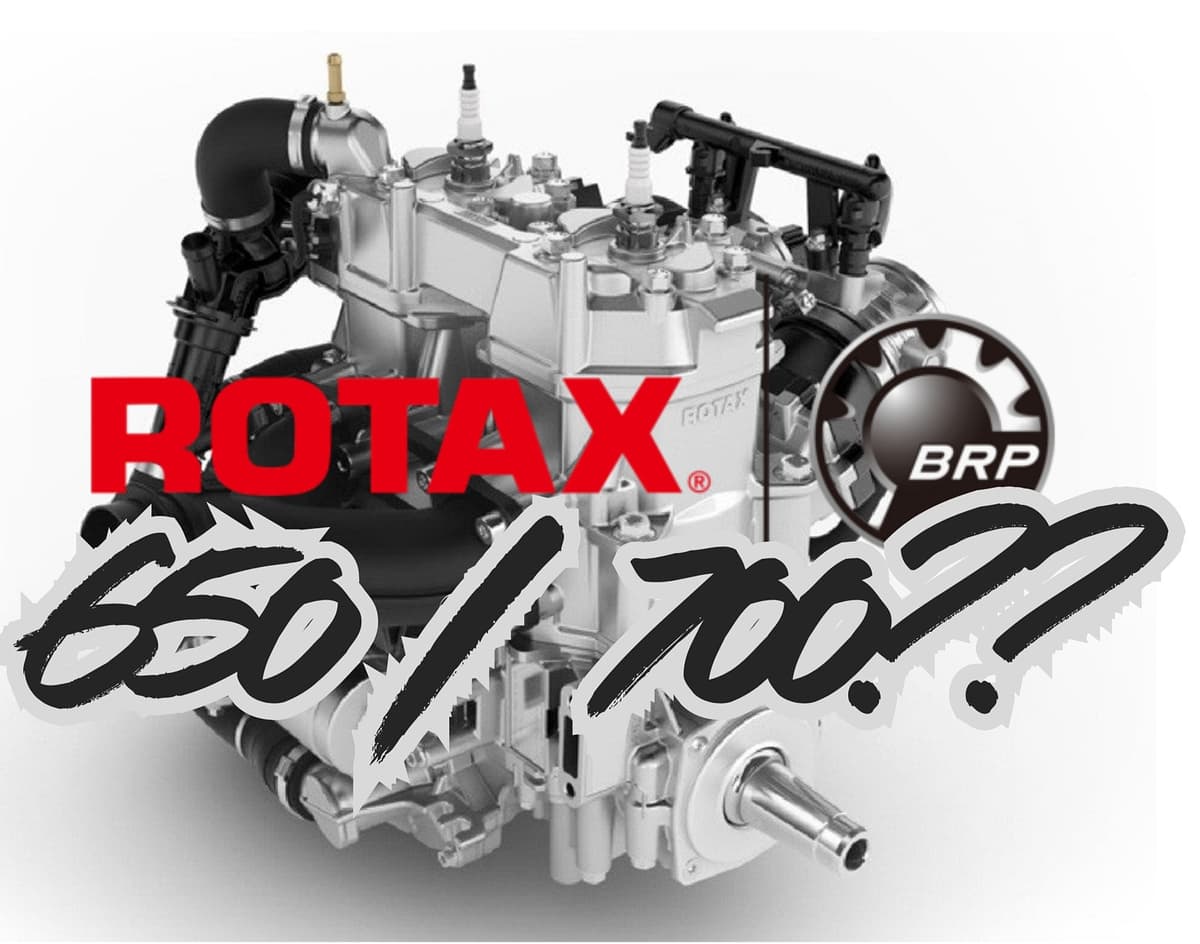
Since its introduction in 2018, the Rotax 600R E-TEC engine has been a cornerstone of Ski-Doo’s snowmobile lineup in the 600 cc segment. Delivering roughly 125 hp in a lightweight two-stroke configuration thanks to second-generation E-TEC technology, it has earned a solid reputation. Despite its respectable performance and popularity, questions are now being raised about the future of the 600R within Ski-Doo’s lineup, especially as the 2027 models approach.
Competition in the mid-displacement engine segment has intensified. For example, Polaris has offered its 650 Patriot engine for several years. Built on the architecture of larger engines, it delivers more power than traditional 600-class engines while remaining efficient and versatile. Many riders and industry analysts believe that for Ski-Doo to remain competitive against these larger-displacement options, a gradual replacement of the 600R with a higher-capacity engine may be inevitable.
A 650 or 700 cc Rotax engine would offer increased torque, more power, and a broader usable power band. This would allow Ski-Doo to better compete in trail, crossover, and off-trail segments, while staying within a weight and performance range accessible to a wide audience. I could easily see such an evolution appearing in the MXZ X-RS or sport-utility variants, where stronger power delivery and throttle response can significantly transform the riding experience.
In my view, as technology and rider expectations continue to evolve, 2027 could mark the gradual rundown of the Rotax 600R. A more modern and powerful replacement would put Ski-Doo in a stronger competitive position across the North American landscape.
Electronic Power Steering (EPS): A Hard-to-Justify Absence at Ski-Doo
In today’s snowmobile market, a growing number of riders consider electronic power steering (EPS) to be essential. Some manufacturers have already taken a clear lead in this area. Arctic Cat, for example, offers EPS on two-stroke models such as the EXT Special 858 and the more recent ZR 600 EPS. To date, Ski-Doo has yet to widely deploy this technology across its core lineup.
EPS provides a significant improvement in handling, particularly at low speeds and in tight trail conditions. It reduces steering effort and helps minimize vibrations felt at the handlebars. As a result, riding becomes more intuitive and less fatiguing, especially over long distances. Arctic Cat has highlighted this advantage in its latest models, and EPS is increasingly becoming a decisive factor for riders seeking comfort without compromising performance.
By contrast, Ski-Doo still does not offer standard EPS on its Grand Touring or Expedition models. Given their touring and long-distance focus, these platforms would seem like obvious candidates. For many, this absence is perceived as a gap in Ski-Doo’s offering—almost a contradiction for a brand built on innovation.
In my opinion, a gradual introduction of EPS on Grand Touring and Expedition snowmobiles for 2027 would significantly enhance the rider experience. It would also pave the way for expansion to other popular models, including the Renegade lineup and even certain sport-oriented machines. By launching EPS first on comfort-focused, mainstream snowmobiles, Ski-Doo could then extend the technology into its high-performance range, strengthening its competitive position.
In short, electronic power steering represents a logical step in the evolution of modern snowmobiles. As such, broader adoption by Ski-Doo in 2027 seems not only likely, but necessary to meet the expectations of demanding riders.
Ski-Doo Snowmobiles 2027: A Pivotal Year for Innovation
Ultimately, the 2027 model year could mark a significant strategic turning point for Ski-Doo. Increased power and technological evolution would help reposition the manufacturer against an increasingly aggressive competitive landscape. Whether it involves a potential 200 hp 900 ACE Turbo RR engine, expanded electrification, the replacement of the 600R with a more modern mid-displacement engine, or the long-awaited arrival of electronic power steering, expectations are high. These remain predictions, but one thing is certain: Ski-Doo will need to continue innovating to remain the benchmark for the most demanding snowmobilers in North America.