


At first glance, when you look at what’s new from Ski-Doo for 2027, you might think the manufacturer is serving up a quiet year. No headline-grabbing revolution, no all-new platform, and no engine that flips the industry on its head.
But that first impression doesn’t last long once you start digging.
When you break down each change—whether it’s powertrain strategy, chassis evolution, weight reduction, or the repositioning of key models—you quickly realize 2027 is anything but “business as usual.” If anything, Ski-Doo looks like it took a deliberate pause to correct, optimize, and refine its lineup with surgical precision.
And in the snowmobile world, those are often the years that age the best.
A clear strategy: refine instead of reinvent
Over the last few seasons, Ski-Doo has already built an extremely strong technological foundation. Instead of starting from scratch, the brand is now leaning into a much more mature approach: remove the irritants, improve the real-world rider experience, and sharpen the purpose of every segment.
You can feel a confident engineering philosophy behind it: fewer compromises, more coherence.
The goal is no longer just to build a good snowmobile—it’s to build the right snowmobile for each type of rider.
The Rotax 600RR E-TEC: more than a new engine, a repositioning
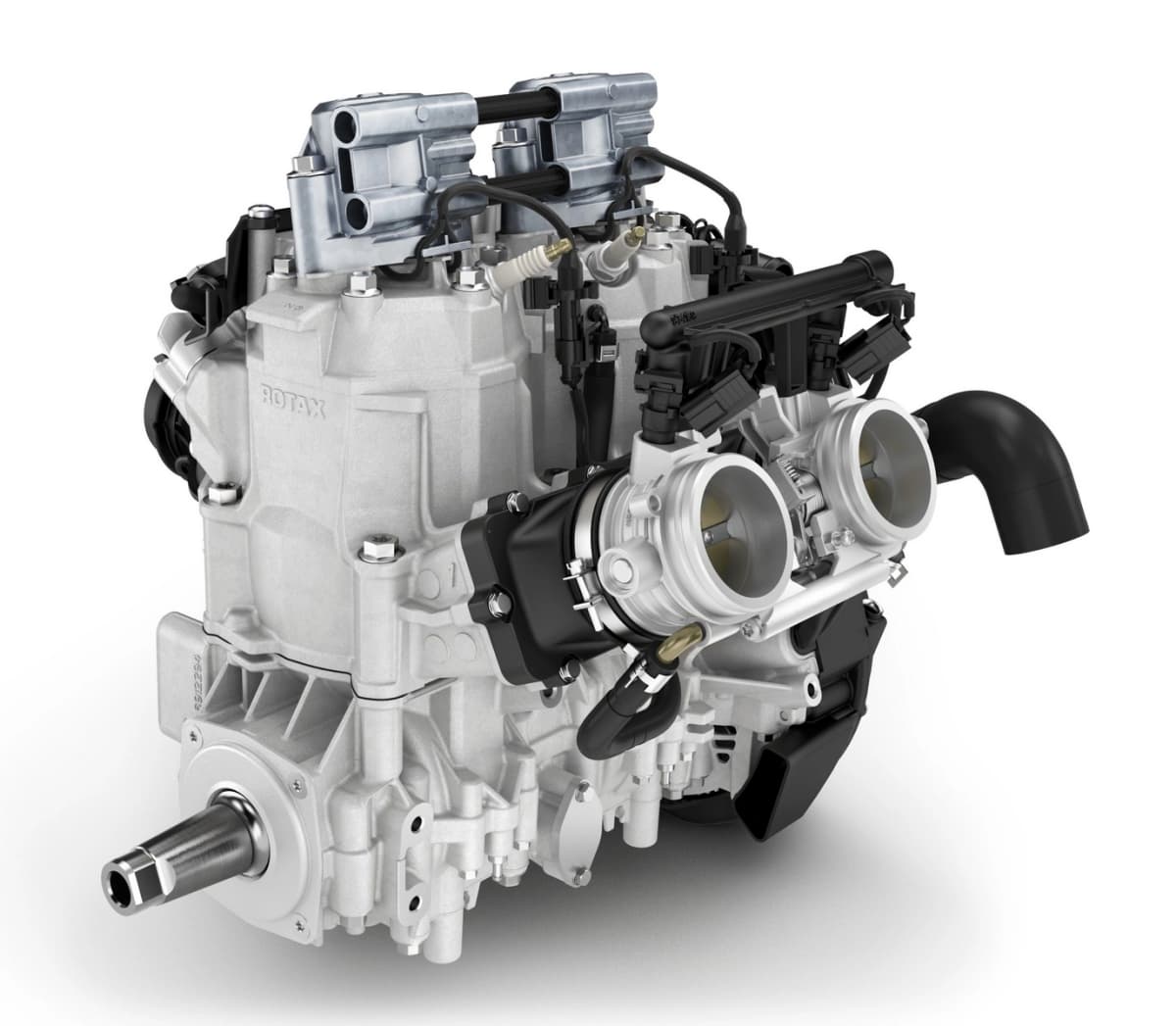
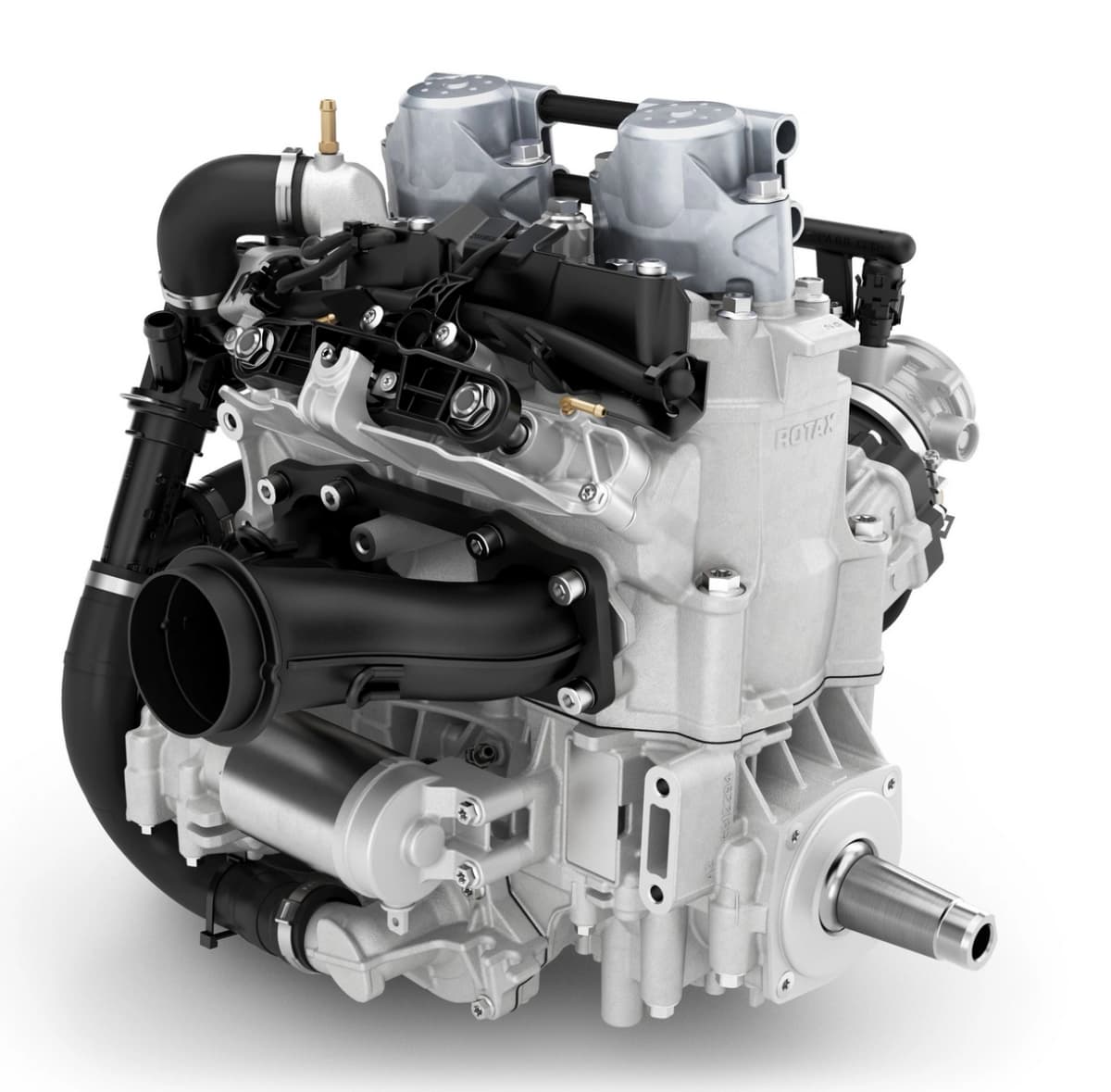
The arrival of the Rotax 600RR E-TEC is more than a simple mechanical update. It redefines what a mid-displacement two-stroke can be.
With 130 horsepower and a noticeably sharper throttle response, this engine intelligently fills the gap between entry-level powerplants and the more aggressive performance options. But what stands out most is the balance Ski-Doo is chasing.
More power—yes.
But also less fuel.
Less oil.
And more electronic intelligence.
Analysis
We’re seeing a clear trend at Ski-Doo: raw performance alone isn’t enough anymore. The manufacturer is now focused on improving running costs and usability—without watering down the fun.
The smart Eco mode is a perfect example. Unlike traditional “economy” settings that feel restrictive, this one automatically adjusts parameters to reduce consumption while instantly unlocking full power the moment the rider asks for it.
Same logic with Silent-Stop: simple on paper, but genuinely impactful in trail reality.
Spend any time on the trails, stop at a warm-up shack, or glance at dealer inventory and one thing becomes obvious: a large share of riders gravitate toward 800 or 850-class displacement—or their four-stroke equivalents. But if we set ego aside for a moment, one question deserves to be asked honestly: how many times per season do you truly use that extra power? Twice? Three times? For the vast majority of riders, a 600 or 650-class engine already delivers more than enough enjoyment—whether you’re logging long-distance miles, riding aggressively, or making quick passes.
The reality is that big displacement comes with a higher purchase price, higher fuel consumption—logical, power has a cost—and in the case of two-strokes, typically higher oil consumption as well. That’s not a knock against those engines; it’s simply a reminder that performance always needs to be weighed against real-world use.
That’s exactly why an engine like the 600RR E-TEC is so promising. By delivering a tangible performance boost in a mid-displacement package while keeping pricing comparable to its predecessor, Ski-Doo is sending a clear message: this segment deserves serious attention. In a market where snowmobile prices are reaching new highs, offering an engine that’s livelier, smarter, and more efficient is an extremely relevant strategy. And honestly, for a very large number of riders, this could be the true sweet spot between fun, performance, and reason.
This kind of innovation doesn’t always make headlines… but it changes day-to-day snowmobiling.
And that’s exactly what Ski-Doo seems to be aiming for in 2027.
REV Gen5 everywhere: the transition is officially over
With the REV Gen5 platform now rolling across the entire lineup, Ski-Doo is completing a major transition that started several years ago.
That’s not a small detail.
When a manufacturer standardizes a platform, it usually means three things:
- Better-controlled ergonomics
- A more predictable riding experience
- Faster future development
Analysis
REV Gen5 has become the backbone of Ski-Doo. Narrow in deep snow, stable on trail, and comfortable in utility applications—the chassis is now proving its versatility.
This is often the exact moment in a platform’s lifecycle when it reaches full maturity.
And for buyers, that’s usually very good news.
Skandic and Tundra: the modernization riders have been waiting for
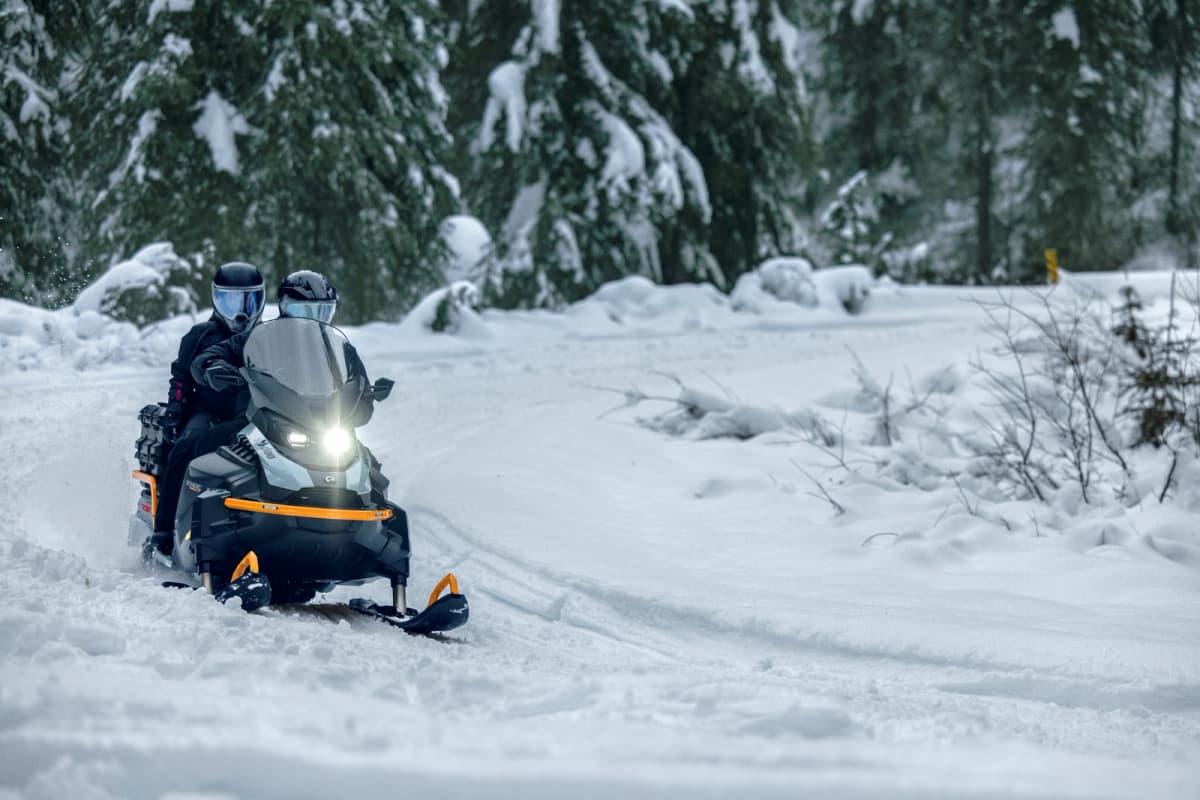
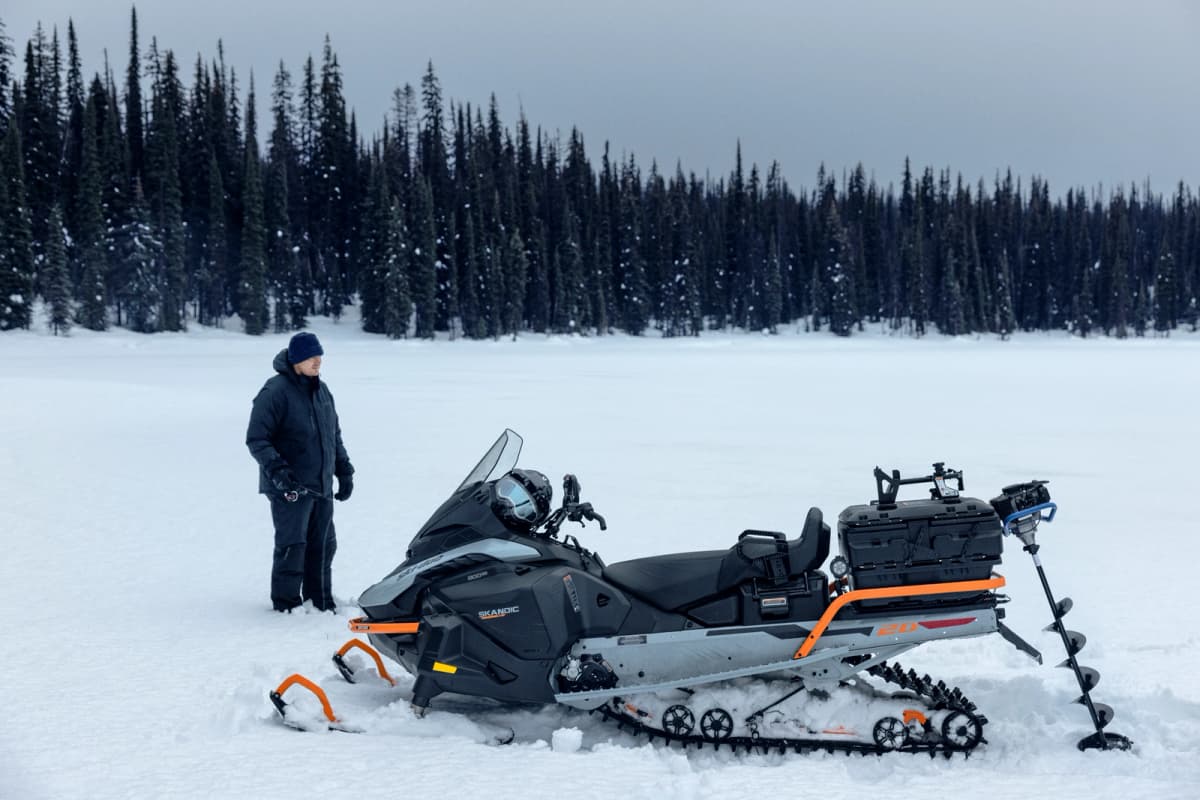
Moving to REV Gen5 literally changes how these utility models are perceived. Less rudimentary, more refined, better isolated from vibration—they’re now approaching the sophistication level of Ski-Doo’s recreational segments.
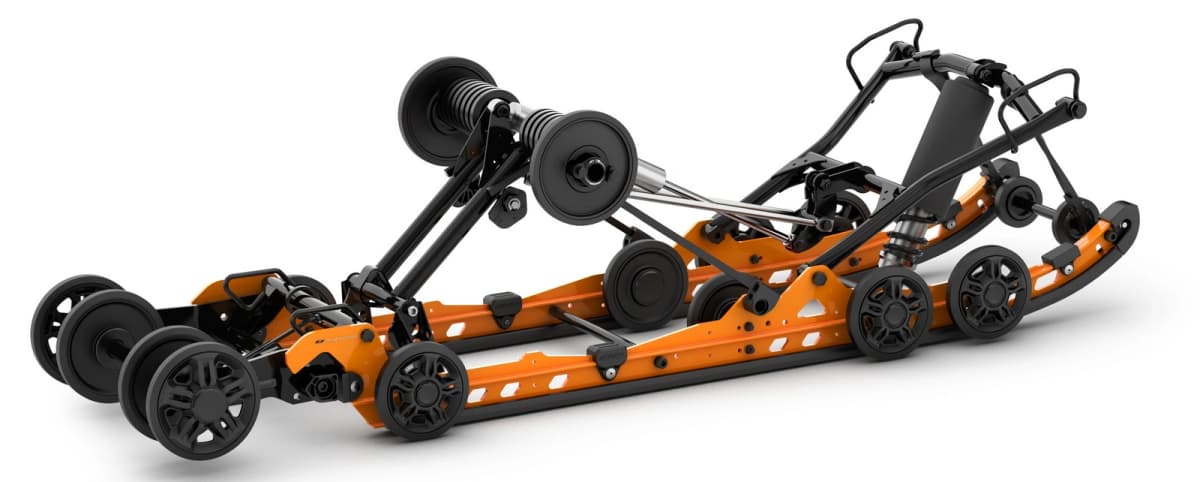
The uMotion suspension deserves a special mention. More travel, better weight-transfer control, and increased capability: everything suggests Ski-Doo wants these machines to be as competent under load as they are enjoyable to ride.
Analysis
Over the last few years, let’s say it plainly: Skandic and Tundra riders have sometimes felt pushed to the side. Some recent launches created real frustration—and you only had to scan social media to see how many users were waiting for a more serious modernization of these machines, despite how essential they are in the Ski-Doo lineup.
In 2027, the message is clear: Ski-Doo heard its customers.
The move to REV Gen5 isn’t a minor technical refresh—it’s a major transformation. We’re talking about a modern, proven platform that’s noticeably more refined, and it completely changes the perception of these utility models.
Same conclusion with uMotion. More travel—with a 27 mm gain—calibration better suited to real work and long-distance riding, and, above all, performance that clearly exceeds the previous generation. For owners, that should translate into a ride that’s more comfortable, more stable, and better controlled, regardless of load or conditions.
Strategic positioning
This migration to REV Gen5 matters, because it completes the bridge between the old architecture and the new one. In other words, Ski-Doo is officially closing a technological chapter.
But more importantly—it sends a strong signal: utility segments are no longer an afterthought.
In a market where these snowmobiles play a critical role for workers, hunters, trappers, and long-range travellers, this could easily be one of the most important moves of the year… even if it makes less noise than a new engine.
Sometimes the best updates aren’t the most spectacular—they’re the ones owners have been waiting for. You can feel Ski-Doo targeting a new type of buyer: someone who works with their snowmobile… but no longer wants to sacrifice comfort to do it.
Expedition LE 16 in.: the strategist model
In any lineup, some models make noise.
Others move volume.
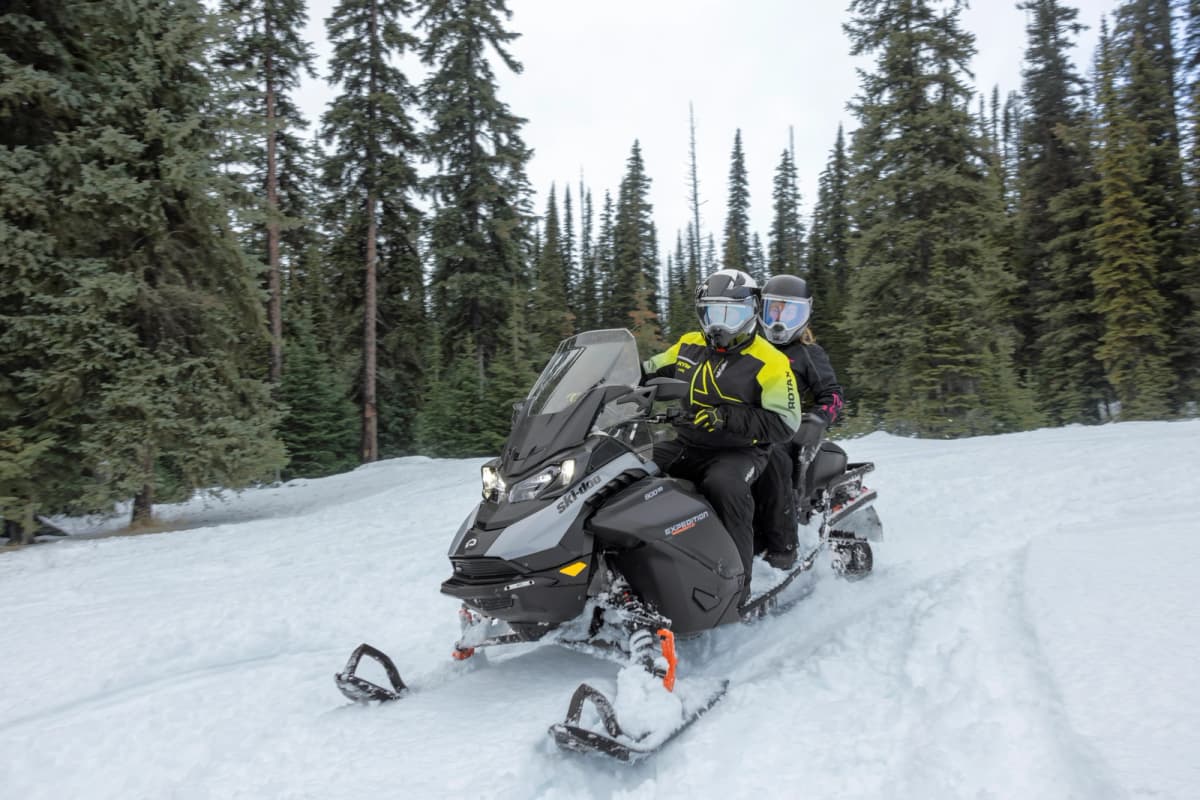
The Expedition LE 16-inch track clearly belongs to the second category.
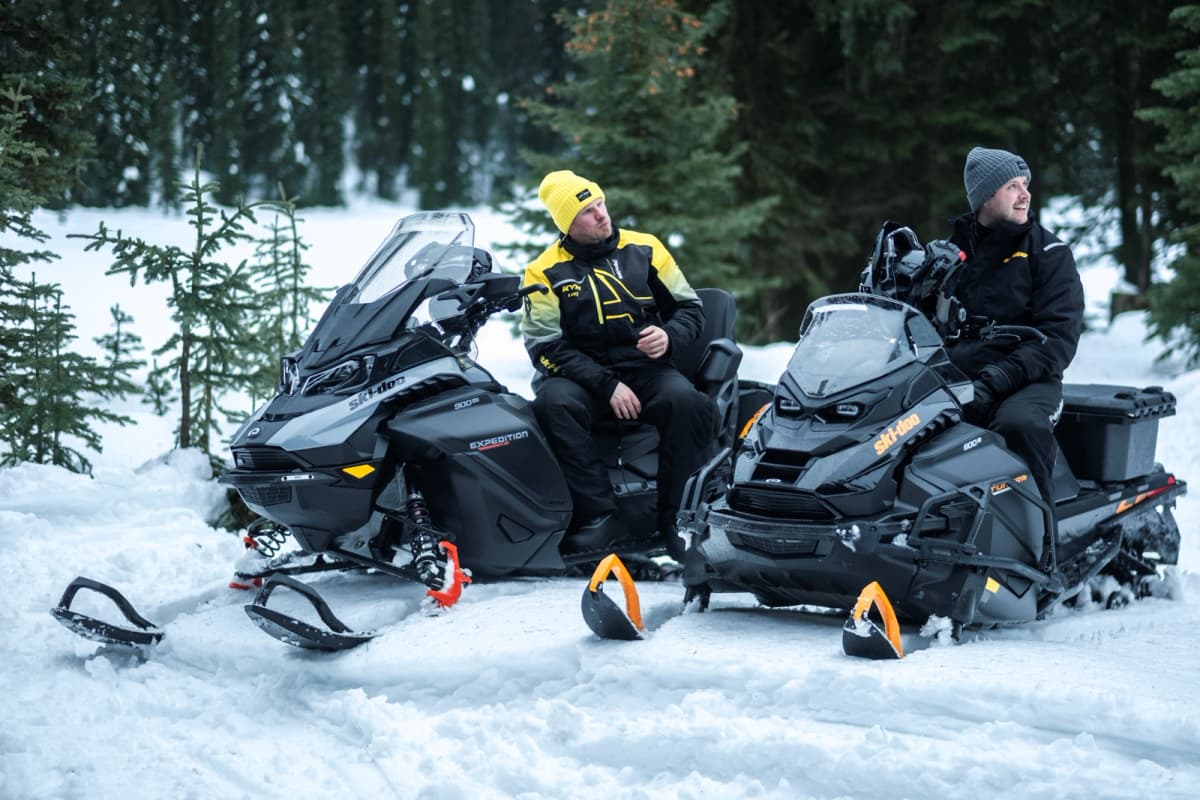
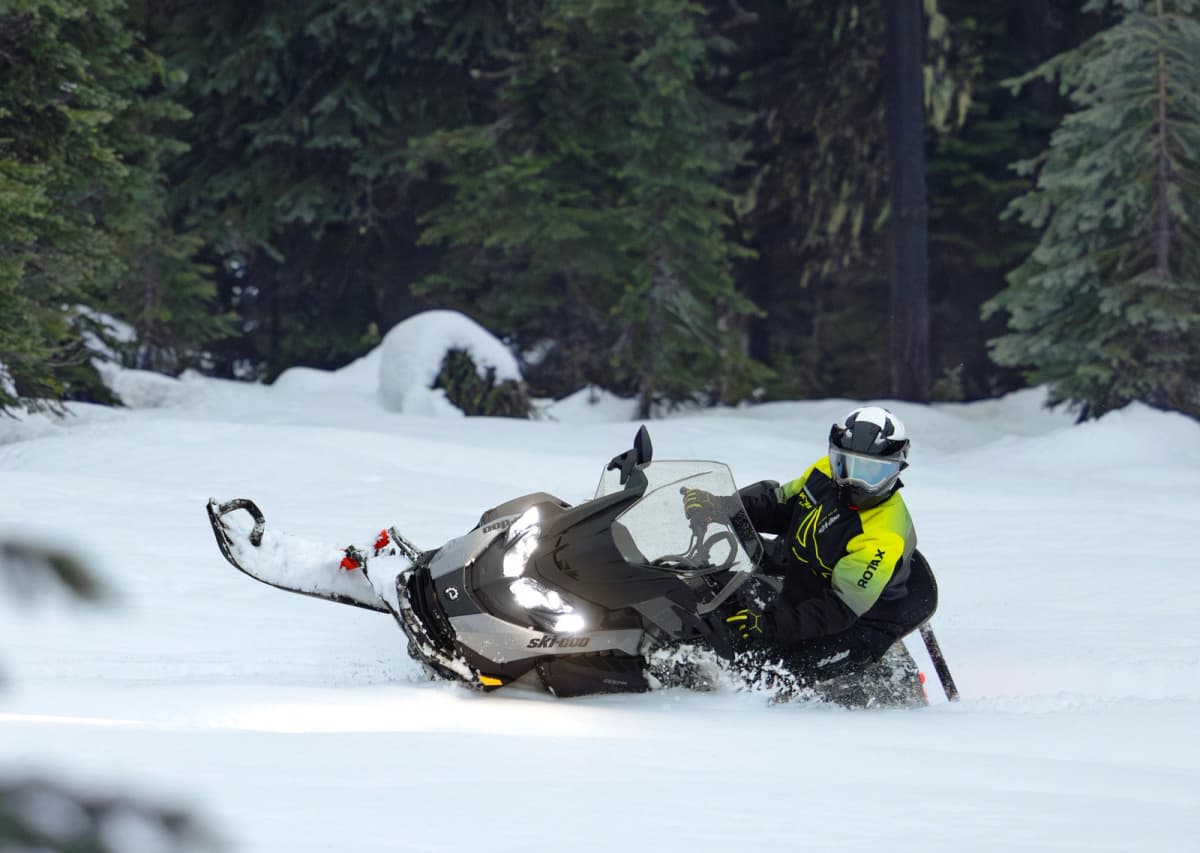
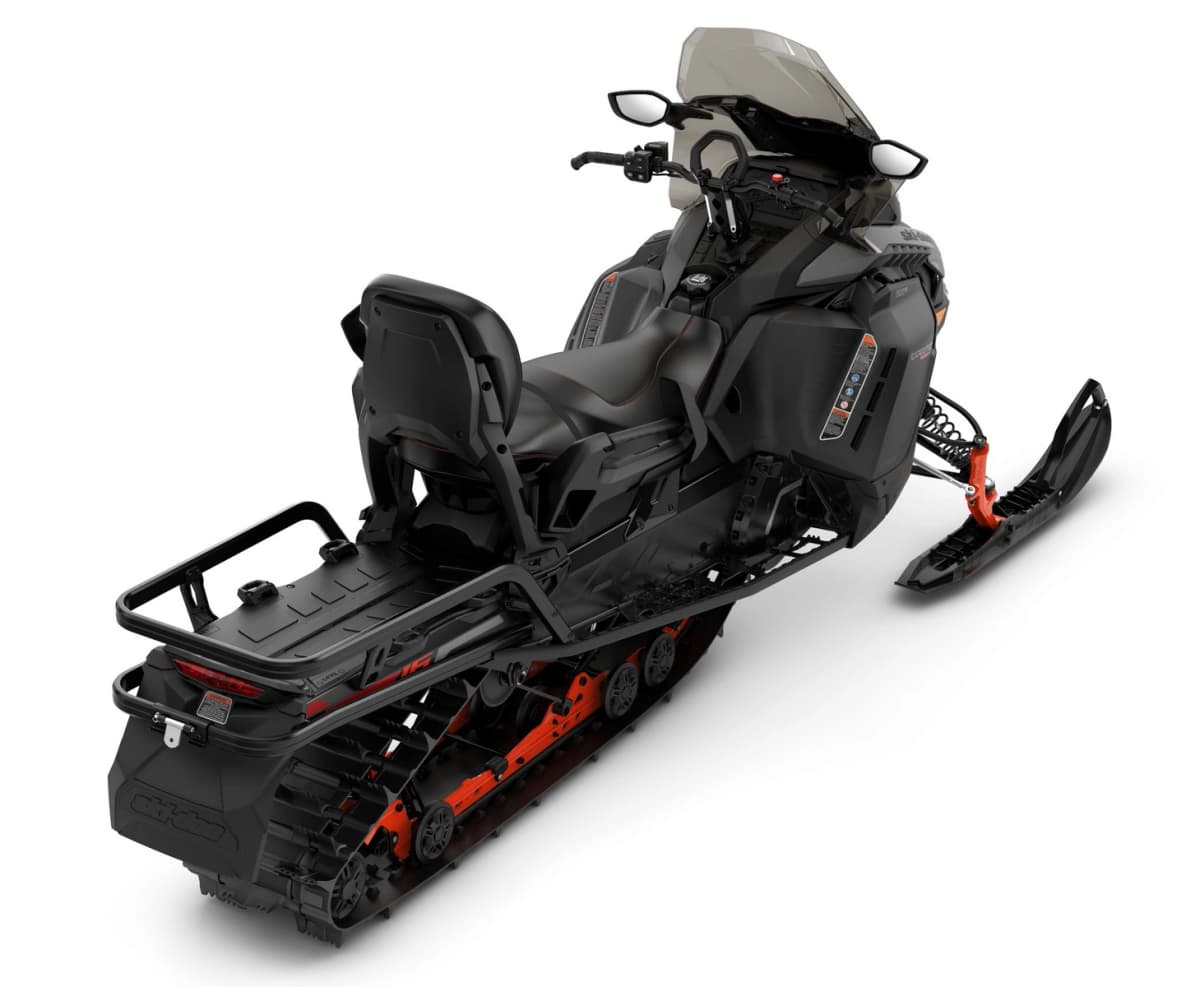
Positioned between the Sport versions and the wider models, it fills a strategic gap. Tough enough for serious tasks, yet refined enough for touring—this is exactly the kind of snowmobile that attracts a broad audience.
Analysis
The message is simple: Ski-Doo is fixing a blind spot in its lineup.
For a few years now, there’s been a gap between pure touring sleds like the Grand Touring and the tougher utility-focused machines in the Expedition family. Meanwhile, some competitors had already started working that space with hybrid models aimed at riders looking for an intelligent compromise.
With the Expedition LE 16-inch, Ski-Doo isn’t following the trend—it’s clearly reclaiming that territory.
Somewhere between the Grand Touring and the 20-inch Expedition, this new configuration feels like a true balance machine. It keeps the utility DNA and robustness of the Expedition platform, but in a more accessible format—less imposing and easier to live with day to day.
The 16-inch track plays a defining role. It delivers more flotation and traction than narrower setups typically associated with 15-inch tracks, while avoiding the heaviness and “truck-like” feel of the very wide platforms. Result: a sled that stays reassuring off-trail while maintaining a more natural touring behaviour.
Strategic positioning
What Ski-Doo is really offering here isn’t just a new model—it’s an answer for riders who were stuck between two philosophies.
👉 Too utility-focused to choose a Grand Touring.
👉 Not work-oriented enough to justify a wide (20-inch) Expedition.
This sled becomes a direct solution to a very real purchase dilemma.
And in a market where machines cost more than ever, buyers are looking to maximize versatility without multiplying compromises.
Very honestly, it wouldn’t be surprising to see this configuration become one of the most logical choices in the lineup for a large share of riders.
Because sometimes, the best snowmobile isn’t the one that does the most.
It’s the one that does everything… well enough.
X-RS: celebrating without getting stuck in nostalgia
Anniversary editions are sometimes purely cosmetic. Not here.
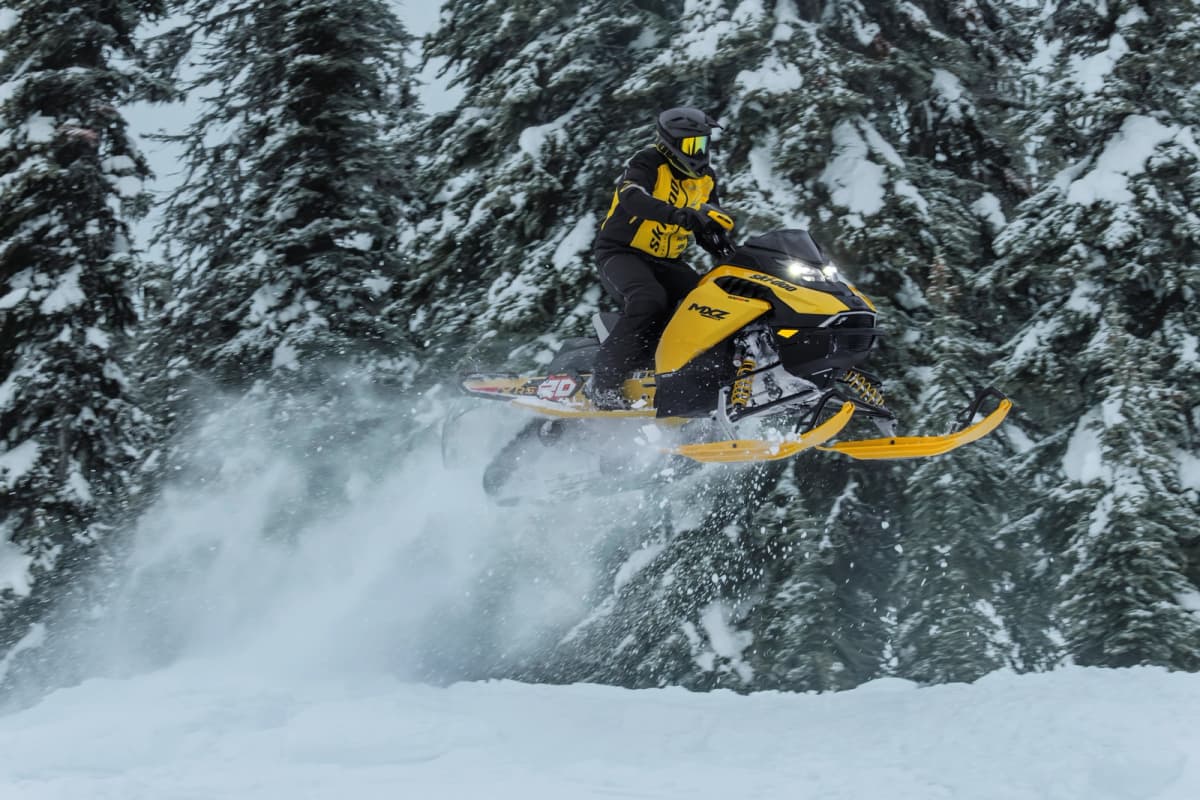
To mark 20 years of X-RS, Ski-Doo didn’t simply add a few decals or a retro colour palette. Instead, the brand revisits the very essence of a model born from racing—a snowmobile designed from day one to bring competition-grade technology directly into the hands of demanding riders.
Since 2007, X-RS has been a rolling laboratory where the best components are combined and calibrated to work in perfect harmony. And for this anniversary edition, that philosophy feels more obvious than ever.
Visually, the exclusive Circuit Yellow colour and Evo Stinger badges immediately signal the sled’s sporting heritage. But the real upgrades live under the surface.
MXZ models inherit race-style front shocks with full-range adjustability for compression and rebound, both high- and low-speed—fine-tuning straight from the racing world. There’s also an exclusive removable tunnel plate, yellow shock springs, and an Evo Stinger race handlebar pad—details that reinforce the sled’s ultra-performance character.
But most importantly, these machines rely on KYB Pro 40 external reservoir shocks known for exceptional capacity, durability, and control in harsh conditions—plus a quick three-position adjustment offering up to 50% more compression. In other words: hardware built to be pushed hard.
A race-derived adjustment device—borrowed from the MXZ race sled—also allows quick suspension behaviour changes without compromise, something experienced riders will appreciate when they want to dial in their calibration.
And it doesn’t stop there. Certain models also get Pilot RX skis with a wider, more aggressive keel, designed for sharper, more predictable cornering—exactly what you expect from a performance-oriented sled.
Analysis
What stands out about this 20th anniversary edition isn’t nostalgia—it’s product maturity.
X-RS no longer needs to prove it’s high performance. It already is. Ski-Doo seems more interested in reminding the market why this model became a benchmark.
There’s a clear intent: keep a direct link between racing and production snowmobiles. And in an industry where many sport models are trending more accessible—sometimes at the expense of their edge—X-RS continues to fully embrace its purpose.
It’s not a snowmobile for everyone.
It’s a snowmobile for riders who want to feel the trail through the bars.
Strategic positioning
In reality, this anniversary edition does more than celebrate a milestone: it reinforces X-RS as a technological showcase.
Because when a manufacturer chooses to integrate so many competition-inspired components into a production model, it sends a very clear message:
👉 performance remains at the core of its DNA.
And even after 20 years, X-RS still embodies that promise better than anything else in the lineup.
Renegade X-RS and Backcountry X-RS: race DNA applied to versatility
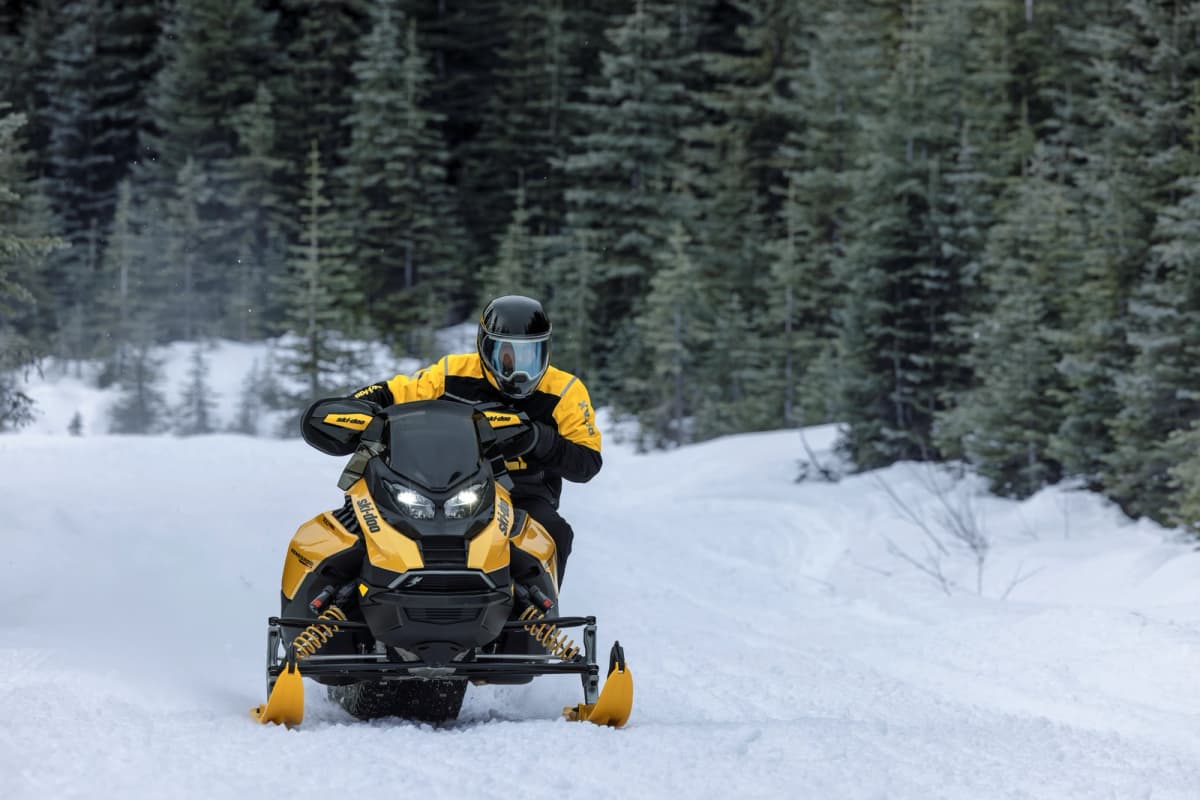
If the MXZ X-RS remains the reference for pure trail performance, it would be wrong to assume the 20th anniversary upgrades stop there. Renegade X-RS and Backcountry X-RS also benefit from this special edition, with a slightly different approach: preserve racing heritage while adapting it to machines built to cover more ground.
Visually, these models wear the exclusive Circuit Yellow livery along with new Evo Stinger badges and custom design elements. It’s not just a styling nod—it’s a clear reminder of the high-performance identity that has defined the X-RS family since day one.
But the real strength of these sleds is their component mix. True to X-RS philosophy, they combine the best elements from each system, calibrated to work together in perfect harmony—an approach directly inspired by racing development, where every detail must contribute to overall performance.
On the engine side, the offering remains particularly strong, with several options including 850 E-TEC, 850 E-TEC Turbo R, the new 600RR E-TEC, and 900 ACE Turbo R. That mechanical variety lets riders tailor the sled to their riding style—whether they prioritize endurance, acceleration, or outright power.
Analysis
What truly sets Renegade and Backcountry X-RS apart is their ability to democratize performance without diluting it.
Unlike the MXZ, which often targets riders focused on aggressive trail riding, these models extend the X-RS experience into a more versatile use case. They’re built to attack a rough trail in the morning, rack up kilometres in the afternoon, and step off the groomed line when the opportunity presents itself—without ever feeling out of their element.
In other words, Ski-Doo isn’t just celebrating an anniversary: it’s expanding the reach of the X-RS badge across multiple strategic segments.
Strategic positioning
This decision isn’t trivial.
By extending the anniversary edition to platforms like Renegade and Backcountry, Ski-Doo sends a very clear message: performance is no longer confined to a single category.
X-RS becomes almost a technological signature—a stamp that guarantees a higher level of engineering, regardless of where you ride.
And in a market where riders increasingly want sleds that can do it all without sacrificing fun, this positioning is genuinely smart.
Because deep down, many riders want the precision of a race sled… without being limited to perfect trails.
Renegade X-RS and Backcountry X-RS deliver exactly that.
Summit: specialization goes up another notch
The simplified naming might look minor, but it actually signals a push to clarify the lineup.
Each model becomes easier to identify.
Each mechanical personality feels more deliberate.
- Adrenaline focuses on agility and accessibility
- Edge pushes precision further
- Expert keeps shedding weight
Analysis
We’re watching the mountain segment become increasingly micro-segmented. Ski-Doo is no longer trying to build one machine that does everything—it’s building specialized tools for each riding style.
For mountain riders, that’s exactly what you want to see.
Freeride 2027: a perfect example of smart evolution
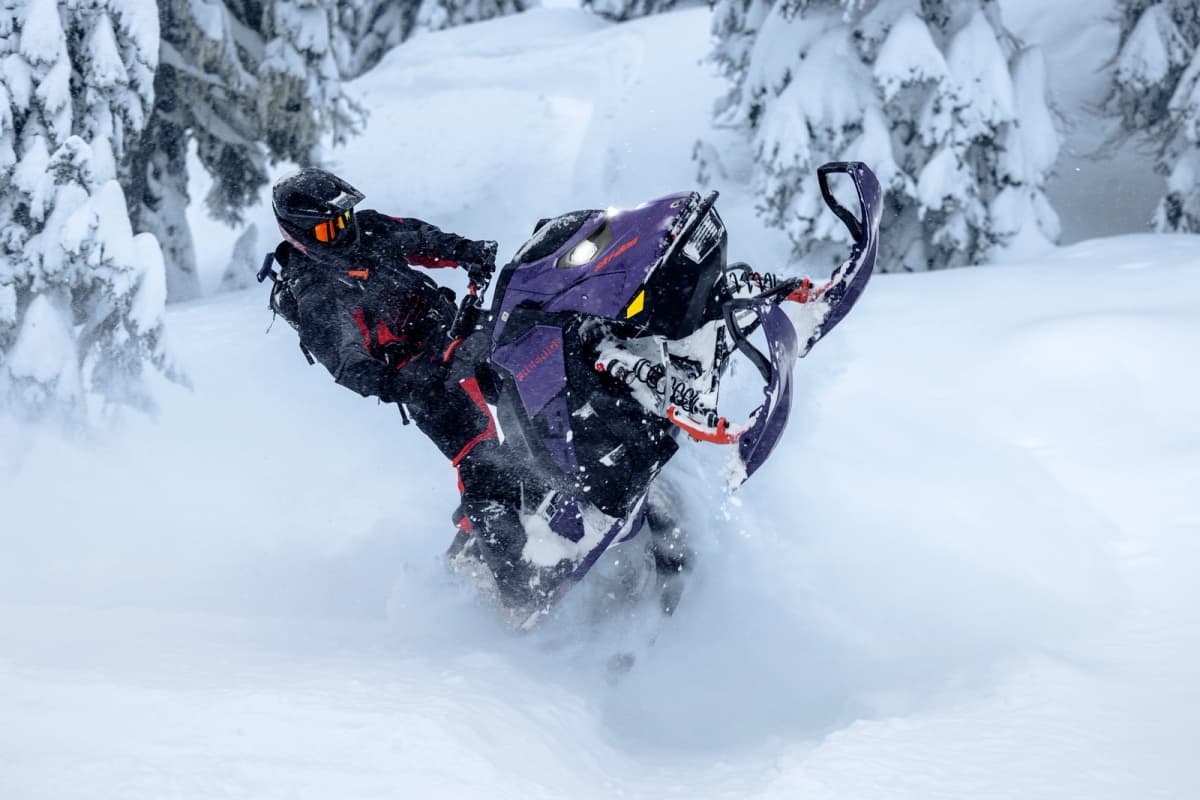
Freeride gets shorter, lighter, more radical—but above all, more thoughtful.
Shorter tunnel, Twin Link steering, narrower ski stance, and a new track that reduces rotating mass: everything points to one clear goal—improve real-world manoeuvrability.
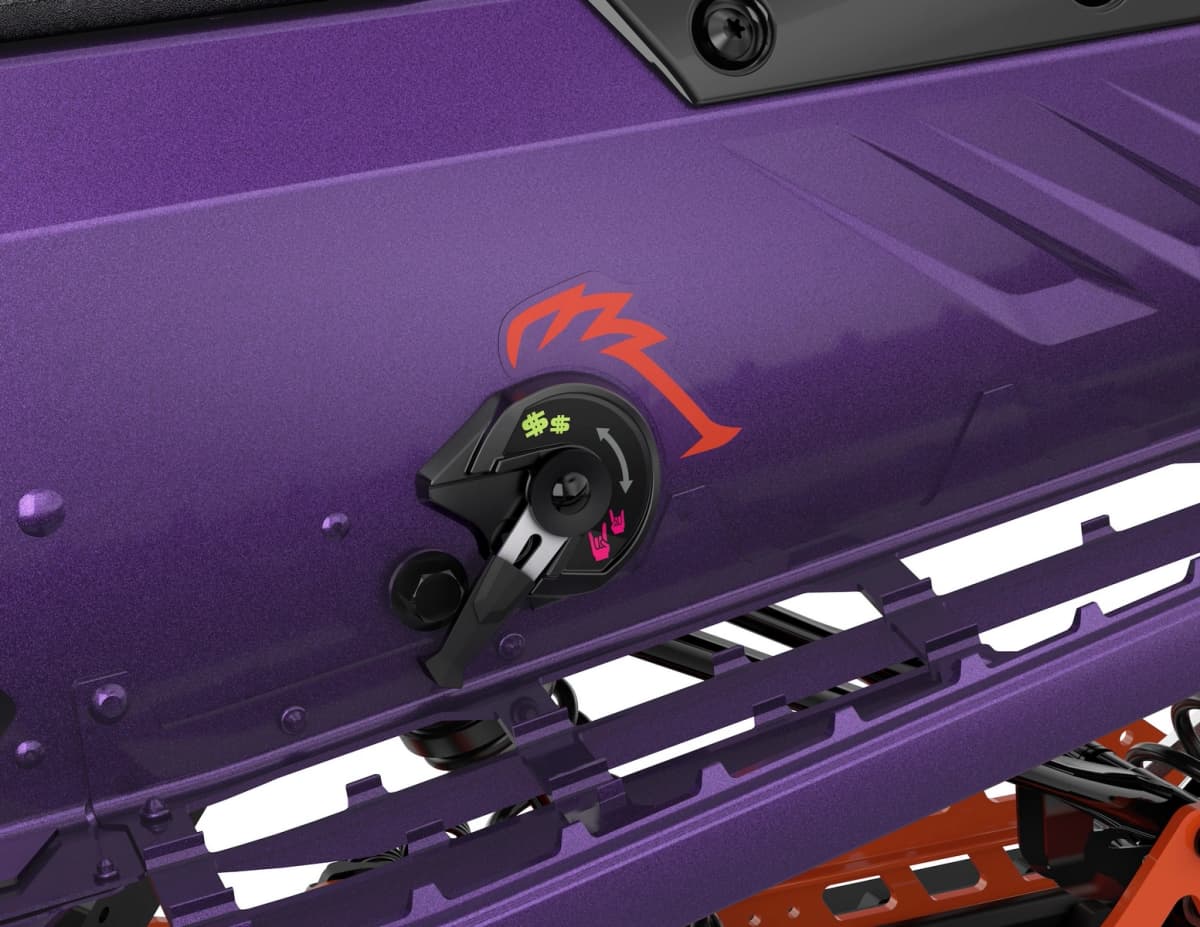
The adjustable limiter strap sums up the sled’s personality:
Party when you want to play.
Business when it gets technical.
Analysis
Dropping up to 14 lb might look modest on paper. On snow, it’s huge.
Every pound removed reduces fatigue, improves transitions, and increases control.
Experienced riders know it: lightness is often the purest form of power.
The weight war: an obsession that pays off
Several models benefit from shorter tunnels, optimized heat exchangers, and lighter components.
It’s not just about numbers.
Less snow buildup.
Less drag.
More freedom of movement.
Analysis
For several years now, Ski-Doo has been waging what looks like a real war on unnecessary pounds—and once again, the manufacturer proves it doesn’t consider the mission complete. On snow, every pound removed translates into a sled that feels sharper, more predictable, and—most importantly—less physically demanding for the rider. It’s the kind of improvement that doesn’t always jump off a spec sheet, but you feel it immediately at the bars.
Mountain riders understand this better than anyone: reducing a snowmobile’s weight is often an obsession… and an extremely expensive operation. Many enthusiasts spend thousands of dollars to remove just a kilo or two from their sled. And even then, those modifications can sometimes alter factory behaviour—or disrupt the balance engineers spent years perfecting.
That’s exactly what makes Ski-Doo’s approach so impressive.
Instead of leaving this work to owners and the aftermarket, the manufacturer builds weight reduction directly into the design—methodically, season after season. This isn’t a marketing exercise; it’s an engineering philosophy.
When you talk about up to 14 pounds of reduction on Freeride, you’re in a zone where the gain is instantly tangible. It’s no longer a technical detail—it’s a dynamic change. Less inertia, quicker transitions, better response to weight transfer: the sled’s behaviour improves across the board.
As a columnist, it’s hard not to tip your helmet to that kind of work. Let’s say it clearly: credit to Ski-Doo for the discipline and consistency. In an industry where adding equipment naturally adds weight, managing to remove pounds without sacrificing strength or performance is a real feat.
And honestly, it may end up being one of the most important improvements—even if it’s one of the least spectacular on paper.
Strategic positioning
This weight obsession says a lot about where Ski-Doo is headed.
The brand isn’t just trying to make snowmobiles more powerful—it’s trying to make them more efficient. And in the mountain world, efficiency often separates a great day from an exhausting one.
By continuing to lighten platforms while many owners still try to do it with specialty parts, Ski-Doo positions itself as a technical leader in this area.
Because in the end, the best pound to remove…
is always the one the manufacturer removes before the sled ever leaves the factory.
Other details that say a lot
New geometry to reduce steering effort.
Redesigned seats for better stability.
Backlit controls.
A 10.25-inch touchscreen.
Individually, these are small evolutions.
Collectively, they change the perceived quality.
Analysis
Big years are often the years of revolutions.
The best years are often the years of refinement.
2027 looks very much like the second category.
Verdict: a bigger year than it looks
No, Ski-Doo isn’t reinventing the snowmobile this year.
But the manufacturer might be doing something even harder: improving an already high-performing lineup without disturbing its balance.
- Smarter powertrains.
- Chassis that have reached maturity.
- Better-positioned models.
- Weight trending down.
Everything points to a confident brand—one that knows its product and its customers inside out.
And if spectacular years grab attention…
👉 It’s often precision years like this one that confirm leadership.
Conclusion — Ski-Doo 2027: A small year? Not even close. A pivotal year.
At first glance, it would be easy to label 2027 as a “transition year” for Ski-Doo. After all, there’s no flashy revolution and no single technology that instantly reshapes the landscape.
But once you take the time to look at the lineup as a whole, a very different reading emerges.
2027 isn’t a year of restraint.
It’s a year of strategic consolidation.
Ski-Doo completes the REV Gen5 rollout, finally modernizes segments that needed it, corrects key lineup positioning, pushes the weight war even further, and introduces a mid-displacement engine that could become the logical choice for a very large portion of riders.
Add to that an X-RS family that feels more focused than ever, mountain models that keep getting more specialized, and a clear commitment to improving the real experience—not just numbers—and you get the portrait of a manufacturer acting with confidence.
Because here’s the truth: the brands that dominate an industry aren’t always the ones that revolutionize everything. More often, they’re the ones that know exactly when to innovate… and when to refine.
And in 2027, Ski-Doo proves something important: it isn’t chasing the market—it’s still shaping it.
- A lineup that feels fully mature.
- A coherent vision.
- Disciplined engineering.
In short: a brand that controls its trajectory.
So no—this isn’t a small year.
It’s the kind of year that might not dominate headlines today…
but will likely age extremely well.
And in a few seasons, don’t be surprised if we look back at 2027 as the moment Ski-Doo solidified the foundations of the next generation of snowmobiles.
Sometimes, real leadership isn’t measured by the noise of a revolution… but by the precision of the decisions.
What’s next?
Analysis is one thing. But nothing replaces the verdict on snow.
Over the next few days, our team will publish a series of riding impressions focused on Ski-Doo 2027 snowmobiles, directly tied to the tests completed during last week’s SnowShoot. It will be a chance to go beyond spec sheets and announcements to discover how these sleds truly behave—where everything actually matters.
You’ll be able to read our contributors’ favourites, their unfiltered impressions, and their detailed notes on the different models we had the chance to put through their paces.
One thing is certain: several of these Ski-Doo sleds are going to be talked about this winter.
👉 Stay connected to SledMagazine.com—our upcoming stories may very well influence your next buying decision.