


The 2027 Arctic Cat snowmobiles have officially launched. To discover all the details and read our full analysis, click here to access the article.
If 2027 does not appear to be a year of dramatic upheaval for Arctic Cat, it could nonetheless prove to be one of the most strategic in the past decade. Following the sale by Textron to a group of private investors last April, the manufacturer has entered a phase in which every decision must be measured and coherent. Each decision must also be oriented toward the long term. This brings us to that point in the year when I share my predictions for Arctic Cat’s 2027 snowmobile lineup. I should state clearly from the outset that this article is a prediction exercise. I do not have any privileged information at this time regarding the 2027 models.
In my view, the Thief River Falls-based manufacturer should not be looking to grab headlines with a flood of new products. Instead, Arctic Cat would be wise to focus on a carefully managed transition year. The objective would be to secure its foundations, strengthen its identity, and prepare the ground for its next major evolutions.
Arctic Cat 2027: A New Ownership Structure That Sets the Pace
The sale of Arctic Cat marks a fundamental shift in the brand’s governance. In this new context, it is reasonable to predict that 2027 priorities will focus on financial stability, profitability of existing platforms, and customer retention.
It would be surprising to see Arctic Cat pursue multiple high-risk projects during the first full year under this new ownership structure. On the contrary, all signs point to a manufacturer intent on proving its ability to deliver coherent and reliable products. In addition, their products must be well-positioned before accelerating further.
Arctic Cat 2027: A Year to Solidify the Catalyst Platform
The Catalyst platform should continue to play a central role in Arctic Cat’s strategy for 2027. After its first seasons on the trails, this architecture has demonstrated clear potential. It has also highlighted areas where refinement is still required.
It is therefore reasonable to predict that 2027 will bring a subtle yet meaningful evolution to the Catalyst platform. This could include refined calibrations, ergonomic improvements, and suspension setups better tailored to different riding styles. A general optimization of reliability also appears likely.
Rather than launching an entirely new platform, Arctic Cat should aim to maximize the return on its Catalyst investment by making it more mature and fully developed.
Gradual Introduction of Naturally Aspirated Four-Stroke Engines from Arctic Cat
In my opinion, one of the most likely moves for 2027, or in the near future, would be the gradual introduction of a naturally aspirated four-stroke engine developed by Arctic Cat for select models. This prediction is based both on market trends and on evolving consumer expectations. Moreover, Yamaha’s Genesis engine is showing its age, and sooner or later, a replacement will be necessary.
This type of powerplant would allow Arctic Cat to appeal to riders seeking longevity, consistency, and predictable operating costs. It is therefore plausible that such engines would first appear in targeted segments, with potential expansion depending on market response.
Thundercat 2027: Evolution Rather Than Revolution
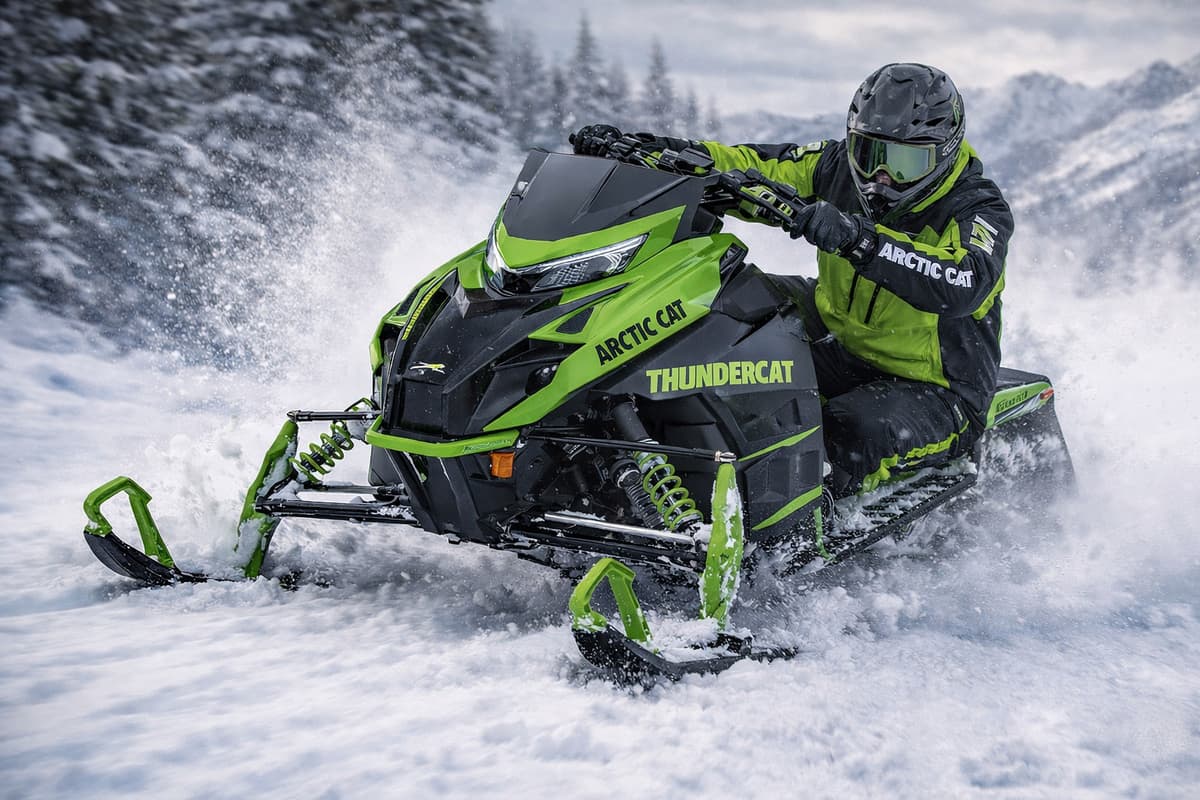
Arctic Cat continues to keep the Thundercat in its snowmobile lineup. That said, all indications suggest it is approaching a pivotal point in its evolution. Could 2027 mark the beginning of a gradual transformation for this iconic model? In my view, that would make sense. Rather than starting from scratch, the brand could build on the Thundercat’s heritage. It could then reposition it as a modern performance model. Thus, it would be capable of competing with the segment’s benchmarks.
An Anticipated Migration of the Thundercat to the Catalyst Platform
In my opinion, the Thundercat could eventually migrate to a widened version of the Catalyst platform. Such a move would significantly modernize the model’s handling characteristics. It would also provide a foundation better suited to future technologies.
This transition would not be trivial and would require rigorous technical execution. However, if Arctic Cat intends to keep the Thundercat relevant over the medium term, the Catalyst platform appears to be an almost unavoidable evolution.
A Turbocharged Four-Stroke Engine: A Credible Hypothesis for the Thundercat
Among the most frequently discussed scenarios is the arrival of a turbocharged four-stroke engine developed by Arctic Cat for the Thundercat. This hypothesis aligns with a philosophy in which power delivery must be more controlled, more durable, and better aligned with modern expectations.
If such an engine were to materialize, it would likely be reserved for a halo model designed to showcase the brand’s technological expertise rather than to generate high sales volumes.
Widescape: 2027 as a Year of Adjustment and Structuring
The acquisition of Widescape in early 2026 will inevitably have repercussions in 2027. It would be surprising for such an integration to be completed in such a short timeframe.
For 2027, expectations should centre on a phase of fine-tuning: dealer selection, gradual team training, and clarification of Widescape’s positioning within the Arctic Cat ecosystem.
The main challenge will be preserving Widescape’s distinct identity while leveraging Arctic Cat’s resources and dealer network.
An 858 Turbo Engine: A Project in the Background
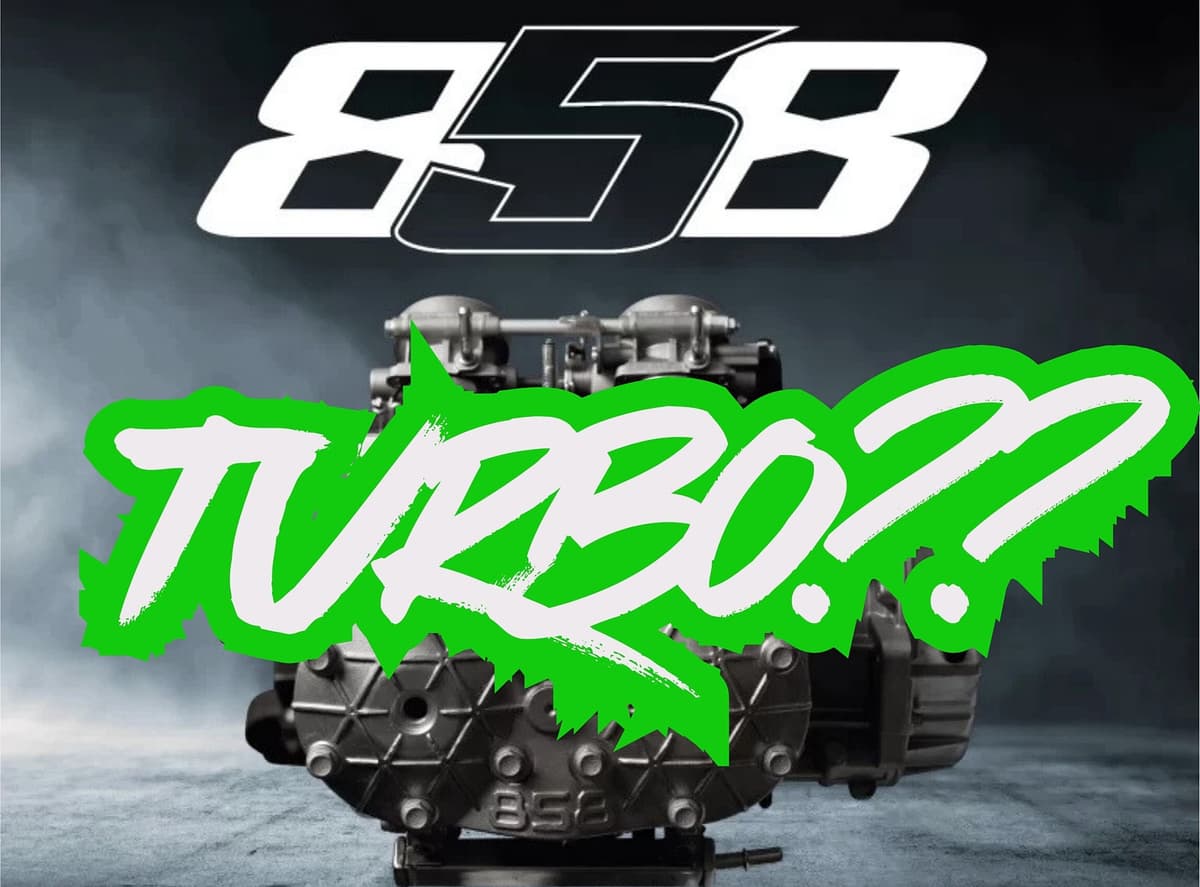
The idea of a turbocharged 858 engine remains one of the boldest predictions for Arctic Cat. While technically plausible, its arrival in 2027 is far from certain.
Given the current context, it is more likely that such an engine is still in development or internal validation, rather than ready for immediate commercialization. If it were to appear, it would probably do so in a very targeted role. In addition, it would reinforce the brand’s performance image. As with Ski-Doo and Polaris, a turbocharged two-stroke engine would most likely debut first in a mountain snowmobile.
Modernizing Electronics: An Almost Inevitable Evolution
Finally, one of the safest predictions concerns the modernization of onboard electronics. Arctic Cat cannot indefinitely ignore the rapid evolution of the rider experience offered by its competitors.
For 2027, the arrival of a more modern display with improved readability and a more intuitive interface appears almost inevitable. This evolution, while less dramatic than a new engine, could have a significant impact on the overall perception of Arctic Cat products.
A Crucial Year to Prepare for the Post-2027 Era
Ultimately, Arctic Cat 2027 should be viewed as a structurally important transition year. Decisions made during this period will directly influence the brand’s ability to innovate and differentiate itself in the years that follow.
For enthusiasts, 2027 may not be the year of headline-grabbing announcements, but it could very well be the year Arctic Cat lays the foundations for its next growth cycle.