

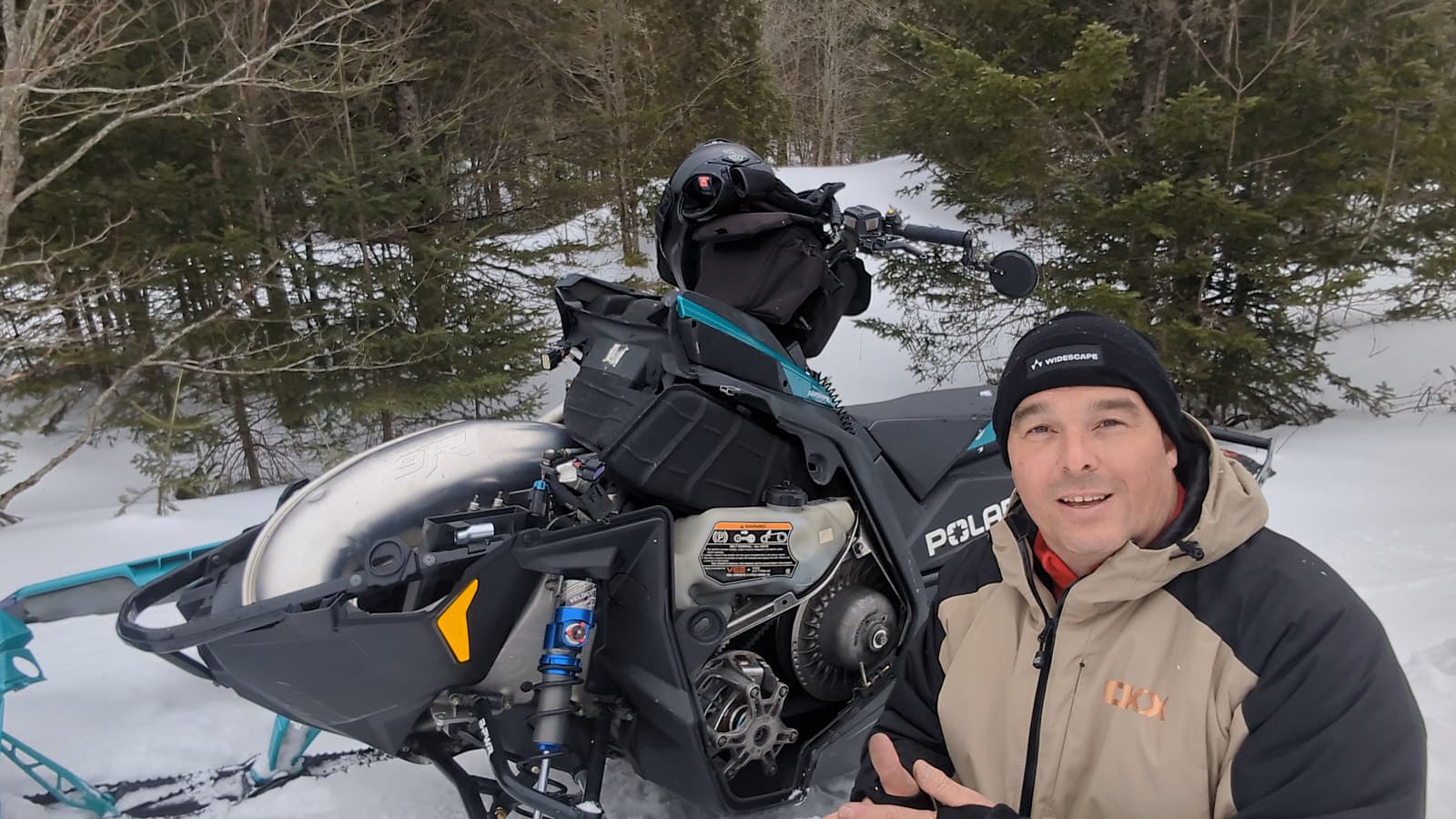

Flooded Engine: Mechanical Guide to Starting a Polaris Patriot 850 or 900 Snowmobile
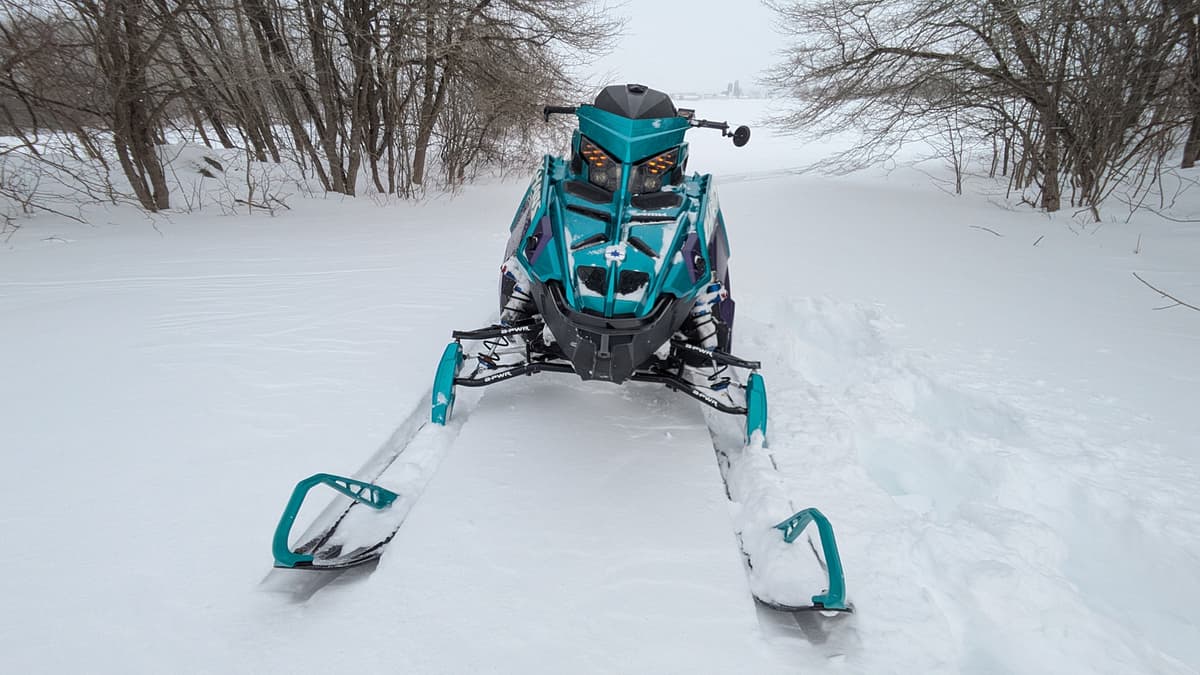
Sometimes, for no apparent reason, a snowmobile refuses to start. Yet everything seems fine: battery, fuel, oil… So where does the problem come from? I own a 2024 Polaris snowmobile equipped with the 900 cc Patriot 9R engine. With a bit of research, I was able to identify two causes that can lead to this type of issue. Here are my thoughts, tips, and practices. This also applies to snowmobiles equipped with the Patriot 850 and 900 engines. Always perform repairs according to your skill level and at your own risk.
- Shutting the engine off using the red emergency stop button: it’s happened to me… you pull quickly into the garage. To prevent the garage from being filled with snowmobile fumes, it’s often recommended to shut the engine off before it slows down, without waiting for it to come to a complete stop.
- Disconnecting the safety tether: another real-life scenario. You’re riding your snowmobile, and the engine is running at a good speed. You fall, and as a safety-conscious rider, your safety tether is attached to you. The tether disconnects from the snowmobile, which continues running. After collecting yourself 15–20 minutes later, you try to restart it—but nothing happens.
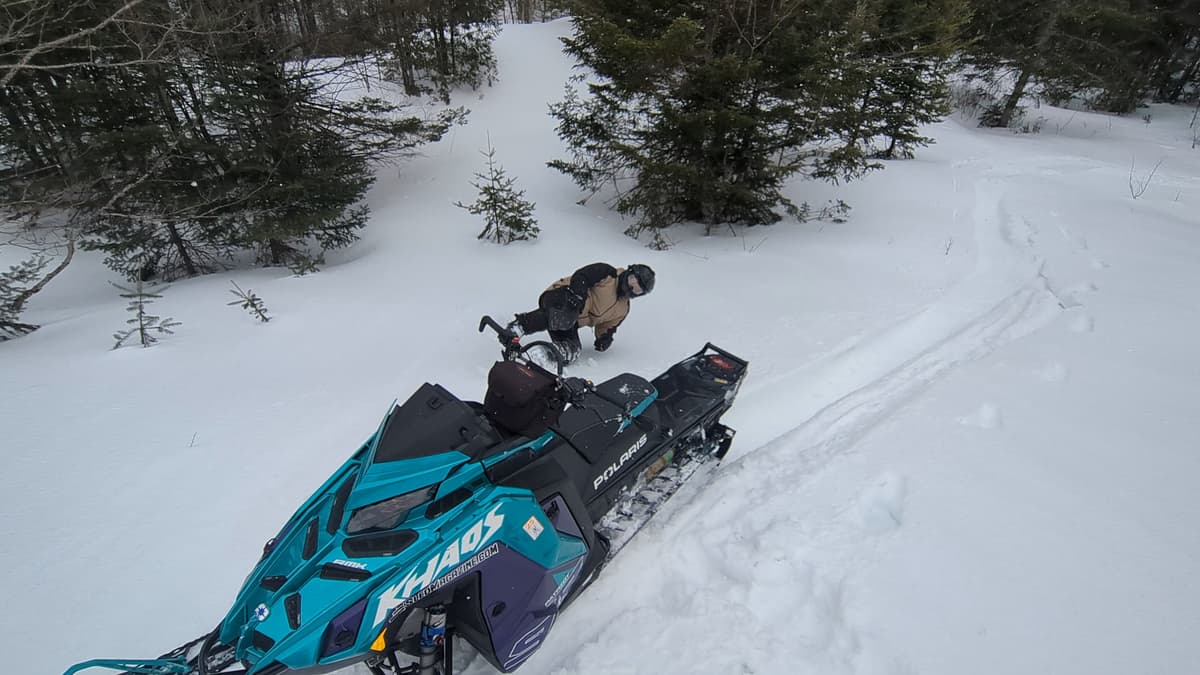
What’s happening at that moment? Here’s my two-cent theory. Fuel delivery is proportional to engine speed, combined with ignition. When you press the red button, the electrical power supply is cut. The same thing happens when the safety tether is pulled. Your spark plugs stop firing, and the fuel no longer ignites. Your engine and spark plugs are designed to operate in a mostly dry environment. The engine runs on fuel with an oil mixture. If that mixture doesn’t burn, imagine what happens inside the engine: a “shower”.
In addition, if you leave your snowmobile sitting for an extended period, the internal engine walls can gum up. The spark plug will also be affected. It becomes short-circuited and no longer produces a spark. But at this point, you don’t know that yet. You try to start the snowmobile. Here’s what usually happens:
- You turn the ignition key.
- You pull the starter rope.
- On the first pull, the engine stores energy through the magneto to activate the fuel pump and injector. This creates a starting fuel spray to help start the engine and generate a spark—hence the initial “puff, puff, puff”. You pull the rope a second time, and the snowmobile should start. But it doesn’t. Doubting yourself, you check that everything is properly set, activate the key, the red button, and reinstall the safety tether.
- You pull the starter rope again. All the previous steps repeat, but the engine still doesn’t start. The result: another wave of fuel accumulates in the engine—what we call, in mechanical terms, a flooded engine.
What should you do now? Once you’ve determined that this is your issue, a few solutions are available.
Troubleshooting a Flooded Engine in the Field
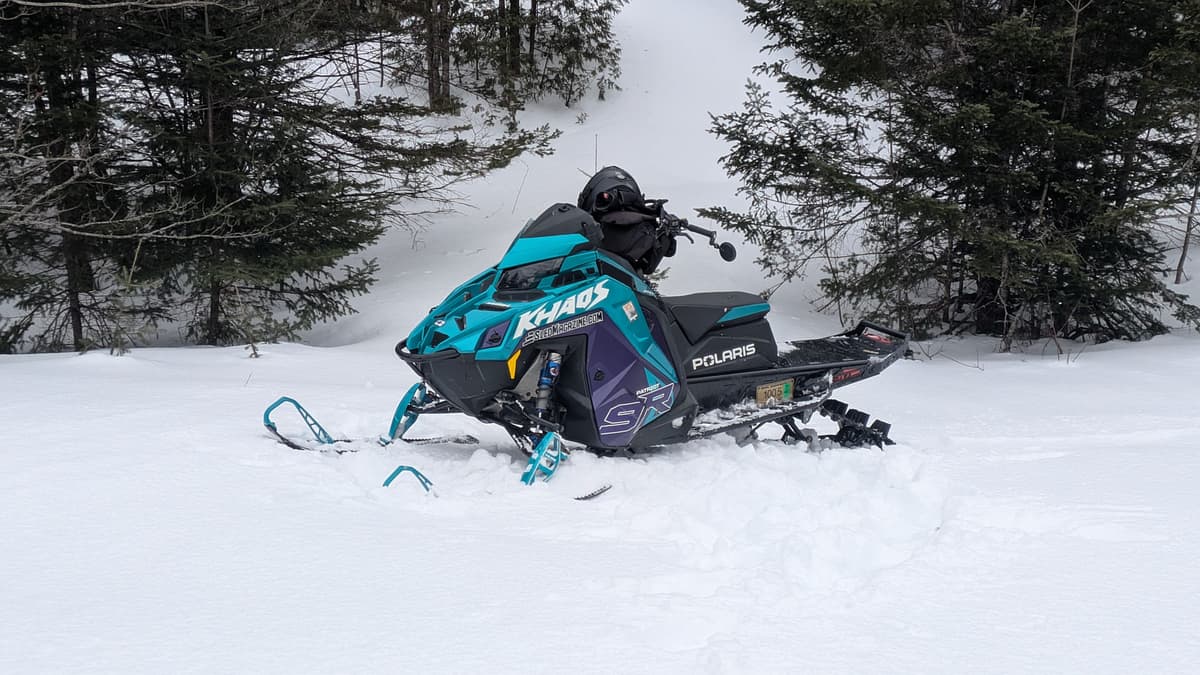
- Place your snowmobile on a flat surface.
- Turn the ignition key to OFF.
- Hold the RED button down, then;
- Remove the left side panel (clutch side).
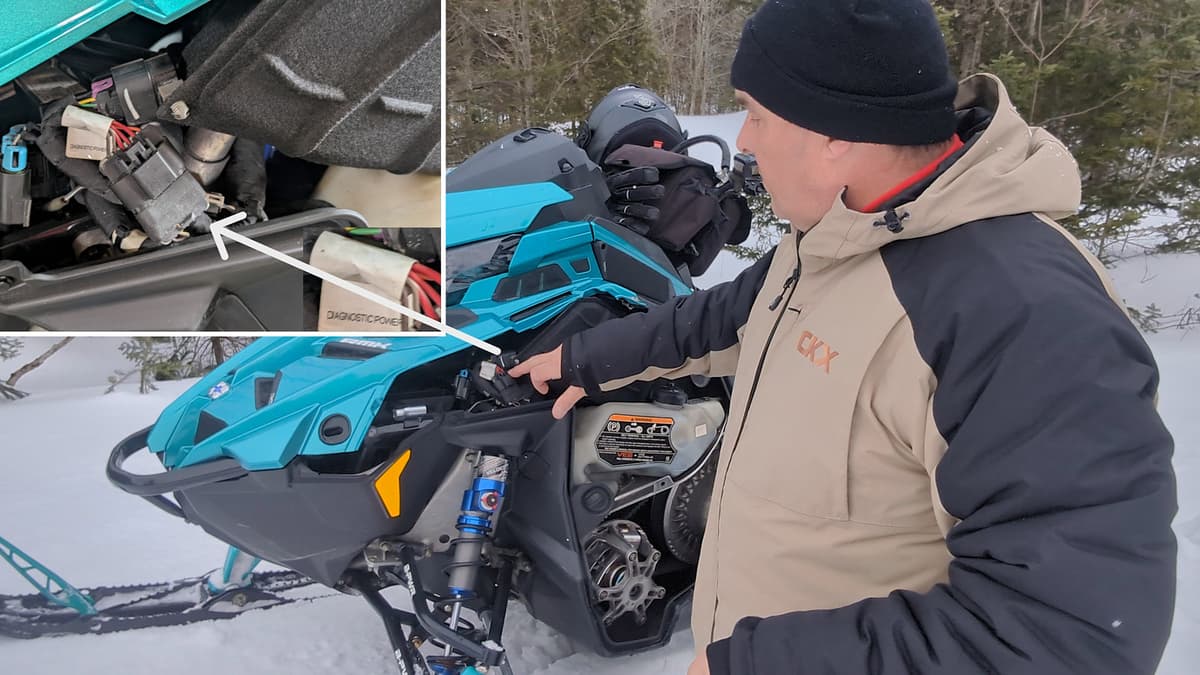
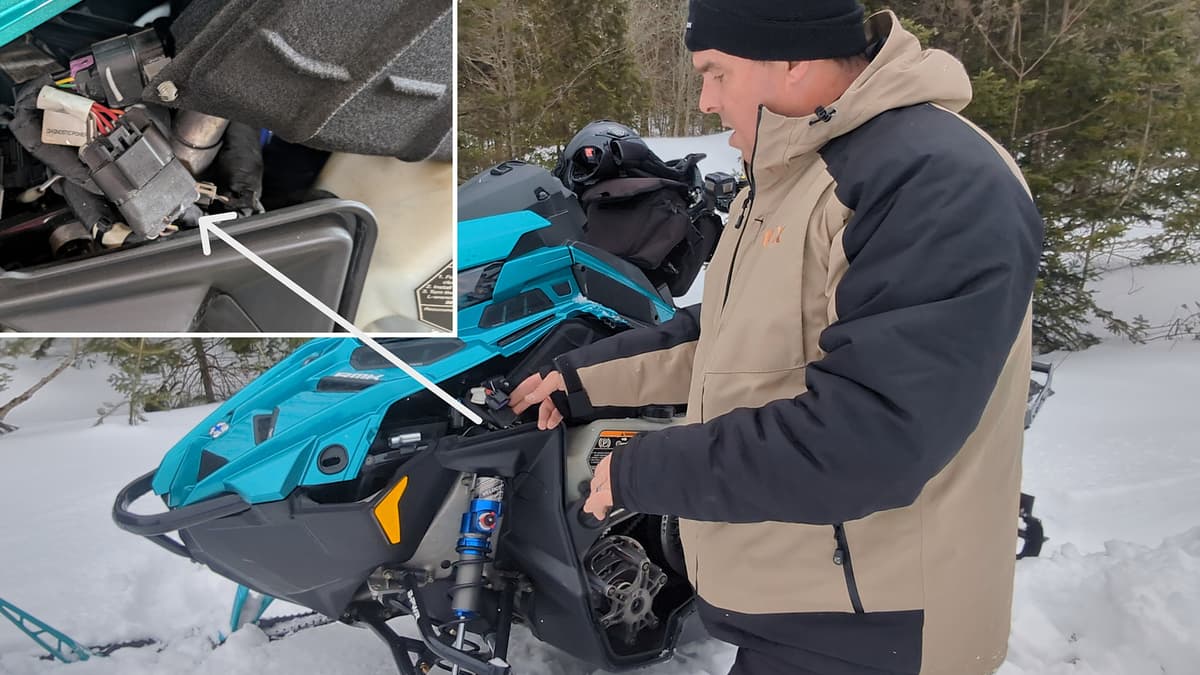
- Above the clutches, locate a flat connector with several wires on one side and two on the other. Disconnect it. This cuts power to the fuel pump.
Drying or Replacing the Spark Plugs (Minimal Tools)
- Disconnect the main power connector for the display, located under the hood on the right side above the coolant reservoir.
- Unlock the two latches and remove the hood.
- Remove the spark plug caps.
- Using a spark plug wrench, remove both spark plugs. WARNING: THE MUFFLER MAY BE HOT.
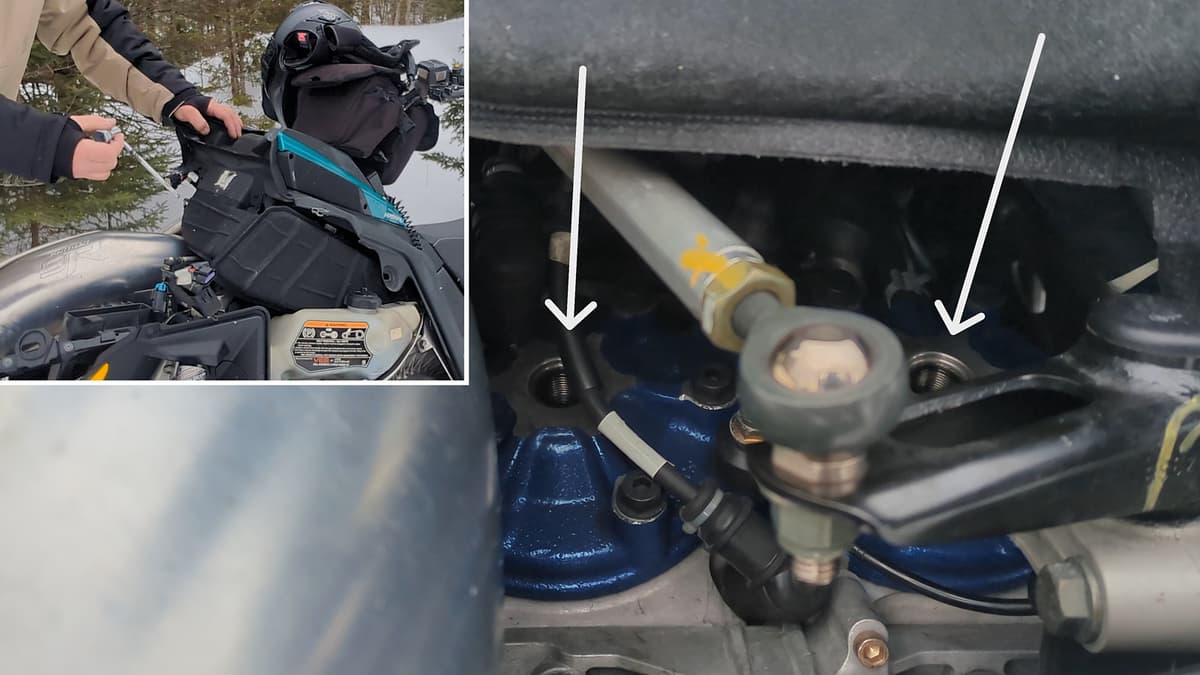
- Replace the spark plugs, if possible.
- If replacement plugs are unavailable and you have a lighter, heat the ground electrode and centre electrode as much as possible. This will burn off the excess oil-fuel mixture.
- Pull the starter rope at least 10 to 15 times. This manually turns the engine and expels the fuel-oil mixture, allowing the cylinder to dry.
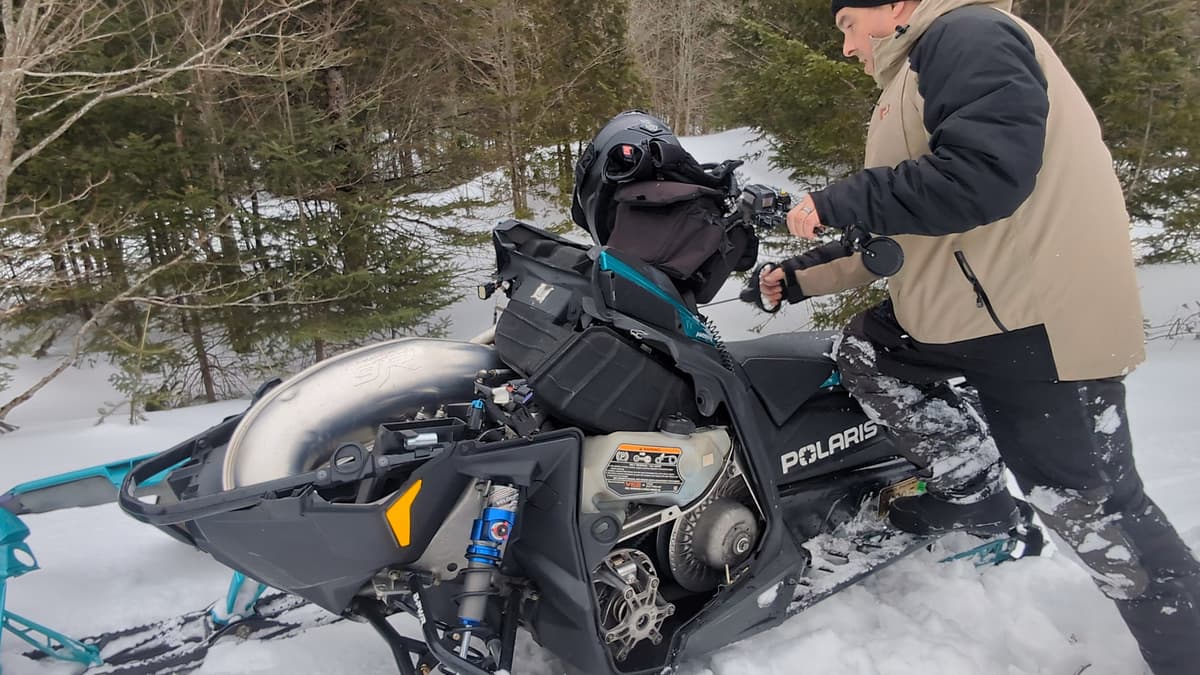
- Reinstall the cleaned* or new spark plugs.
*To learn how to clean your spark plugs, see the section below. - Reconnect the connector and start the snowmobile normally.
- Once the engine has warmed up, shut it off and reinstall the panels.
Restarting a Flooded Snowmobile Without Tools
If you don’t have the necessary tools to remove the spark plugs, don’t worry. Here’s a basic procedure to get you out of trouble anyway.
- Pull the starter rope at least 20 times. This manually turns the engine, expelling the fuel-oil mixture and drying the cylinder.
- Reconnect the connector and start the snowmobile normally.
- Once the engine has warmed up, shut it off and reinstall the panels.
How to Clean Your Spark Plugs
If you’re at home, you likely have access to your tools. If you don’t have replacement spark plugs, you’ll need to clean the ones you have. Here’s how to proceed. Follow the same steps outlined above, with a few additional steps for cleaning. After thoroughly drying the cylinder, clean the spark plugs. You’ll need a propane torch (BLUE bottle) or a MAP gas torch (YELLOW bottle).
- Heat the electrodes until they glow red.
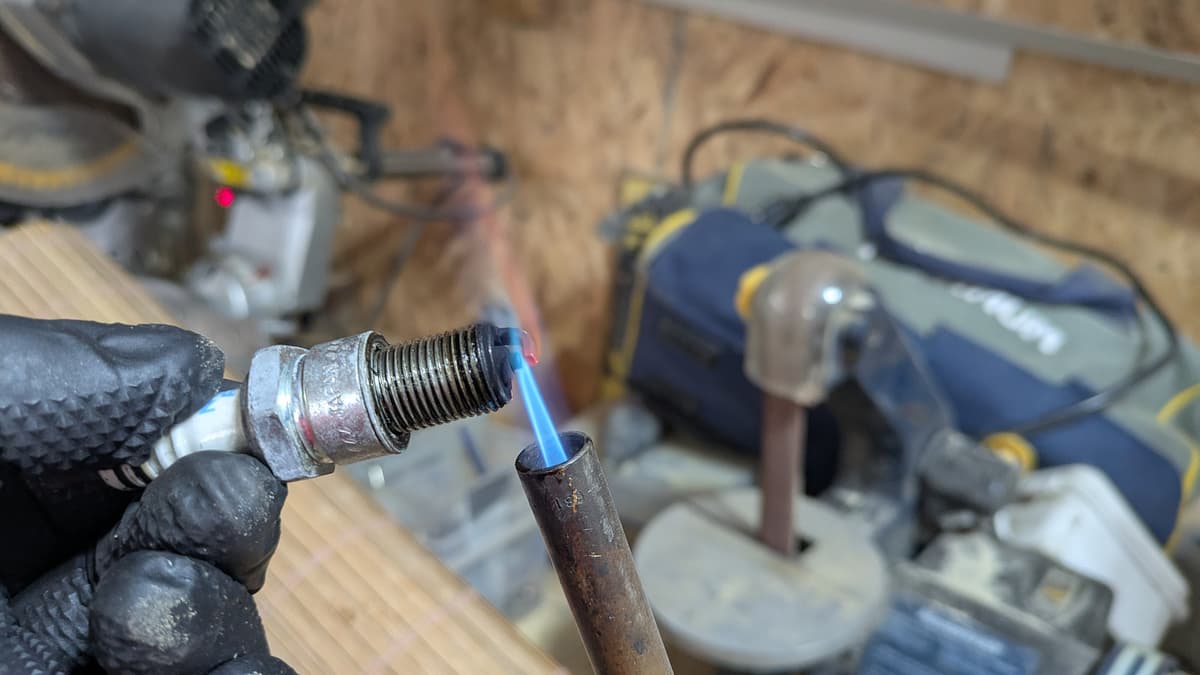
- Pull the starter rope about ten times and reinstall everything.
Be careful; the spark plugs will be very hot! - Reconnect the connector and start the snowmobile normally.
- Once the engine has warmed up, shut it off and reinstall the panels.
Conclusion: Preventing and Fixing a Flooded Engine on a Polaris Patriot
In summary, your Polaris snowmobile equipped with a Patriot 850 or 900 cc engine may fail to start due to shutting it off with the red emergency stop button. Disconnecting the safety tether can also cause this issue. These actions cut electrical power, preventing the spark plugs from firing. The fuel doesn’t ignite, which can lead to a flooded engine. Whether you’re in the field with minimal tools or at home with a full setup, this guide offers several solutions. The steps generally involve drying or replacing the spark plugs and disconnecting certain connectors. Above all, don’t forget to pull the starter rope to dry out the cylinder.
By following these tips, you should be able to restart your snowmobile and get back to enjoying your rides safely. As always, perform repairs according to your abilities and at your own risk.
Watch My Video
If the video does not play, click here.