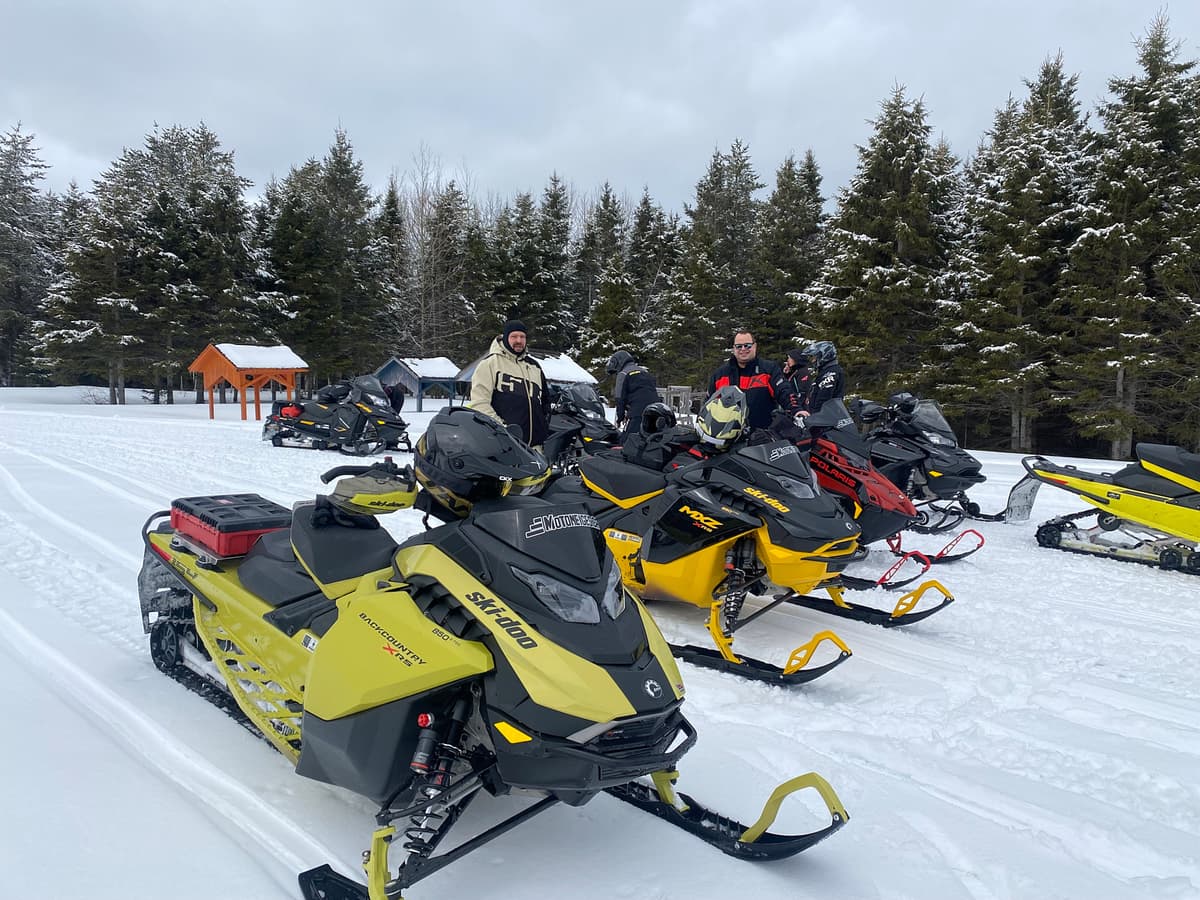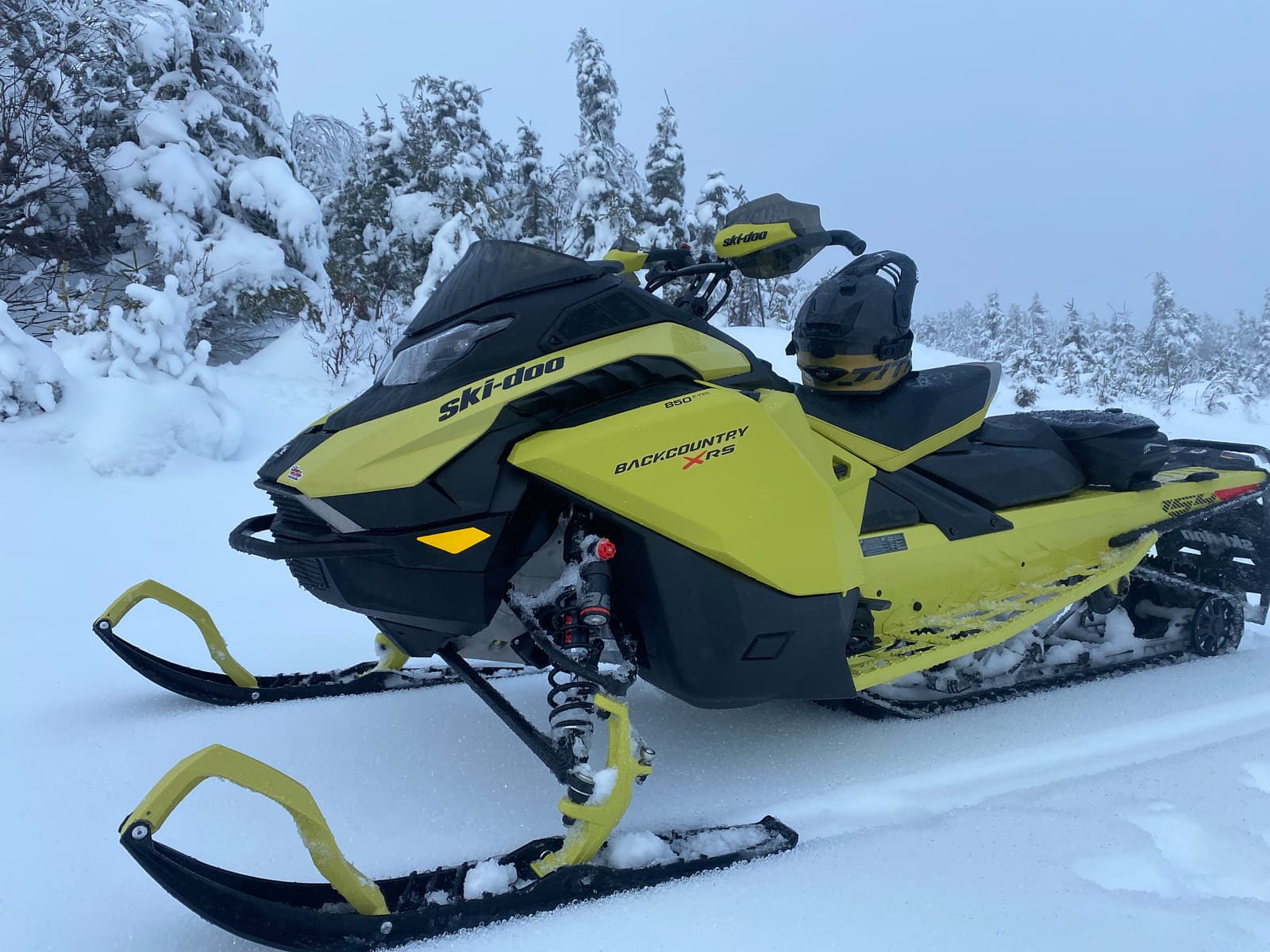

After an emotion-filled season covering many miles on and off the trails aboard the 2025 Ski-Doo Backcountry X-RS 850 154, the conclusion is clear: this snowmobile performs exceptionally well in nearly all conditions. It proves that a crossover model does not necessarily mean compromise.
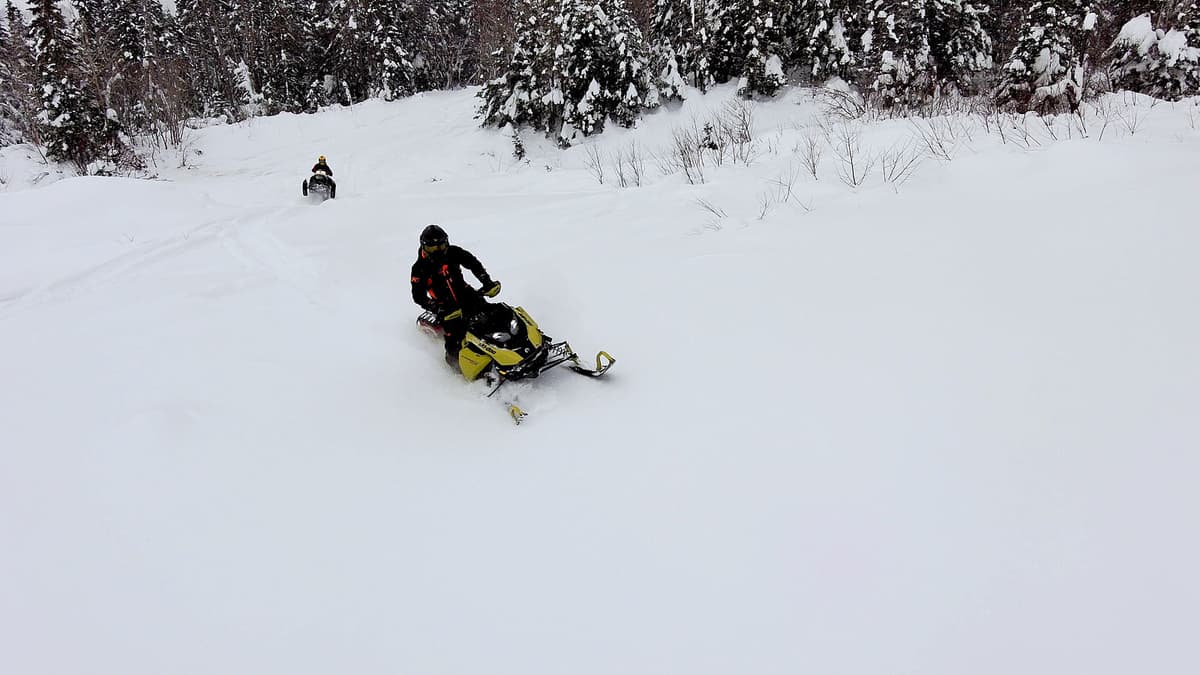
With 1,985 km logged this season, during a winter considered excellent and sufficiently snowy, the Backcountry X-RS was tested in a wide range of conditions. Deep powder, wind-packed snow, crust, icy trails with ruts, and perfectly groomed trails were all part of the daily routine. Most of the season took place in the Chic-Chocs, along with a major trail trip of approximately 1,000 km to Rivière-du-Loup—an ideal context to evaluate the true versatility of this snowmobile.
My Backcountry X-RS 2025 on Test
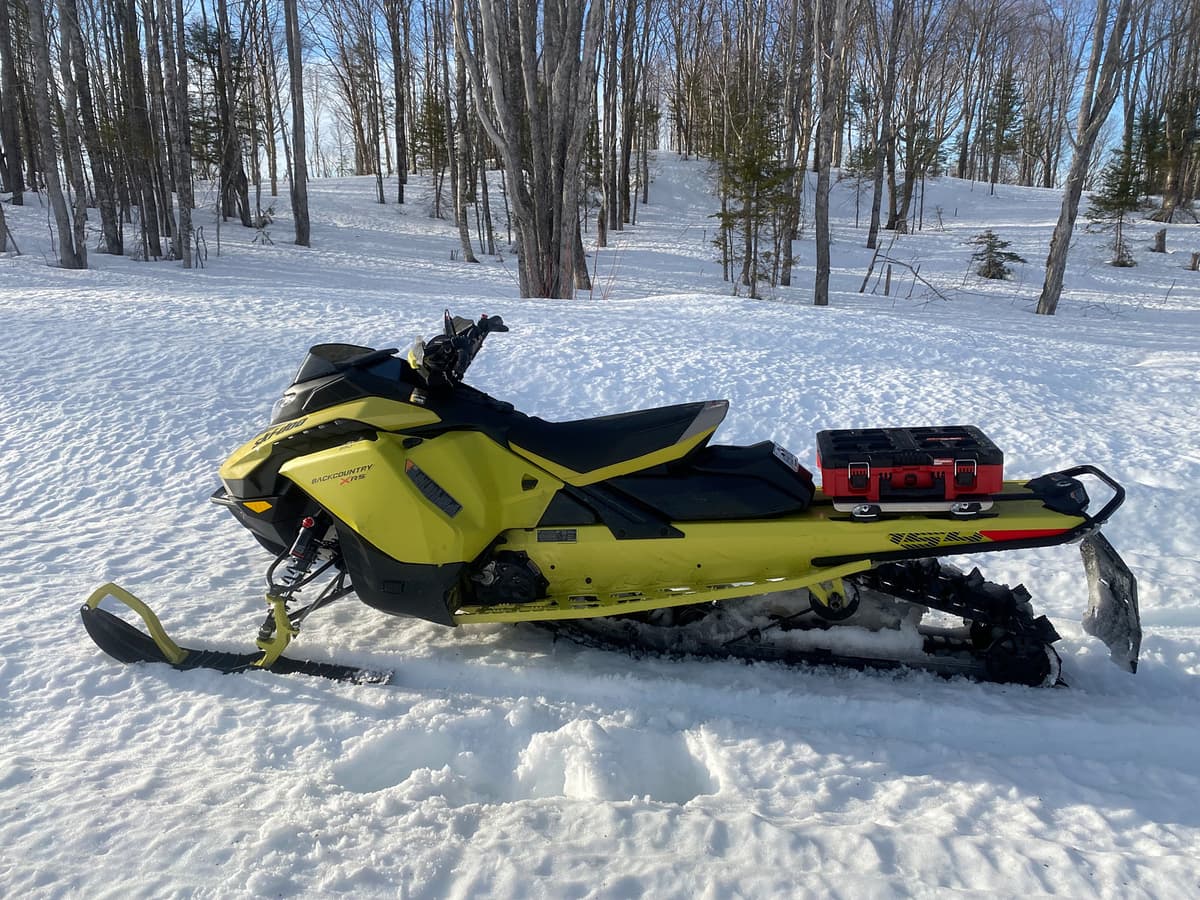
My Backcountry X-RS 2025 was equipped with the 10.25-inch touchscreen display, the Rotax 850 E-TEC engine, SHOT electric start, and a PowderMax track (154 × 16 × 2.0). Up front, the RAS X suspension featured an adjustable ski stance set at 39 inches.
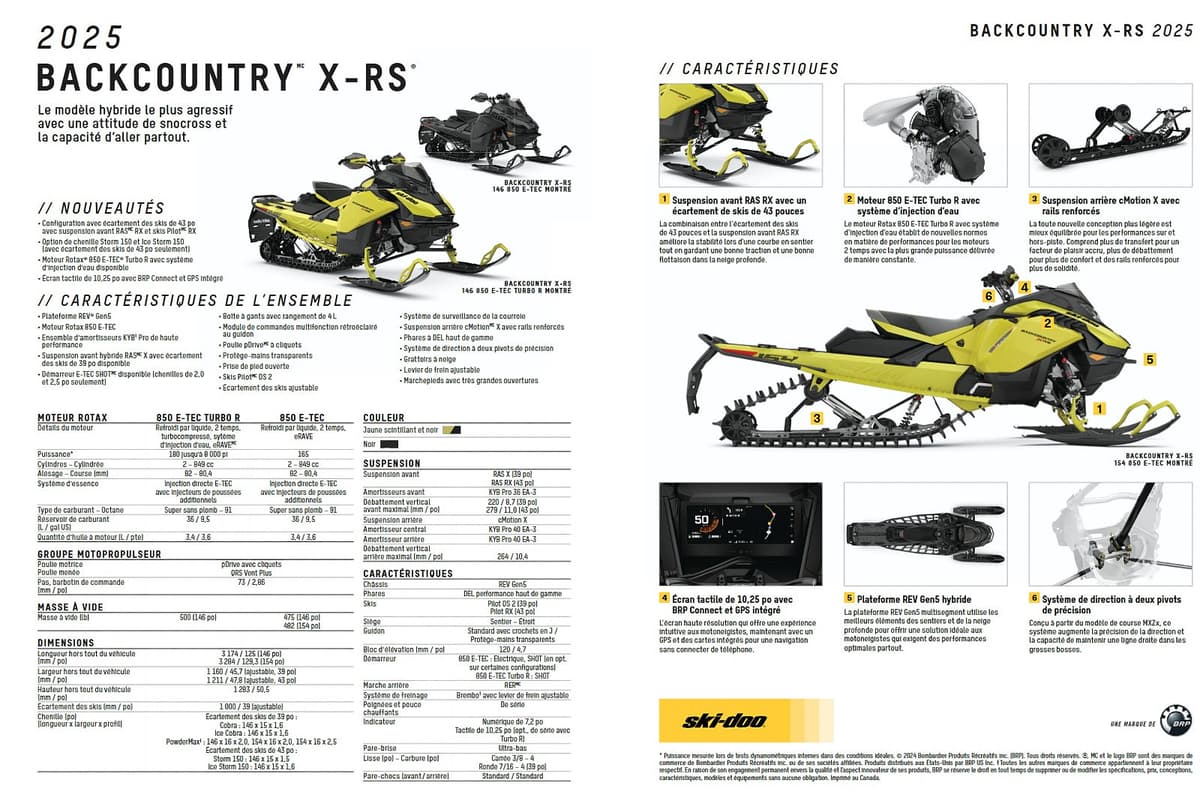
Official technical specifications of the Ski-Doo Backcountry X-RS 2025: REV Gen5 platform, 850 E-TEC engine, KYB Pro shocks, RAS X suspension, SHOT starter, pDrive clutch, Pilot DS2 skis, and PowderMax track (154 × 16 × 2.0).
Backcountry X-RS 2025 Riding Context
Over the course of the season, I rode my Backcountry approximately 40% on trails, 50% in the backcountry, and 10% in technical terrain. On trails, my riding style is clearly aggressive. I remain active on the snowmobile, shift my weight, and work with the machine. In off-trail riding, my approach is more cautious and technical, focusing on precision and terrain reading.
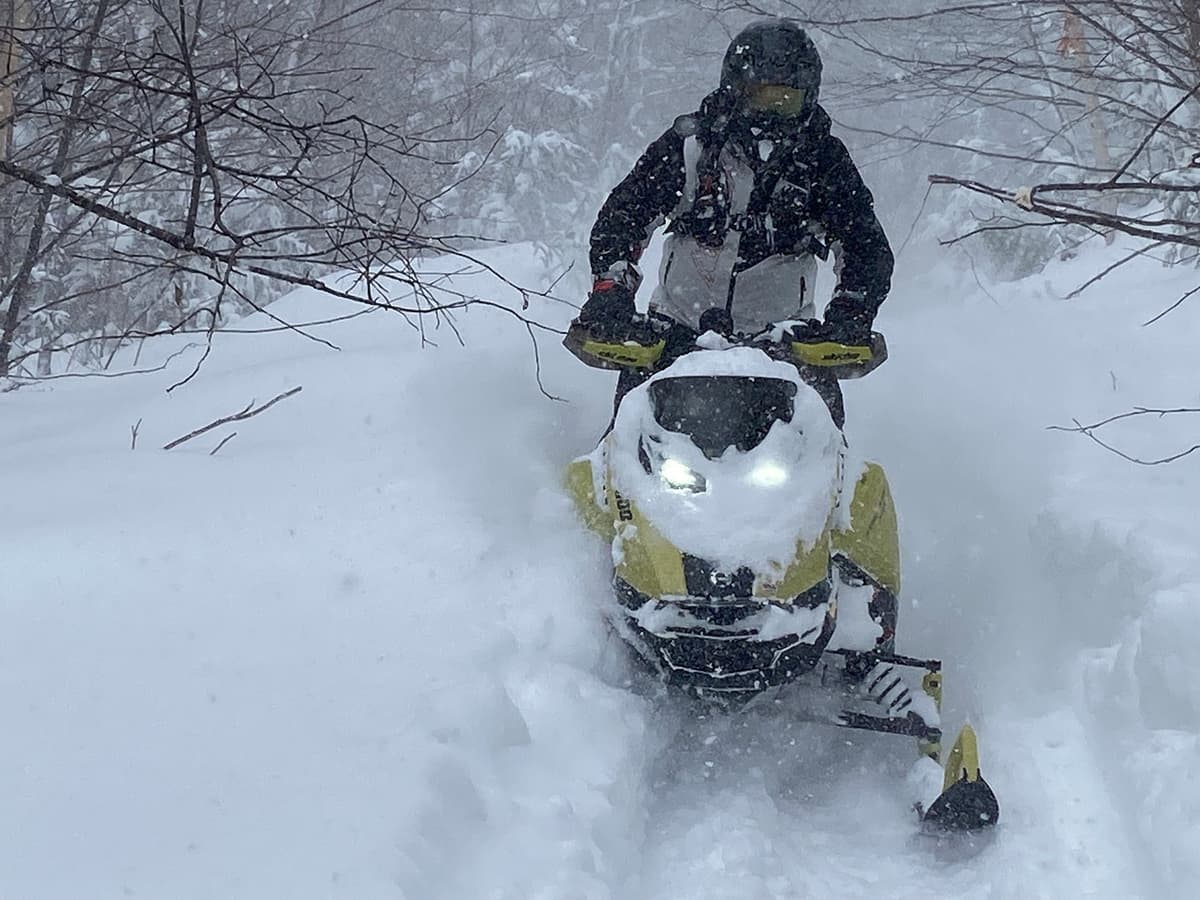
Early in the season, there was some apprehension during aggressive trail riding. However, as the miles accumulated, the control and stability of the REV Gen5 platform built confidence. During off-trail riding, the flotation and overall balance of the Backcountry X-RS allowed me to navigate mountainous terrain with great ease.
On-Trail Performance of the Backcountry X-RS
On the trails, the Backcountry X-RS showcases the rigour of its design. This is not a snowmobile that rewards passive riding. It demands an active rider willing to work with it. I make extensive use of weight transfer and knee input in corners to follow terrain movements and fully exploit steering precision.
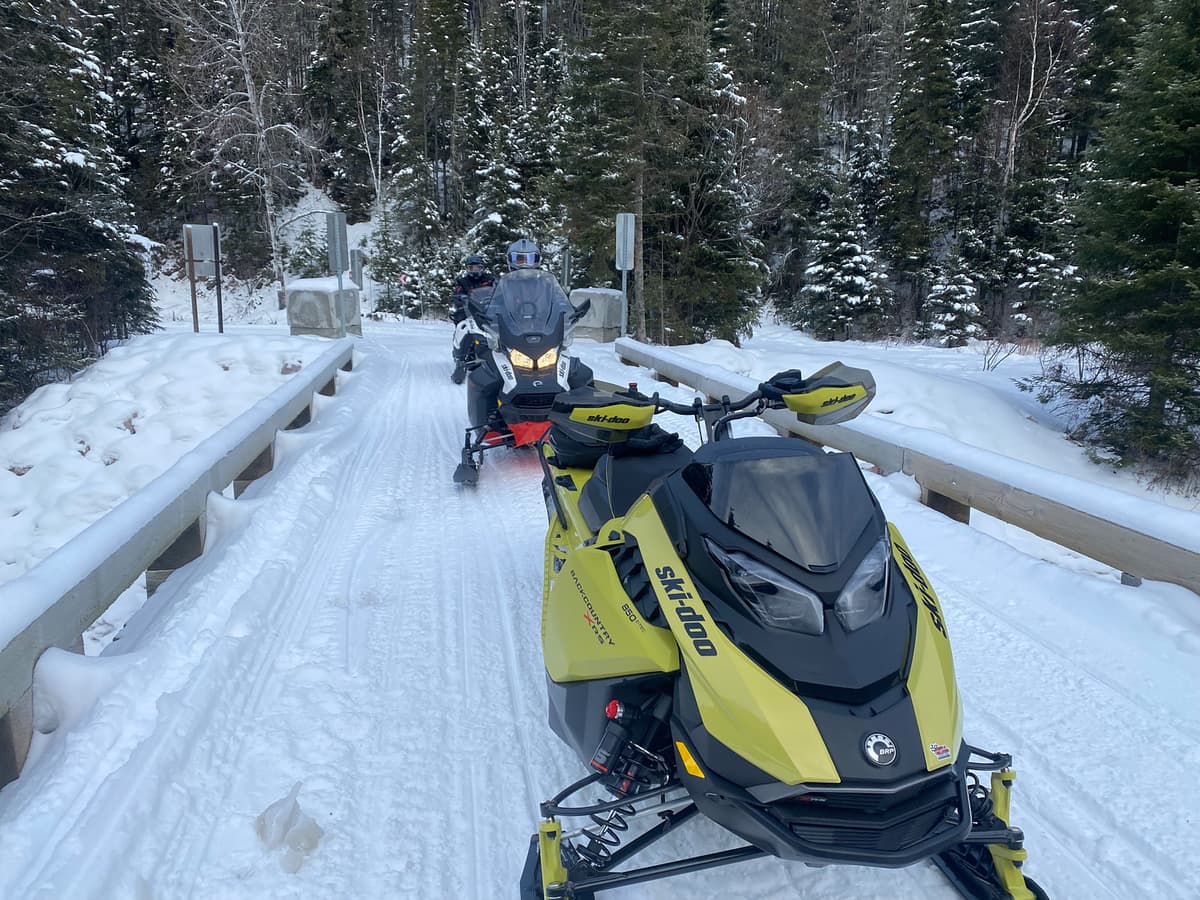
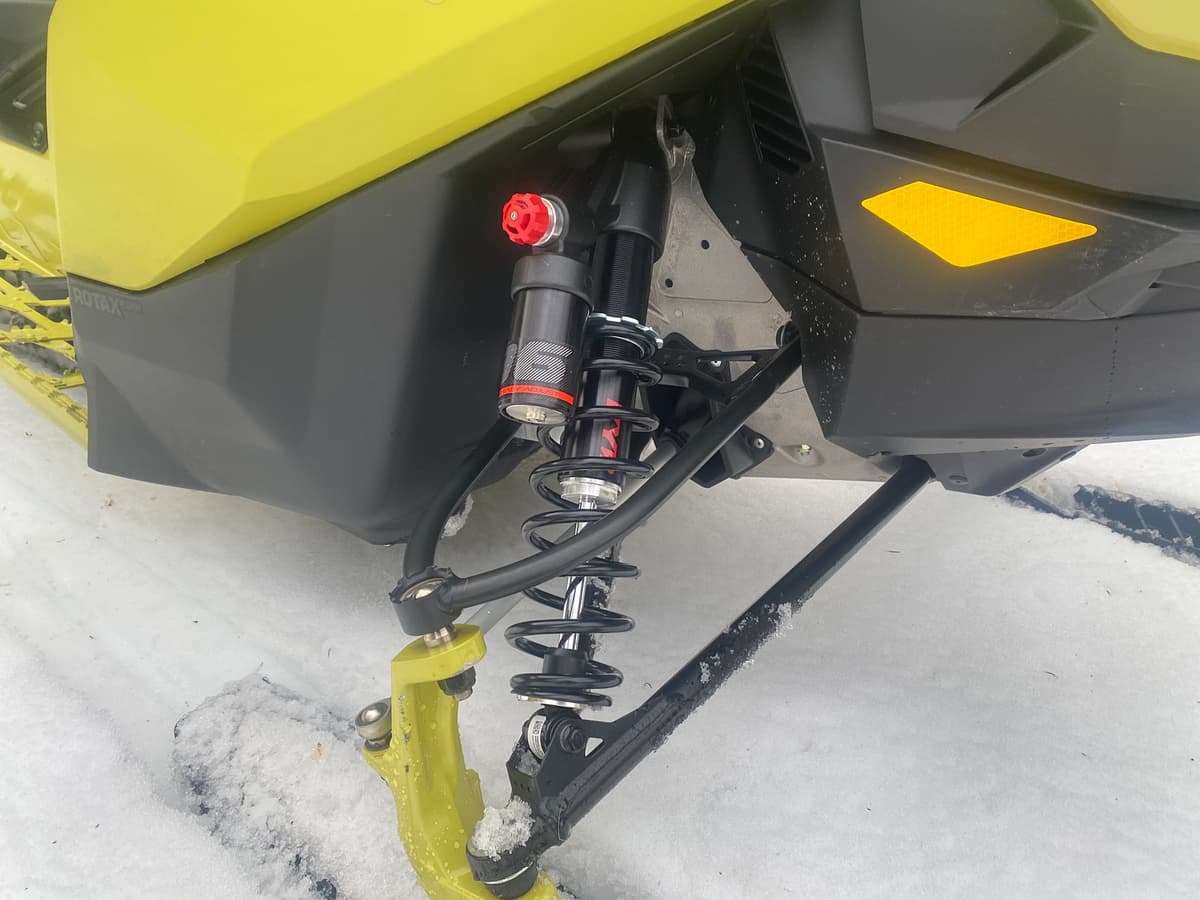
In my opinion, the steering is demanding. I would rate the effort required at 7/10. That said, it remains consistently predictable. The engagement required is real, but the reward is immediate, resulting in incredibly precise, stable, and sporty handling. The KYB Pro suspension effectively absorbs irregularities and maintains excellent stability, even at speed on rougher trails.
A rider who spends most of their time on trails might consider adding a dual carbide runner to slightly soften steering effort and reduce darting on hard surfaces. Personally, this dynamic behaviour is part of the enjoyment. This snowmobile is ridden more than it is simply driven.
The Rotax 850 E-TEC engine, paired with the pDrive clutch, delivers instant throttle response. Power is lively yet always well controlled. This combination makes the Backcountry X-RS surprisingly accessible despite its sporty character. Acceleration is strong, and stability when exiting corners inspires confidence.
Off-Trail Riding With the Backcountry X-RS 2025
Off the trails, the Backcountry X-RS 850 154 impresses with its overall balance. The REV Gen5 platform positions the rider close to the centre of gravity, facilitating movement and control during quick transitions. The snowmobile floats exceptionally well, noticeably better than the previous generation, creating the sensation of riding on top of the snow rather than sinking into it.
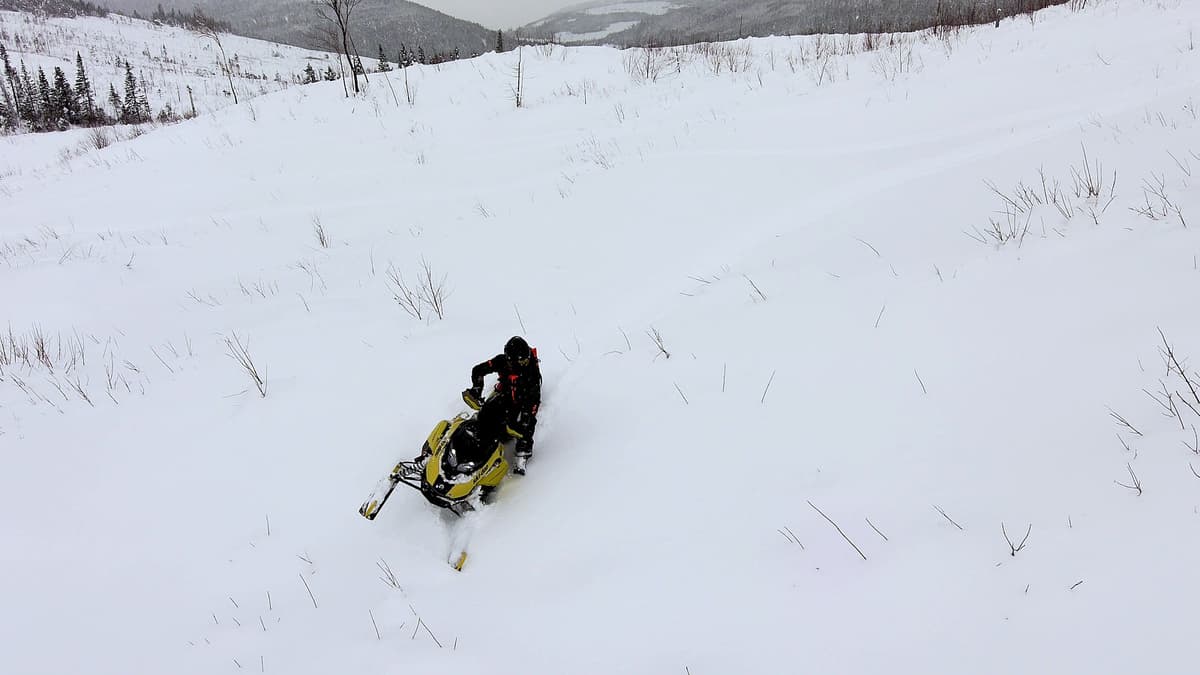
The PowderMax track (154 × 16 × 2.0) proves to be highly versatile. It delivers excellent flotation in deep snow while remaining effective during transitions back to the trail. The 850 E-TEC engine provides all the power needed to extract the machine from technical sections, even though the front end lifts slightly less than a pure mountain snowmobile.
In sidehill situations, the machine remains stable and predictable, which is essential for maintaining control on slopes. It requires a solid initial input to set the line, as is the case with many REV Gen5-based snowmobiles. Once committed, it holds the line very well. On hard snow and steep angles, the wider cockpit can occasionally create resistance and cause panelling out. I experienced this very rarely, but it is worth noting.
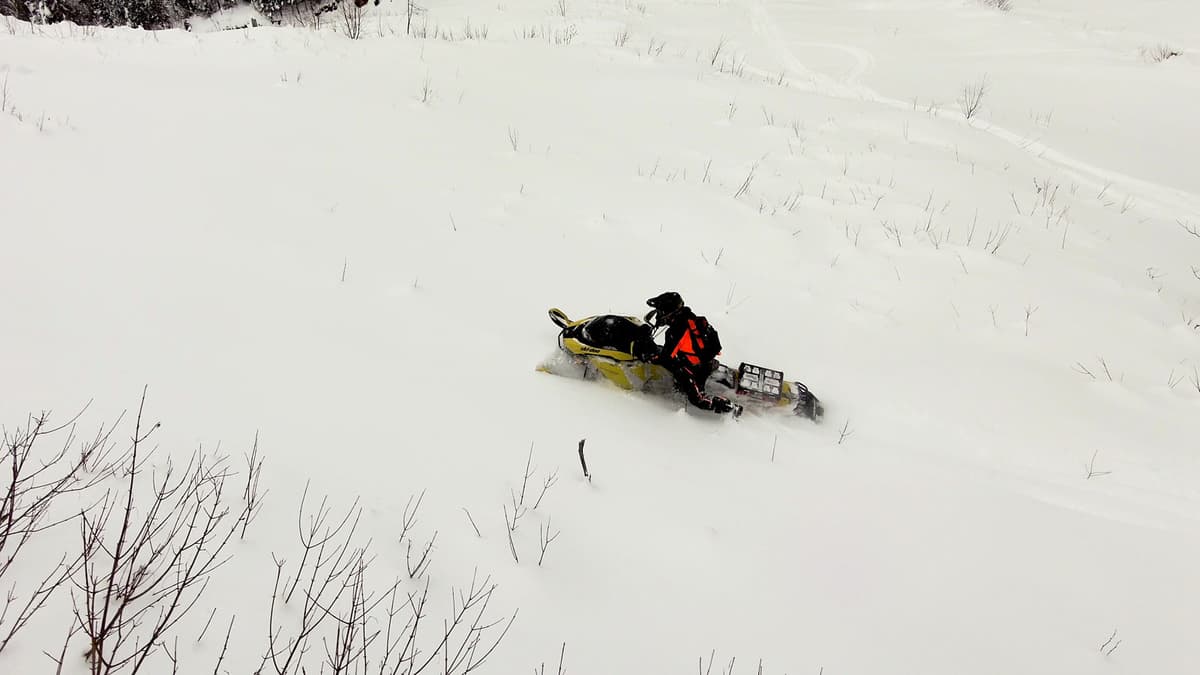
At low speeds, flotation and stability provide a very pleasant feeling of lightness. The Backcountry X-RS clearly targets the hybrid rider—someone who enjoys exploring forest openings and mountainous terrain without giving up trail riding. In extreme and very tight terrain, however, the wider cockpit slightly limits manoeuvrability compared to a pure mountain sled.
Comfort, Suspension, Ergonomics, and Design
The high-end suspension components of the X-RS model contribute greatly to overall stability, particularly on trails, where they absorb rough and uneven sections with ease. I also appreciated the seat during long rides. Despite its firmness, it proved comfortable.
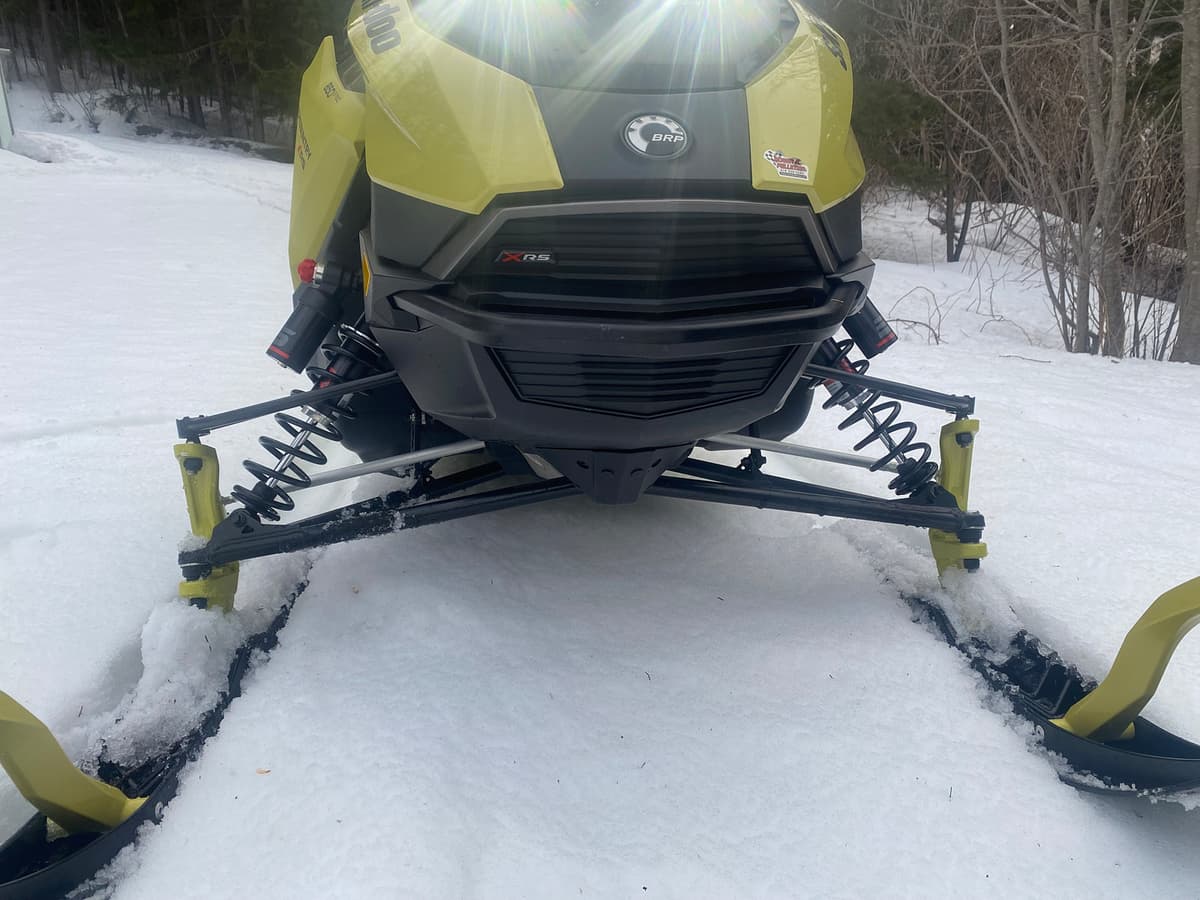
The handlebar position suits my height well, offering an excellent balance between off-trail control and on-trail comfort. During aggressive riding, I remain active on the snowmobile and readily transfer my weight during corners, resulting in precise and stable exits.
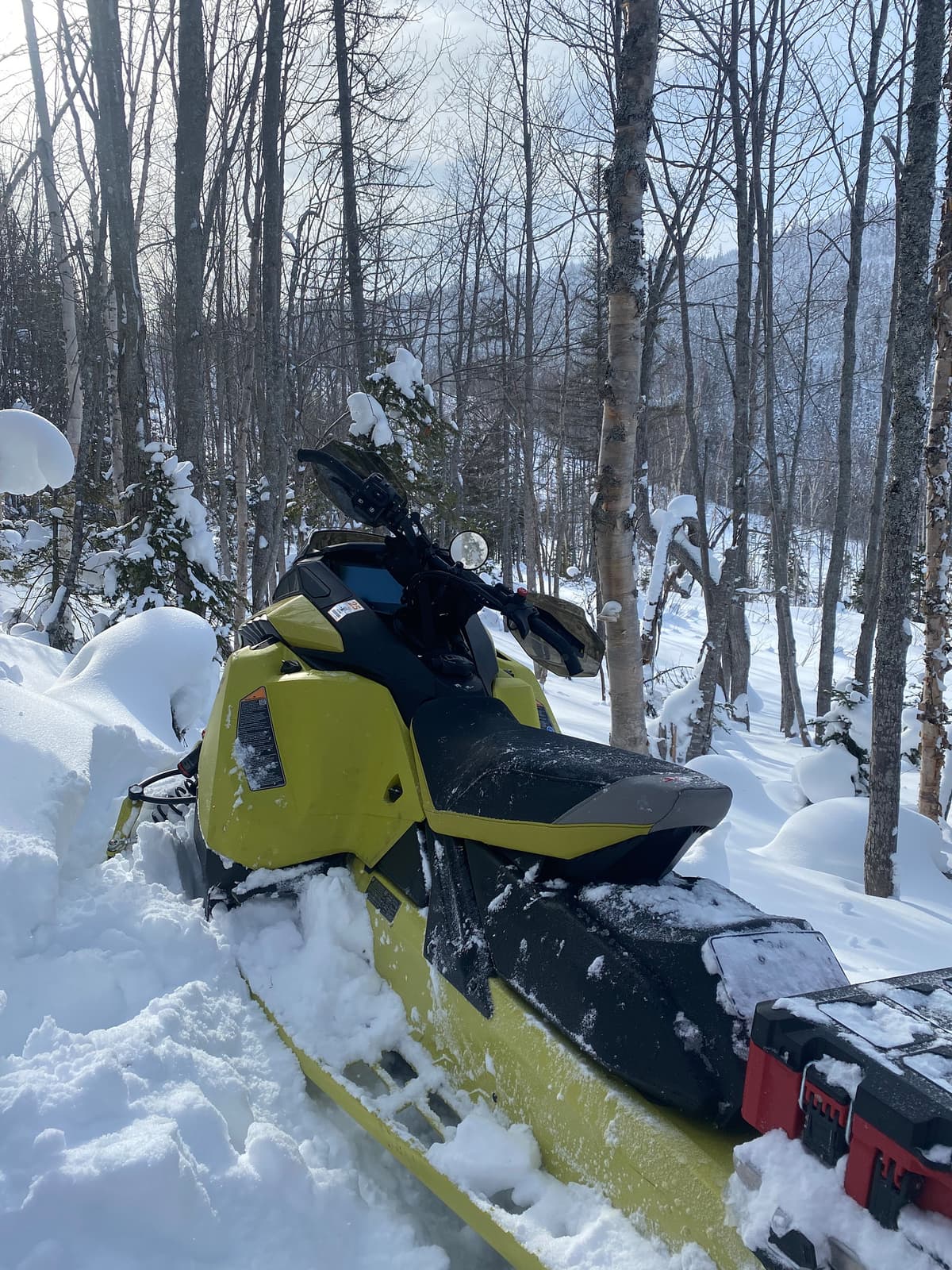
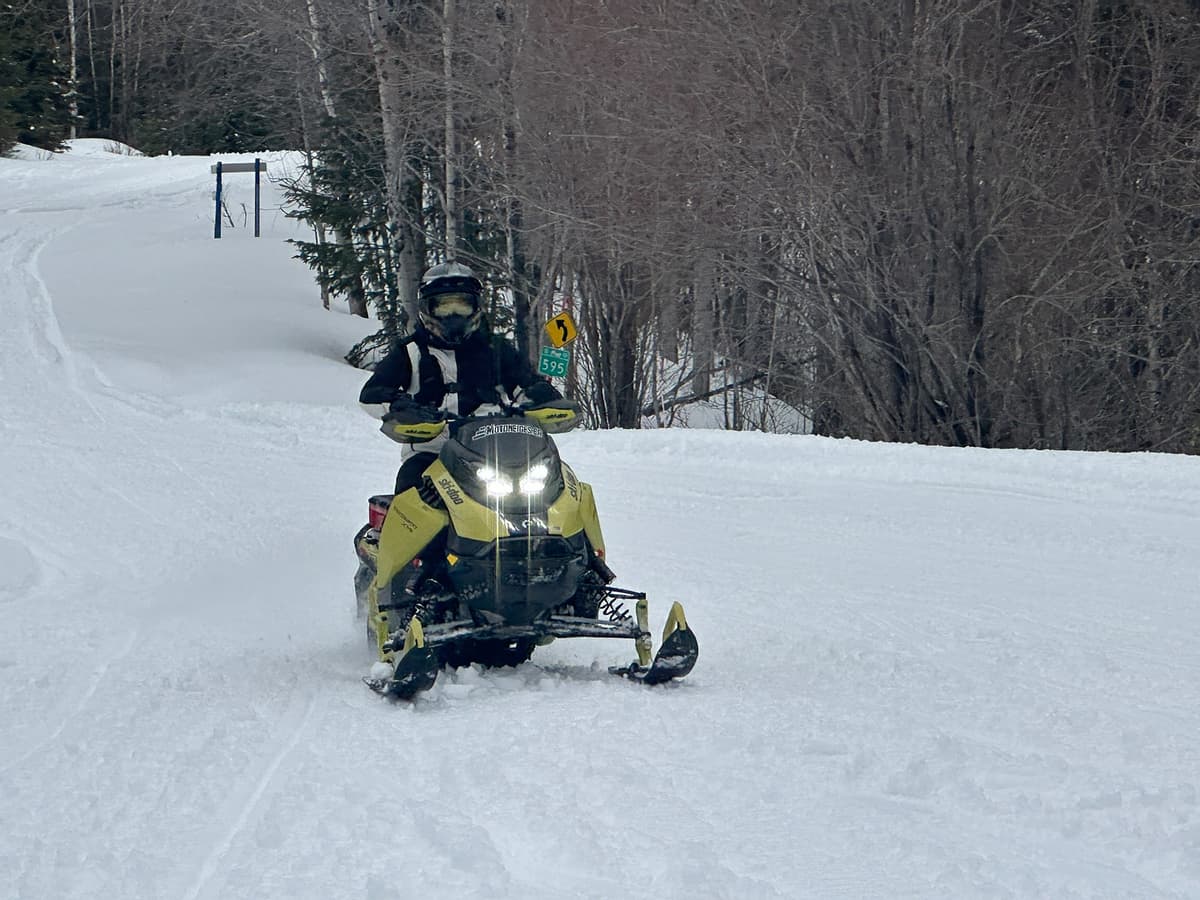
A quick word on the visual aspect of the Backcountry X-RS 2025. I particularly appreciated the shimmering yellow colour, which is very successful this year. It clearly stands apart from Ski-Doo’s traditional yellow and adds a refreshing touch. Throughout the season, many snowmobilers approached me spontaneously to comment on how good-looking they found this snowmobile, confirming that Ski-Doo nailed it with this distinctive and modern livery.
Lighting represents a significant improvement over the previous generation. The Backcountry X-RS 2025 headlights are very effective and produce a cooler, light tone, greatly enhancing terrain reading and contrast both on and off the trail. At night or in reduced visibility, coverage is wide and even, providing clear and reassuring vision at speed. This evolution directly contributes to confidence and safety, especially during long days that extend after sunset.
Technology and Display on the Backcountry X-RS 2025
The 10.25-inch touchscreen display is visually impressive and offers useful features. At present, integration with the BRP Go! app requires a USB cable, allowing access to navigation, music, and communications directly from the handlebar.
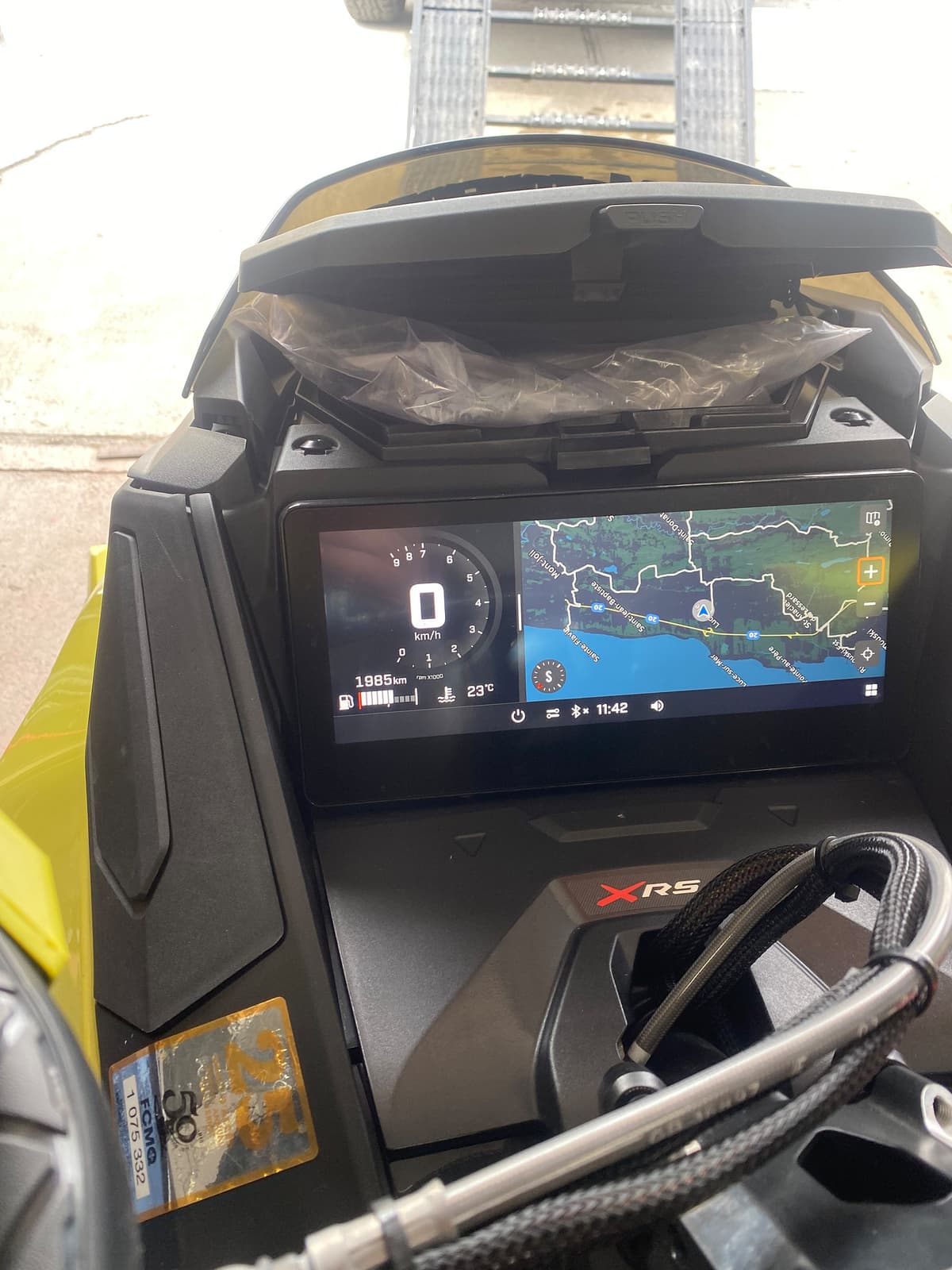
Early in the season, some challenges arose during map updates, requiring the snowmobile to keep running while being near WiFi. Following explanations from BRP, using a plug-in tool and maintaining the auxiliary battery above 12 V helped simplify the process.
Once updates were complete, the maps were comprehensive and provided an excellent overview of accessible areas. The integrated GPS track occasionally resets quickly, an issue that BRP indicates has been improved in more recent updates.
In the long term, the ability to save daily tracks directly on the snowmobile would be a clear advantage. This functionality is available through the BRP Go! app, but an integrated solution within the dashboard display would be preferable. Overall, BRP Go! works well, but wireless connectivity would be a welcome future improvement.
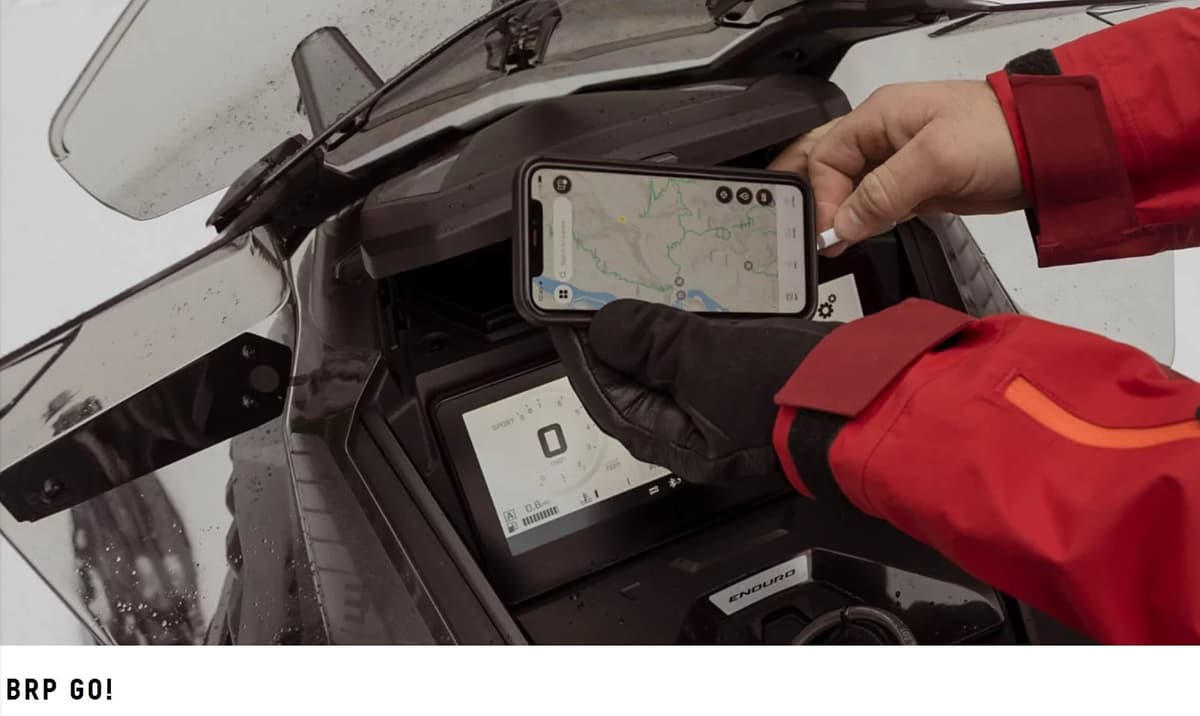
Using the USB port in combination with the heated phone pocket is practical, and the interface with the large display is well designed. I even took phone calls directly from the handlebar. However, a USB connection can become restrictive for connectors: when damaged, the system may disconnect and reconnect repeatedly. For this reason, toward the end of the season, I often favoured using trail maps downloaded directly to the snowmobile’s display.
Overall, the display is very successful and, once properly configured, offers excellent functionality. Over time, it would benefit from stronger wireless connectivity and more advanced GPS track management.
Strengths and Areas for Improvement on the Backcountry X-RS 2025
| Strengths | Areas to Improve |
| Exceptional trail stability, especially during aggressive riding. | Wider cockpit can limit sidehilling on hard snow and steep angles. |
| Precise steering with no ski lift in corners. | GPS track saving not integrated directly into the display. |
| Smooth, predictable power delivery from the Rotax 850 E-TEC. | BRP Go! connectivity still dependent on a USB connection. |
| Significantly improved flotation compared to the previous generation. | Map updates require some preparation. |
| True versatility between trail, off-trail, and technical terrain. | Possible fatigue at the end of the day for less active riders. |
| High-end suspension delivering comfort and control at speed. |
Conclusion
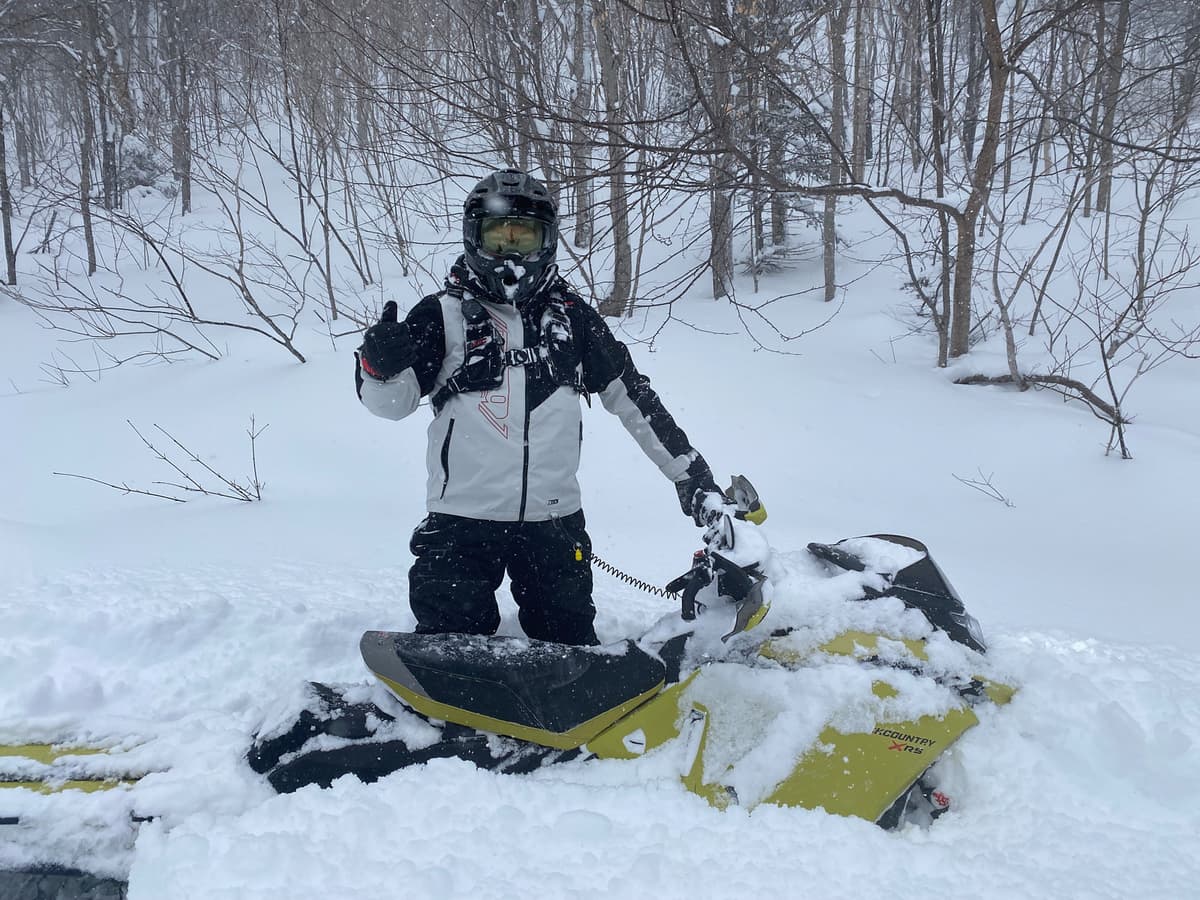
The Ski-Doo Backcountry X-RS 850 154 2025 fully delivers on the promise of a no-compromise crossover snowmobile. It combines the precision and stability required on trails with the flotation and manoeuvrability sought when riding off-trail. The REV Gen5 platform provides remarkable balance and refined ergonomics, while the Rotax 850 E-TEC delivers smooth, predictable, and usable power.
That said, the Backcountry X-RS remains a physical machine that demands an active and engaged rider. Those who prefer a more relaxed riding style may find it a bit intense. But for sporty riders who enjoy piloting rather than simply cruising, it offers a complete, stimulating, and coherent experience. A snowmobile capable of doing it all, built for those who love both groomed trails and untouched snow.
We would like to thank Ski-Doo for the loan of this snowmobile and for the trust placed in us during this season-long test.