


In the late 1960s and early 1970s, the snowmobile industry experienced what many still consider its golden age. Winters were long, the market was booming, and innovation was everywhere. Instead of just three or four dominant manufacturers, like today, dozens of companies—both large and small—were competing to stand out through performance, design… or pure technological ambition.
It was within this energetic landscape that Outboard Marine Corporation (OMC), an American giant already firmly established in the marine world through its Johnson and Evinrude brands, decided to make a bold move. Rather than refining a conventional piston engine like everyone else, OMC took a daring gamble: developing a rotary engine specifically designed for snowmobiles.
A risky and expensive bet… but one that perfectly captured the spirit of the era.
The Rotary Engine: A Technology That Captivated Engineers
The rotary engine, often associated with the name Wankel, was not entirely new in the early 1970s. Already used in certain automotive prototypes and industrial applications, it fascinated engineers with its radically different design.
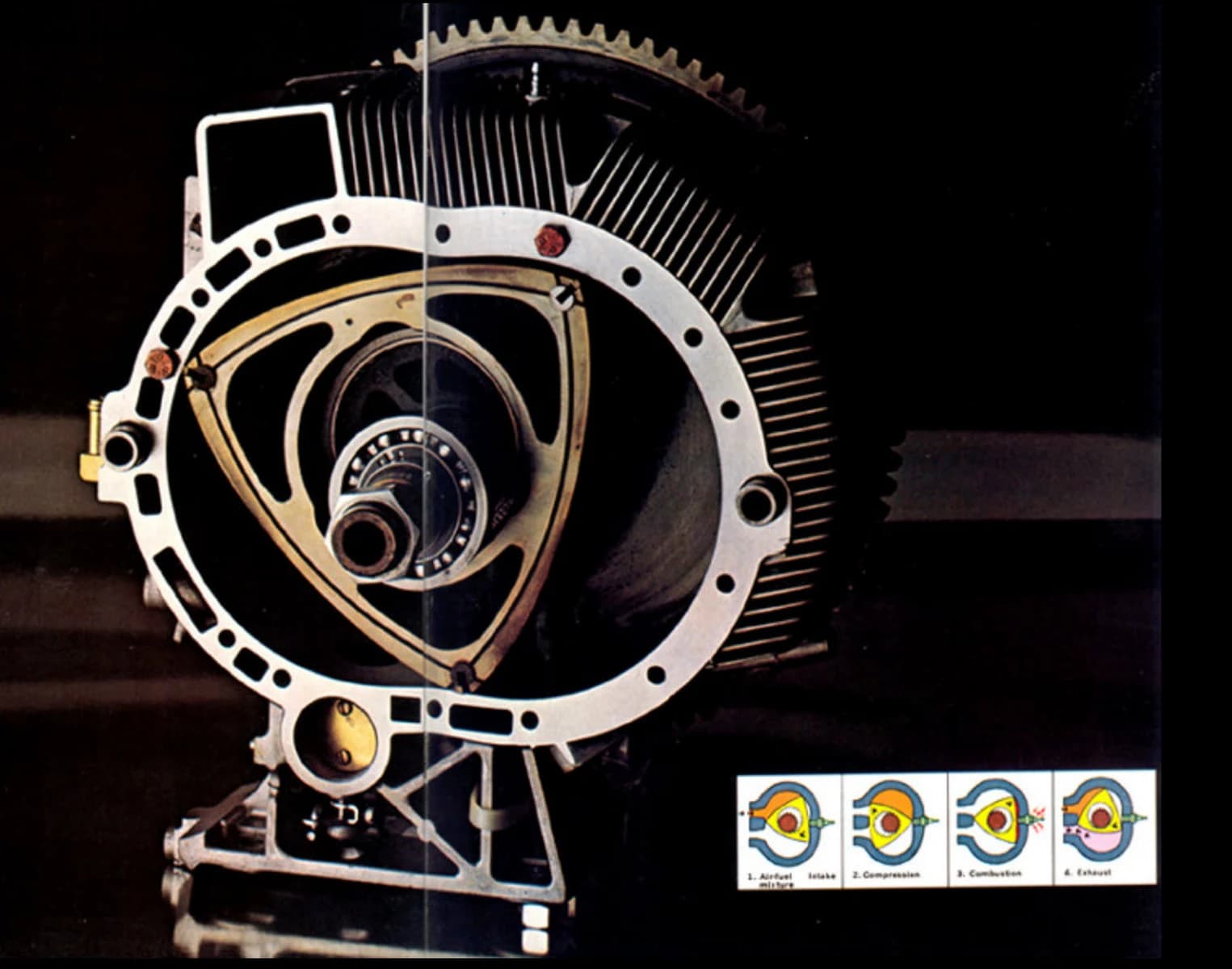
Unlike a piston engine, a rotary engine operates using a triangular rotor spinning inside an oval-shaped housing. This continuous motion eliminates several moving parts, promising:
- smoother operation;
- reduced vibration;
- remarkable compactness;
- and an excellent power-to-weight ratio.
On paper, the concept seemed nearly perfect for snowmobiles—vehicles where weight, mechanical smoothness, and simplicity are critical factors. Reality, however, proved more complex. Even at the time, engineers understood that rotary engines came with significant challenges: sealing durability, thermal management, and fuel consumption.
Still, the potential was compelling enough to attract the attention of multiple manufacturers.
OMC Was Not Alone… But It Was Different
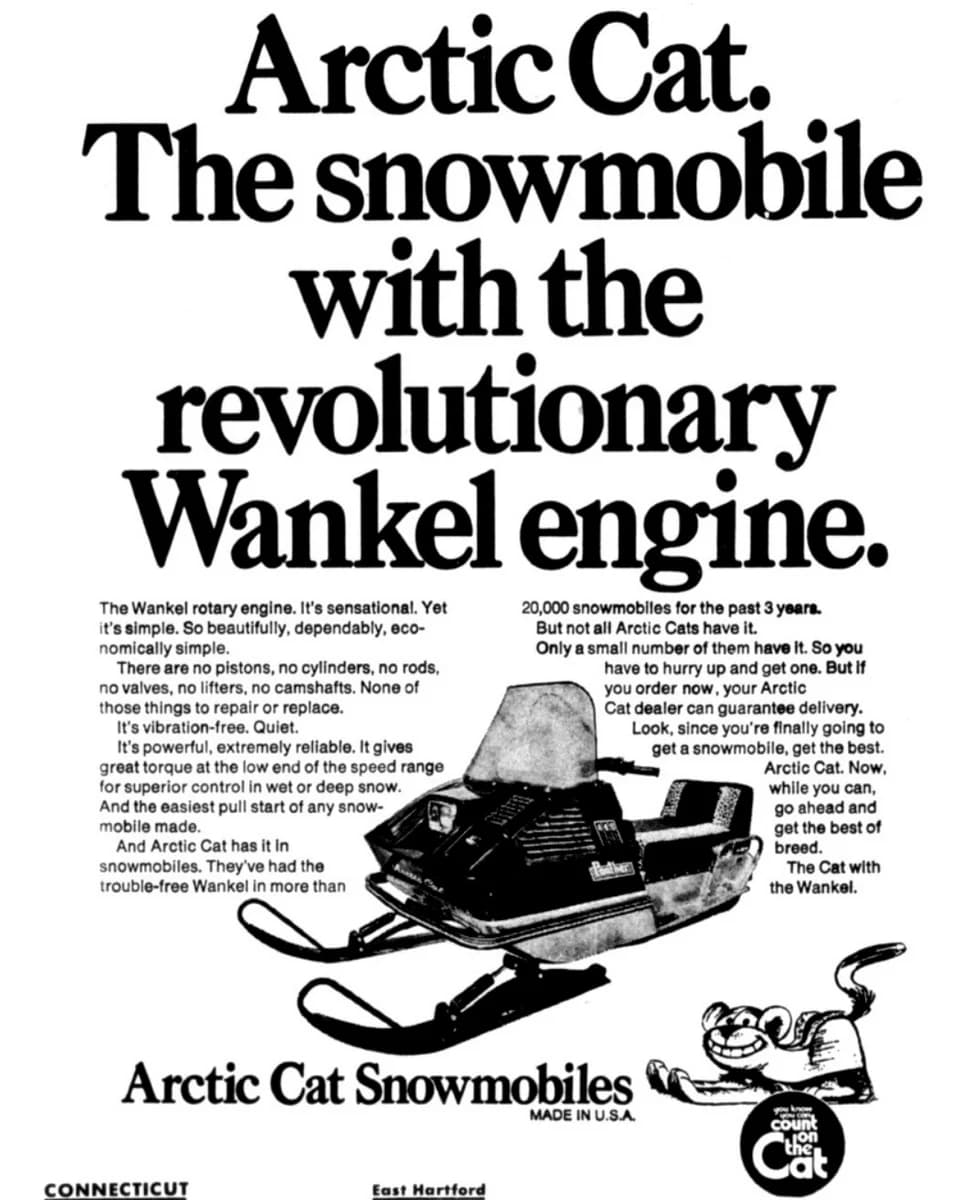
Even before OMC introduced its rotary engine, several snowmobile manufacturers had experimented with the concept. In the late 1960s, German-built Fichtel & Sachs Wankel engines of roughly 303 cc were used—in very limited numbers—by North American brands such as Arctic Cat, Polaris, and Scorpion.
However, these initiatives relied on externally sourced engines that were adapted, sometimes imperfectly, for winter use. OMC chose a radically different path:
👉 Design and industrialize its own rotary engine, engineered from the ground up to meet the specific demands of snowmobiling.
This is where the story becomes truly compelling.
The D471 Project: A Rotary Built for Snow
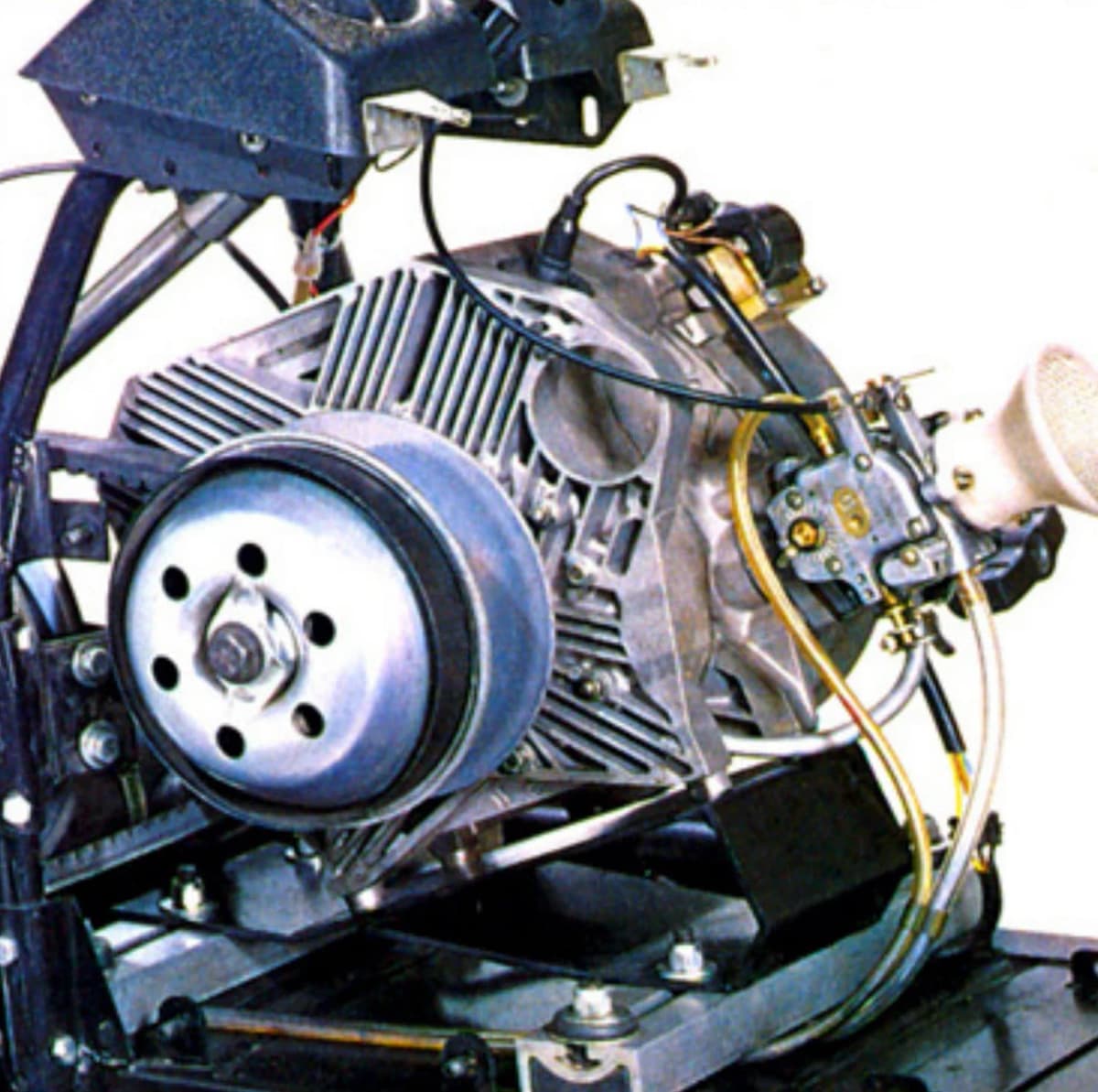
Within OMC, the development of the rotary snowmobile engine was known as Project D471. The objective was clear: create a powerplant capable of rivalling contemporary piston engines while delivering a unique technological signature.
The result was impressive for its time:
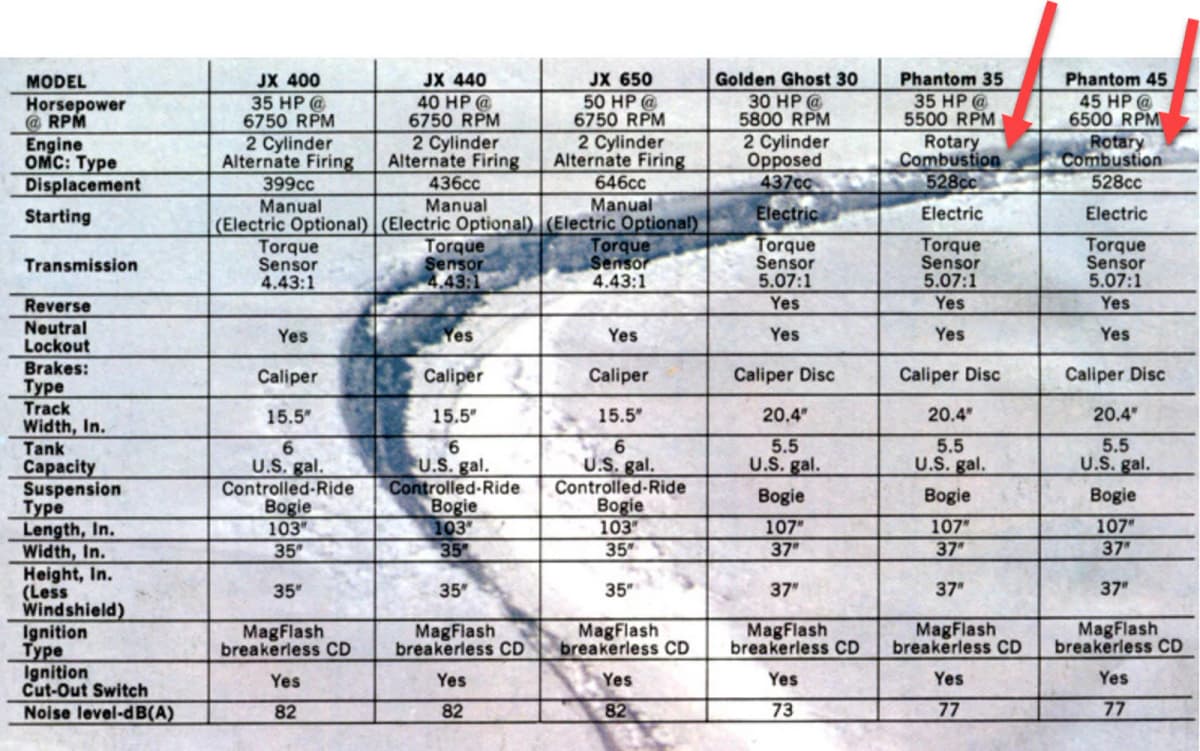
- Architecture: single-rotor rotary engine
- Displacement: approximately 528 cc
- Claimed output: 35 horsepower at around 5,500 rpm
- Cooling: forced air
- Fuel system: carbureted
- Manufacturing: North America
This engine is often recognized as the first production rotary designed specifically for snowmobiles—and the first rotary engine industrially produced in North America for this market.
For OMC, it was more than just an engine; it was a technological showcase and a powerful statement to competitors.
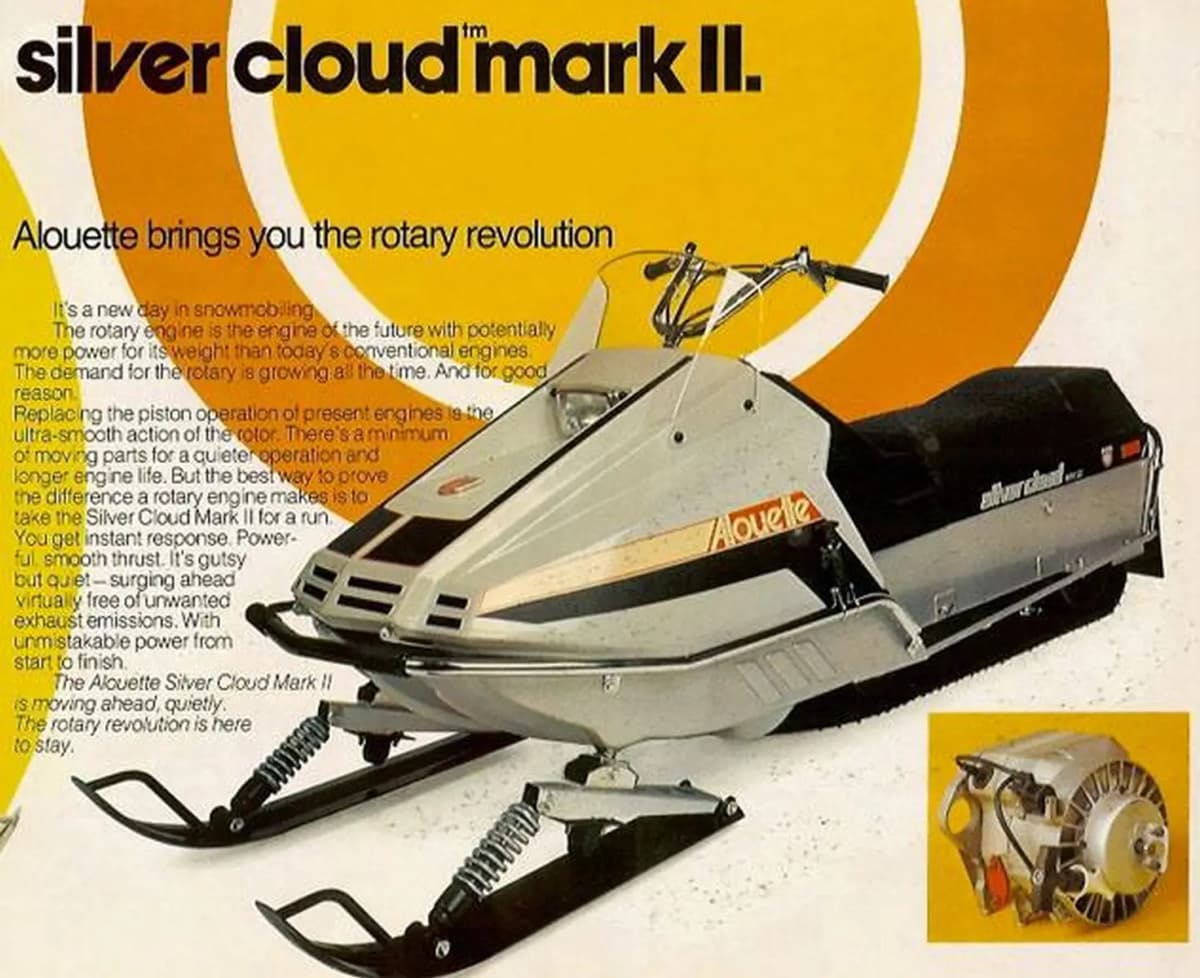
1973: The Rotary Hits the Snow
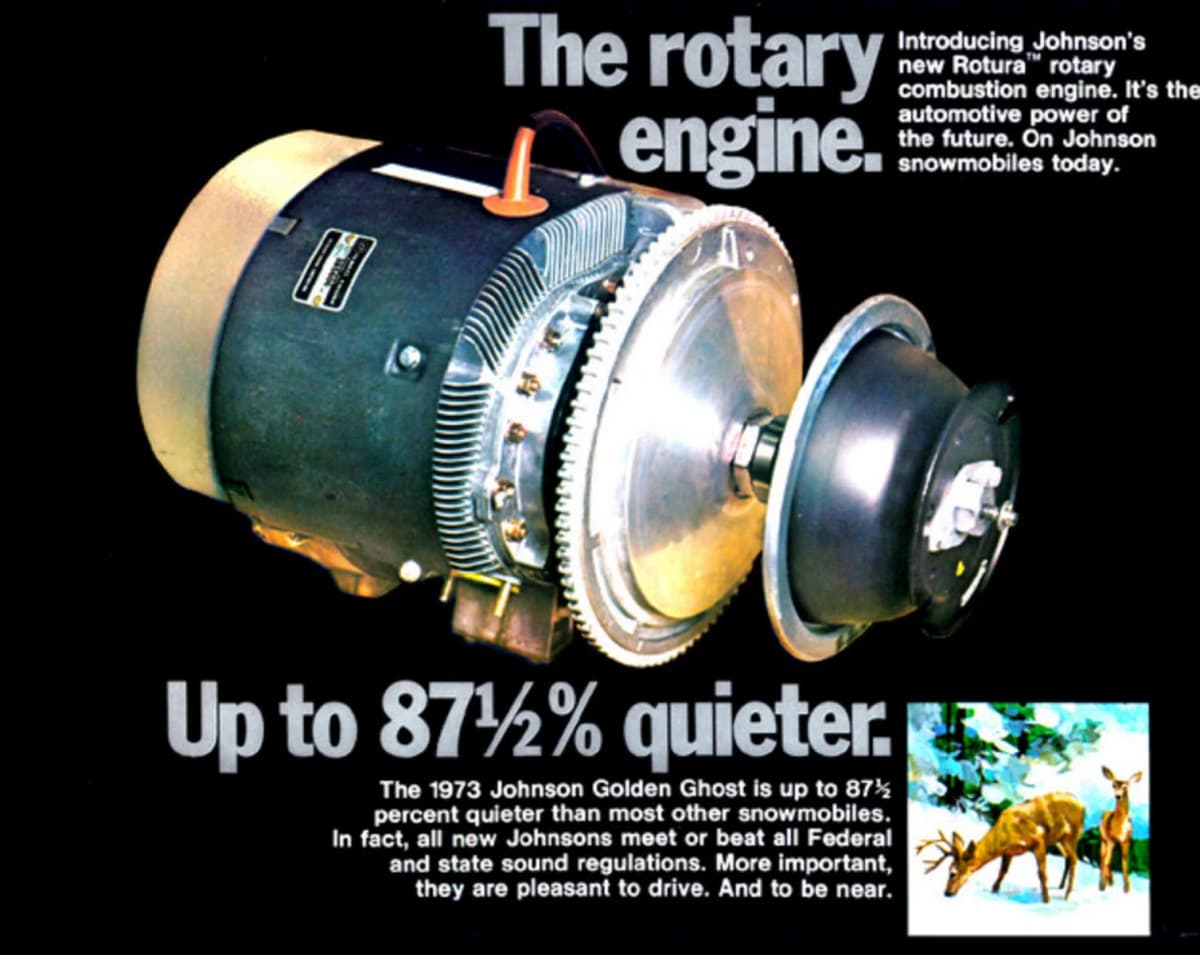
The D471 entered the market in the early 1970s, notably powering two memorable models:
- Johnson Trailblazer (1973)
- Johnson Phantom (1973)
These snowmobiles were not necessarily built to set outright speed records. Their mission was different: deliver a new kind of riding experience. Marketing campaigns emphasized smoothness, modern engineering, and the technological edge represented by the rotary engine.
For many riders of the era, hearing a rotary engine running on snow was almost disorienting. The sound was distinctive, the operation surprisingly fluid, and the lack of vibration left a strong impression.
On Snow: Fascinating Technology, Imperfect Reality
Out on the trail, the OMC rotary engine delivered on some of its promises. Mechanical smoothness was undeniable, as was the engine’s compact design. Power delivery felt linear, without the pulsations typical of piston engines.
But the limitations quickly became apparent.
Fuel consumption—higher than conventional engines—became a concern. Thermal management proved delicate, especially in variable winter conditions. And as with many rotary engines of the period, apex seal wear raised questions about long-term reliability.
Additionally, despite the advertised horsepower, overall performance was sometimes viewed as underwhelming given the weight of the machines and the high expectations created by marketing.
1974: Attempting an Evolution
Aware of the criticism, OMC attempted to refine the formula in 1974 with a more powerful version rated at approximately 45 horsepower. The goal was to address certain shortcomings and reposition the rotary as a more competitive option.
But the industrial landscape was already shifting. The snowmobile market was slowing, winters were becoming less predictable, and manufacturers were entering a phase of consolidation. Expensive technological gambles were increasingly difficult to justify.
Why the Adventure Ended
The discontinuation of OMC’s rotary engine was not the result of a single dramatic failure, but rather the convergence of several unfavourable factors:
- high development and production costs;
- perceived reliability lower than proven piston engines;
- elevated fuel consumption;
- a market less tolerant of niche technologies;
- OMC’s strategic refocus on its core business.
In a more conservative environment, the rotary engine simply no longer had a place.
A Legacy That Still Fascinates
Looking back, the OMC rotary engine holds a unique place in snowmobile history. OMC was not the first to experiment with rotary technology, but it was the first to develop one specifically for snowmobiles and produce it on an industrial scale in North America.
Today, rotary-powered Johnson Trailblazer and Phantom models have become sought-after collector machines. Complex, rare, and sometimes temperamental, they perfectly symbolize an era when the industry dared to try almost anything.
An era when innovation sometimes mattered more than profitability.
Conclusion: When Innovation Outran Its Time
The OMC rotary engine did not permanently transform the snowmobile industry—but it left a lasting mark. It embodies the boldness, creativity, and experimental freedom that defined snowmobiling’s golden age.
More than just an engine, the D471 reminds us that there was a time when manufacturers were unafraid to take risks—even if it meant occasionally going too far, too fast.
And that is precisely why we are still talking about it today.