

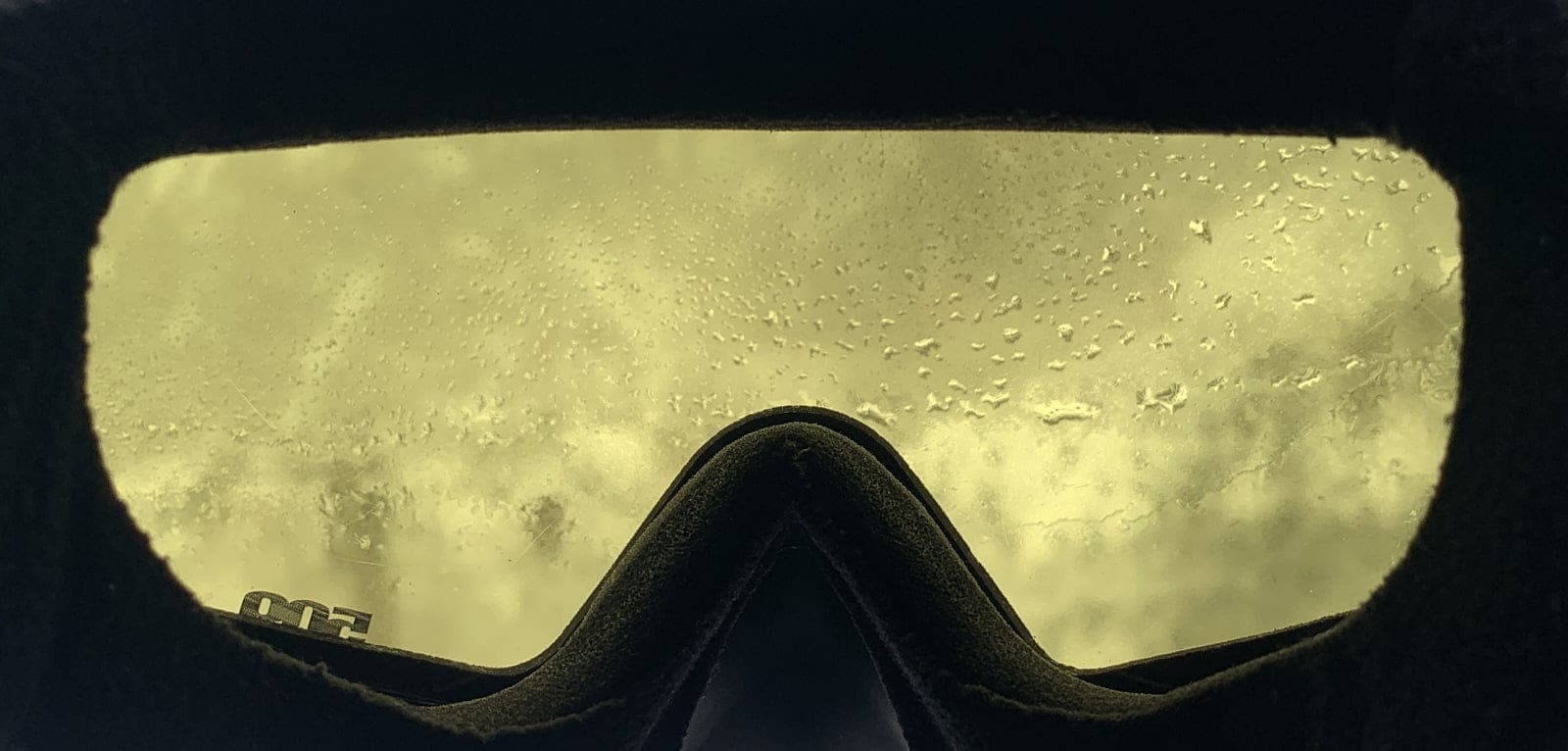

Can you name something more frustrating than being stuck with fogged-up goggles? In snowmobiling, vision is crucial. Especially when riding off trail, where analyzing the terrain is essential. With the cold, goggles are necessary to protect us from frostbite, so when fog becomes an issue, action must be taken! To prevent this phenomenon, you should opt for ventilated goggles that fit your face properly.
We’ve all experienced it before: you stop for a few moments, exert yourself to get unstuck, and then it starts. With my experience and interest in understanding the reasons behind this problem, I decided to look into the causes that lead to condensation inside snowmobile goggles.
What causes Fog on Snowmobile Goggles?
When looking for a solution to a problem, the first step is to understand its cause. In our case, let’s set the scene. On a beautiful winter day with a temperature of -15 degrees Celsius on the thermometer, you are riding through the backcountry in fresh powder. Despite the cold, inside your helmet, more precisely between your face and your goggle lens, a microenvironment forms. This environment is much warmer than the outside temperature and filled with humidity. This is where the problem takes place: the temperature difference between the lens and the warm, humid air leads to the formation of this annoying fog.
To prevent this issue, traditional snowmobile goggles have double lenses. If you weren’t aware, this design helps prevent thermal conduction from the outside temperature to the inner lens. Similar to thermal windows, the gas between the two lenses acts as an insulator, significantly reducing heat transfer. In our case, this principle greatly improves the goggles’ resistance to condensation by raising the dew point.
To break things down, the dew point is the temperature at which water vapour in the air becomes liquid. This process is known as condensation. The two factors that affect this condensation point are temperature and levels of humidity in the air. Warmer air holds more moisture and has a higher dew point than cold air. That’s why having a warm, insulated inner lens is essential.
Everything Relies on Two Things
Two key factors can make all the difference in why your friend’s goggles remain fog-free while yours are constantly fogged up. These are the ventilation and the seal between the goggles and your face.
Goggle Ventilation: Your Best Friend Against Fogging
I noticed the effect of ventilation by comparing two identical goggle models. The first had a standard lens, while the other had additional ventilation ports. The goggles with better ventilation almost never fogged up, while the other ended up fogging up. This occurs because increased ventilation helps remove heat and moisture trapped inside the goggles.
That’s why I recommend choosing goggles with maximum ventilation. I used the 509 Sinister X5 goggles as a comparison. Yes, they are nearly 10 years old, but the principles for avoiding fog remain unchanged to this date.
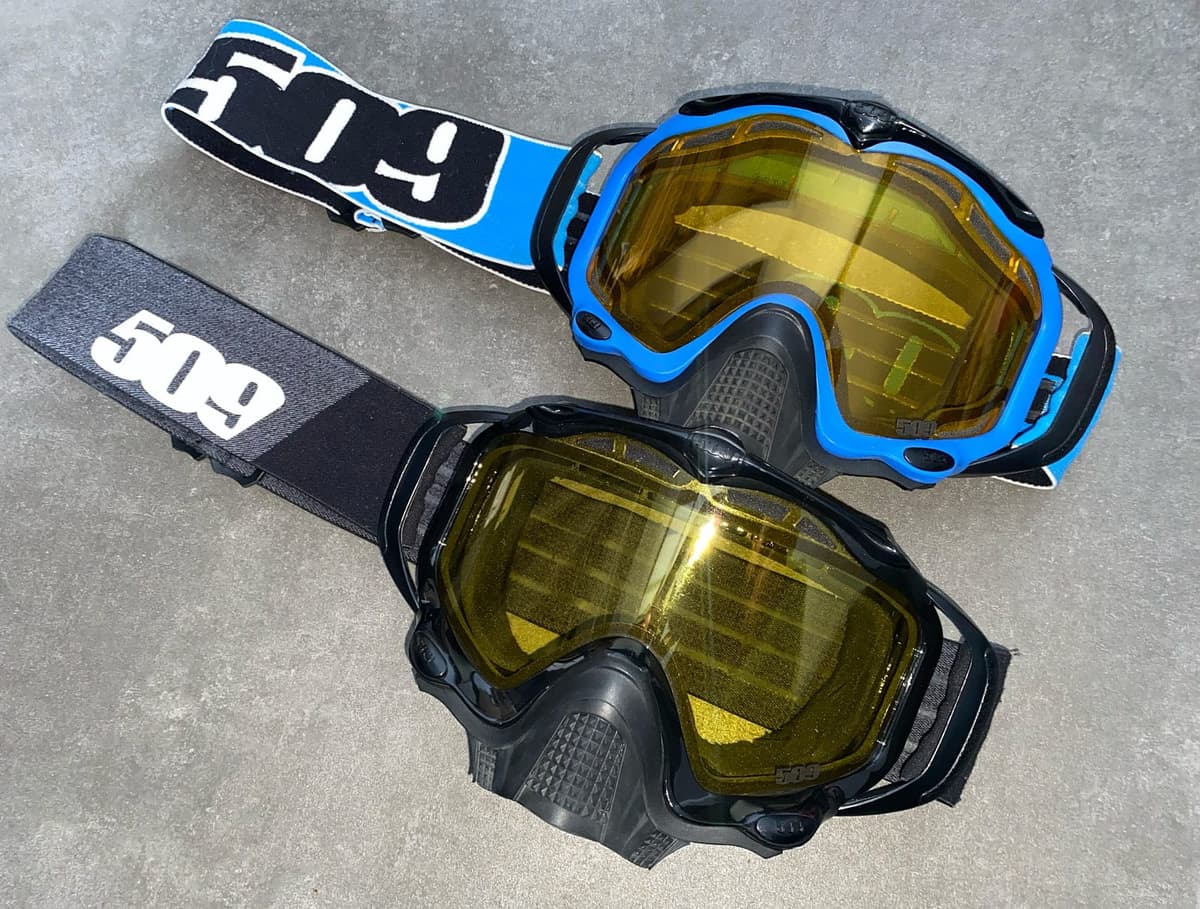
As shown in the image above, the blue model has more than twice the ventilation of the black one. This simple change significantly reduces fog formation on the inner lens.
Mote Air = Less Humidity Inside Your Goggles
Another aspect that could help is the air volume inside the goggles. A greater air volume can help reduce humidity concentration inside the goggles and delay air saturation. For example, during intense physical effort with poor ventilation, like when you’re struggling to get unstuck.
Goggles with a larger-than-average air volume are the ones with toric-lens models like the Klim Aeon and the 509 Aviator 2.0.
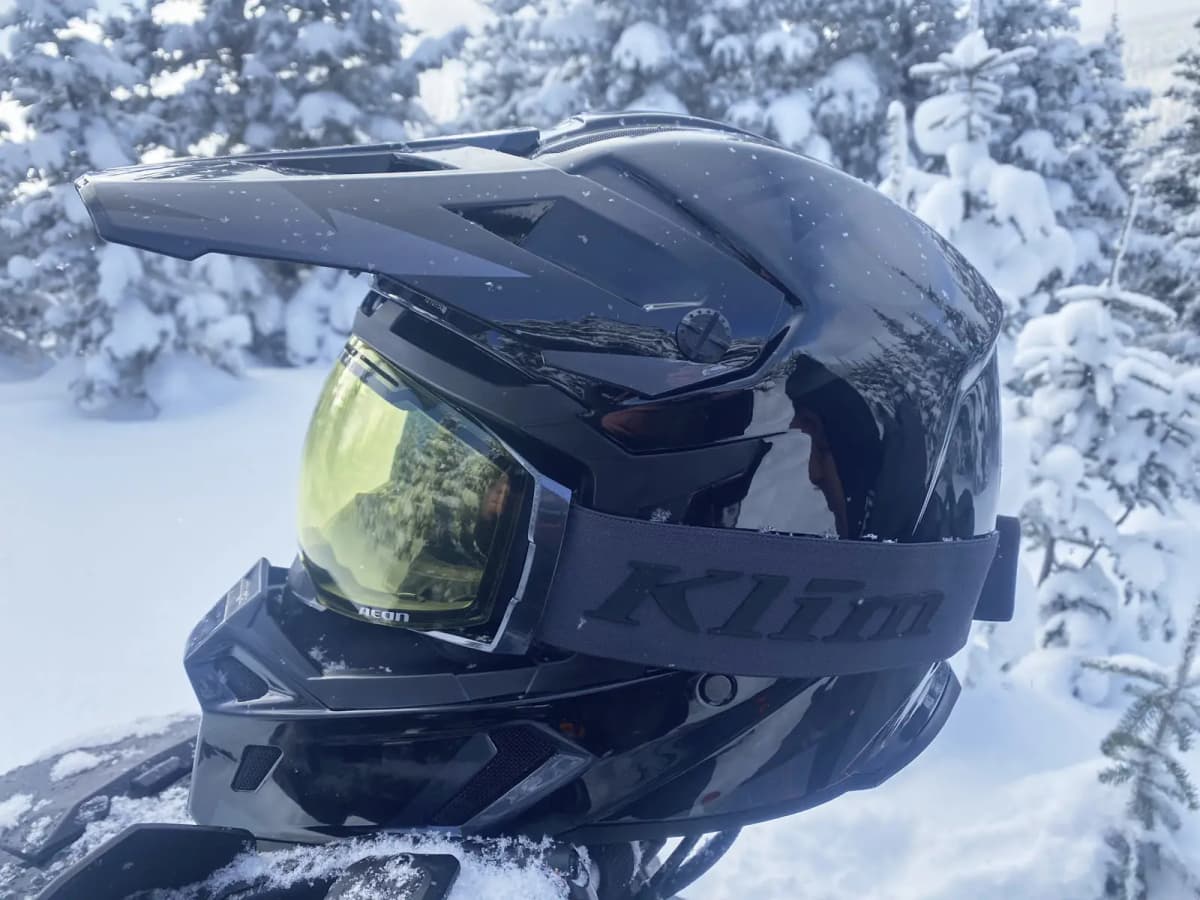
Mathieu Lavoie, my colleague and contributor to SledMagazine, has tested the Klim Aeon goggles (read his review here). The photo demonstrates the interior volume allowed by the toric lens. See how the lens is curved and deep compared to traditional flat lenses. Screenshot taken from SledMagazine.com.
Goggle Adjustment: A Tight Seal Prevents Fogging
The second crucial factor is the seal between your goggle foam and your face. This foam is not there simply for comfort; it primarily creates an airtight seal. The goal of this seal is to maintain the microenvironment inside your goggles. Take care of it; otherwise you won’t see a thing! This seal prevents heat and humidity from your breath from disrupting the climate inside your goggles.
Yes, Size Matters!
To get the best possible fit, make sure to choose goggles that suit well to your face shape. Some goggles have a large opening, while others have a smaller one. Goggles that are too wide for your face will let warm, humid air from your breath enter. It’s essential to choose well-fitted goggles. For example, Scott states on their website that the “Prospect” model is designed f
or medium and large helmets, whereas the “Primal Snow Cross” model is made for small and medium helmets.
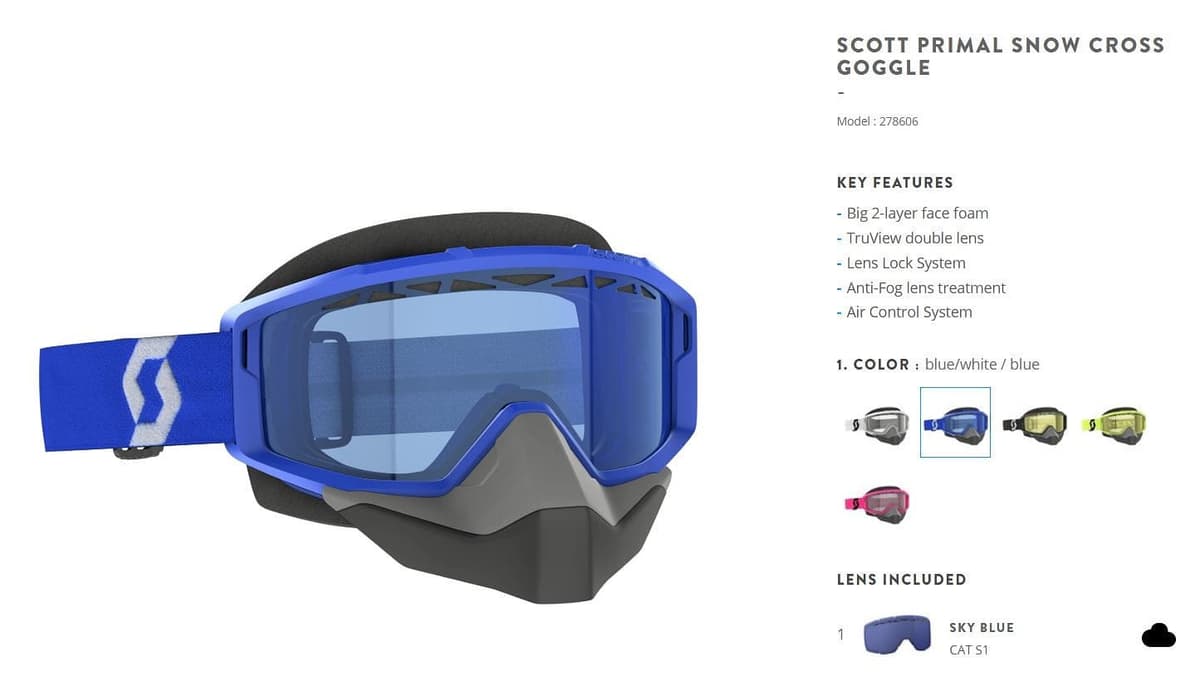
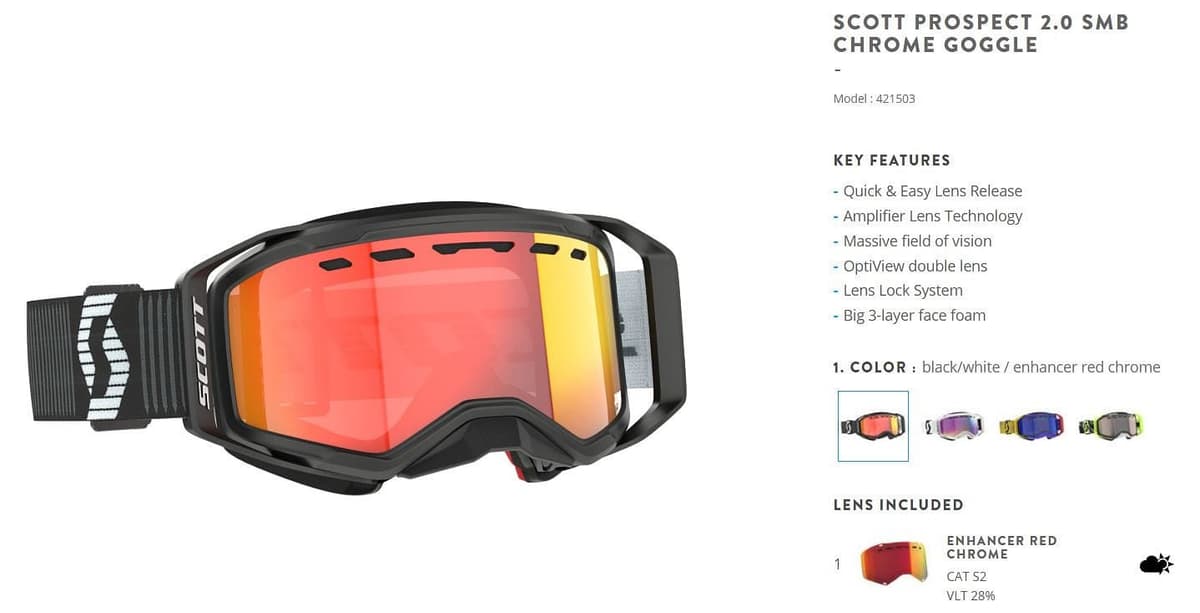
A 100$ pair of goggles that fit you perfectly may perform better than a model twice the price that would be too large for your face. I have also been caught buying goggles that were too large for my helmet opening. Despite their excellent ventilation, my breath’s warm air entered and frosted up the lens.
The “Joker”: Heated Lens Goggles
If you’ve tried these two tricks and still can’t see after 10 minutes, you might not find a way to fix the problem. With the wide variety of gear available on the market, one specific goggle model might solve the issue, but I understand that testing them all is unrealistic given their price.
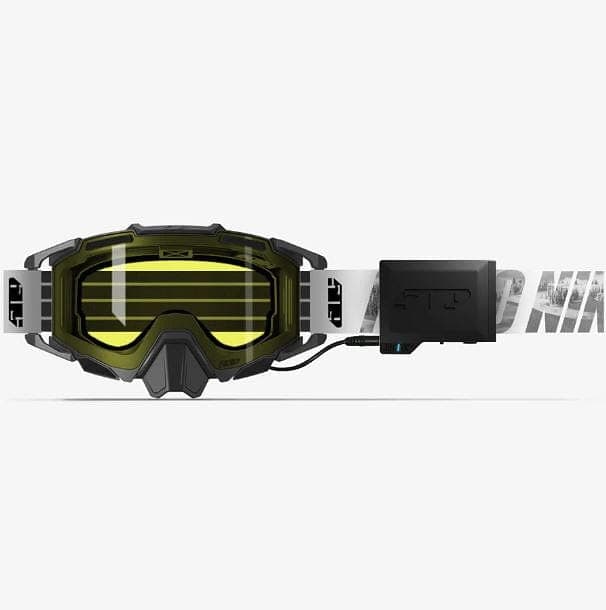
In this case, I recommend what could be considered a “Joker” option. It is the heated lens goggles. Personally, I believe it’s always good to have goggles that won’t fog up without relying on technology to avoid failures or dead batteries. However, if you can’t solve your fogging problem, don’t waste any more time and go for the electric goggles.
Several options are available on the market. Among major brands, 509 offers the Ignite series, FXR has the Maverick model, and KLIM has entered the market this year with the Edge eFire. You’ll have plenty of options to choose from!
Extra Tips to Prevent Fog on Your Goggles
In addition to the fit and ventilation of your glasses, there are other tricks that can help you eliminate fogging. Here are some.
Wear a Good Balaklava
Another element not to overlook is the balaclava. It may seem trivial, but a balaclava with an integrated breath deflector prevents your breath from rising to your goggle lens. As with your goggles, the fit is crucial. While many brands offer this type of product, some models can create a direct air leak toward your goggles. Make sure the deflector fully contours your nose. Otherwise, warm and humid air will be pushed toward your nose, which is often the least well-sealed area by the goggles.
Remove Your Goggles in Key Situations
When you stop for a break or to get unstuck, I strongly recommend removing your goggles. When exerting yourself physically, your sweat increases humidity and leads to fogging. Additionally, when you’re stationary, ventilation is significantly reduced. However, when you remove your goggles, make sure not to place them lens-up; you wouldn’t want snow falling inside!
Keep Tabs on the Anti-fog Treatment on Your Goggles
Anti-fog products are somewhat misleading in their name, as they help reduce the visual impact of condensation but won’t prevent it. Snowmobile goggles have a factory-applied anti-fog coating on the inner lens. After several seasons and cleaning, this coating may lose its effectiveness. In this case, reapplying an anti-fog treatment with a suitable product can be beneficial.
Adjust Your Goggle Strap Properly
Often forgotten, goggle straps are adjustable. Tightening them increases pressure on your face, creating a better seal with the goggles.
What to Keep In Mind
What you need to understand about fogging is that in winter, cold temperatures reduce the air’s capacity to hold moisture before becoming saturated and causing fog. The colder it gets, the easier condensation forms.
For snowmobile goggles, two key factors need to be considered. Make sure to choose goggles with excellent ventilation to evacuate warm and humid air effectively. And last, but not least, a proper seal between your face and the goggles is essential. If you follow these two points, you should be able to ride all day with the same pair of goggles!