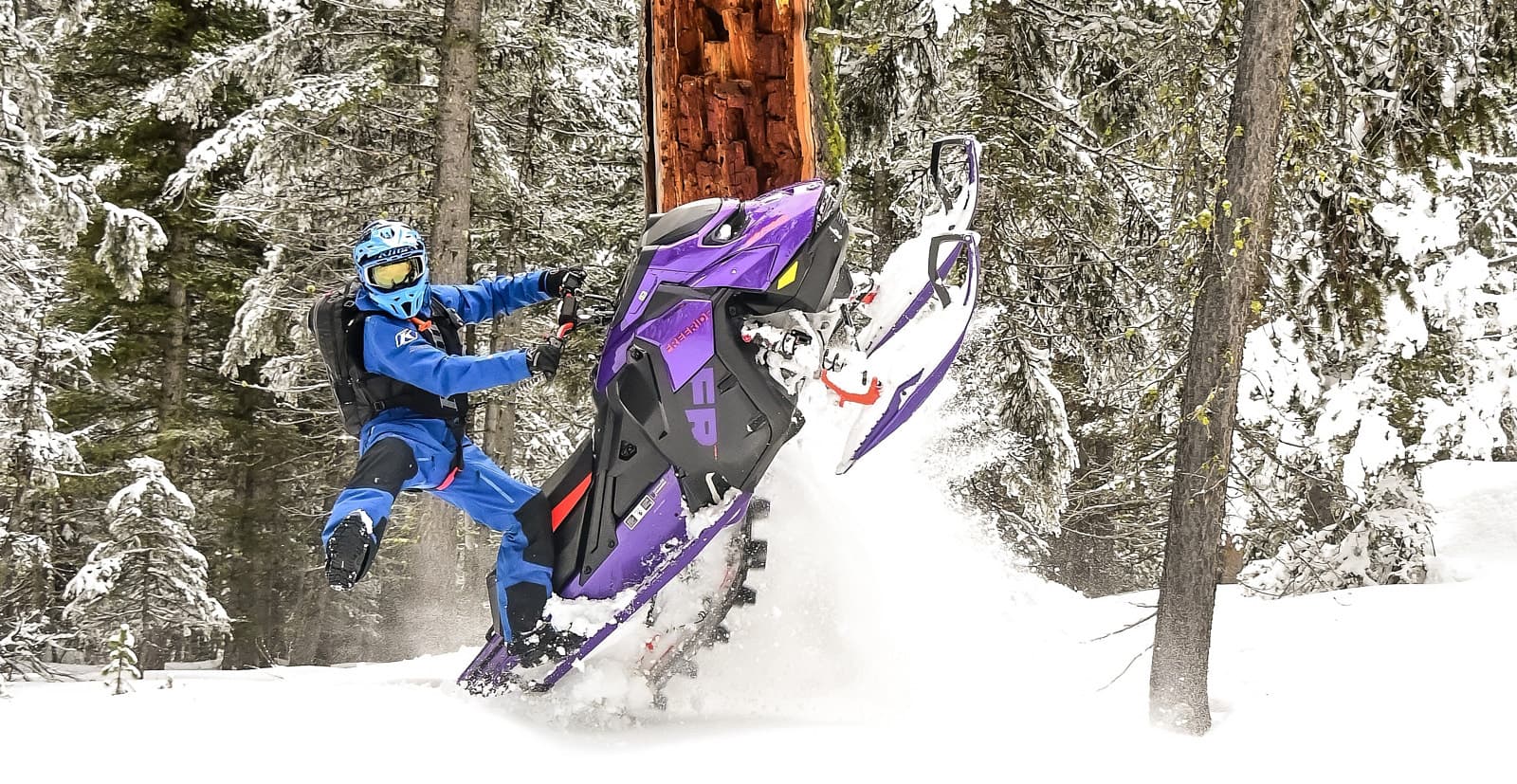

Every so often, a manufacturer releases a mountain sled that feels less like a revision and more like a reset… an intentional reimagining of what a platform can be. After riding it during SnowShoot, I can tell you Ski-Doo’s 2027 Freeride 850 E-TEC Turbo R is one of those resets. Now, the Freeride name has long been tied to big jumps, deep snow, and boundary-pushing riders. However, past generations have earned a reputation for being a bit stiff, somewhat bulky, and not as responsive as some competitors in the steep-and-deep arena. For Model Year 2027 (MY27), however, Ski-Doo’s engineers tore deeply into the chassis, ergonomics, suspension, and steering systems. In the process, they shed a remarkable 14 lb off this mountain sled.
Click here for the 2027 Freeride Specs Sheet.
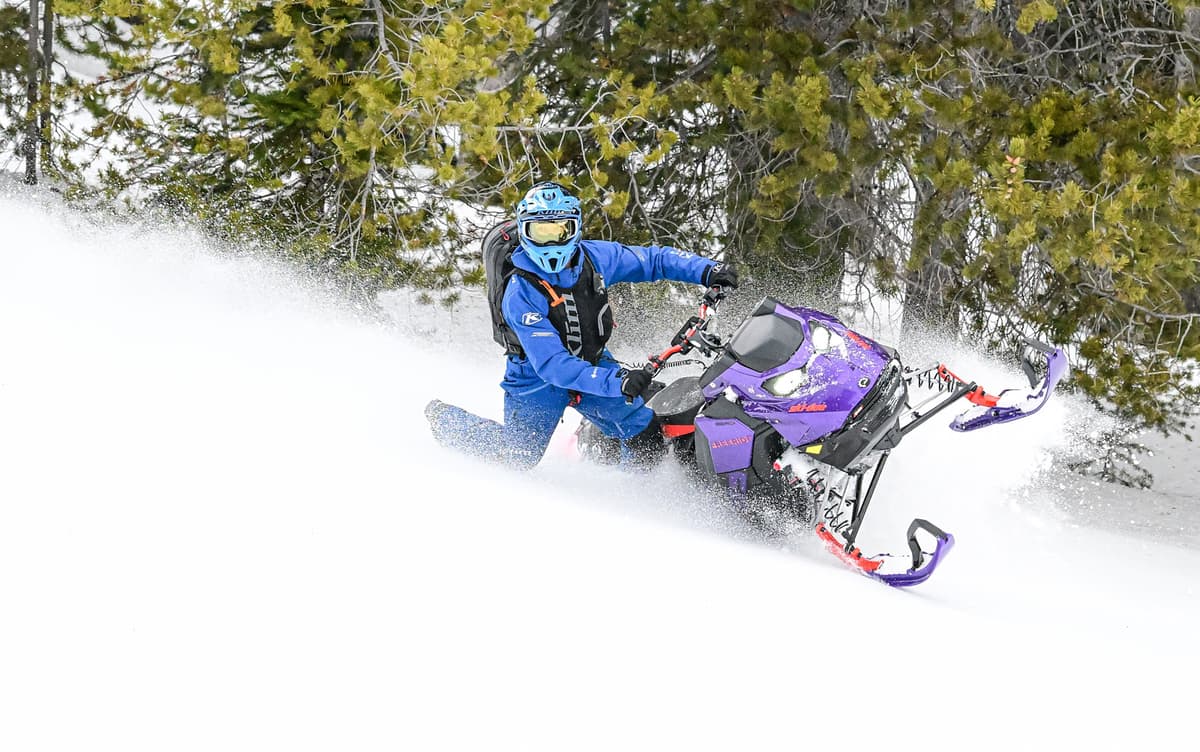
The resulting Freeride not only performs better, but feels dramatically different. I found it livelier, more precise… and more fun. In this review, I will break down what has changed and why this new Freeride is one of the most improved mountain sleds of the year.
Ultraviolet First Impressions of the 2027 Freeride: Unexpectedly Iconic
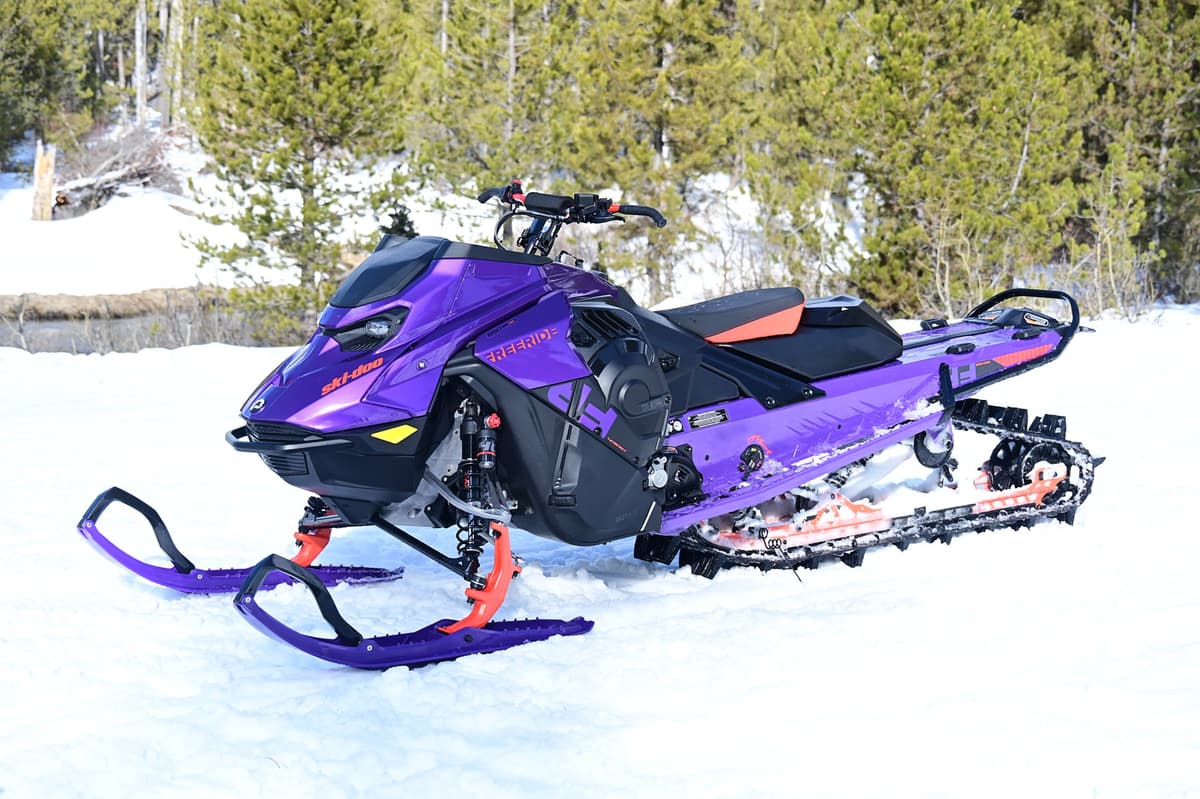
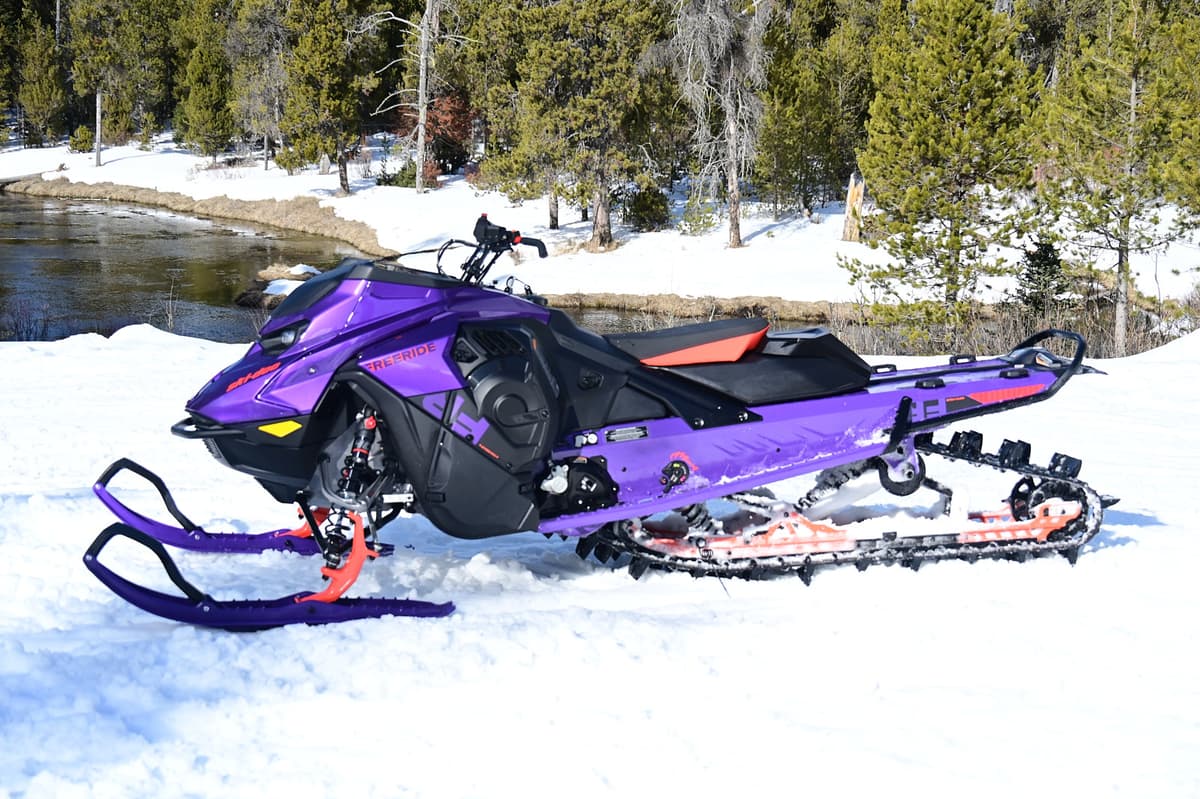
The first thing I noticed, before even studying the technical updates, was the color. The new Ultraviolet purple of the 2027 Freeride is bold in a way mountain sleds seldom are. Purple is a historically polarizing color. Yet Ski-Doo’s execution is eye-catching rather than gaudy. On snow, it shines through the whites and grays of winter with confidence.
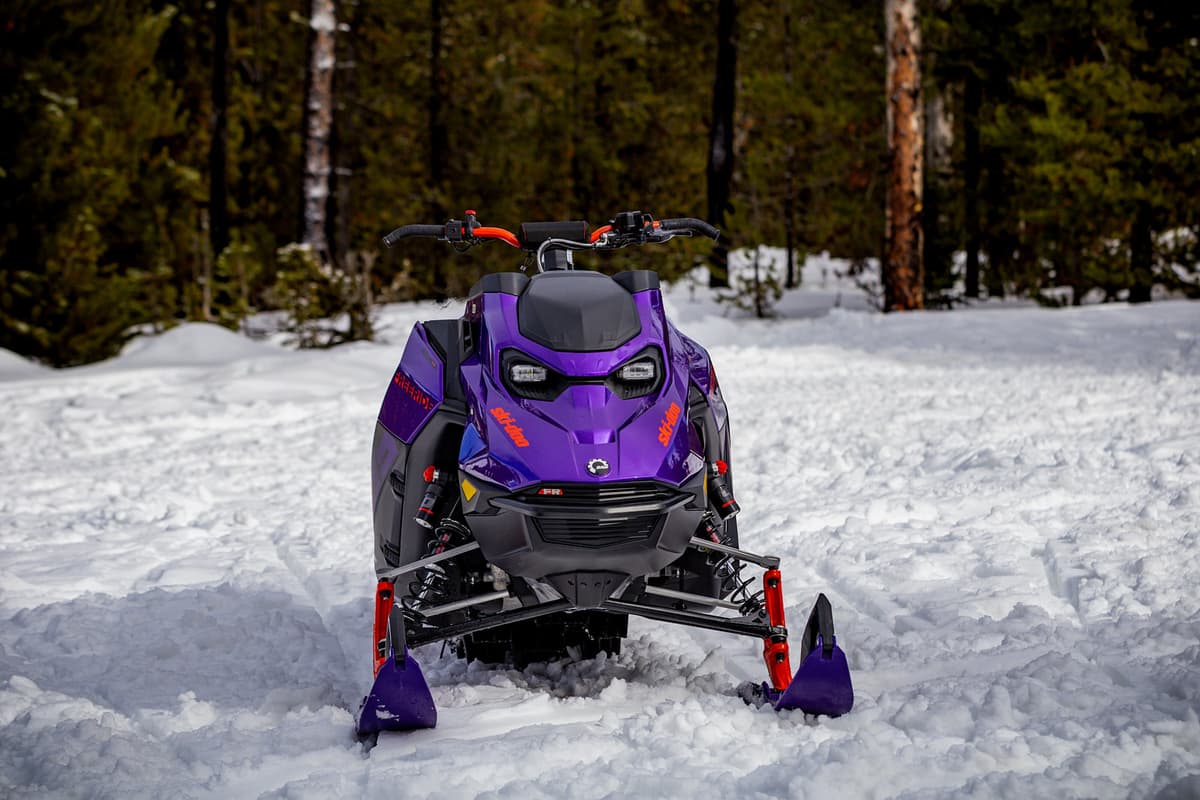
It evokes an unmistakable connection to the iconic Dodge and Plymouth “Plum Crazy” muscle-car era of the late 1960s and early 1970s, a color that has stood the test of time. Ski-Doo’s Ultraviolet has that same unapologetic energy. Whether or not purple typically fits your taste, the new Ultraviolet color delivers a bold, unmistakable presence on the mountain.
2027 Freeride Ergonomics: Lower Riser, New Cockpit Feel
A Lower Handlebar Riser
Among the many functional changes, the reduced riser height may be the most immediately noticeable. Ski-Doo lowered the handlebar riser from 120 mm to 90 mm on their 2027 Freeride. Effectively, this puts us in a more aggressive, rider-forward mountain stance.
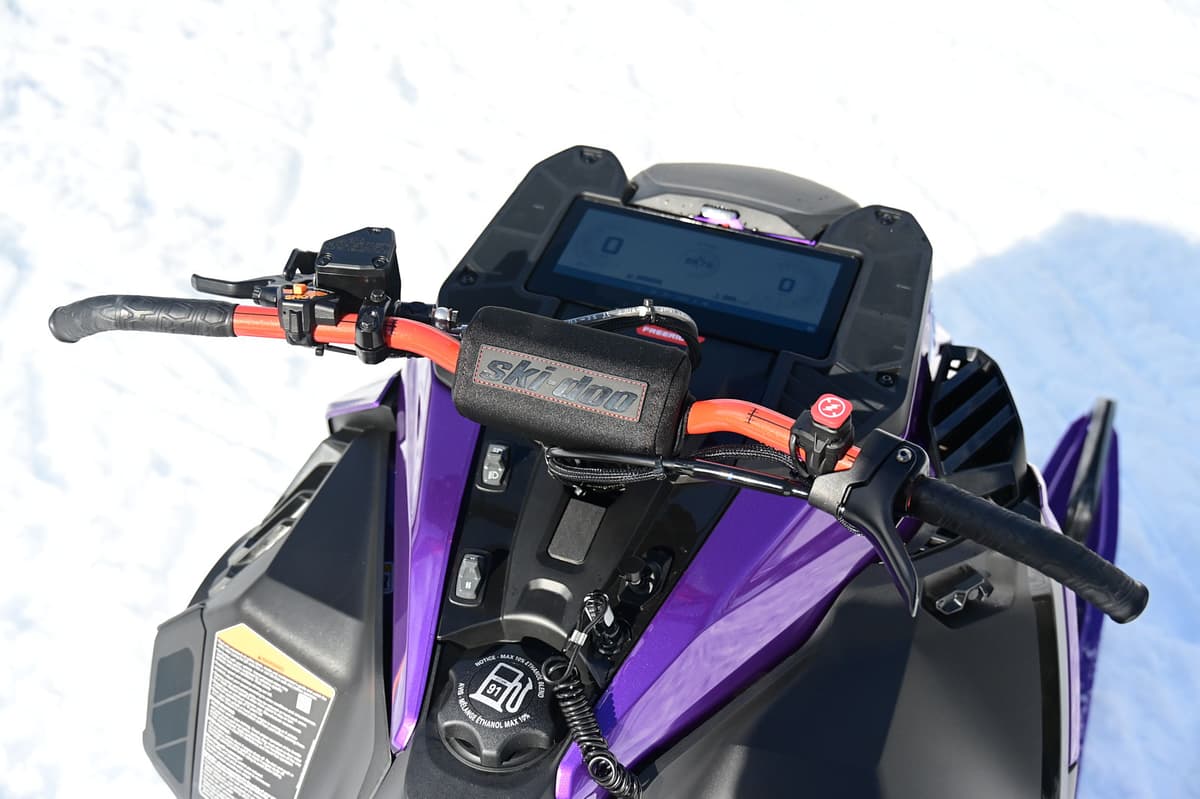
For technical riding, tree lines, steep cuts, or transitioning from edge to edge, the shorter riser simply works. By keeping our body position closer to the sled’s center of gravity, we observe an increase in control and responsiveness. Furthermore, it ends up removing the “tall and less controllable” feeling of past Freeride setups. Visually, it’s a small change from previous models. But I noticed a big modification to the overall feel, control, and handling.
The End of the Mountain Bar
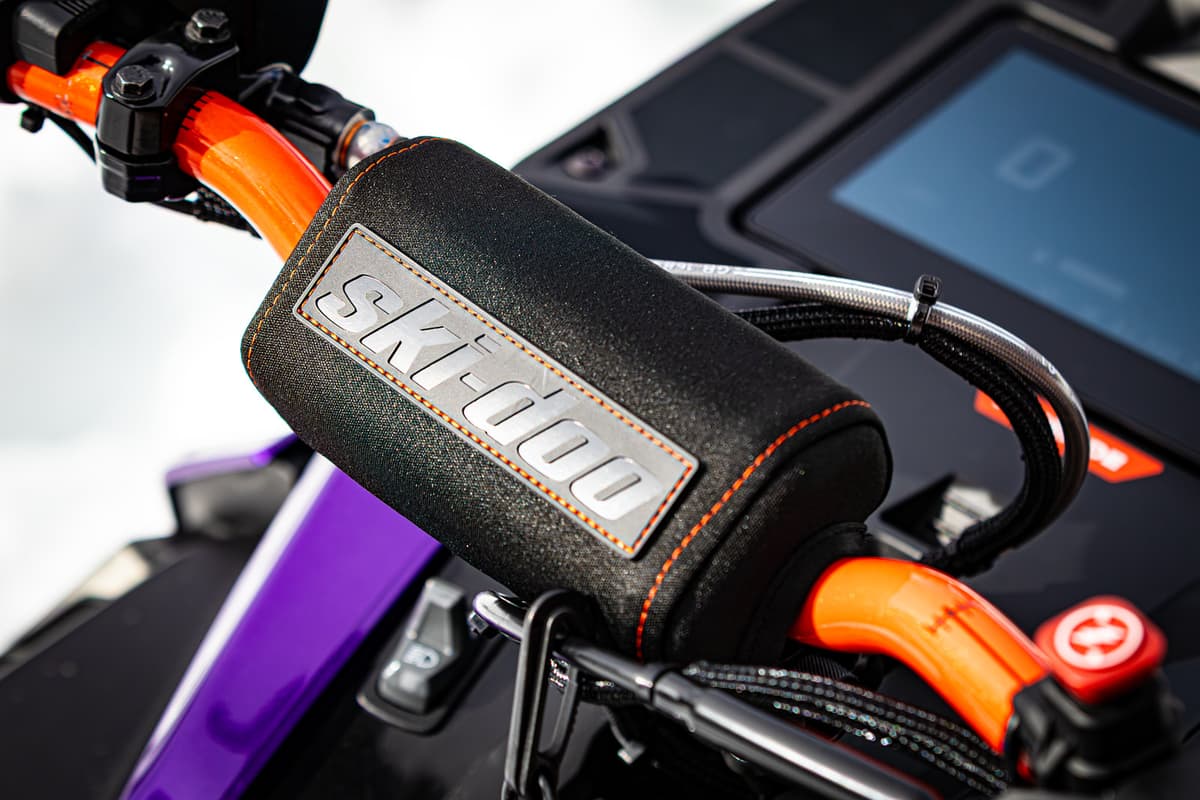
Ski-Doo has also eliminated the traditional mountain bar and added a handlebar pad instead. Personally, I welcome the change, as I rarely rely on grabbing the mountain bar. However, riders who frequently use the mountain bar may find this update less appealing.
Improved Seating for Better Balance
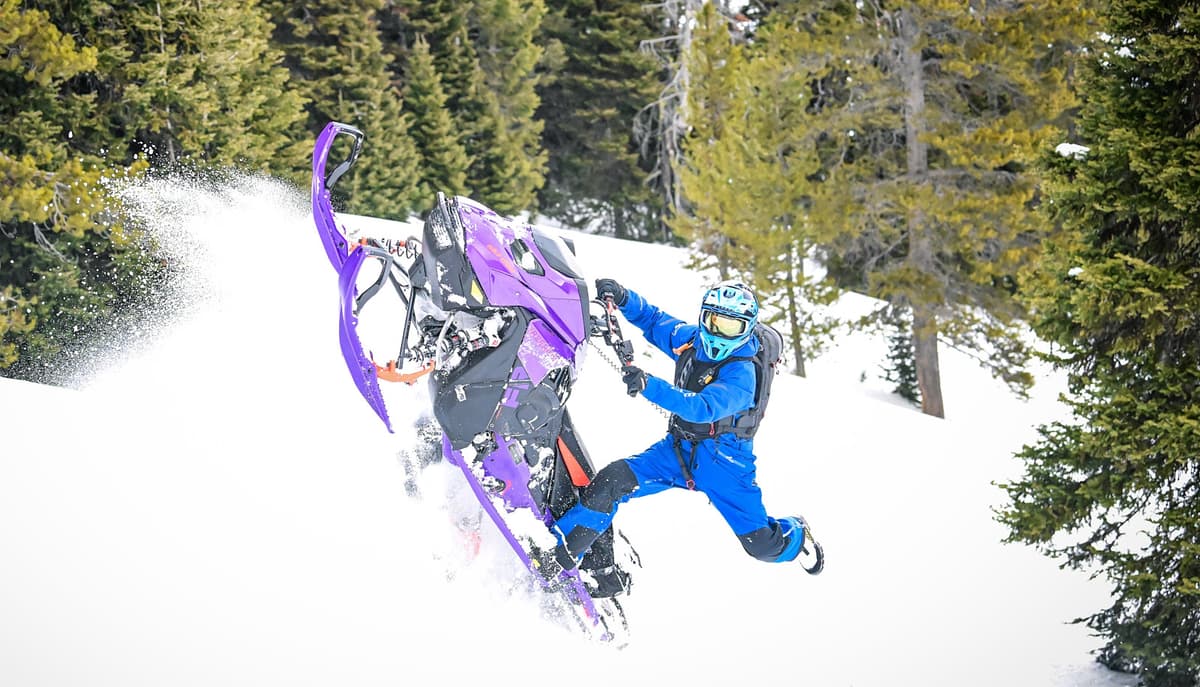
The ultra-compact, lightweight deep-snow seat, both lower and lighter than its predecessor, complements this change perfectly. Together, the cockpit redesign gives the rider better control, better balance, and better response during fast transitions.
Super Short Tunnel & Cooling Revisions: Strategic Weight Savings
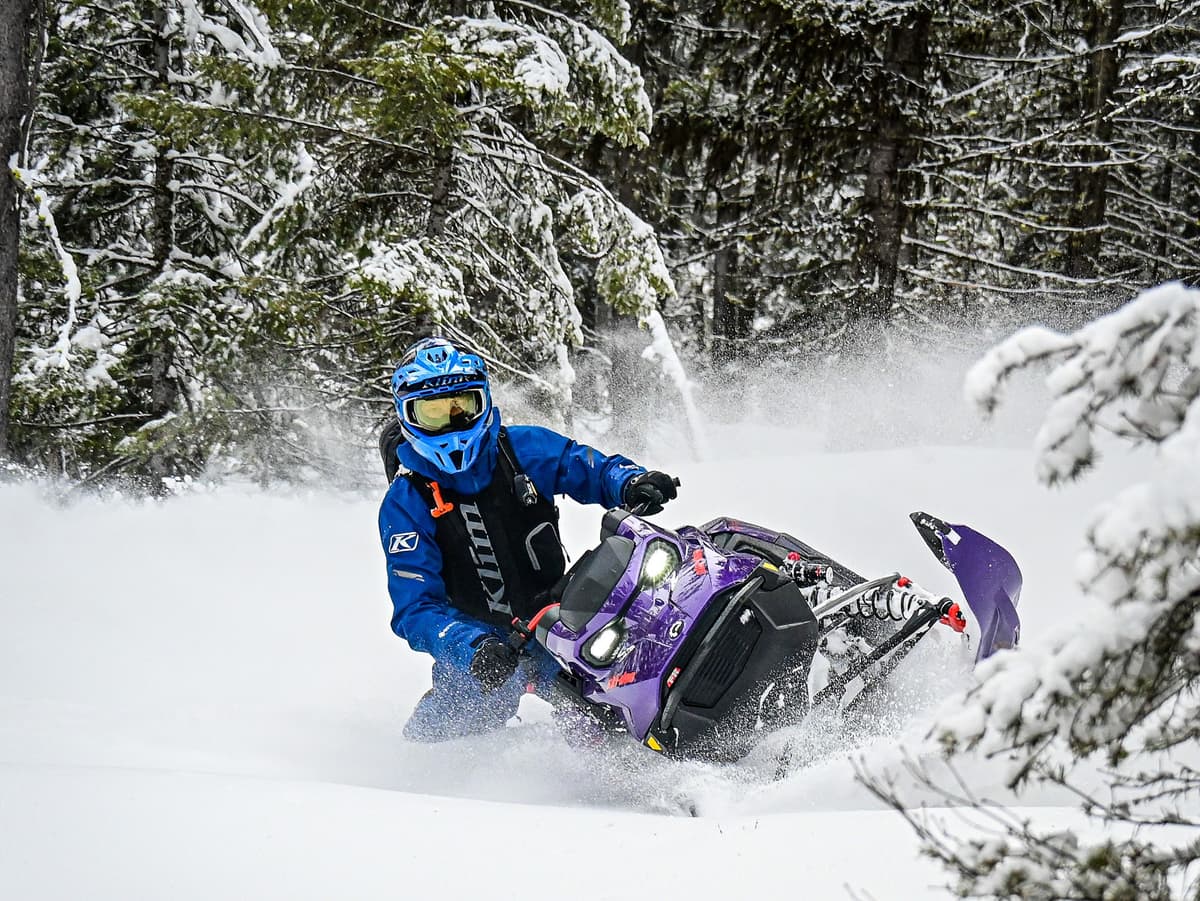
True to its name, the 2027 Freeride now uses a “Super Short Tunnel”. Yes, even shorter than last year’s. Indeed, Ski-Doo continues to trim material where it matters most for flotation and maneuverability. In short, less tunnel means less drag in deep snow, better lift, and more playfulness when initiating sidehills, hop-overs, or bowties.
Shorter Cooling System: Work Smart, Not Hard
Then, to further reduce weight, engineers redesigned the heat exchanger to be shorter and hold less coolant. Effectively, this saves mass without impacting thermal performance. This aligns with an ongoing trend among various mountain-oriented platforms that prioritize intelligent cooling over larger sizes.
2027 Freeride Rear Suspension: tMotion Lock-Out Explained
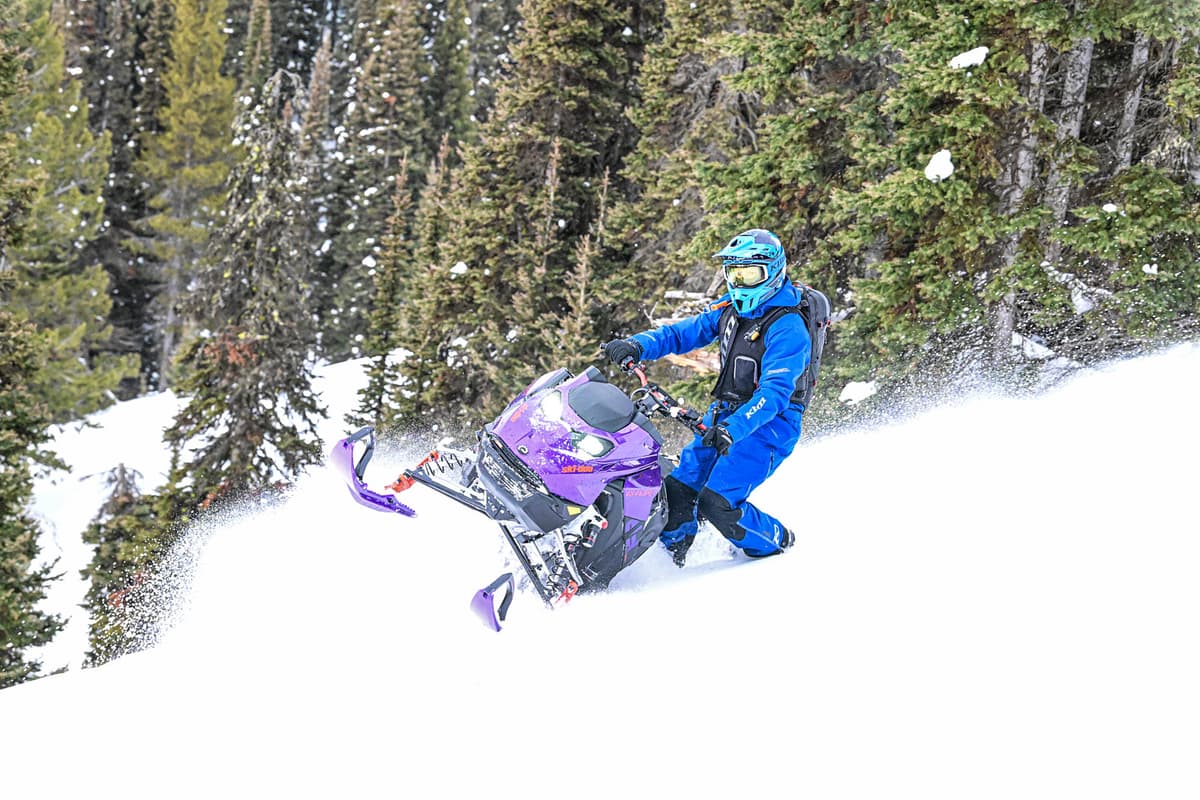
Now, let’s talk about the 2027 Freeride’s rear suspension. Ski-Doo reworked its design with the tMotion Lock-Out (L/O) with coil-over rear shock and the now-standard tMotion Lock. This allows riders to have a more rigid skid for performance. In fact, the tMotion L/O provides a sharper edge hold and increased stability of the sled. This makes it ideal for steep technical lines or stable jumps.
During my SnowShoot trial, the revised suspension felt noticeably more performance-oriented than previous generations. I found it improved the Freeride’s predictability in both jump landings and aggressive sidehilling.
Forged Aluminum A-Arms & 34-inch Front Stance: Sharper Front-End Precision
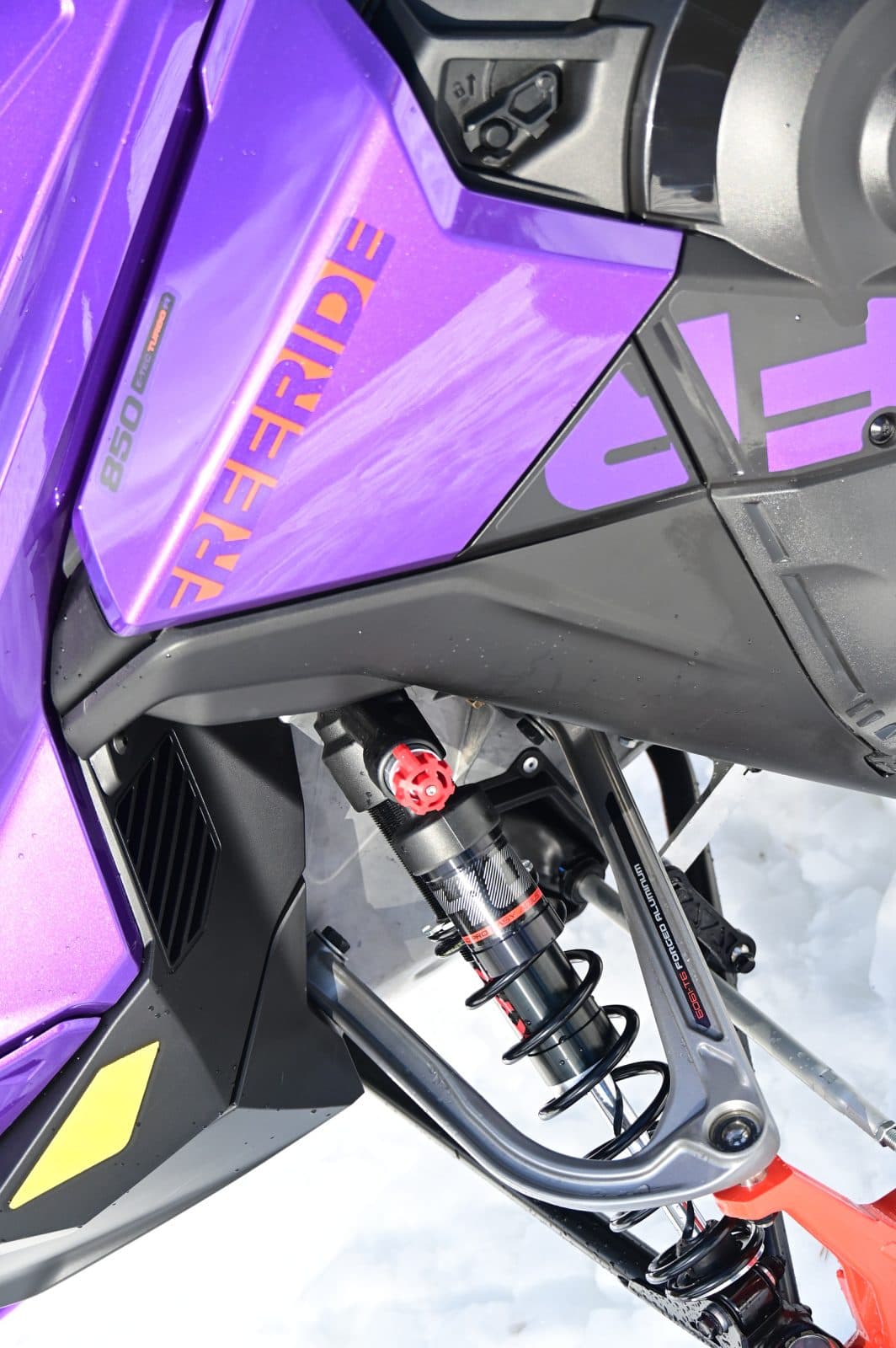
But what about the front end? Another improvement to handling comes from the new forged aluminum upper A-arms, which maintain strength while shaving weight from the front end.
That being said, I believe the change riders will feel the most dramatically is the narrowed 34-inch ski stance. That’s 2 in. down from the previous 36 in. Narrower ski stances have become the dominant trend in modern mountain sled design… and for good reason. Effectively, they dramatically improve agility and reduce the effort required to get the sled on edge. In my experience, the 2027 Freeride responds quicker, initiates carves easier, and has a more “playful” personality than before. I noticed the improvement immediately!
Twin Link Steering System: Eliminating Free Play and Improving Control
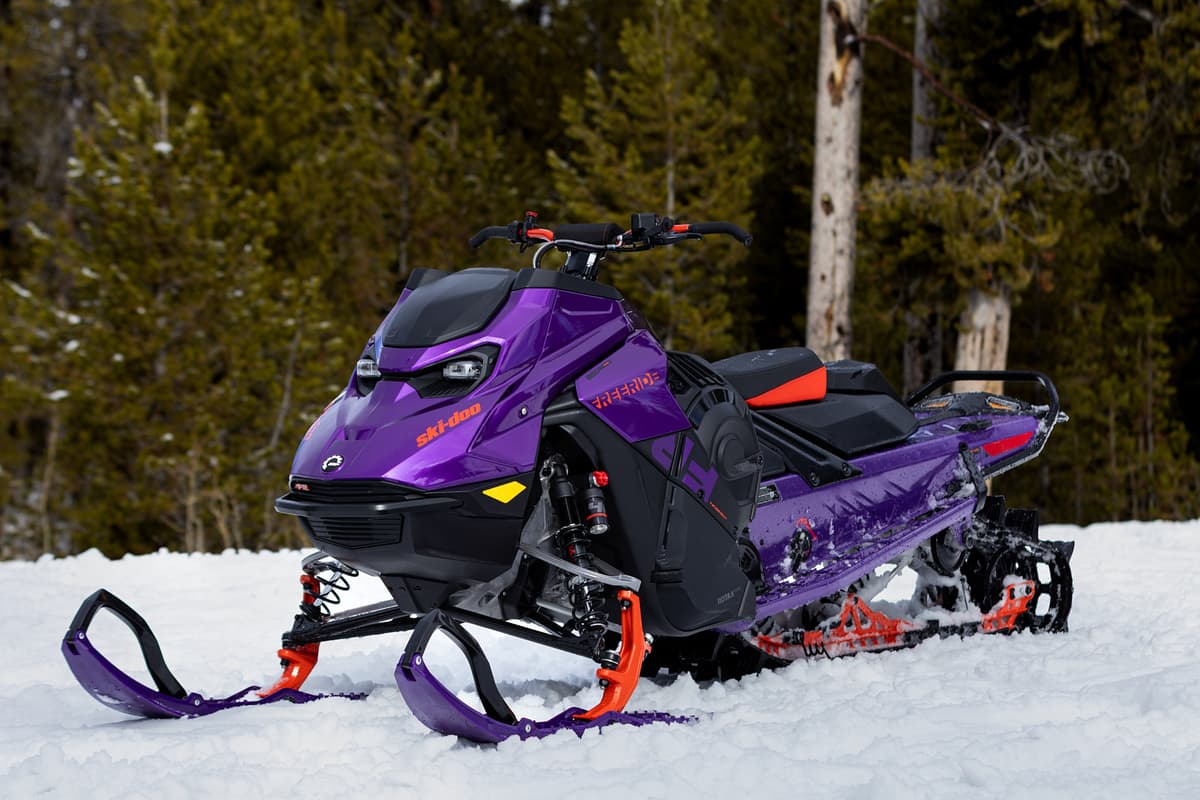
Ski-Doo introduced its Twin Link steering system last season. And this big upgrade alone transforms the Freeride’s ride quality immensely. By eliminating free play and cutting bump steer by 52%, the steering delivers a tighter, more precise feel. The 30% improvement in steering angle provides better maneuverability in the trees and more precision when lifting the sled on edge.
PowderMax X-Light Track & Full Rods: Lightweight yet Stable
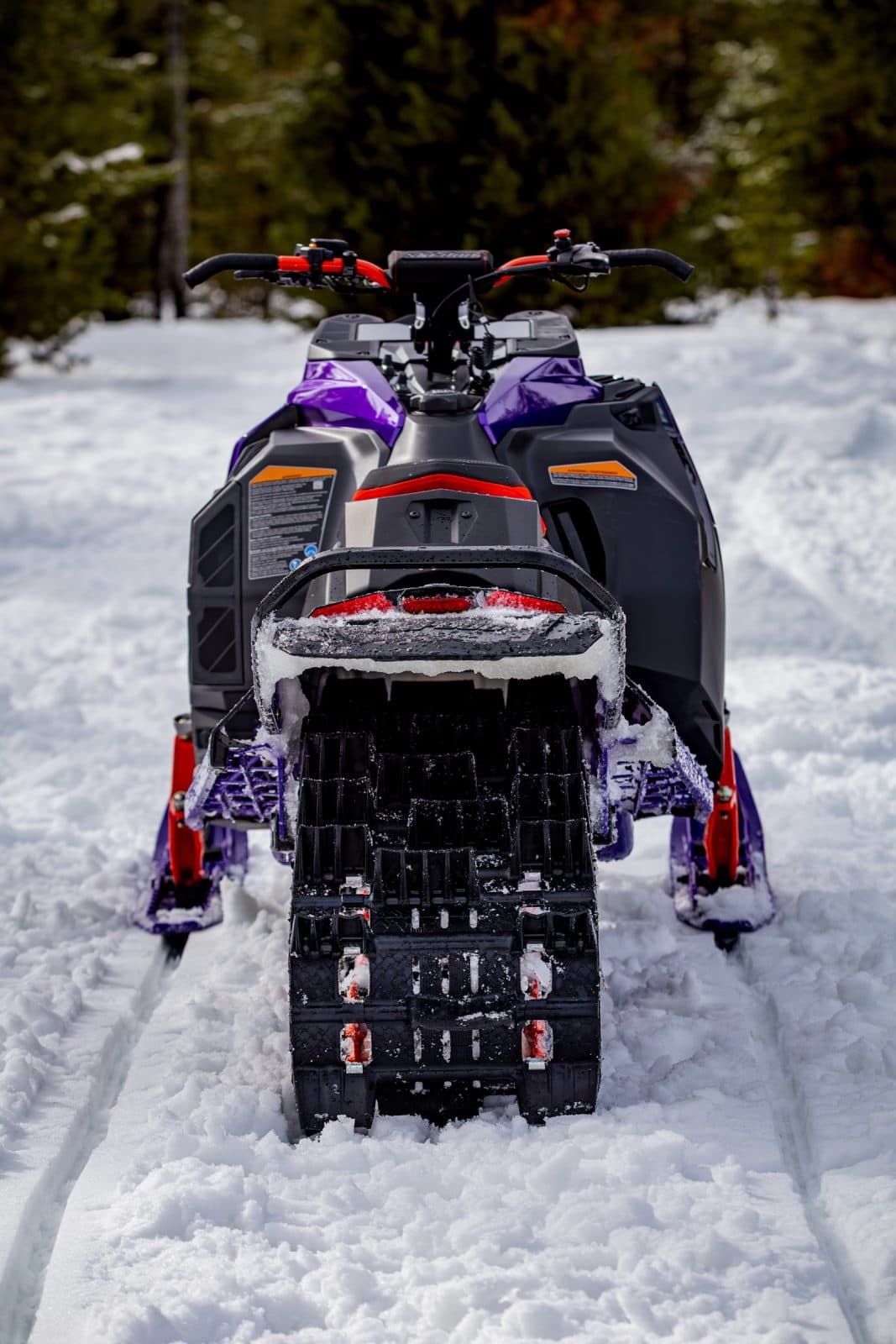
The new 3-inch track of the 2027 Freeride features thinner belting, which reduces rotating mass. This is yet another simple and effective way to reduce the sled’s weight. The PowderMax X-Light also comes with full-length rods, which provide more stability when it’s on its edge or on a steep technical side hill. Fewer rotating mass results in strong climbing performance with improved sidehill stability. This is a combination that previous models didn’t always balance perfectly.
This new track contributes significantly to the Freeride’s more playful, responsive feel while still offering excellent control in challenging mountain conditions.
Quick Limiter Strap Adjustment: “Business Mode” vs. “Party Mode”
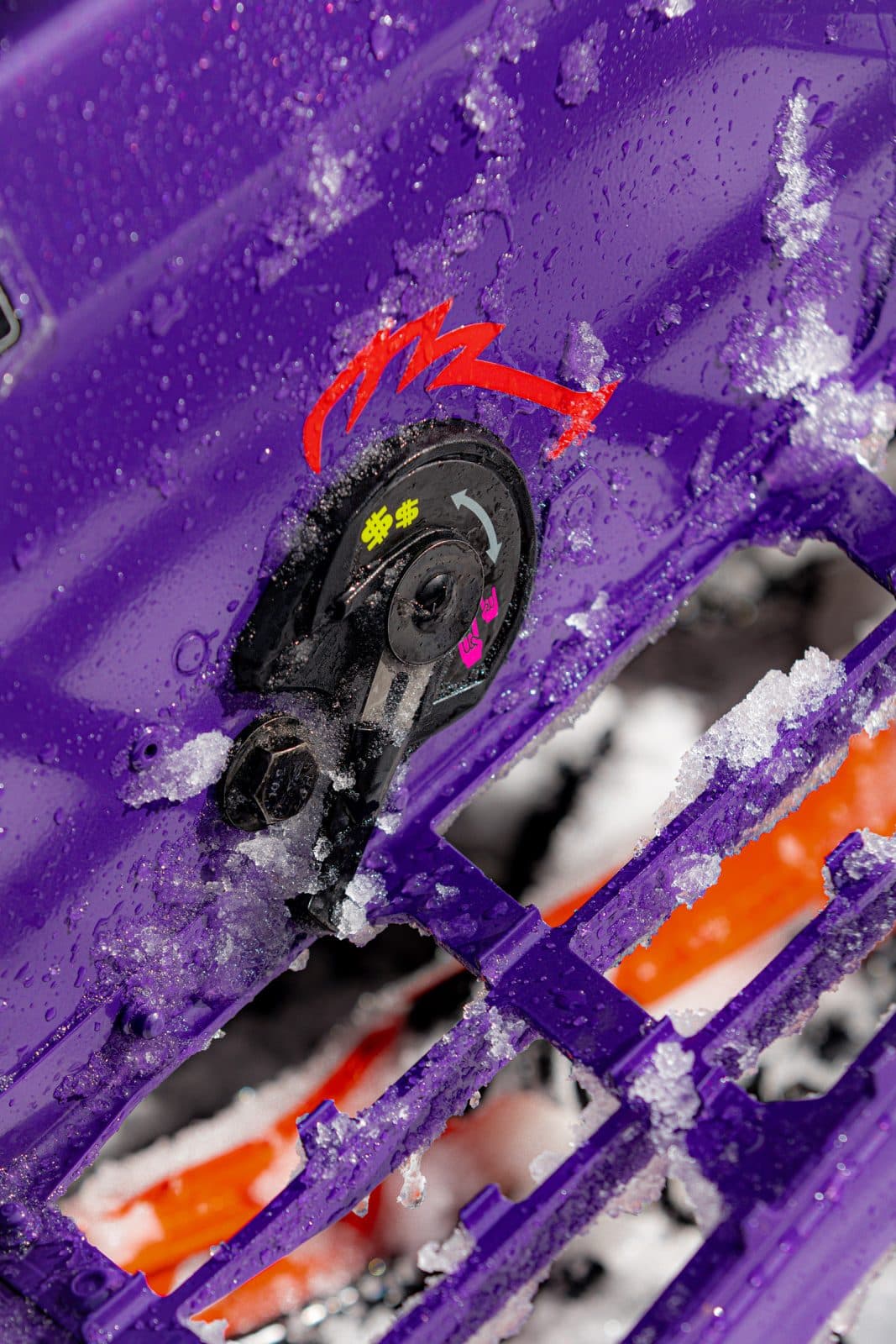
Now, I have to address what is, in my opinion, one of Ski-Doo’s smartest features. For 2027, the quick limiter strap adjustment gets added to the Freeride… and gets even better. This feature lets riders dramatically change the sled’s handling on-site without any tools. And this year, Ski-Doo even added simple and fun visual icons to help you choose between its two modes:
- Business Mode ($): In this configuration, the tightened strap reduces the ski lift. It is optimal for technical lines and big climbs.
- Party Mode (🤘): By extending the strap, this configuration allows for maximum transfer, easy wheelies, playful behavior, and enhanced fun factor.
Using this genuinely felt as if I was transforming the Freeride into two different sleds. I don’t know many features of any mountain sled that make such a dramatic difference with so little effort.
2027 Freeride: The Most Capable and Improved of Its Kind… Ever
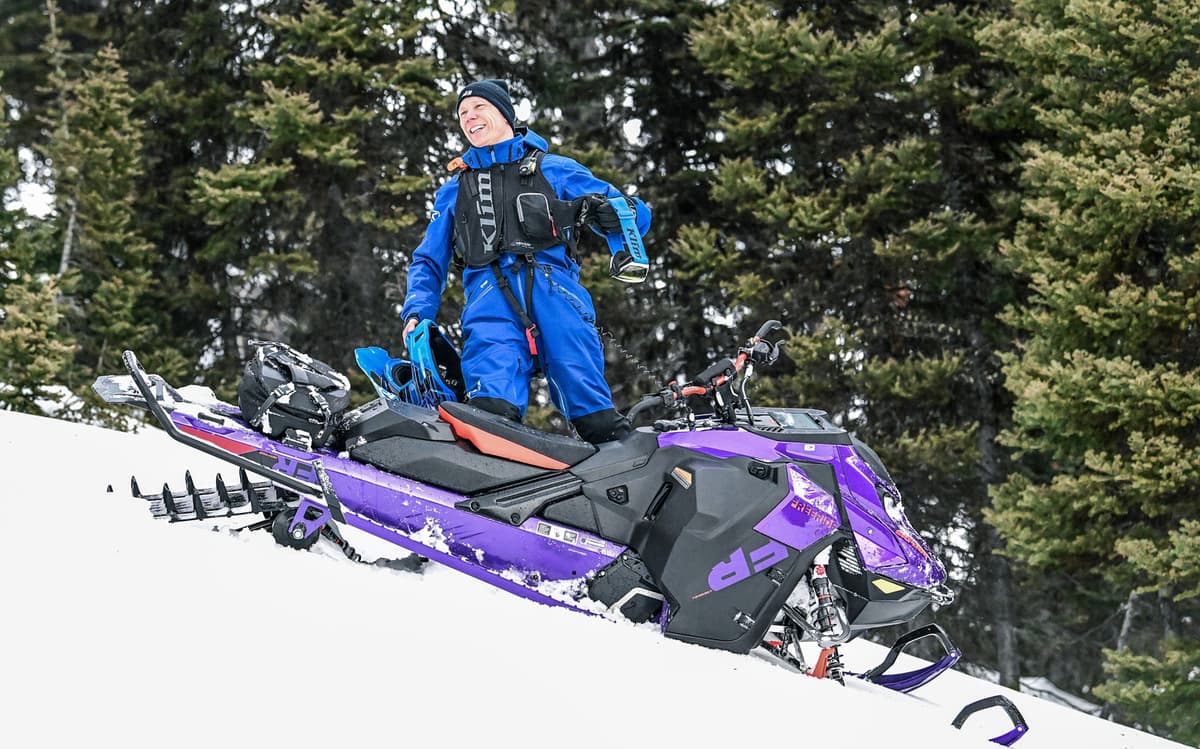
After a few days of riding and testing the new 2027 Freeride, I came up to one clear, bold conclusion. I believe this is the most responsive, refined, and enjoyable Freeride Ski-Doo has ever built. Gone is the weighty, somewhat rigid feel of older generations. In its place, we have a machine that’s dramatically lighter, more agile, and more playful, raising the bar on the fun factor to new levels.
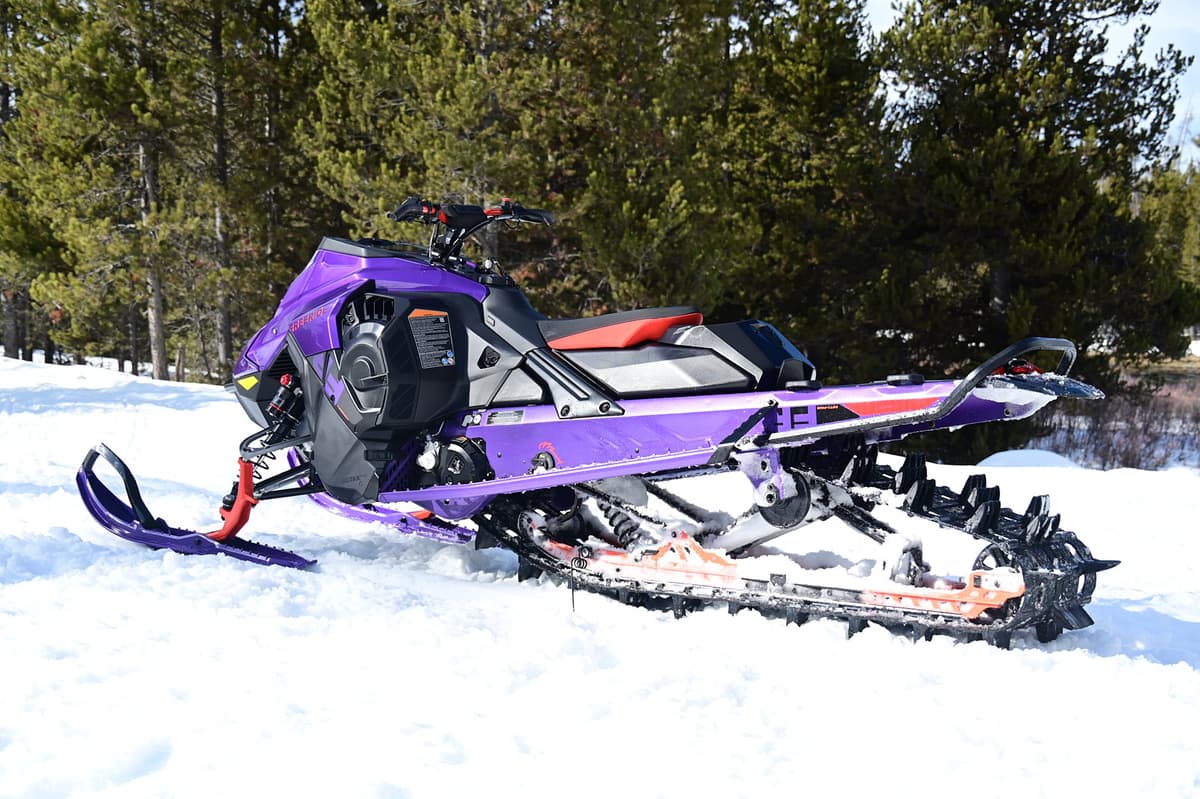
The cockpit ergonomics, front suspension geometry, Twin Link steering, and Super Short Tunnel are just a few of the many modifications that have been made to the new Freeride. These changes were designed to enhance rider enjoyment without compromising capability.
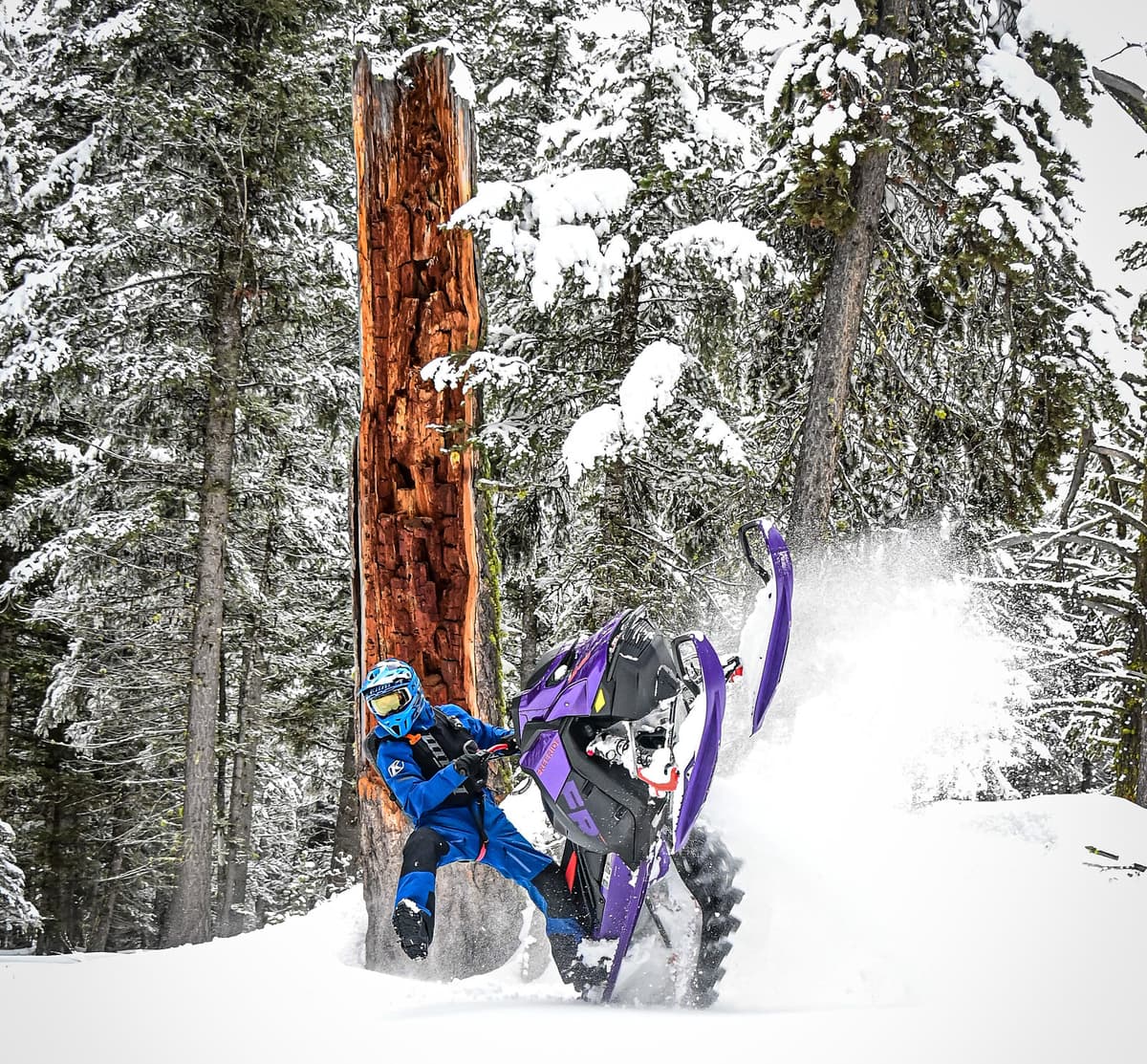
Because of these improvements, the 2027 Freeride 850 E-TEC Turbo R has become one of my top picks for mountain riders seeking both performance and pure enjoyment. If you’re thinking about upgrading your sled next season, I strongly recommend you give this reinvented Freeride a hard look. Personally, it brings the excitement back into the ride… exactly where it belongs.