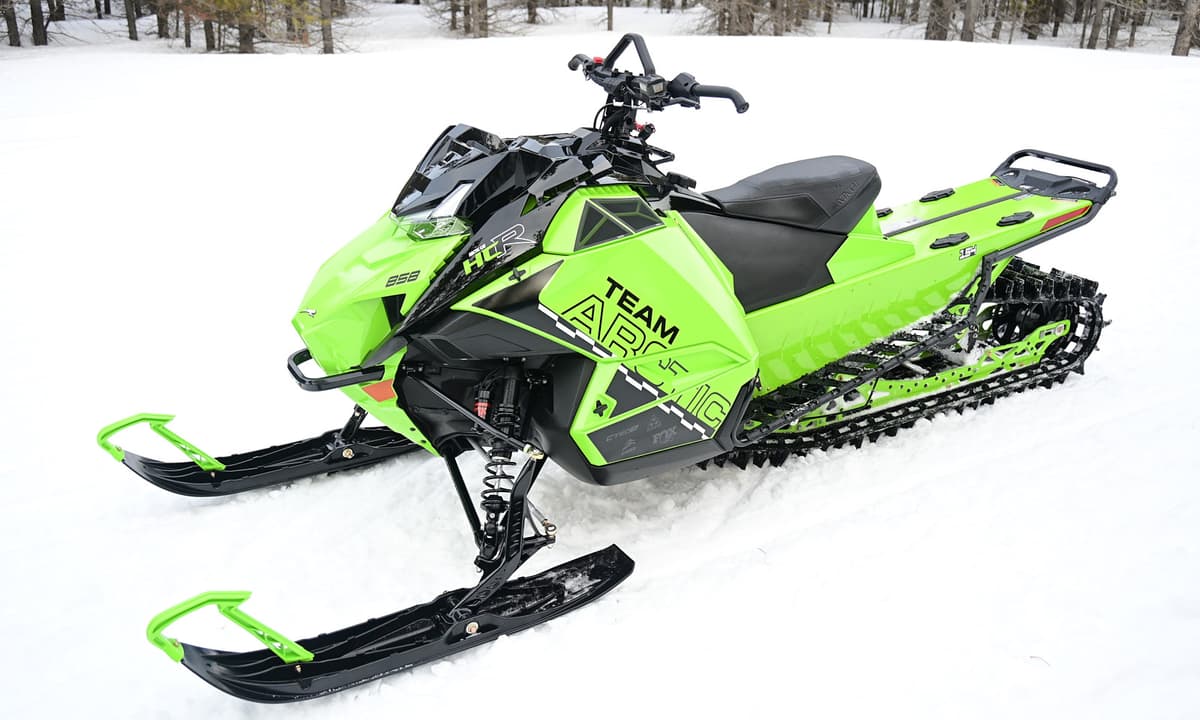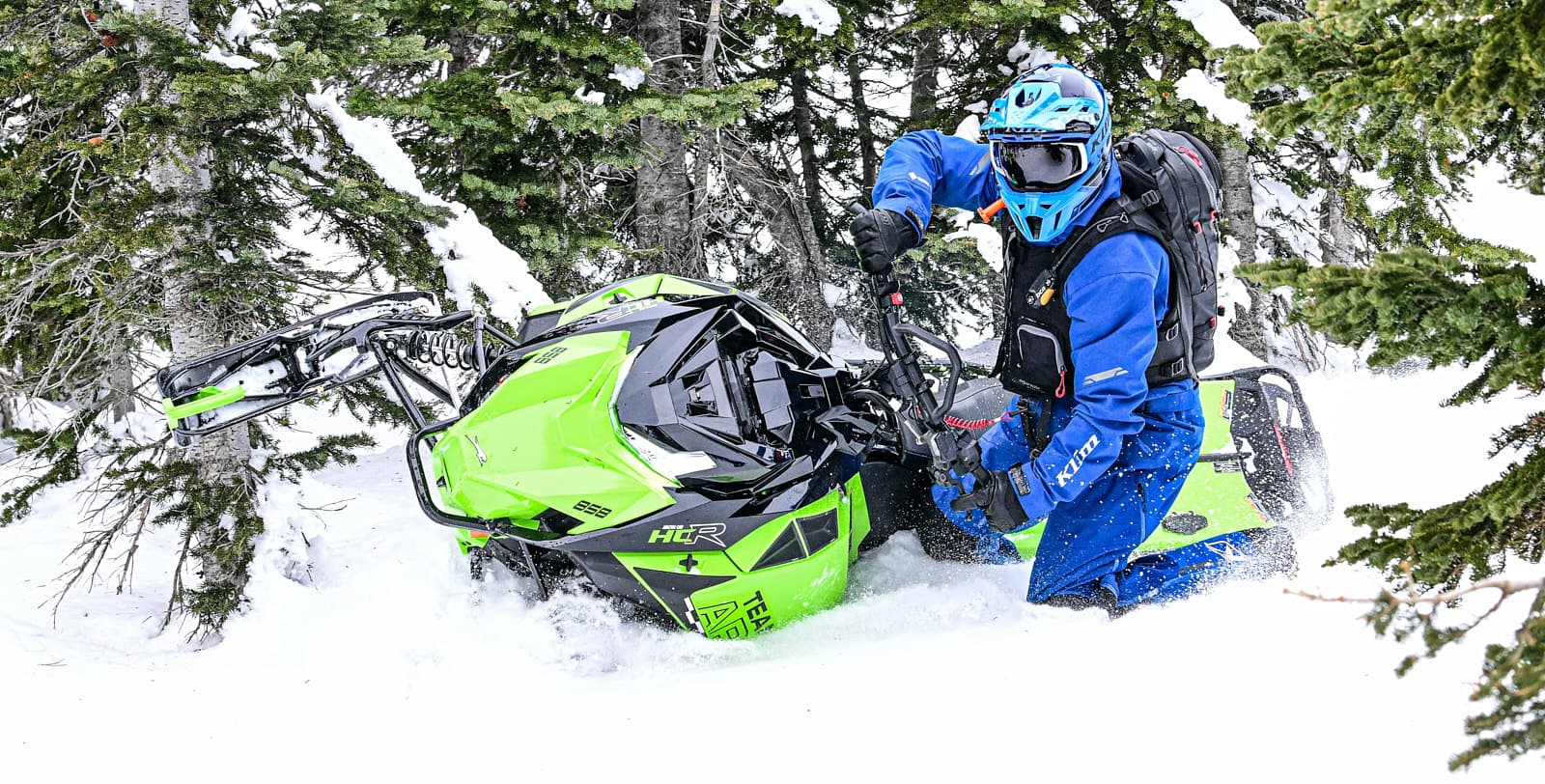

Arctic Cat has long catered to riders who demand strength, control, and precision in the steepest sections of backcountry terrain. With the 154-inch 2027 HCR 858, the brand doubles down on that identity, delivering a hillclimb-ready machine rooted in durability and engineered for aggressive mountain riders. Built on the Catalyst platform and powered by the high-revving 858 C-TEC2 engine, the HCR blends lightweight agility with chassis reinforcement and suspension bracing designed for riders who routinely push equipment to its limits.
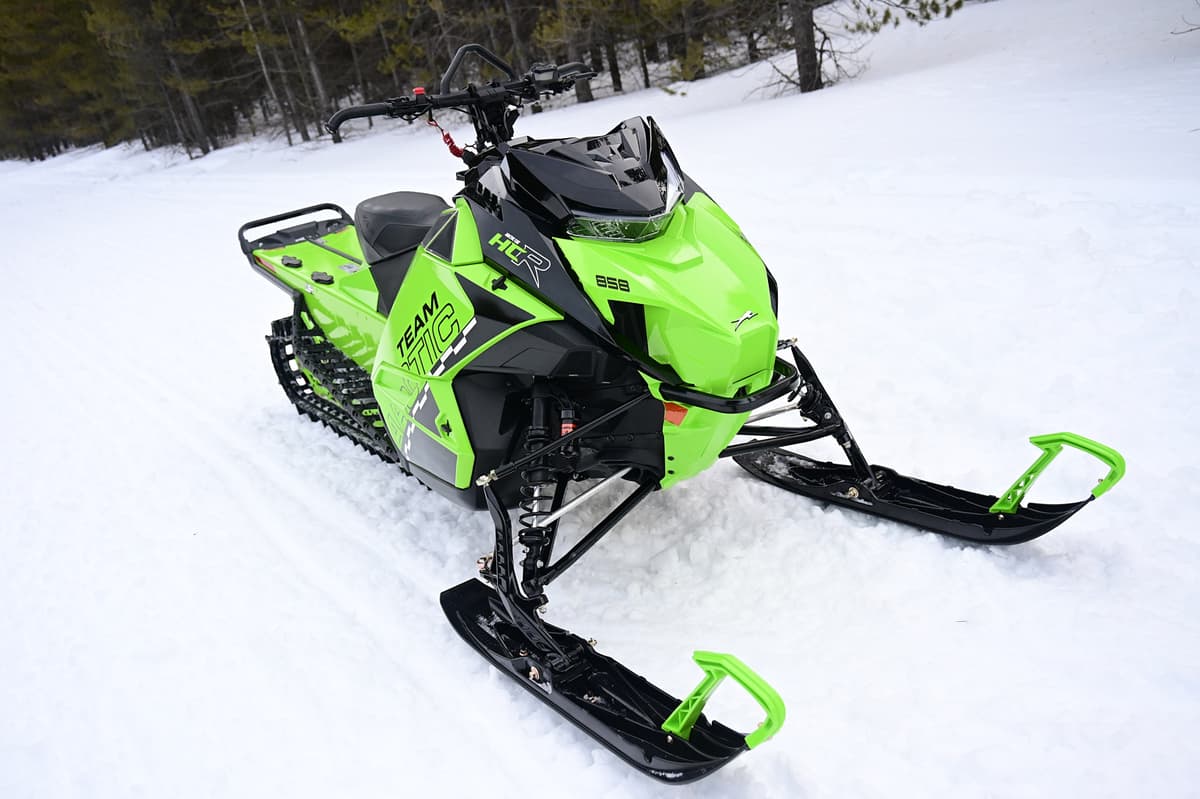
Across three days of testing in varied snow conditions and terrain, from long, punched-out hillclimbs to tight technical lines, the HCR repeatedly showed that its engineering priorities are exactly where they should be: stability, control, and predictability. Below is a deep dive into how this Arctic Cat mountain-focused powerhouse performs where it matters most.
Catalyst Platform: Lightweight, Narrow, and Rider-Centered
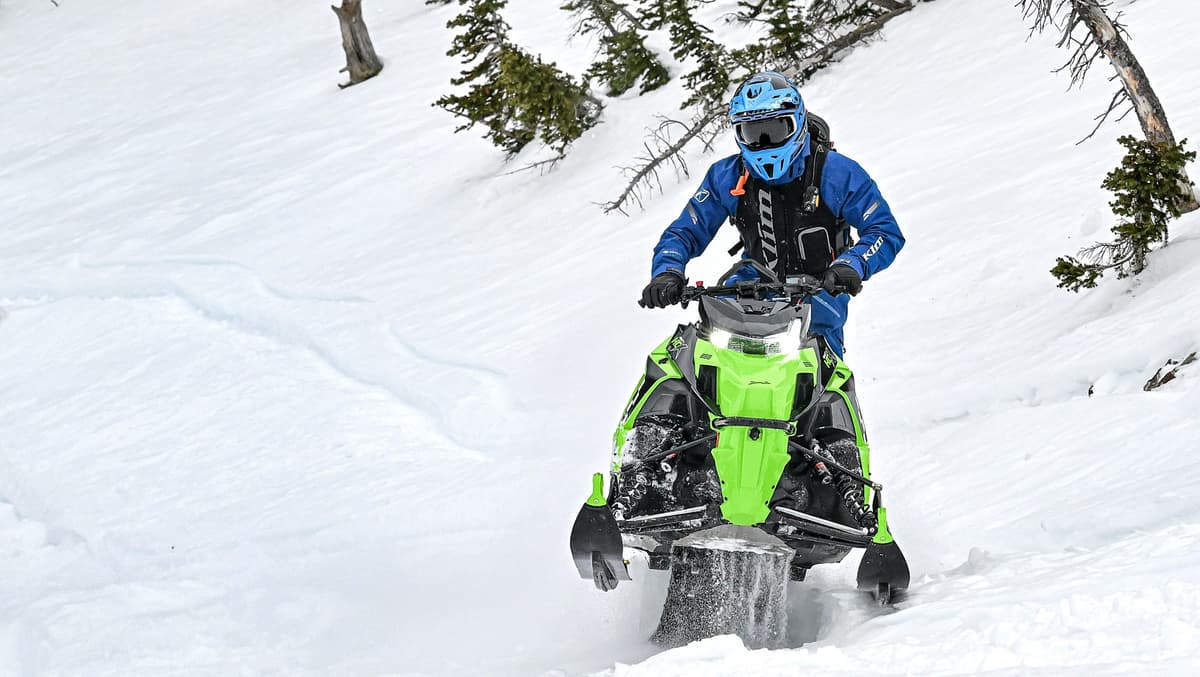
The HCR’s character starts with the Catalyst chassis, which is arguably one of Arctic Cat’s most significant platform evolutions in years. The design philosophy centers around centralized mass, improved ergonomics, and the brand’s exclusive laydown engine orientation, a combination that produces a noticeably lower center of gravity. For mountain riders, this translates to a snowmobile that feels light underfoot and quick to react when transitioning side to side.
These traits are immediately noticeable. Even in tight trees or off-camber slopes, the sled responds with minimal rider input, helping reduce fatigue over long days of riding, especially in technical terrain. Riders stepping off older Arctic Cat platforms will notice how narrow, tucked in, and neutral the Catalyst chassis feels in comparison.
Vertical Steering Post: Forward, Aggressive… and a Bit Heavy at the Bars
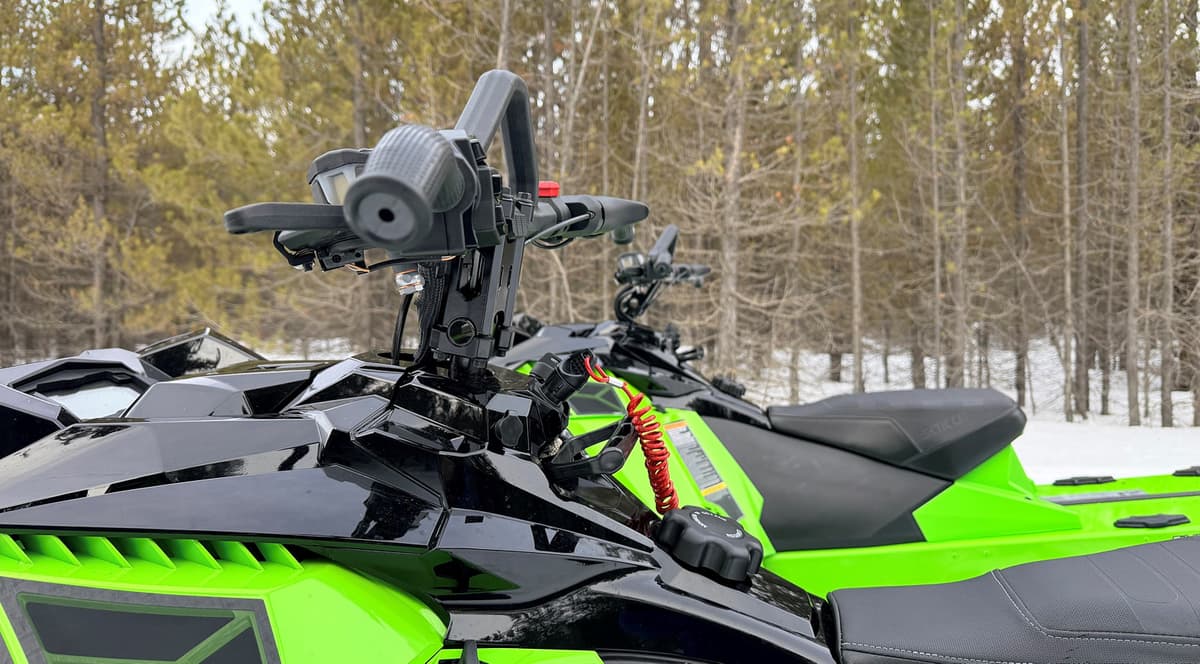
The vertical steering post places the rider further forward, promoting an attack-style stance that keeps weight centered over the sled’s front end. This design enhances control in steep, aggressive riding by naturally aligning the rider’s body with the front of the snowmobile.
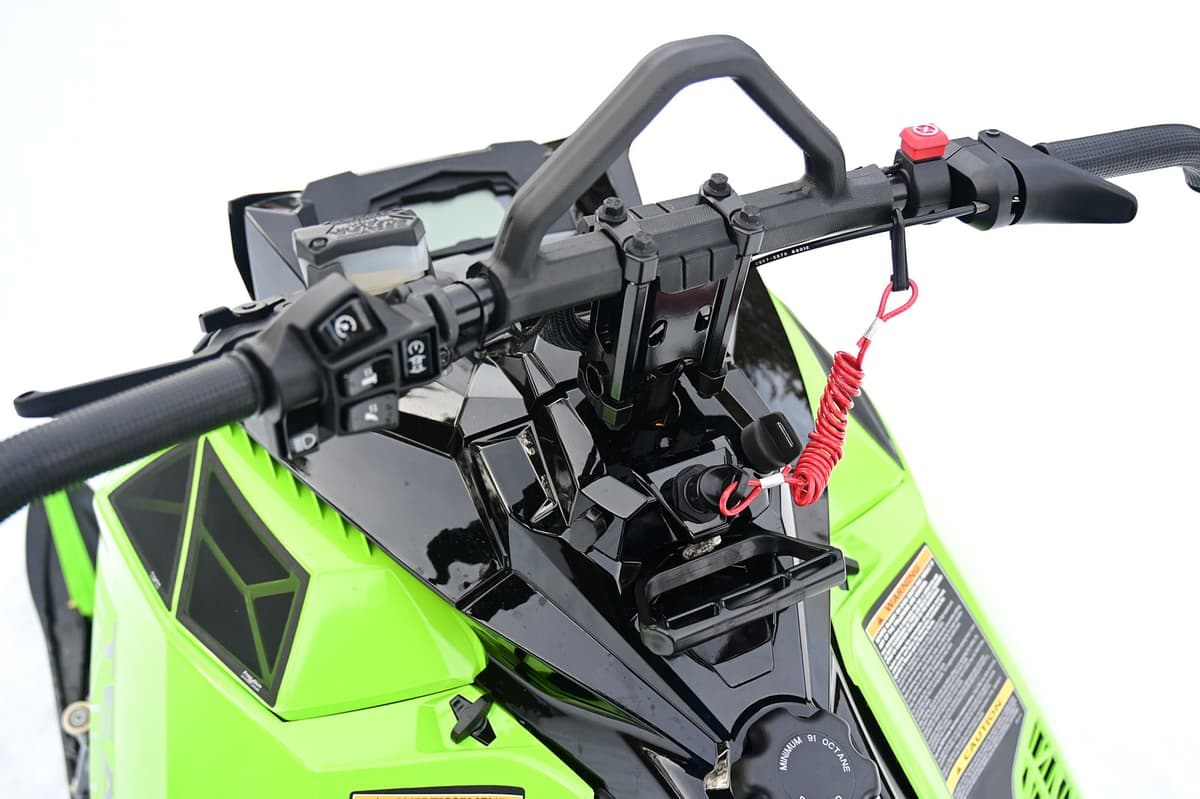
However, this forward positioning also introduces a notable characteristic: increased steering resistance at low speeds. Whether the cause is the geometry of the steering post, ski pressure, or the ski/keel design, there is undeniably more resistance when turning the skis on hard-packed snow or during tight maneuvers at slow speeds. It’s nothing deal breaking, but riders will feel a bit more resistance in their shoulders and arms, especially when comparing the HCR to other modern mountain platforms. Once in motion and in deeper snow, the drag becomes far less noticeable.
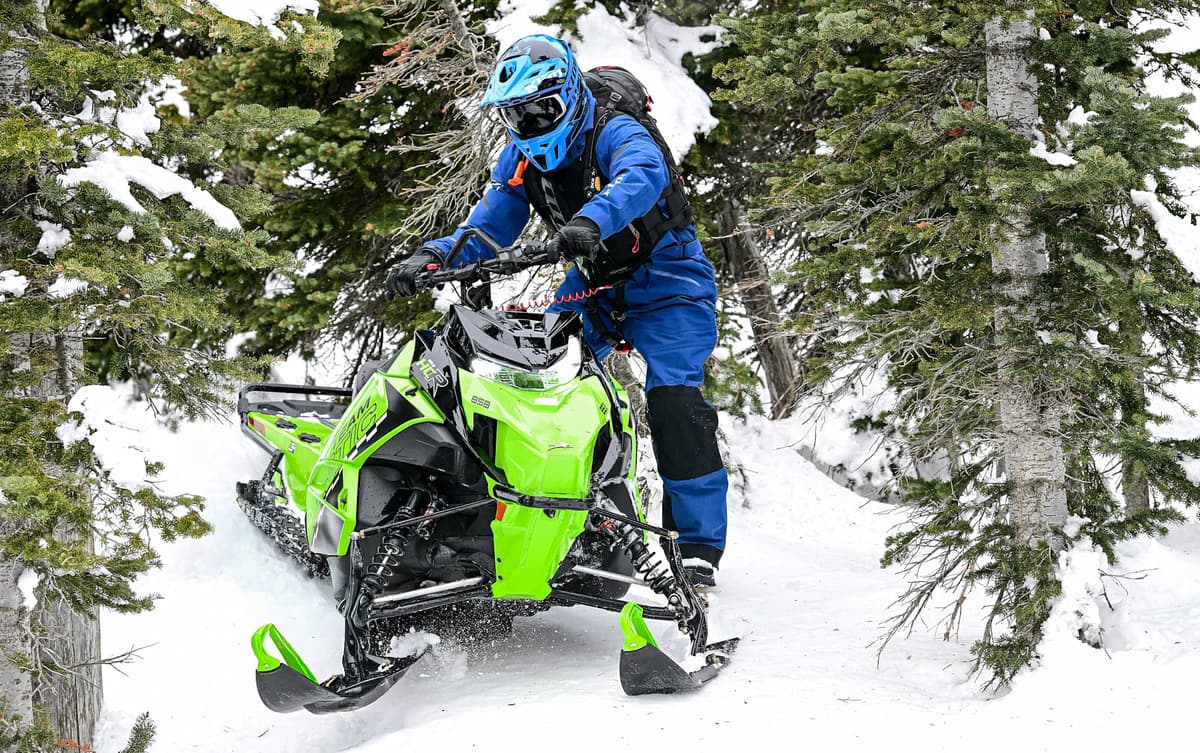
Still, the trade-off is largely worth it. When you’re picking a line through a steep treed section or balancing the sled across a technical sidehill, the forward posture helps maintain stability and leverage where it matters most.
Shortened Cooling System: Smart Weight Savings Without Sacrificing Performance
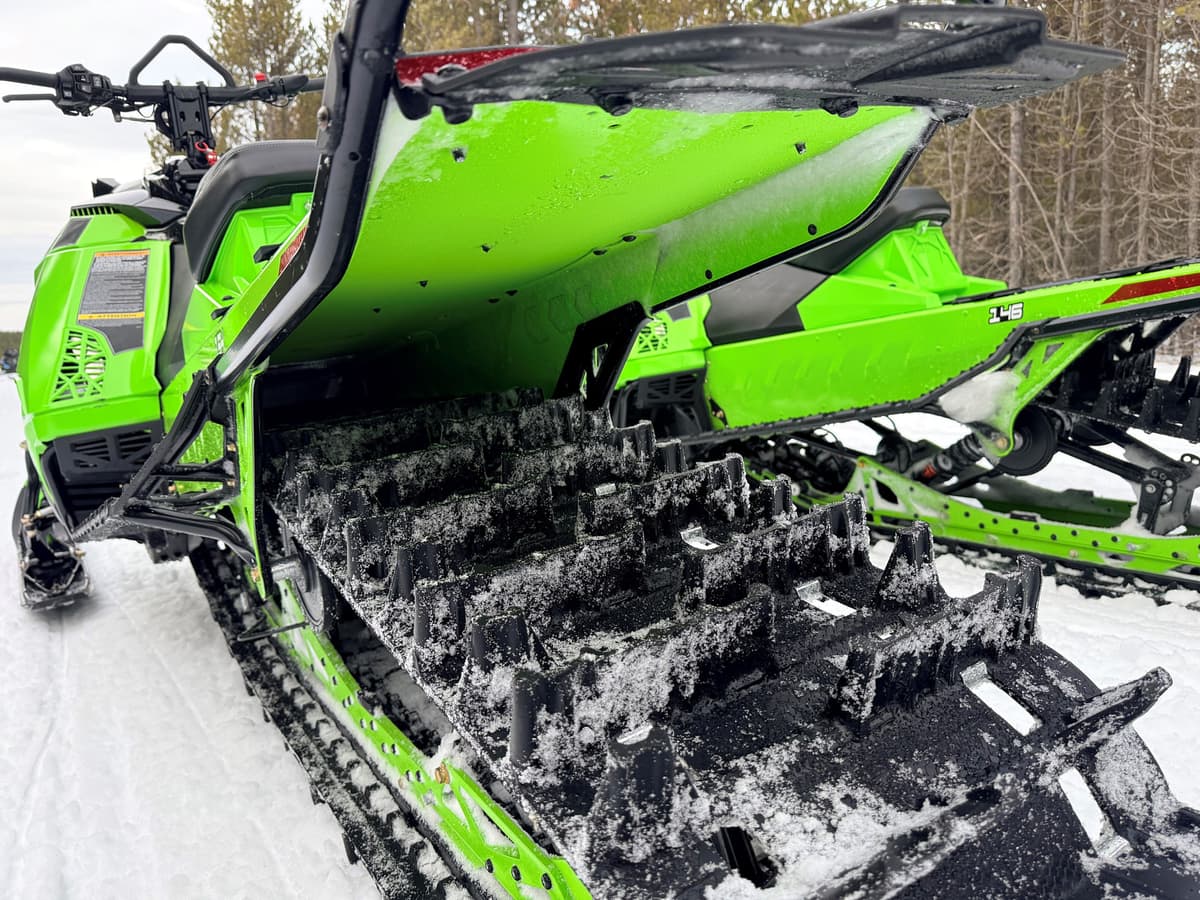
Arctic Cat trimmed some weight on the 2027 HCR by implementing a shortened cooling system that eliminates the heat exchanger going all the way to the rear of the tunnel. Less coolant and reduced hardware equal fewer pounds, an important contribution for a mountain sled aimed at aggressive riding.
Despite the more compact cooling system, the HCR stayed consistently cool through multiple test rides. This includes longer trail rides and power-heavy pulls, where cooling systems are often stressed. Arctic Cat seems to have found the right balance, shedding weight without compromising the cooling system.
Float Action Twin Rail Suspension: Stability Meets Precision
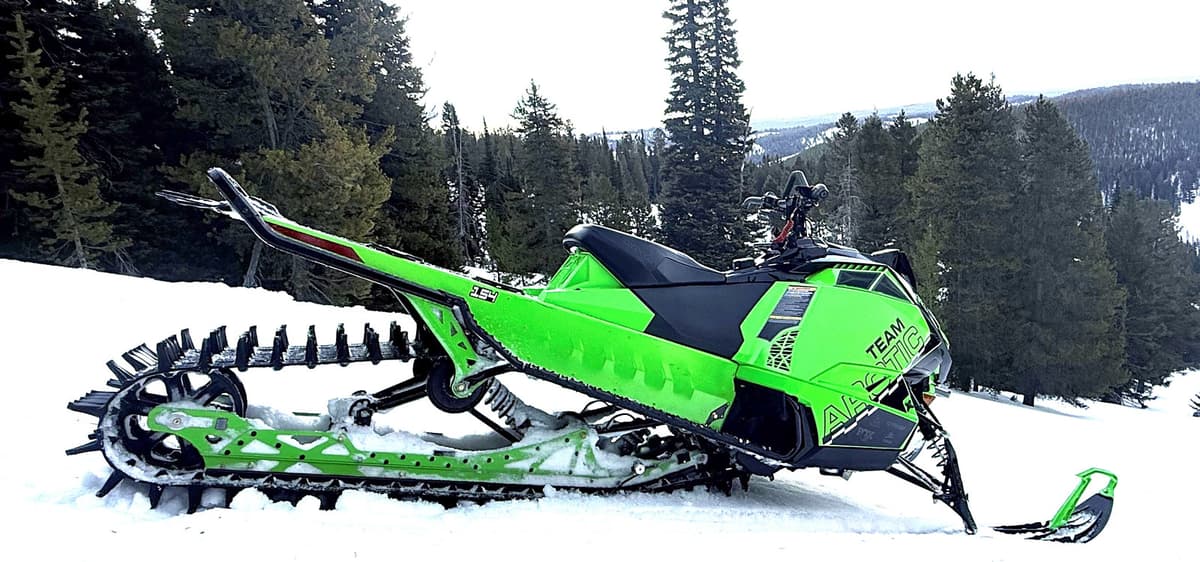
If there’s one defining feature of the HCR, it’s the Float Action Twin Rail suspension with added rail bracing. Designed specifically for carving and climbing, the braced dual-rail setup delivers exceptional rigidity and predictability. In steep, rutted hill climb terrain, where sleds are often deflected or washed out, the HCR tracks straight and feels planted.
The benefits become even more pronounced in technical sidehilling. The twin rail design improves edge hold, helping the sled resist unwanted flex or “washout” losing the track downhill. Combined with the narrow Catalyst chassis, the HCR requires surprisingly little input to set onto edge. Once there, it holds its line confidently.
Riders who prioritize stability over the playful looseness of some single-rail designs will especially appreciate the HCR’s composure.
FOX QS3/QS3R Shocks: Lightweight Performance with Easy Adjustability
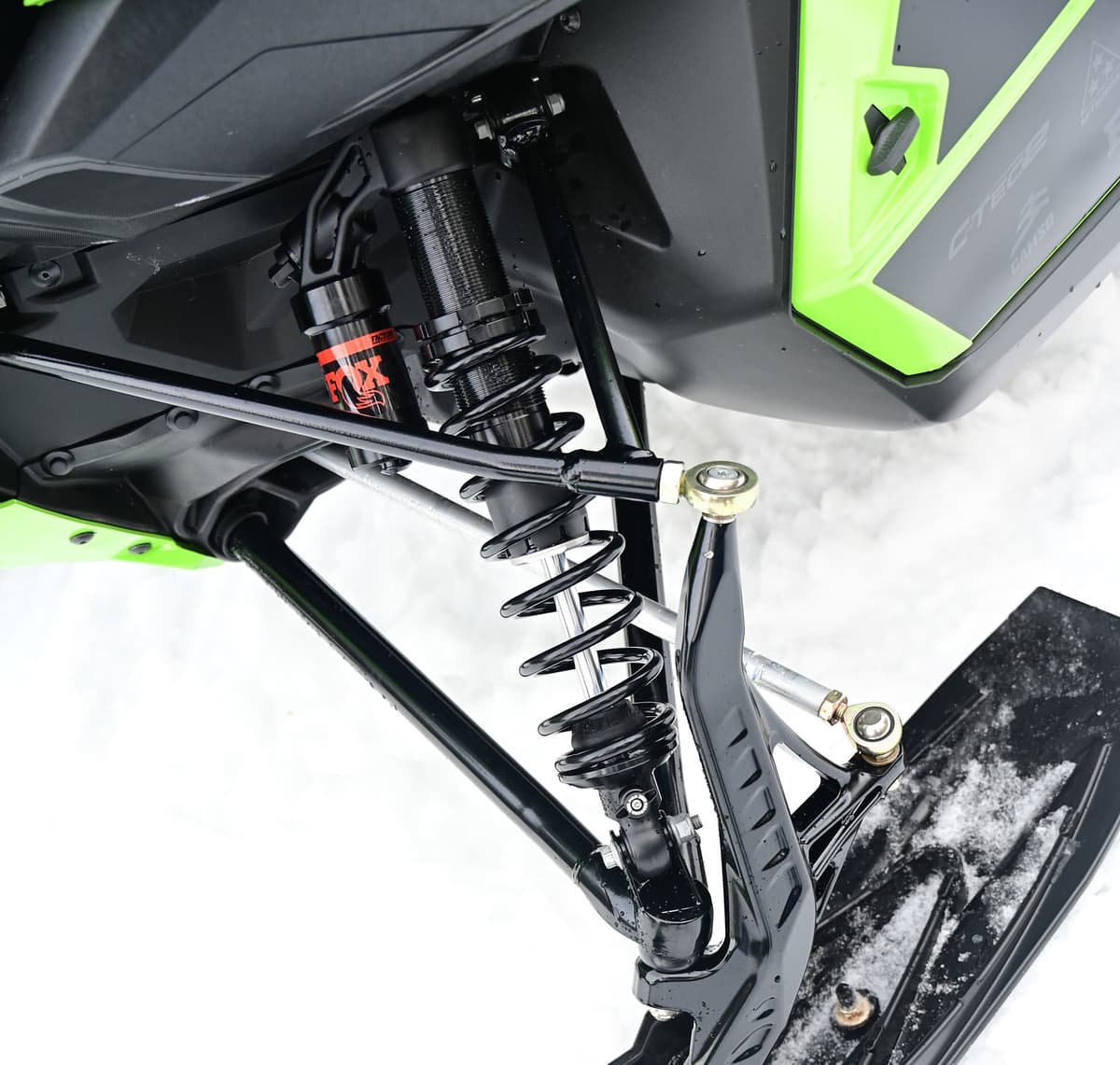
Arctic Cat outfitted the HCR with Fox 1.5 Zero QS3 & QS3R lightweight shocks, which include both compression and rebound adjustment via a three-position valve system. These aren’t entry-level shocks; they’re among the most advanced non-electronic shocks Arctic Cat uses.
The result is outstanding bottoming resistance, smooth compression control, and effortless three-position adjustability on the mountain. Whether stiffening the setup for big pulls or softening it for technical tree riding, the QS3/QS3R combination delivers a noticeable, and useful, range of tuning. The lightweight reservoirs and end caps help maintain the sled’s featherweight feel without compromising performance.
Add the 10-inch rear idler wheels, and the suspension package becomes even more refined, helping maintain track speed and reduce rolling resistance.
858 C-TEC2 Engine and 2.6″ Power Claw Track: A Strong, Predictable Combo
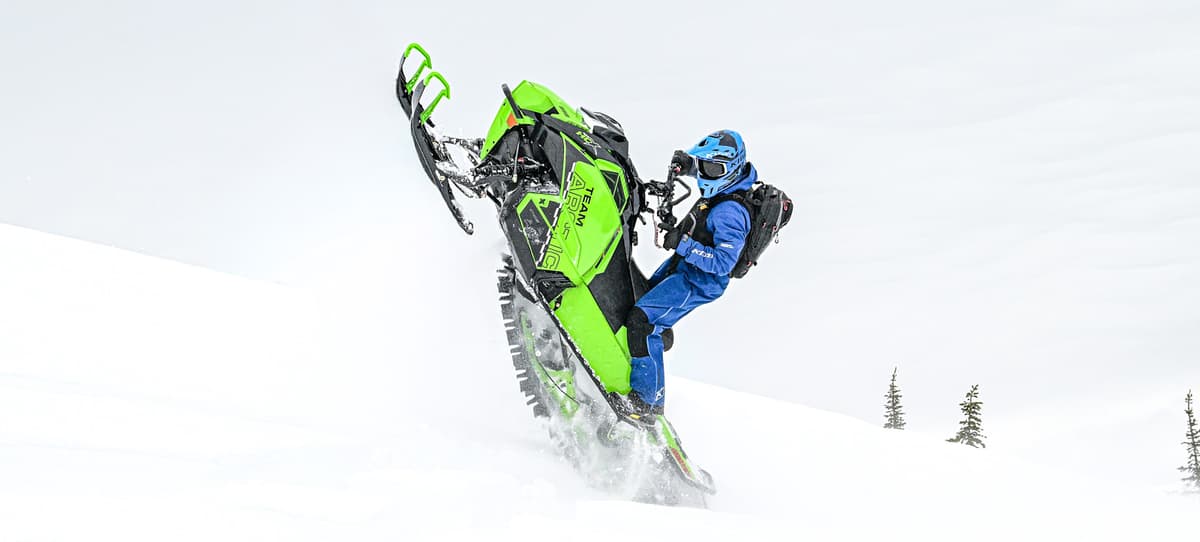
The 858 C-TEC2 engine anchors the HCR with strong mid-range pull and consistent high-RPM performance. It’s not the most explosive powerplant in the class, but its predictability is appreciated navigating steep technical terrain.
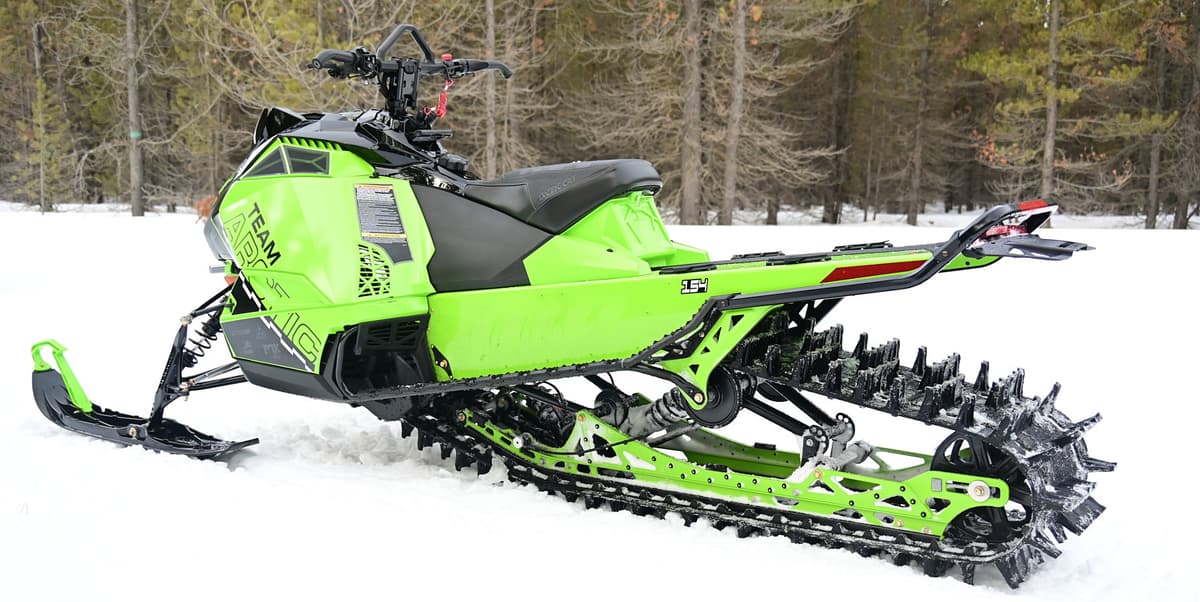
Paired with the 2.6-inch Power Claw track, the forward-curved, staggered paddle design resists folding and excels in both deep snow and hillclimb conditions. Whether launching a long climb or lifting the sled into a controlled sidehill, the track hooks consistently and generates impressive traction and flotation.
ATACH Accessory System: Simple, Quick, and Practical
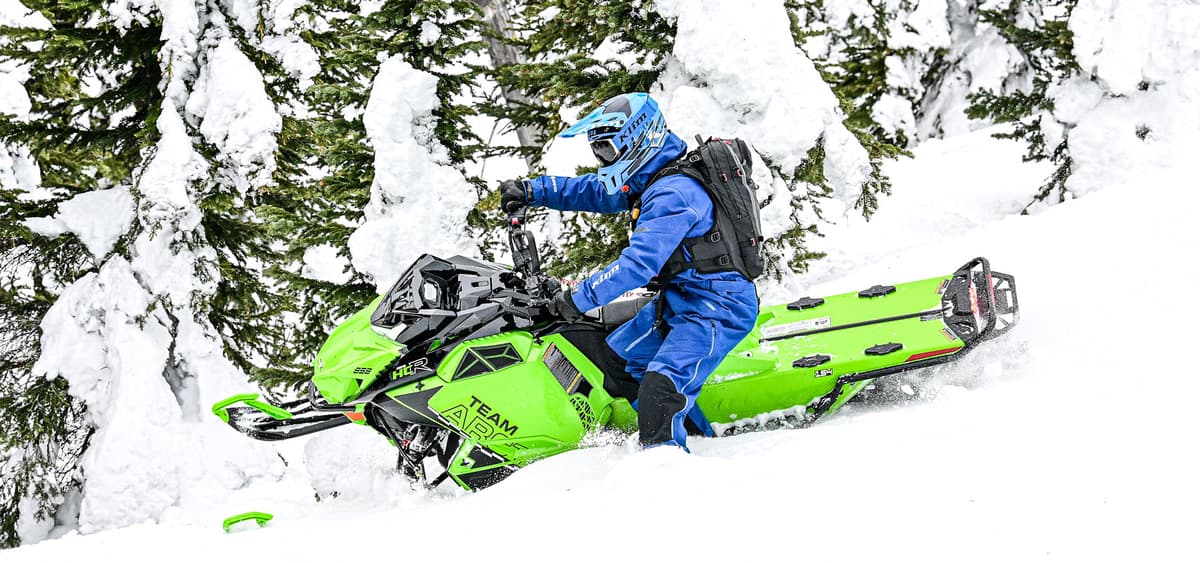
The ATACH 4-point latching system adds practical value for riders who switch between accessory setups. Bags, racks, and other add-ons can be removed or installed quickly without tools, a welcome convenience for a mountain sled that may see everything from long-day storage bags to lightweight, minimal setups.
Final Thoughts: A Mountain Sled Built to Be Pushed
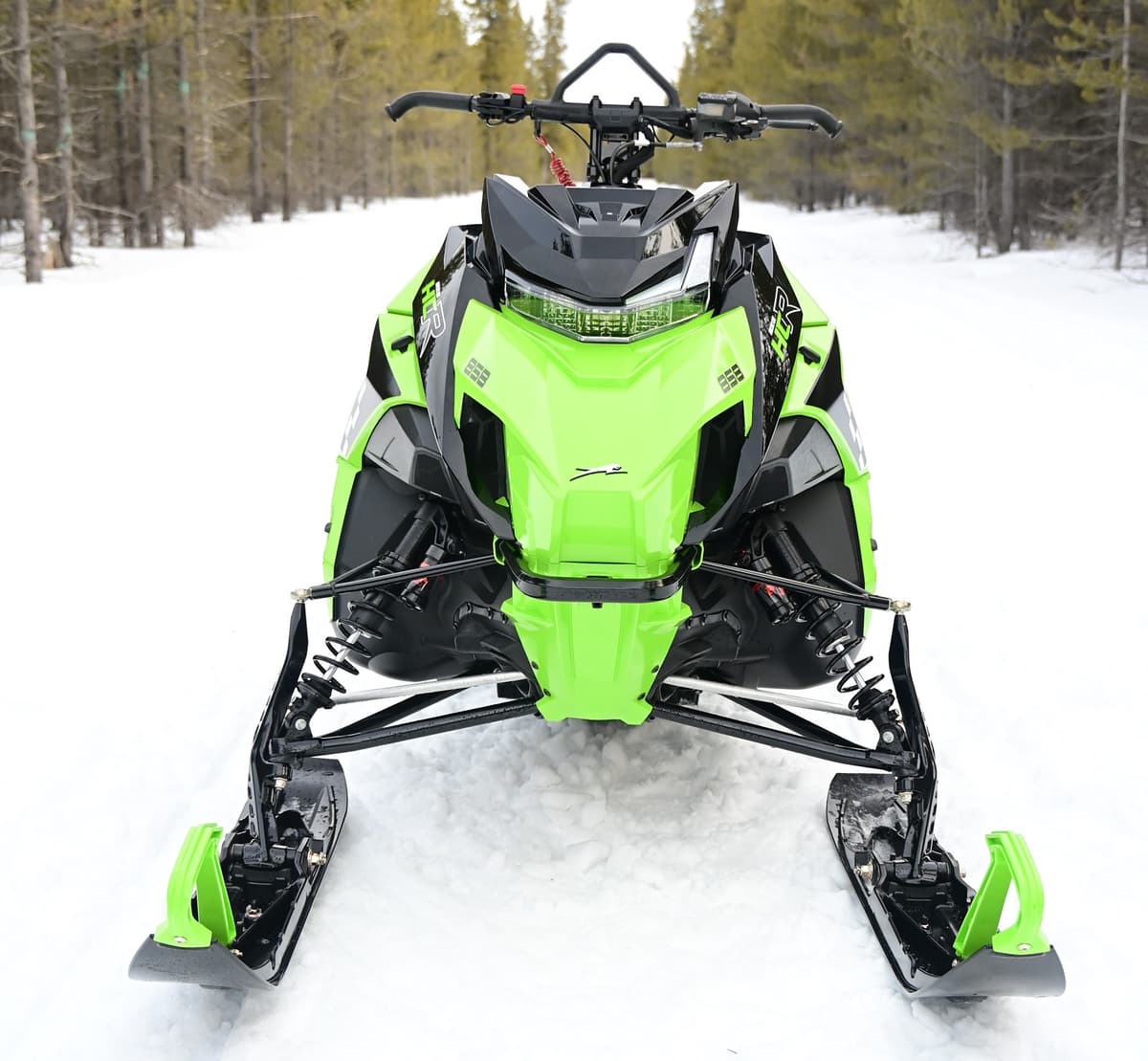
After several days of riding, climbing, and challenging the HCR in varied conditions, one conclusion stands out clearly: Arctic Cat built the HCR for riders who push hard.
The braced twin rail design is a standout feature, providing exceptional stability and predictability in exposed, technical, or aggressive terrain. The Catalyst chassis feels light, the vertical steering post puts the rider in a strong forward position, and the 858 C-TEC2 engine/Power Claw track combo delivers reliable power and traction.
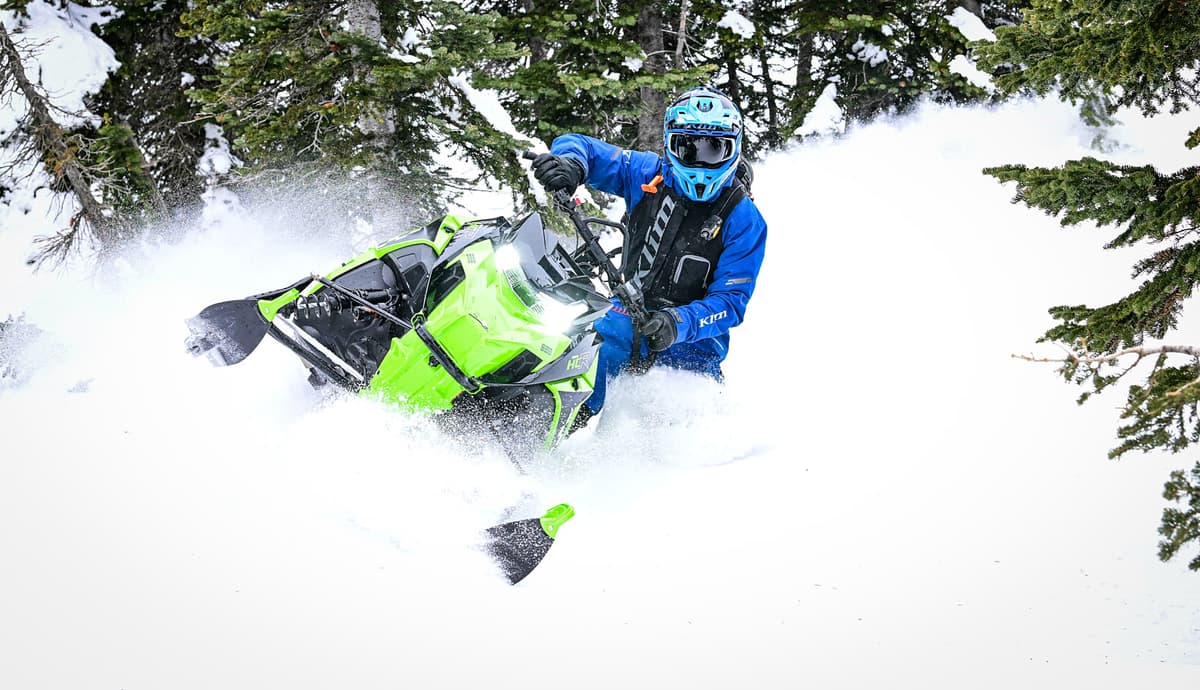
Yes, there’s some steering weight at low speeds. And yes, the HCR is unapologetically focused on control over playfulness. But for mountain riders who prioritize precision, line holding, and chassis strength, the Arctic Cat 2027 HCR 858 154 is a confidence-building machine that thrives exactly where it’s meant to: the steep, the deep, and the unpredictable.
If your riding style leans toward aggressive climbing and technical descents and you appreciate a snowmobile that rewards commitment, you should be talking a look at the 2027 Arctic Cat HCR.