

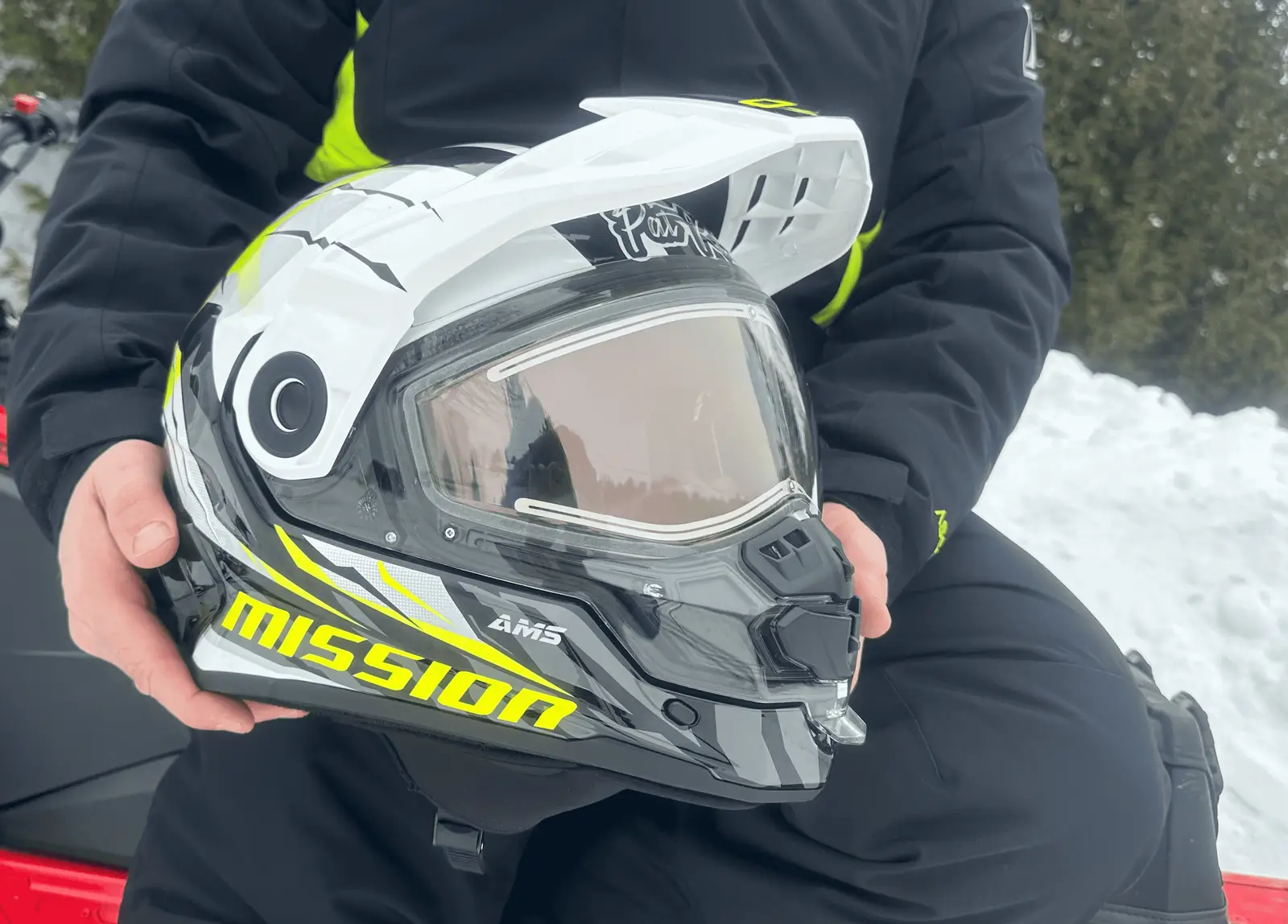

We simply can’t stay indifferent to the helmets offered by CKX. They break new ground and constantly push innovation. This winter, I once again had the privilege of testing the CKX Mission helmet—this time, in its Claw version.
Let’s be honest: since CKX introduced the Titan helmet in 2016, we’ve seen an explosion of these helmets across the powersports world. The Titan, a motocross-type helmet, stands out for its removable chin guard. This feature quickly won over enthusiasts.
Meanwhile, CKX engineers continued developing the “AMS” (Air Management System) concept. Exclusive to CKX, the AMS technology creates a clean environment free of condensation and fog by evacuating humid air to the outside.
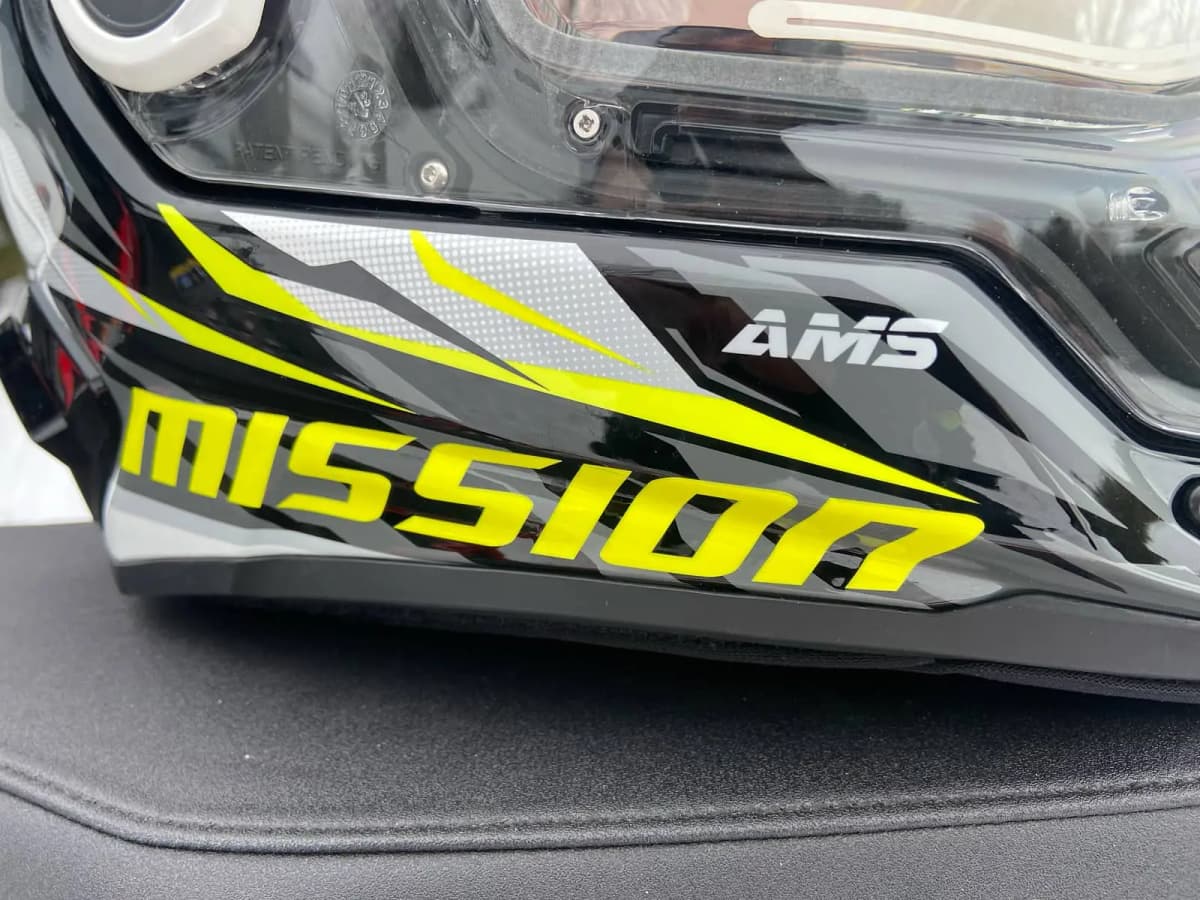
AMS Technology: CKX’s Air Management System
To better understand how CKX’s AMS technology works, I invite you to read this article published in KIMPEX NEWS in March 2019:
How It Works
“The way the AMS system works is based on a physical principle associated with fluid mechanics whose starting point is aerodynamics.
The helmet’s aerodynamics lets the outside air bypass it with little resistance. A low-pressure zone is thus created at the back of the helmet, allowing the AMS channel to move the moist air.”
Inside the Helmet
“Inside the helmet, a higher-pressure zone is created in the front part where moist air is exhaled.
At the back of the helmet, where exhaust ports are located, the difference in air pressure releases the moist air through the AMC channel. This is how the AMS system actively contributes to reducing internal fogging.”
The Race Car Analogy
To draw an analogy, think of car racing. When cars travel at high speed, a vacuum is created behind them. That low pressure also creates suction. The same physical principle applies to the AMS system. When snowmobiling at a certain speed, the air and moisture are drawn out from the rear of the helmet, keeping your visor clear and fog-free.
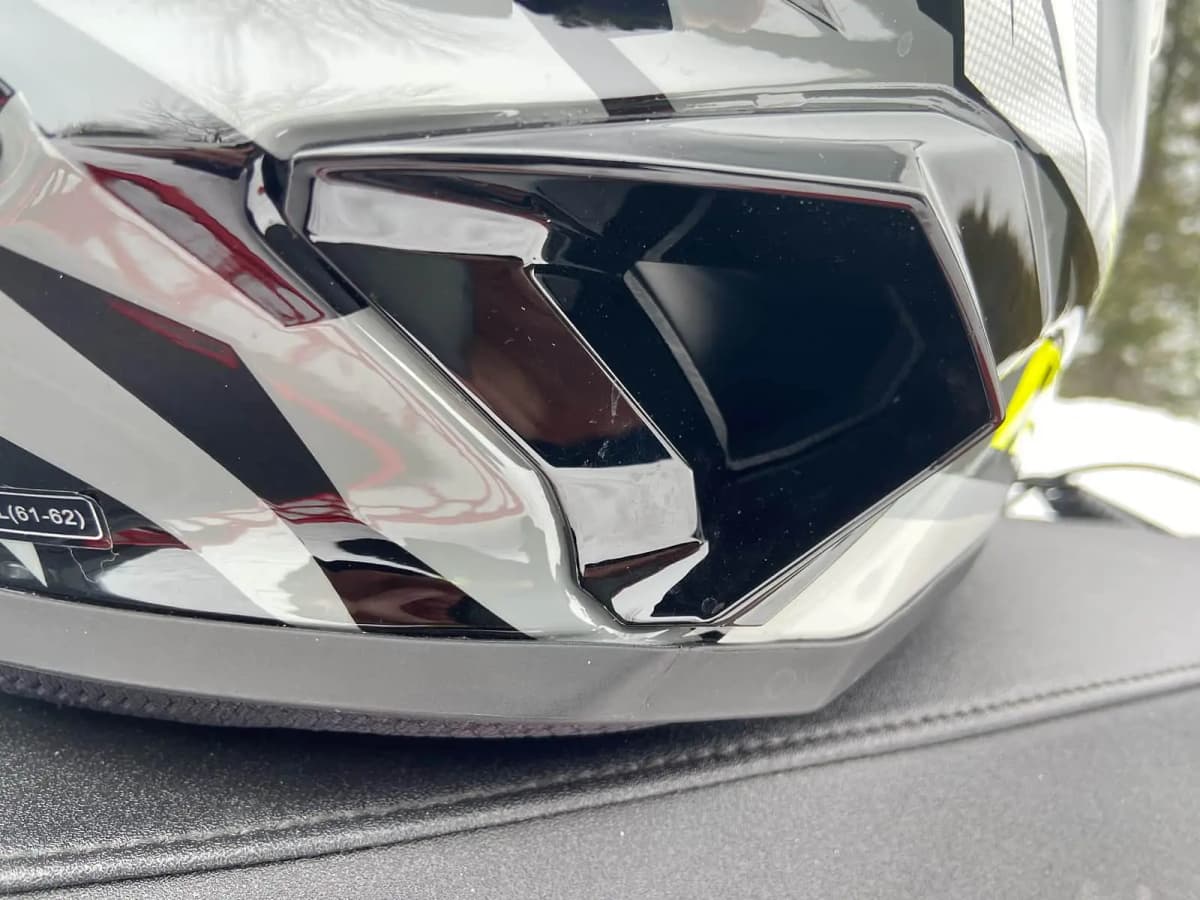
The Breath Deflector: The Heart of the AMS System
The helmet’s AMS efficiency comes from its breath deflector. This rubber component fits perfectly around the lower part of the face when the helmet is closed. Moisture from your breath is evacuated through two side channels. CKX uses the name AMS for this technology, short for Air Management System.
At first, I feared it would collect saliva or feel intrusive on my face—but neither is true. I quickly forget it’s even there. I tested my CKX Mission helmet in extremely cold riding conditions, and I can confirm the rubber breath deflector stays soft and comfortable. I never feel suffocated, and I can breathe normally without fogging up the visor. The AMS system truly works.
Personnal tip: if you wear a balaclava, I recommend CKX’s own model. It leaves your face fully open to take full advantage of the AMS technology.
CKX Mission Helmet: Modular Design and Comfort
I’ve grown to appreciate the modular aspect of the CKX Mission full-face helmet. Being able to lift the visor allows me to talk to friends or take a breath of fresh air during stops. Plus, the rubber breath deflector lifts when the visor is fully raised, clearing the helmet’s opening.
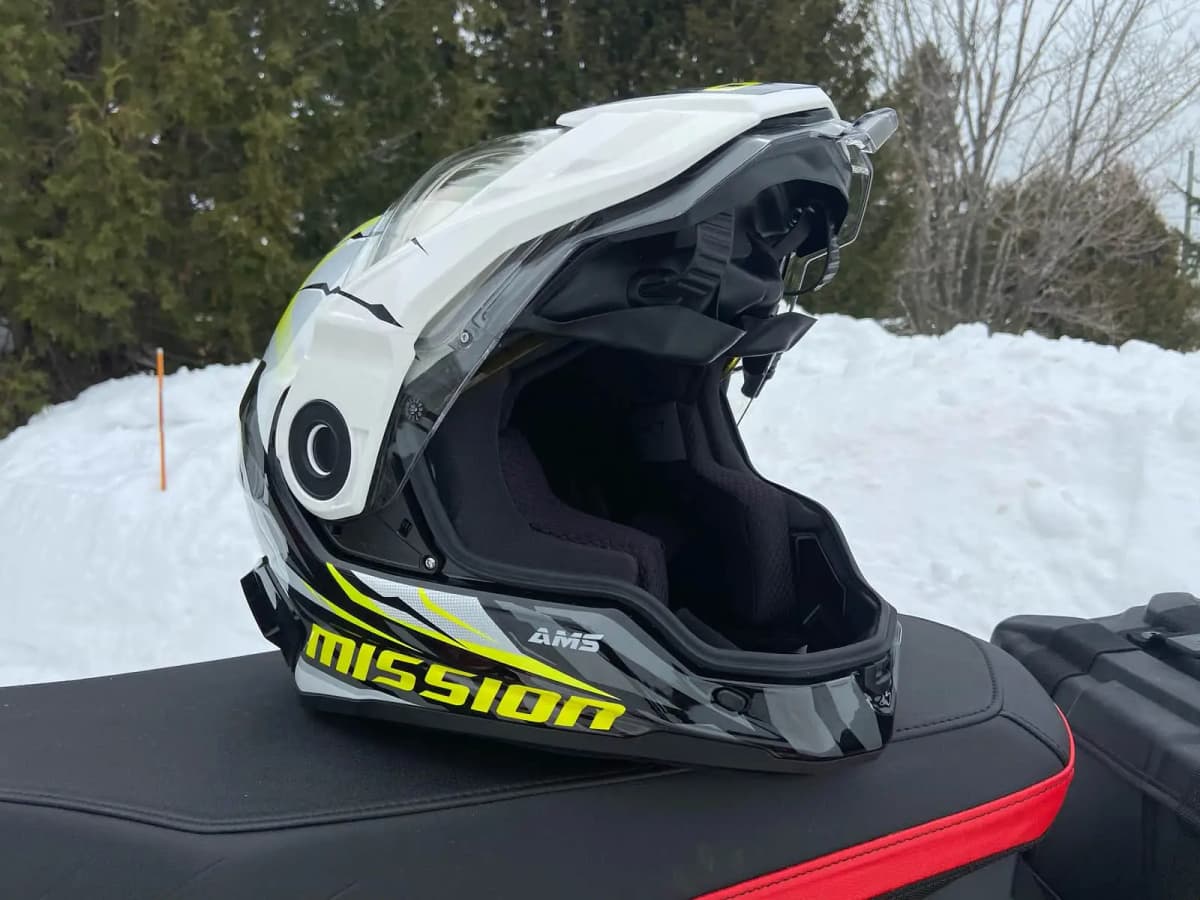
The adjustable cheek pads provide plenty of space for riders who wear glasses. Everything is designed to accommodate a future communication system as well. That attention to detail is impressive.
Now, let’s talk about the aerodynamic peak. It adjusts to two positions and can be removed using a ratchet push-button system. It detaches easily without tools. Personally, I prefer the upward position. Be careful though—because it’s so easy to remove, you might accidentally trigger it. In experience, I once found a Mission helmet peak on the trail near Lac Taureau in Saint-Michel-des-Saints.
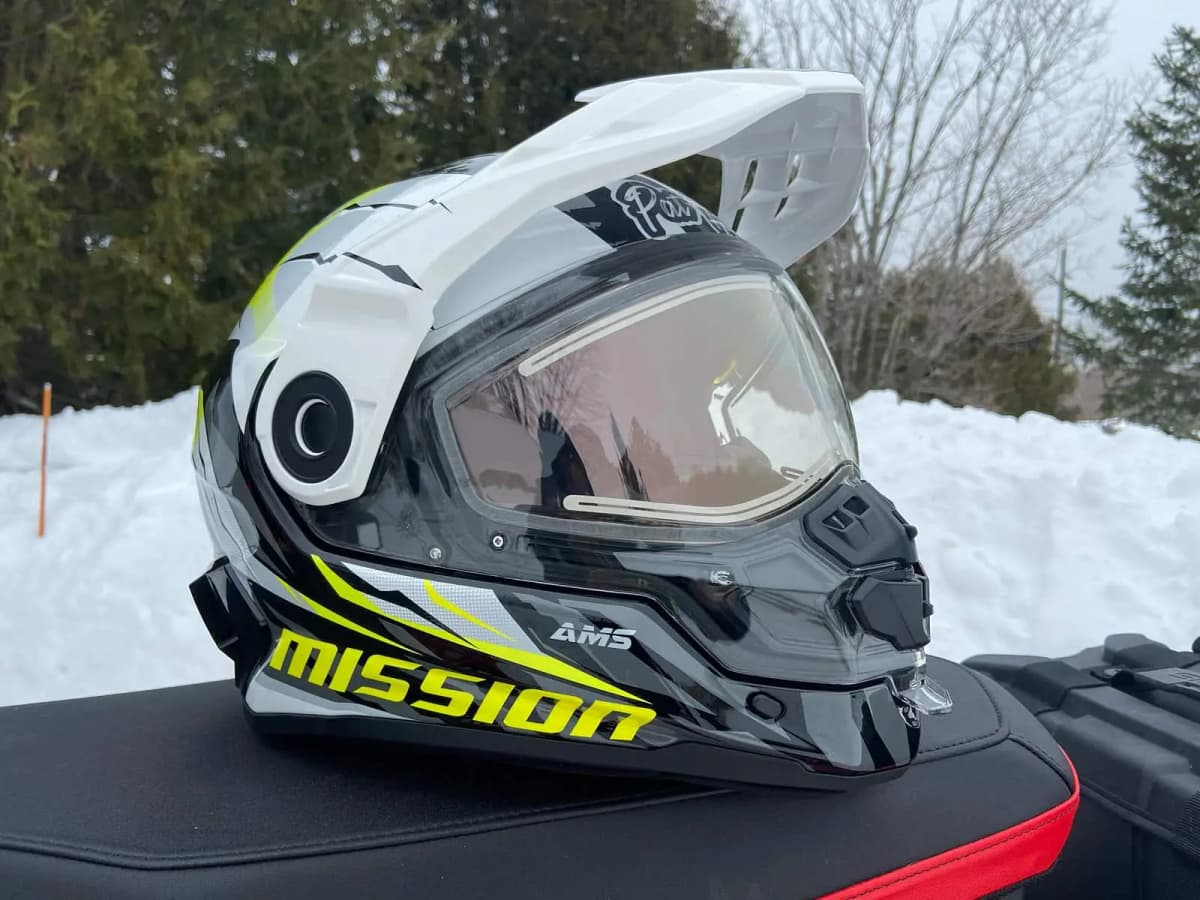
When I rise and lower my visor, the peak sometimes interferes and falls to its lowest position. I always have to readjust it, which can be a little annoying.
CKX Mission Helmet: Insulation and Sealing
The large visor closes tightly, and I need to press harder than with any other helmet I’ve used before. Once locked, though, there’s absolutely no air or whistling—keeping me warm and protected from the elements.
The long removable chin curtain also attaches securely with hook-and-loop fasteners. This essential piece prevents air from entering through the helmet’s base and is highly effective.
CKX Mission Heated Visor: Comfort and Performance
The large, clear visor offers an excellent panoramic view. Its seal, as mentioned earlier, is flawless. I chose the electric heated visor, though I don’t think it’s strictly necessary for this helmet.
One feature I really appreciate is the magnetic connection for the heated visor cable. This has become essential, since it appeared on the market. No more fumbling blindly to connect the cord—just bring the two ends close, and they snap together instantly.
For peace of mind, two indicator lights confirm the 12 V connection is active.
Retractable Sun Visor: Useful but Imperfect
The CKX Mission helmet also includes a retractable sun visor inside the helmet. It lowers via a side slider. Personally, I rarely use it. I found that it fogs up easily and affects visibility, so I prefer to keep it retracted.
CKX Mission Claw Helmet: Bold and Unique Style
CKX offers several Mission helmet variations, mostly cosmetic. This year, I chose the Claw version for its wild design—a mix of white, grey, and bright lime. I like my helmets to stand out, and this one certainly does. It’s exactly what I look for, and I definitely don’t go unnoticed.
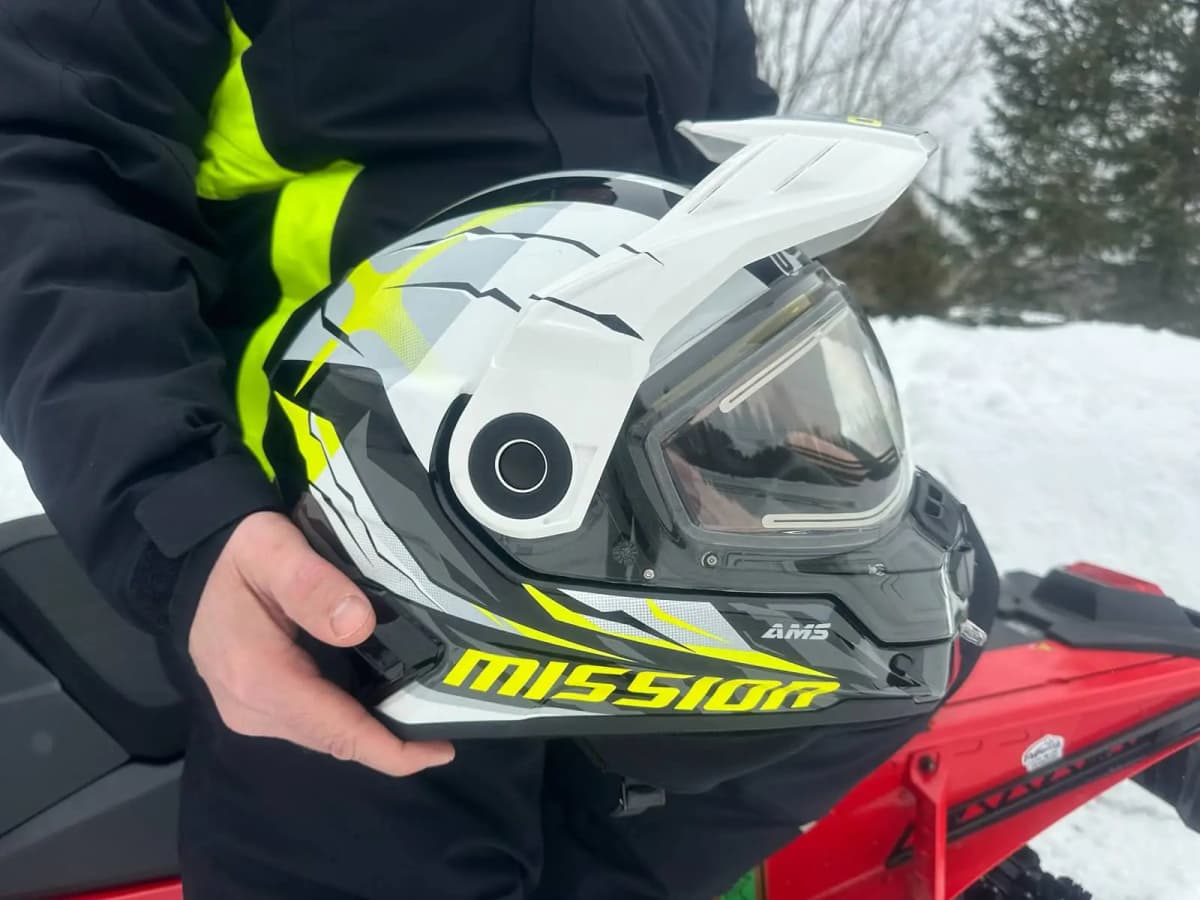
Choose the CKX Mission Claw Helmet for Your Rides
To conclude, investing in a CKX helmet like the Mission is a guarantee of quality and satisfaction. Designed for trail riding, it’s lightweight, insulated, and aerodynamic. CKX continues to raise the bar while competitors can only watch. If you haven’t tried one yet, I strongly encourage you to consider it for your next purchase. You won’t regret it.