



When we think about snowmobiling, we naturally think about trails, wide-open snow-covered landscapes, trips with friends, and the passion that brings hundreds of thousands of riders outdoors every winter.
But behind the recreation lies a major economic industry.
Manufacturers, dealerships, equipment suppliers, repair shops, clubs, hotels, restaurants, gas stations, and tourism businesses all benefit directly or indirectly from the economic activity generated by snowmobilers.
The latest data presented by the International Snowmobile Manufacturers Association (ISMA) in 2026 provides a revealing look at the size and importance of this industry.
After several years of declining sales following the surge experienced during the pandemic, the global snowmobile market is showing signs of stabilization.
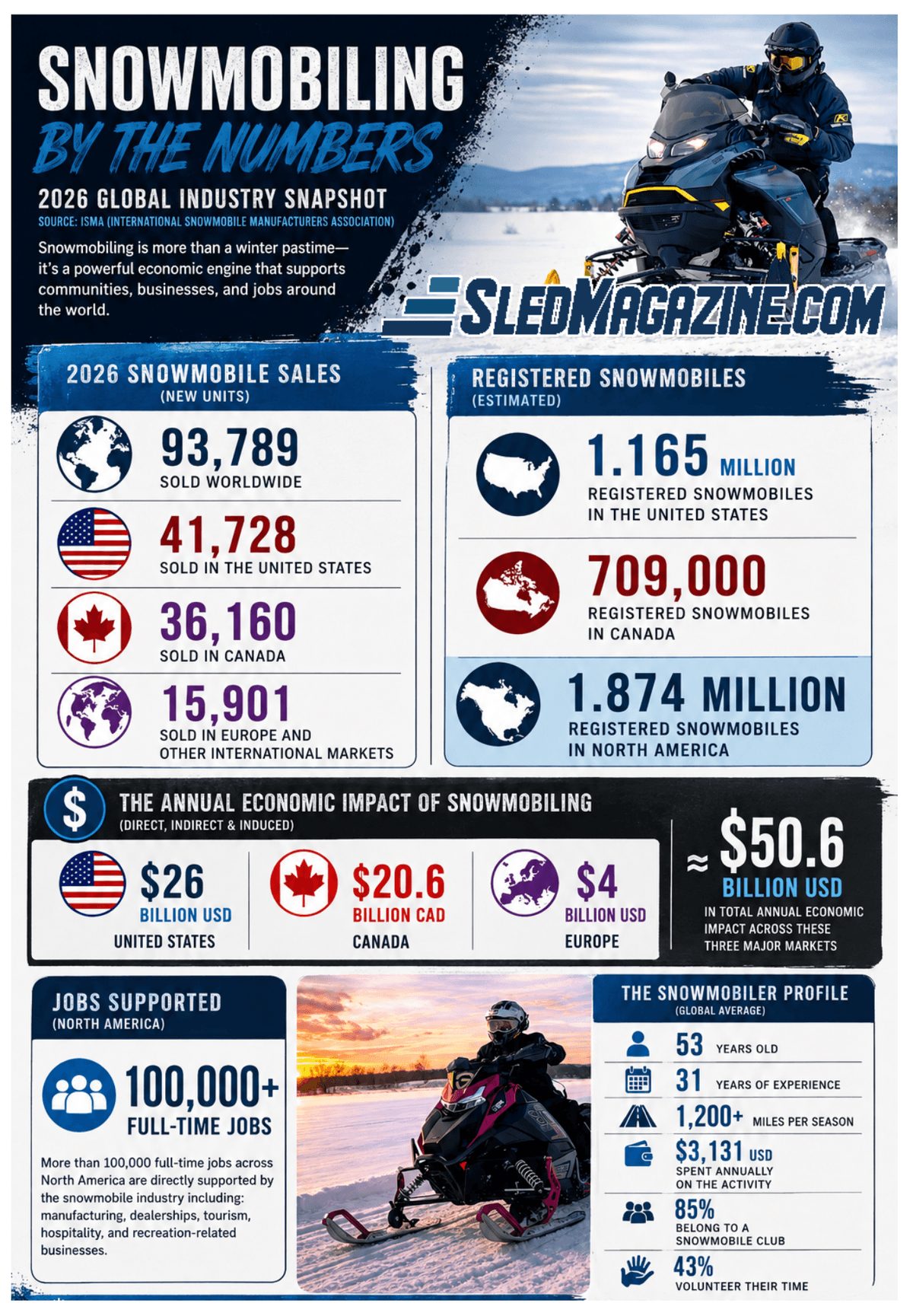
In 2026, 93,789 new snowmobiles were sold worldwide.
But that number tells only part of the story.
93,789 New Snowmobiles Sold Worldwide in 2026
According to ISMA data presented at the 58th International Snowmobile Congress, worldwide snowmobile sales reached 93,789 units in 2026.
That represents a slight increase compared with the 92,387 snowmobiles sold in 2025.
The increase is modest, approximately 1.5%, but it is nevertheless significant following the substantial market correction experienced by the industry over the past several years.
By comparison, worldwide sales reached 112,650 units in 2024.
The market has therefore not returned to the levels seen a few years ago, but for now, the decline appears to have stopped.
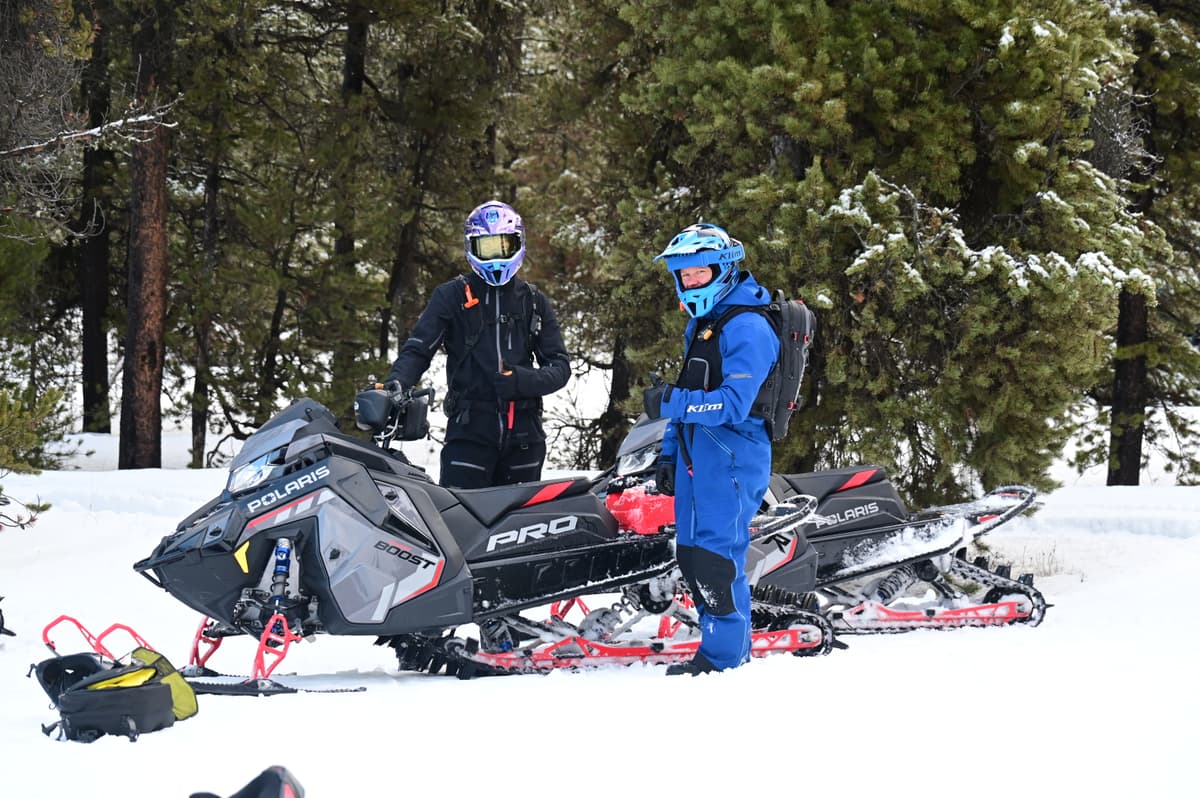
The United States Remains the Largest Market
The United States remained the largest national snowmobile market in 2026, with:
41,728 new snowmobiles sold.
One year earlier, 41,588 units were sold.
The U.S. market therefore remained virtually unchanged.
Within the United States, the Midwest continues to play an especially important role in the industry. It represents approximately 42% of U.S. sales, compared with 31% in the West and 27% in the Northeast.
States such as Wisconsin, Minnesota, and Michigan remain among North America’s major snowmobiling strongholds.
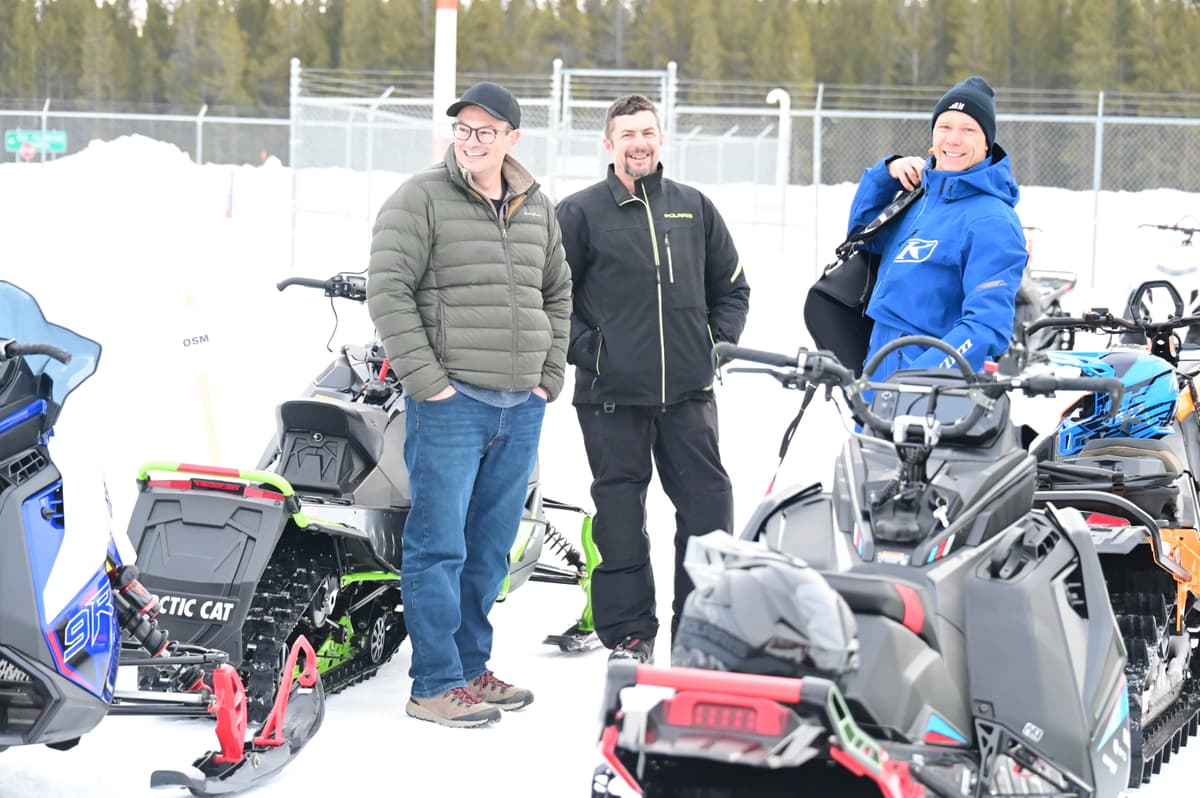
Canadian Sales Increase in 2026
The situation is slightly more encouraging in Canada.
Canadian snowmobile sales increased from 34,828 units in 2025 to 36,160 units in 2026.
That represents an increase of approximately 3.8% in a single year.
Despite having a much smaller population than the United States, Canada remains an exceptionally important market for the global snowmobile industry.
Quebec and Ontario are also among the North American jurisdictions with some of the largest registered snowmobile populations.
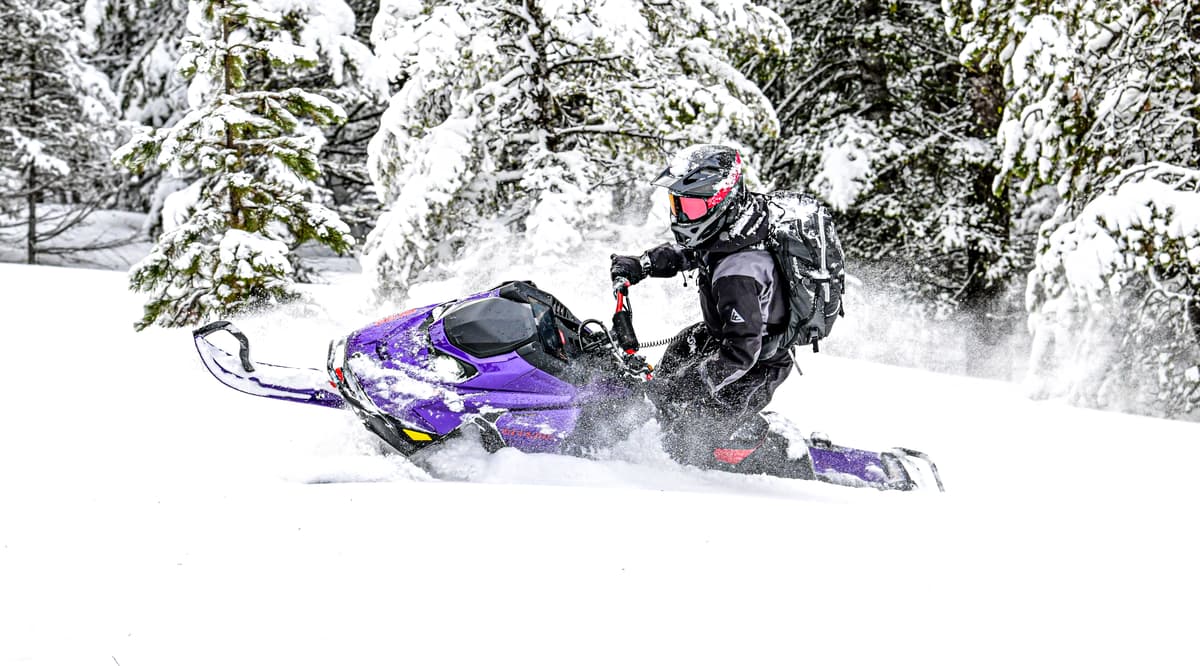
More Than 83% of New Snowmobiles Are Sold in Canada and the United States
Combined, 77,888 new snowmobiles were sold in Canada and the United States in 2026.
That means approximately 83% of all new snowmobiles sold worldwide were purchased in these two markets.
Europe and other international markets accounted for the remaining 15,901 units.
These figures demonstrate just how important North America remains to the global snowmobile industry.
Nearly 1.9 Million Registered Snowmobiles in North America
New vehicle sales represent only a fraction of the total snowmobile population.
According to 2026 figures reported from ISMA data, approximately 1.165 million snowmobiles are registered in the United States.
In Canada, the number is estimated at approximately 709,000 units.
Combined, that represents approximately:
1.874 million registered snowmobiles in North America.
Quebec, Wisconsin, Minnesota, Michigan, and Ontario are among the jurisdictions with some of the largest snowmobile populations.
However, caution is necessary when comparing these figures with previous years. Registration sources and compilation methods can differ, and some of ISMA’s publicly available statistics are not updated simultaneously.
An Industry Generating Billions of Dollars
The true scale of the snowmobile industry becomes even more apparent when we examine its economic impact.
Snowmobiling does not generate revenue only when someone purchases a new machine.
Every snowmobile trip can generate spending:
- Fuel.
- Lodging.
- Restaurants.
- Trailers
- Clothings
- Helmets
- Parts and accessories.
- Maintenance.
- Insurance.
- Trail permits.
- Transportation.
- Snowmobile trips.
And this economic activity repeats throughout the winter season.
$26 Billion in the United States
According to economic data published by ISMA, the snowmobiling community generates approximately:
$26 billion USD in annual economic activity in the United States.
This figure extends far beyond the value of new snowmobiles sold.
Instead, it illustrates the broader economic ecosystem surrounding the sport.
For many rural communities across the northern United States, snowmobiling also represents an important source of winter revenue.
$20.6 Billion in Canada
In Canada, the economic impact attributed to snowmobiling reaches approximately:
$20.6 billion annually.
Snowmobiling is therefore much more than a recreational activity.
In many communities across Quebec and Canada, it is a genuine winter tourism product.
Snowmobilers may travel hundreds of miles during a multi-day trip, staying at several hotels and lodges, eating at local restaurants, and purchasing fuel and supplies in different communities.
Each group of snowmobilers therefore becomes a source of revenue for a long chain of businesses.
Approximately $4 Billion in Europe
Europe also has an important snowmobiling culture, particularly in Nordic countries.
The annual economic impact associated with snowmobiling is estimated at approximately:
$4 billion.
Scandinavia remains an important market for snowmobile manufacturers.
Tens of Billions of Dollars in Economic Activity
When considering the figures reported for the United States, Canada, and Europe, snowmobiling generates tens of billions of dollars in annual economic activity.
However, figures expressed in different currencies should not simply be added together to create a worldwide total without applying appropriate currency conversions.
What remains clear is the scale of the industry: snowmobiling represents tens of billions of dollars in economic activity every year.
More Than 100,000 Full-Time Jobs
One of the industry’s most revealing statistics involves employment.
According to ISMA, more than 100,000 full-time jobs in North America are supported by the snowmobile industry.
These jobs are not limited to manufacturing plants.
They include employment related to:
- snowmobile manufacturers and component suppliers;
- dealerships;
- repair and maintenance services;
- accessory manufacturers and distributors;
- tourism;
- hospitality;
- restaurants;
- retail businesses;
- recreational tourism operations.
The economic impact of snowmobiling therefore extends far beyond businesses directly identified with the machines themselves.
An Economic Engine for Rural Communities
One unique aspect of snowmobiling is where much of this economic activity takes place.
Unlike many forms of consumer spending concentrated in major urban centers, snowmobiling brings consumers directly into rural communities.
A multi-day snowmobile trip can generate spending across a series of small towns and communities.
For hotels, restaurants, outfitters, and gas stations located near major trail networks, a strong snowmobile season can therefore have a considerable economic impact.
Snow itself becomes a tourism resource.
The Average Snowmobiler Is Now 53 Years Old
The industry does, however, face an important challenge.
According to the latest survey presented by ISMA, the average snowmobiler is now 53 years old.
The average participant also has approximately 31 years of snowmobiling experience.
That figure demonstrates the remarkable loyalty of snowmobile enthusiasts, but it also raises an essential question for the industry’s future:
Who will make up the next generation of snowmobilers?
ISMA considers attracting new participants one of the industry’s major challenges.
There is, however, an encouraging sign.
New participants surveyed are considerably younger, with an average age of approximately 38 to 40 years old.
More Than 1,200 Miles Every Winter
The average snowmobiler also remains very active.
According to data presented in 2026, the average rider travels more than 1,200 miles per season.
They also spend approximately $3,131 USD annually on the activity.
Multiplied across hundreds of thousands of participants, these expenditures help explain the enormous economic importance of snowmobiling.
A Highly Engaged Community
The snowmobiler profile also reveals a particularly engaged community.
According to the survey:
85% belong to a snowmobile club.
And:
43% volunteer their time.
This involvement is essential to the operation of many trail networks.
In many regions, a significant portion of the infrastructure that makes snowmobiling possible relies on volunteers who maintain trails, negotiate land access, install signage, and operate local clubs.
The true value of this volunteer contribution therefore extends well beyond economic statistics.
An Important Customer Base for the Entire Powersports Industry
The 2026 data also shows that snowmobilers frequently participate in several other powersports activities.
Approximately 45% also ride ATVs, while 40% own a side-by-side.
Approximately 27% also ride motorcycles.
More than half of respondents also participate in boating or fishing activities.
For multi-line powersports dealerships and related businesses, snowmobilers therefore represent an especially important customer base.
An Industry That Is Stabilizing but Must Prepare for the Future
The 2026 statistics ultimately tell two stories.
The first is economic.
With 93,789 new snowmobiles sold worldwide, nearly 1.9 million registered snowmobiles in Canada and the United States, and economic activity measured in tens of billions of dollars, snowmobiling remains a major industry.
The second story concerns its future.
Sales appear to be stabilizing after several difficult years, but an aging rider population and the recruitment of new participants remain fundamental challenges.
The industry will therefore need to continue attracting new enthusiasts, maintaining trail access, and supporting the thousands of clubs and volunteers who make the activity possible.
Snowmobiling Is Much More Than a Winter Pastime
When a snowmobiler starts their machine on a Saturday morning, they probably aren’t thinking about the billions of dollars generated by the activity.
- They’re thinking about snow.
- The next stop along the trail.
- Their friends.
- The day ahead.
Yet behind every one of those rides is an enormous economic chain.
Workers designed and assembled the snowmobile. A dealership sold it. Technicians maintain it. Companies manufacture the rider’s equipment. Volunteers prepare the trails. Hotels welcome traveling snowmobilers, and restaurants serve their meals.
It is this combination of passion, tourism, industry, and community involvement that makes snowmobiling such a unique activity.
And with nearly 94,000 new machines sold worldwide in 2026 and more than 100,000 jobs supported in North America, one thing is clear:
Snowmobiling isn’t just a winter pastime. It’s an economic engine.
— Source: Powersports Business