

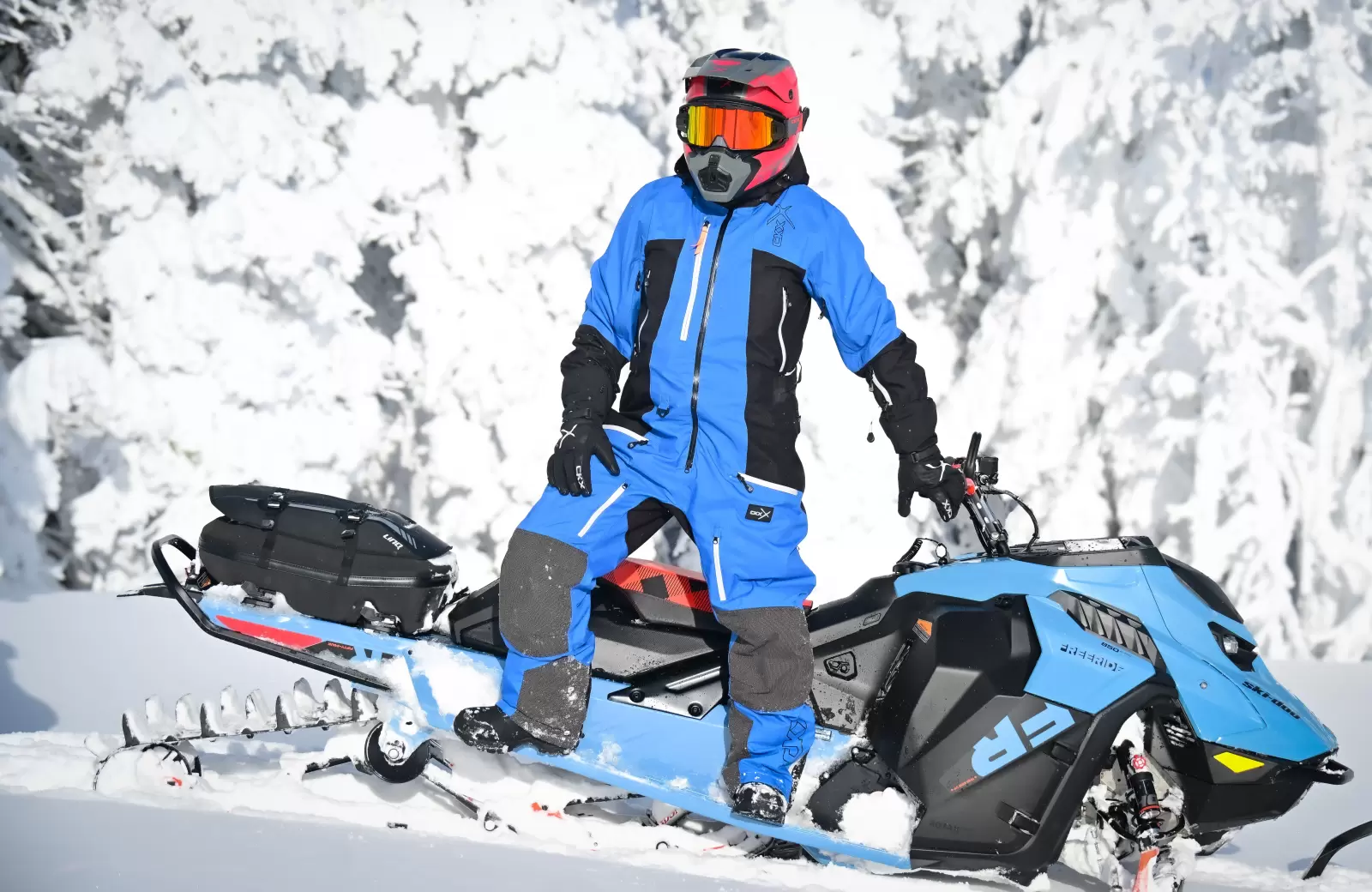

After an entire winter guiding snowmobile tours in Montana, Joe Erickson shares what impressed him most—and what still needs improvement.
Living in Your Riding Gear
I feel like I live in my riding gear all winter long.
Customers often ask me if I work out to stay in shape for guiding snowmobile tours. I usually laugh and tell them,
« Absolutely! Every morning when I put my gear on, and every evening when I take it off. »
If you’ve ever wrestled with a full riding kit before sunrise, you know exactly what I mean.
I’ve gotten so used to gearing up that I can practically do it like a fire drill. Oversleeping on a workday has proven that more than once.
When you spend hundreds of hours each winter riding, digging, helping customers, hiking through deep snow, and photographing sleds, you become incredibly picky about your equipment. I often find myself asking a simple question whenever I try something new:
« Did the person who designed this actually build it for a human? »
Function always comes before flashy marketing.
This season, CKX gave me the opportunity to put an entire riding setup through one of the toughest tests possible: everyday use.
My winter kit included the Elevation Mono Suit, Titan AMS Helmet with APEX Goggles, Xvelt Gloves, and Colchester Lace Boots. Every piece was used exactly the way snowmobile gear is supposed to be used—not for one weekend demo ride, but through months of guiding in Montana’s mountains under virtually every condition imaginable.
Elevation Mono Suit: Better Than I Expected
If you happened to read my previous review of the original CKX Elevation Mono Suit a few years ago, you’ll know I was already a fan.
In fact, I still own that suit and wear it from time to time.
That’s why, when CKX sent me the latest version, I honestly wasn’t expecting major changes.
I couldn’t have been more wrong.
Rather than redesigning a successful product from scratch, CKX focused on refining the details that matter after hundreds of hours on the snow. Those small improvements may not jump out when you first look at the suit, but after a full season, they make a noticeable difference.
One of the biggest upgrades is storage.
I’ve tested riding gear from companies that seem to forget riders actually carry things. The Elevation has no such problem. With six generously sized and intelligently placed pockets, I never found myself wishing for more space. Everything had a logical home.
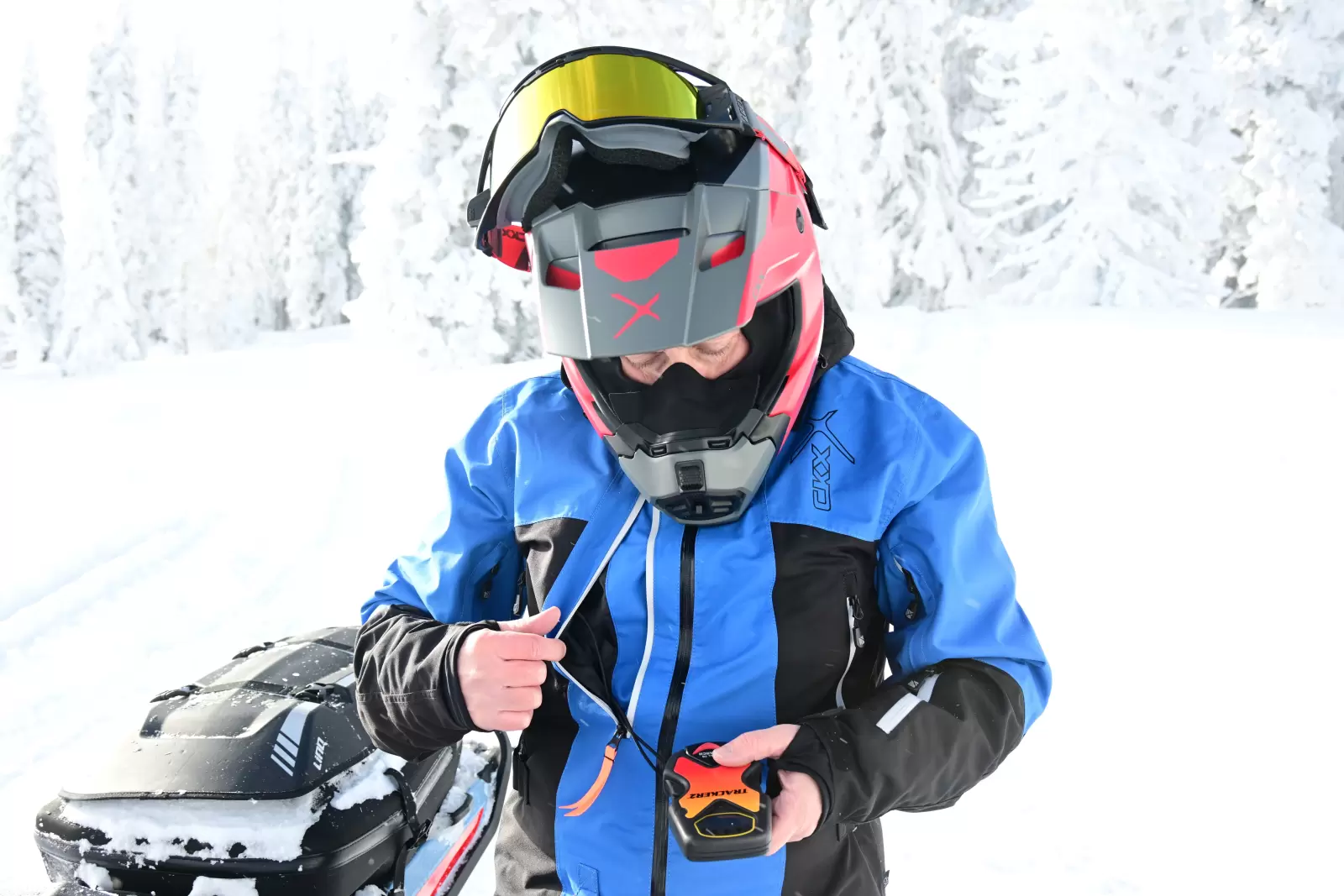
One feature I particularly appreciated was the new chest pocket with the bright orange zipper pull. Inside, CKX added a tether, which quickly became the perfect place to secure my avalanche beacon for fast access. Even while wearing my avalanche airbag pack over the suit, I never felt like the pocket placement interfered with comfort or movement.
Little details like that tell me someone actually rides in this gear.
My lip balm lived permanently in the left sleeve pocket, right beside a goggle cloth and, of course, a few pieces of candy. Priorities matter.
Another improvement I quickly noticed was the redesigned hand pockets. They’re now positioned more vertically instead of horizontally. That might seem insignificant until you accidentally leave one partially open. With the new orientation, your gear is much less likely to fall out.
That’s the kind of attention to detail I genuinely appreciate.
Built to Move
The Elevation remains a lightly insulated mono suit, using 60 grams of Vivo insulation, and I think CKX struck an excellent balance.
Paired with the proper layering system, it performs extremely well for aggressive backcountry riding while remaining comfortable during long trail rides.
Ventilation also deserves recognition.
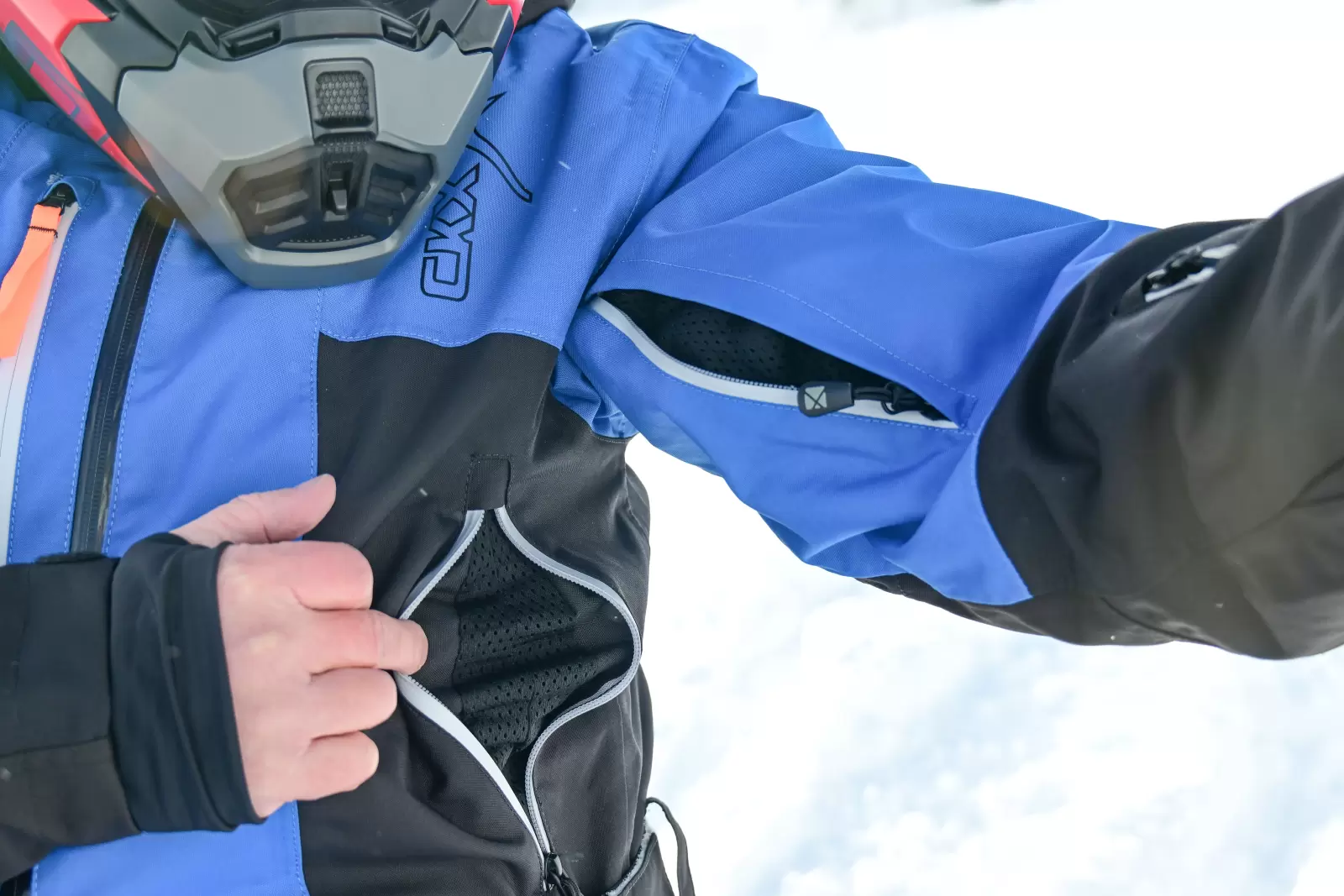
CKX increased the number of vents to six, including additional arm vents that proved incredibly effective whenever I started overheating during technical riding. Open all six vents and excess heat escapes surprisingly fast.
I also noticed that the upper chest vents have been slightly repositioned, making them easier to reach while riding. It sounds minor, but it’s another example of thoughtful design improving day-to-day usability.
I’d genuinely love to meet whoever designs these suits someday.
I’d simply shake their hand and say thank you.
Comfort That Adapts to the Rider
One thing I’ve always appreciated about the Elevation is its adjustability.
Between the removable internal suspenders, torso adjustment straps and leg-length adjustment system, it’s easy to fine-tune the fit.
For reference, I’m 5’7″, wear a 34-inch waist, have a 32-inch inseam, and this season I apparently discovered muscles aren’t permanent.
Let’s just say the belly has started winning.
A medium fits me exactly the way I like.
Loose enough to move freely without ever feeling baggy.
I’ve tried more form-fitting suits over the years, but they often restrict movement once you’re climbing around stuck sleds or working through technical terrain.
The Elevation never feels restrictive whether I’m standing, sitting or throwing my weight around the sled.
The extra room also allows me to add insulation during those brutally cold Montana mornings.
Another improvement worth mentioning is the magnetic closure around the chin gaiter.
It keeps the front zipper securely closed while helping prevent snow from working its way inside the suit.
CKX also reinforced the lower leg zipper with both Velcro and a snap closure. That’s a welcome improvement because, on the previous version, powder riding occasionally caused the zipper to work itself open.
That problem completely disappeared this season.
Titan AMS: A Helmet I Couldn’t Wait to Try
I’ll admit something.
People tell me I own too many helmets.
They’re probably right.
Then again, nobody tells a bird it owns too much sky.
So bring on another helmet.
For the last few years I’ve been riding with the original CKX Titan Air Flow paired with the 210 goggles, and I still think it’s one of the best warm-weather helmets I’ve used. Ironically, Montana experienced one of its warmest winters on record this year, so I found myself reaching for that helmet more often than expected.
When CKX announced the new Titan AMS (Air Management System), I immediately wanted to see what had changed.
The original Titan completely changed the way I communicate while guiding.
Instead of removing my helmet every time I needed to explain something to a customer—or catch my breath after digging out a stuck sled—I simply opened the muzzle.
I also found myself drinking more water because hydration became that much easier.
Sometimes the smallest improvements make the biggest difference.
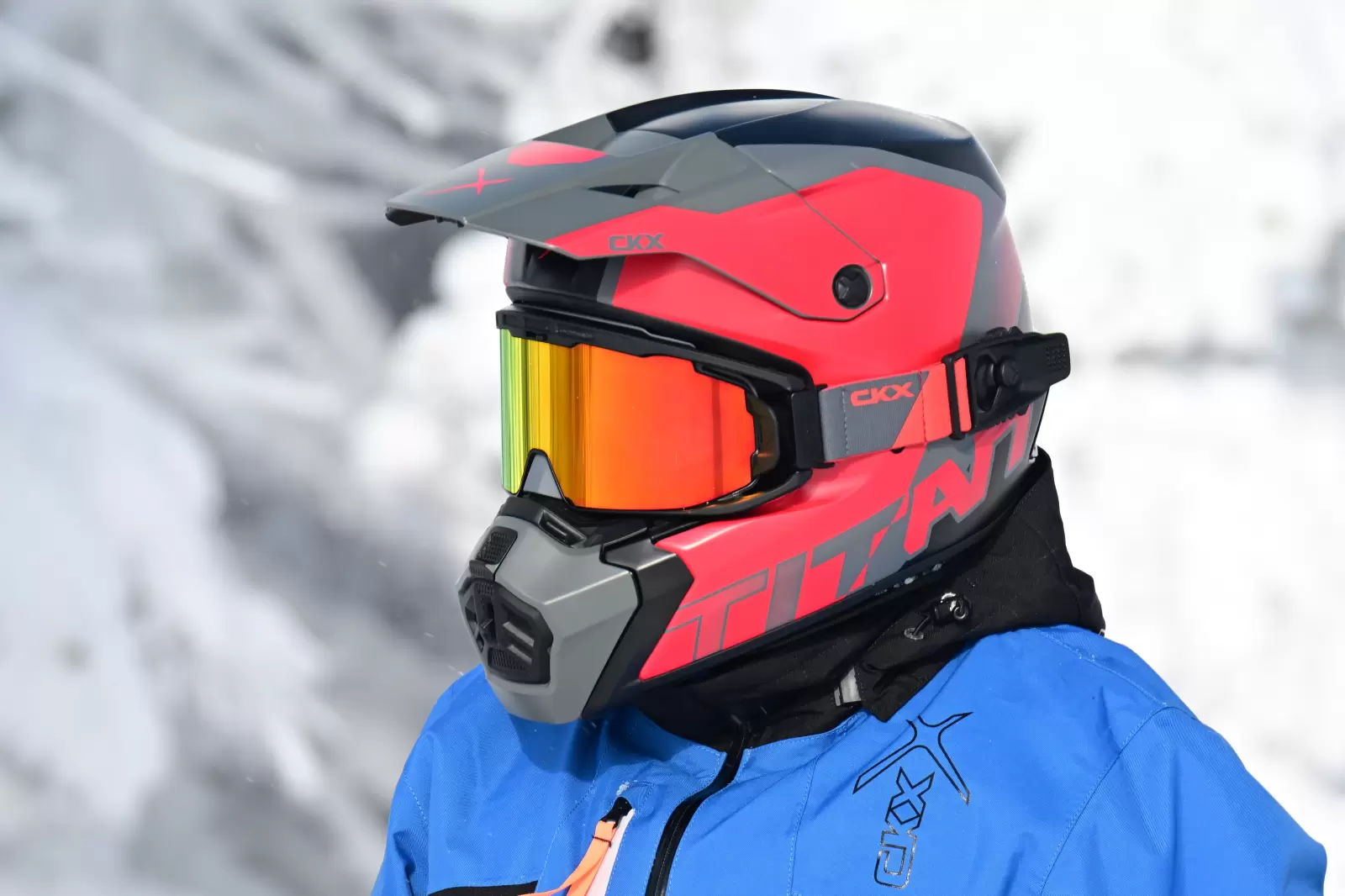
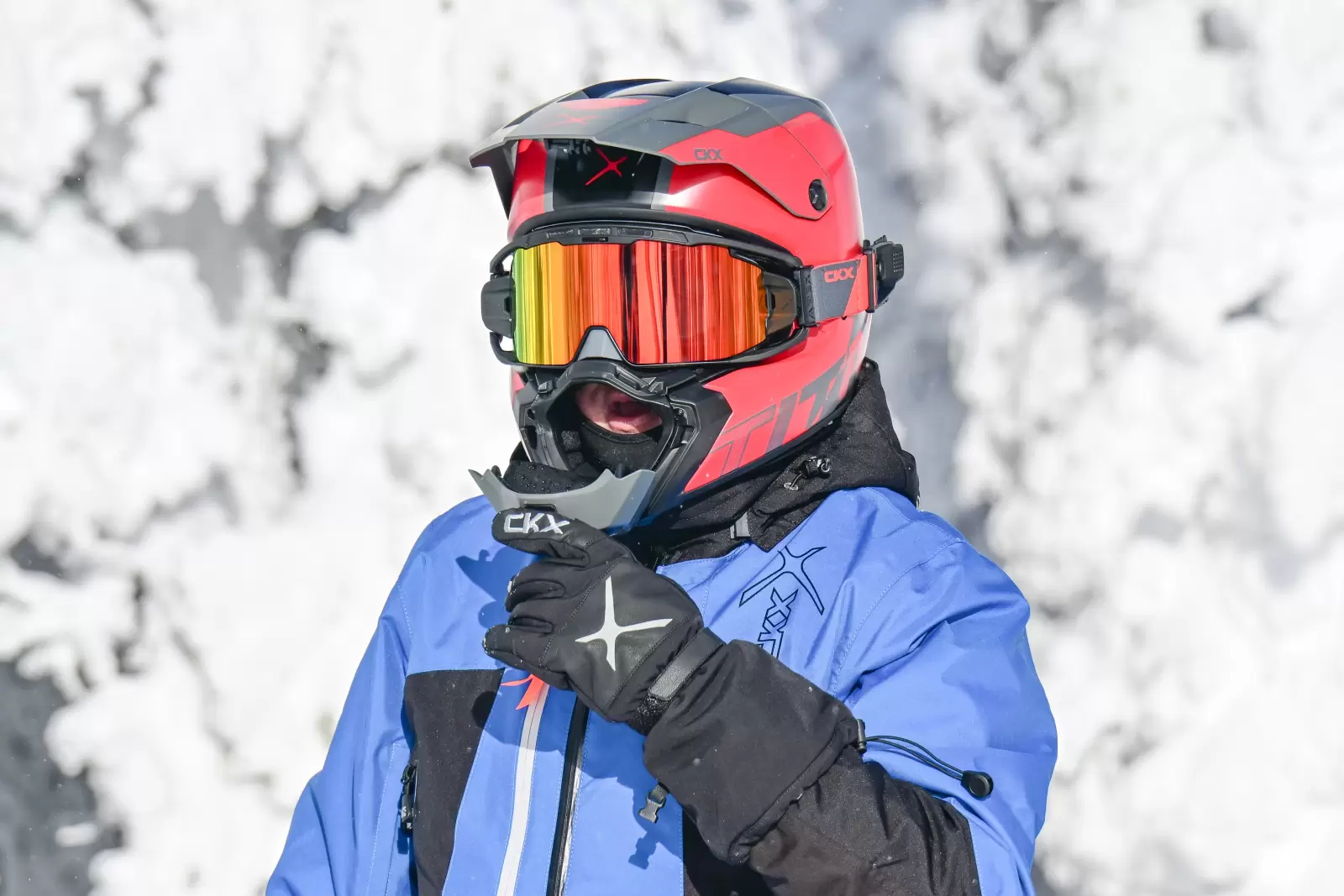
With the Titan AMS, CKX didn’t just update the helmet. They rethought several key elements, including a larger eye port, the new integrated APEX goggles, the Air Management System and a redesigned two-stage muzzle system intended to make communication even easier without disturbing the goggles.
On paper, it looked like the next logical evolution of an already excellent helmet.
The real question was whether those improvements would perform once winter got involved.
Titan AMS: Brilliant Ideas Meet Real-World Riding
Once I finally got the Titan AMS out on the snow, it didn’t take long to realize that CKX had done much more than update the graphics.
The larger eye port immediately caught my attention. Paired with the new APEX goggles, visibility feels noticeably more open than the previous generation. Whether weaving through tight trees or scanning a mountainside before committing to a line, that wider field of view is something you appreciate every single ride.
The Air Management System (AMS) also impressed me. Airflow throughout the helmet feels much more controlled than simply having extra vents punched into the shell. Combined with the removable face curtain and chin skirt, the helmet adapts remarkably well to changing weather conditions.
Cold morning trail ride?
Install the curtain.
Warm spring afternoon in the mountains?
Remove it in seconds.
That level of adaptability quickly became one of my favorite parts of the helmet.
The APEX Goggles Are a Home Run
The biggest surprise wasn’t actually the helmet.
It was the CKX APEX goggles.
I’ve owned enough goggles over the years to fill an entire shelf in my garage, so I’m not easily impressed anymore.
These impressed me.
The magnetic lens system is incredibly well executed. Instead of carrying multiple pairs of goggles, I can simply pack an extra lens in my backpack. Lens changes take seconds, even with gloves on, and drying or cleaning a lens during the day has never been easier.
The goggles integrate perfectly with the Titan AMS.
No pressure points.
No awkward gaps.
No fighting to make everything line up.
The quick-release strap system also deserves credit. Anyone who’s dropped their goggles into the snow while trying to remove them knows how frustrating that can be. This system simply works.
After an entire season, I’d rank the APEX goggles among the best I’ve ever used.
The Adaptive Muzzle: A Brilliant Concept
One of the defining features of the original Titan was its drop-down muzzle.
As a guide, I use that feature constantly.
Every time I stop to explain terrain, discuss avalanche safety or simply answer a customer’s question, I can flip open the front of the helmet instead of removing it completely.
It’s faster.
It’s warmer.
It’s simply more convenient.
The new Titan AMS takes that concept one step further.
Unlike the previous generation, the nose deflector now moves independently, allowing the muzzle to open while leaving the goggles in place.
From a design standpoint, that’s exactly what riders have been asking for.
When it’s snowing heavily, you don’t want to break the seal around your goggles.
When the sun is blazing, you don’t want to remove your tinted lens every time you need to talk or grab a drink.
On paper, the new design solves both problems beautifully.
Where I Ran Into Trouble
Unfortunately, real winter isn’t always kind to great ideas.
When the helmet was warm and dry, the new muzzle system worked exactly as intended.
Out on the mountain, however, things changed.
As moisture from breathing—or melting snow—began freezing around the hinge area, opening and closing the muzzle became increasingly difficult. Late in the day, I occasionally had to chip away small amounts of ice before everything would operate normally again.
I initially wondered if I was doing something wrong.
So I contacted CKX.
The company acknowledged that they were aware of the issue and suggested installing the vented muzzle insert to improve airflow.
I followed their recommendation.
Unfortunately, in my experience, it didn’t eliminate the problem.
To make sure it wasn’t unique to my helmet, I spoke with several other guides at our shop who were also using the Titan AMS.
Their experiences were very similar.
I also noticed that the plastic latch hooks on the new muzzle didn’t inspire quite as much confidence as the metal hardware used on my original Titan Air Flow after repeated icing events.
That said, I don’t see this as a failed design.
I see it as a design that still needs refinement.
Innovation rarely happens perfectly on the first attempt.
If there’s one company that has shown it’s willing to improve products based on rider feedback, it’s CKX.
Xvelt Gloves: My New Favorite Backcountry Gloves
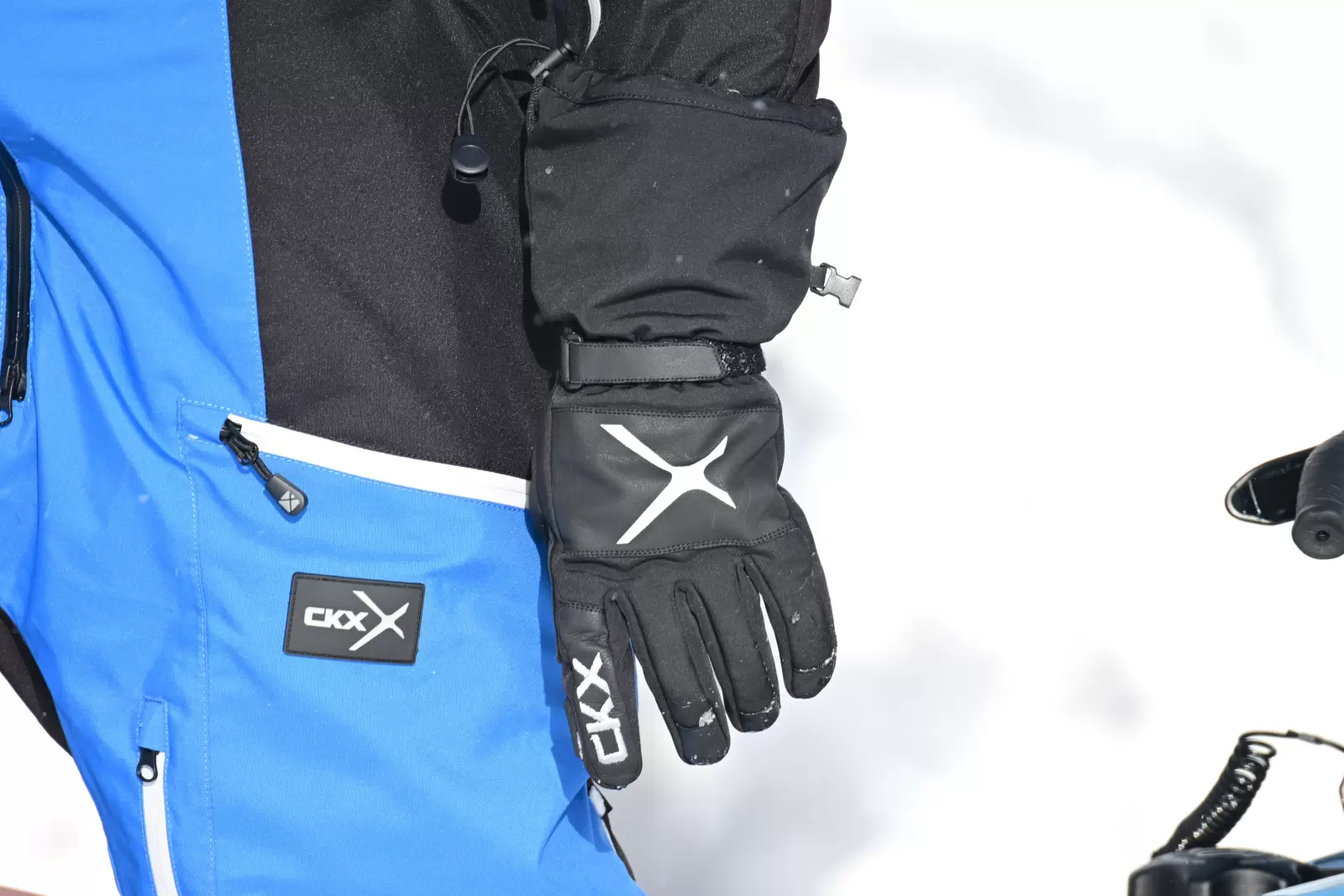
If there was one product that completely exceeded my expectations this season, it was the Xvelt gloves.
I’ve always preferred thinner gloves when riding technical terrain because I want maximum feel at the handlebars.
My biggest complaint has always been that many lightweight mountain gloves stop at the wrist.
Why?
We use boot gaiters to keep snow out of our boots.
We use high collars to keep snow out of our jackets.
Then somebody decides gloves should tuck inside your sleeves?
That has never made sense to me.
The Xvelt gloves solve that problem with a properly designed gauntlet that seals around your jacket while still maintaining excellent dexterity.
The leather palm took a few rides to fully break in, but once it did, the gloves became incredibly comfortable.
Even after months of mountain riding, grabbing skis, digging sleds and brushing against trees, they’ve held up remarkably well.
They’re lightly insulated, breathable and provide outstanding feel on the handlebars.
Simply put…
They’ve become my favorite backcountry gloves
Colchester Lace Boots: Built for Riders
I’ve gone through more snowmobile boots than I care to count.
Worn-out soles.
Broken BOA systems.
Frayed cables.
You name it.
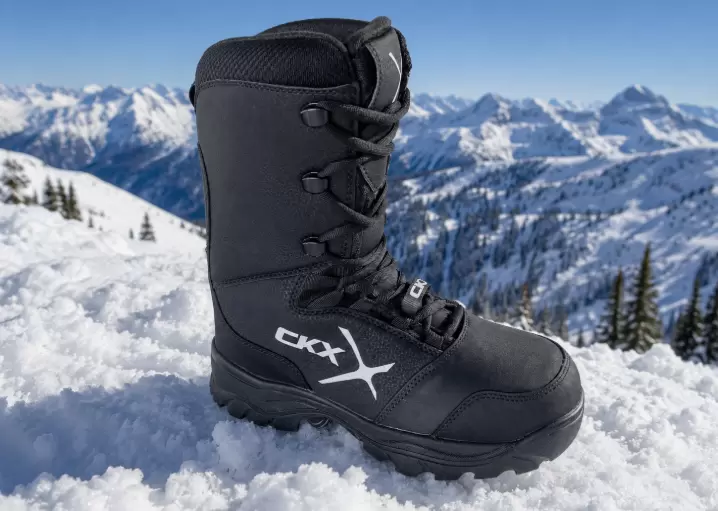
The Colchester Lace Boots surprised me the moment I put them on.
They feel slimmer and more athletic than many aggressive riding boots, yet still provide excellent ankle support.
Despite their supportive construction, they never created pressure points or discomfort during the break-in period.
The reinforced flex zones around the toe box also suggest these boots were designed to survive years of abuse.
Personally, I also prefer traditional laces.
That’s not a knock on BOA systems—they work well—but if I damage a lace in the backcountry, replacing it is simple.
Replacing a cable isn’t.
Even during one of the warmest and wettest winters we’ve experienced in Montana, my feet remained dry throughout the season.
For someone who spends nearly every day standing in snow, that’s about the best compliment I can give a pair of boots.
Final Thoughts: Real Gear for Real Riders
One thing guiding teaches you very quickly is that marketing disappears once the snow starts flying.
Good equipment doesn’t.
After spending an entire winter living in this CKX setup, I came away genuinely impressed.
The Elevation Mono Suit continues to evolve in all the right ways and remains one of the most functional one-piece suits I’ve worn.
The Xvelt gloves have earned a permanent place in my riding gear.
The Colchester boots proved they’re built for riders who demand comfort, support and durability.
As for the Titan AMS, I honestly believe it represents one of the most innovative helmet concepts currently available.
Its airflow, comfort, visibility and adaptability are outstanding.
I also believe the muzzle system still needs refinement to perform flawlessly in the harshest winter conditions.
The encouraging part is that CKX has built a reputation for listening to riders and continually improving its products.
Thomas Edison famously said,
« I have not failed. I’ve just found 10,000 ways that won’t work. »
Innovation has always been a process.
The Titan itself is proof of that.
And if the Titan AMS follows the same path as its predecessor, I have little doubt it has the potential to become one of the very best snowmobile helmets on the market.
Verdict
⭐⭐⭐⭐☆ 4.5 / 5
What I Loved
- Excellent versatility from trail to backcountry
- Elevation Mono Suit continues to improve with thoughtful updates
- Outstanding APEX goggles with magnetic lens system
- Xvelt gloves offer exceptional control and comfort
- Colchester boots deliver excellent support, durability and waterproofing
- Titan AMS offers one of the most comfortable helmet environments I’ve experienced
Room for Improvement
- Adaptive muzzle can ice up in specific weather conditions
- Plastic latch hardware feels less confidence inspiring than the previous metal design
- Fixed visor offers little protection from low sun or tree branches