

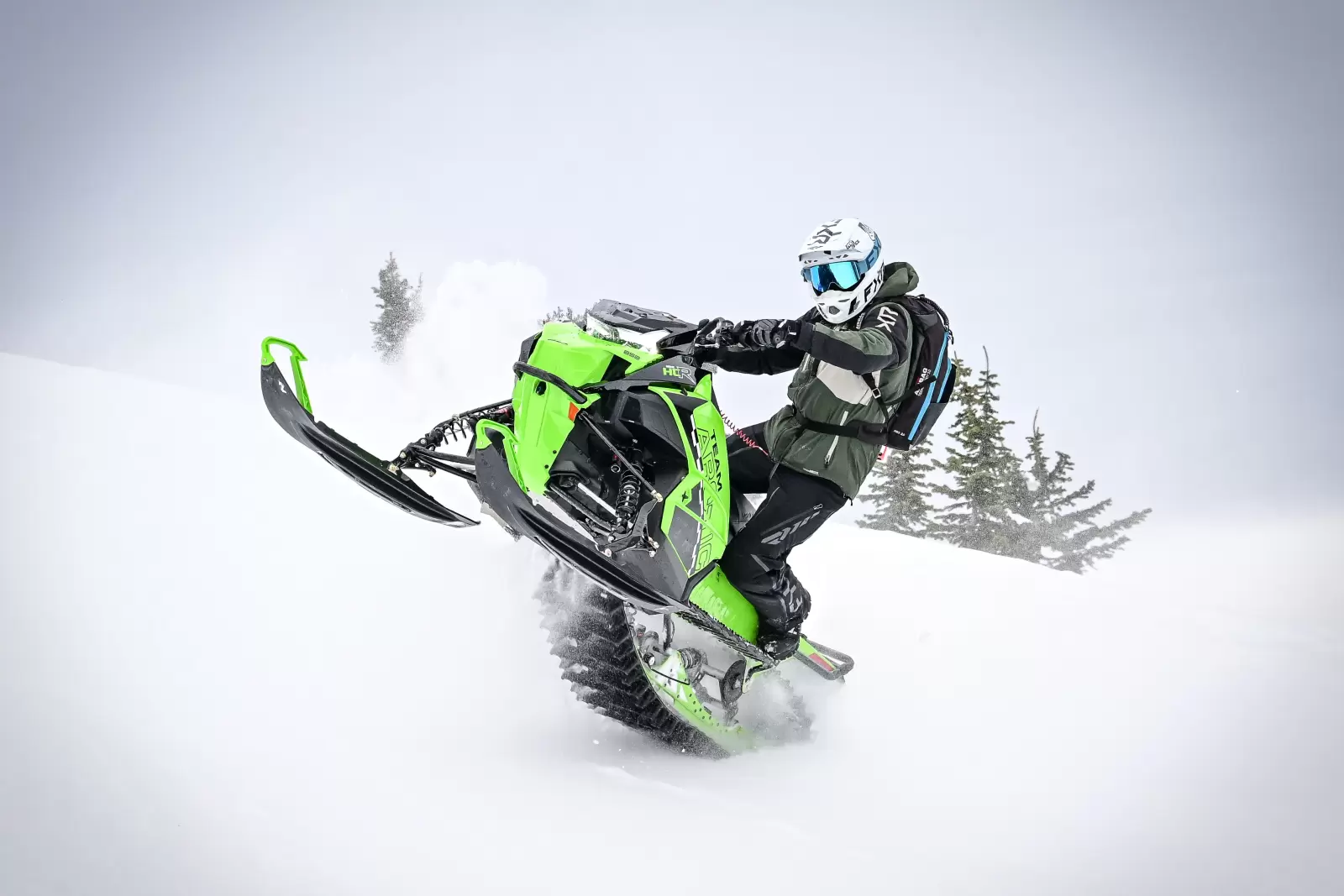

Different Types of Snowmobiles: How to Choose the Right One for You
Choosing a snowmobile can quickly become complicated. Between machines designed for groomed trails, sleds built for deep powder, crossover models capable of handling multiple types of terrain, and true utility workhorses, manufacturers now offer an impressive number of choices.
Polaris, Ski-Doo, Lynx and Arctic Cat all use their own platforms, technologies and model names. As a result, two snowmobiles that may look similar at first glance can behave very differently once you are behind the handlebars.
Before buying, it is therefore essential to determine which type of snowmobile actually matches the way you ride.
Do you spend most of your time on groomed trails? Are comfort and long-distance touring your priorities? Do you prefer deep snow and technical terrain? Do you need to haul equipment or tow heavy loads? Or are you looking for a machine that can do a little bit of everything?
To make things easier, most snowmobiles can be grouped into four main categories:
- trail snowmobiles;
- off-trail snowmobiles;
- crossover or multi-segment snowmobiles;
- utility snowmobiles.
Within those categories, several subgroups can help narrow things down even further.
Trail Snowmobiles: Built to Cover Miles
Trail snowmobiles are generally designed to provide stability, precise handling and confidence on firm, groomed surfaces.
Their tracks are usually shorter than those found on mountain or deep-snow sleds, often ranging from approximately 121 to 137 inches, while the wider ski stance helps improve cornering stability.
Track lugs are also designed to provide solid grip on hard-packed snow and icy conditions.
This broad category, however, includes several very different types of machines.
High-Performance Trail Snowmobiles: Speed and Precision
High-performance trail sleds include some of the most powerful and technologically advanced snowmobiles on the market.
The objective is clear: deliver strong acceleration, precise handling and enough performance to satisfy demanding riders.
Manufacturers use different strategies to achieve this.
Polaris, for example, offers electronically controlled suspension technology on certain versions of the Indy VR1 Dynamix, while Arctic Cat focuses heavily on horsepower with models such as the ZR 9000 Thundercat.
Ski-Doo also offers performance-oriented versions of the MXZ X-RS, using advanced engine and suspension technology to maximize trail performance.
Examples include:
Ski-Doo: 2026 MXZ X-RS with Competition Package
Polaris: 2025 Patriot Boost INDY VR1 with Dynamix
Arctic Cat: ZR 9000 Thundercat
These sleds are mainly aimed at riders who want maximum performance on groomed trails.
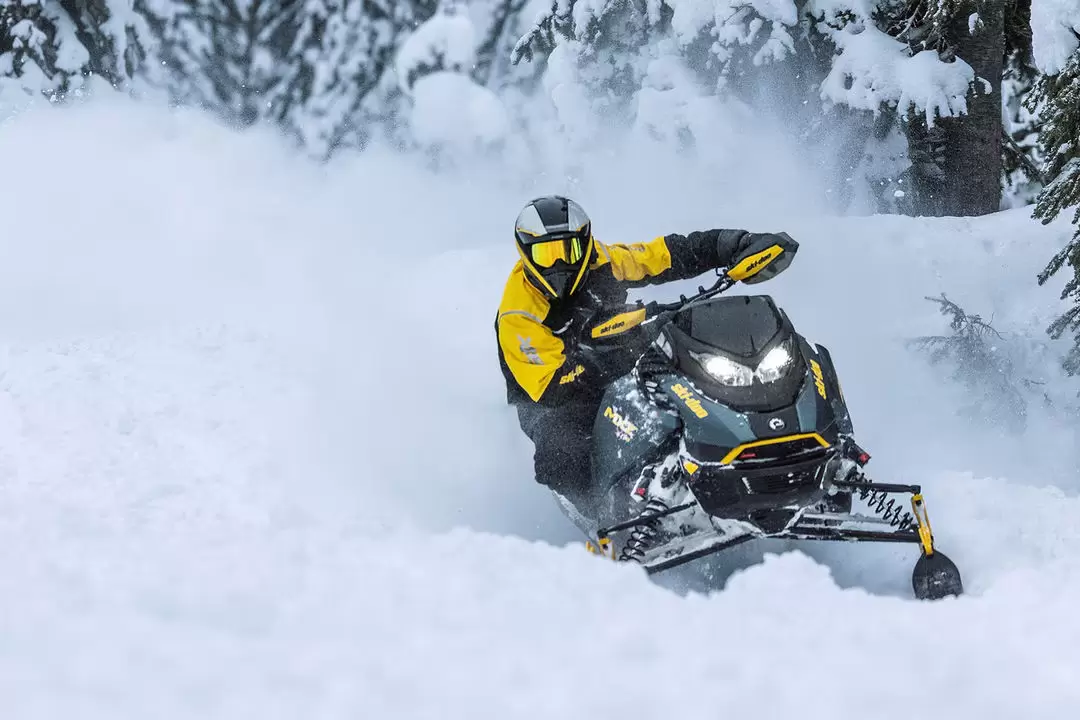
Touring Snowmobiles: Comfort Comes First
Not every snowmobiler is chasing top speed.
For many riders, the best part of snowmobiling is spending an entire day on the trail, riding with a passenger, or covering hundreds of kilometres in comfort.
That is exactly where Touring snowmobiles come in.
These machines typically prioritize:
- comfort;
- fuel range;
- wind protection;
- storage;
- passenger comfort;
- stability over long distances.
Models such as the Ski-Doo Grand Touring, Polaris Indy Adventure and certain Yamaha Sidewinder Touring models illustrate this philosophy very well.
The extra weight created by more comfortable seating, larger fuel tanks, storage compartments and convenience features explains why many Touring models still use fairly powerful engines.
Examples:
Ski-Doo: 2024 Grand Touring LE – Preseason Analysis
Yamaha: Sidewinder S-TX GT EPS –
The Sidewinder S-TX GT EPS is a good example of a Touring sled built to cover long distances with comfort-oriented equipment and two-up capability.
Entry-Level Trail Snowmobiles: A Great Way to Get Started
It is easy to believe that you need the biggest engine or the most advanced machine to enjoy snowmobiling.
That is not always the case.
For a new rider, a simpler machine may actually provide a better overall experience.
Entry-level trail sleds generally focus on simple mechanics, manageable weight and power that is easier to control.
Models such as the Polaris Indy Sport, Arctic Cat ZR 400 and Ski-Doo MXZ Neo can be ideal for someone discovering groomed trails, riding occasionally or simply heading out for a relaxed weekend ride.
The main advantage here is accessibility: lower cost, easier operation and less intimidating performance.
Off-Trail Snowmobiles: Where the Groomed Trail Ends
At the opposite end of the spectrum are off-trail snowmobiles, designed to move through deep, loose snow.
Here, flotation, agility and the ability to keep moving through powder are the priorities.
Tracks are generally longer, often 146 inches or more, with taller and more aggressive lugs designed to bite into soft snow.
Manufacturers also work hard to reduce weight.
Every pound saved makes it easier to change direction, maneuver through tight terrain and keep the sled from sinking into deep snow.
Mountain Snowmobiles: Built to Climb
Mountain snowmobiles are perhaps the most visually spectacular part of the off-trail world.
Models such as the Ski-Doo Summit and Polaris PRO RMK are built specifically for deep snow and steep terrain.
Traction, low weight and maneuverability are critical.
The chassis geometry must allow riders to shift their body weight easily in order to control the sled on steep slopes and technical terrain.
The Ski-Doo Summit lineup and Polaris RMK models are among the best-known examples in this category.
Ski-Doo: 2026 Summit X: Even Lighter, Yet More Robust Than Before
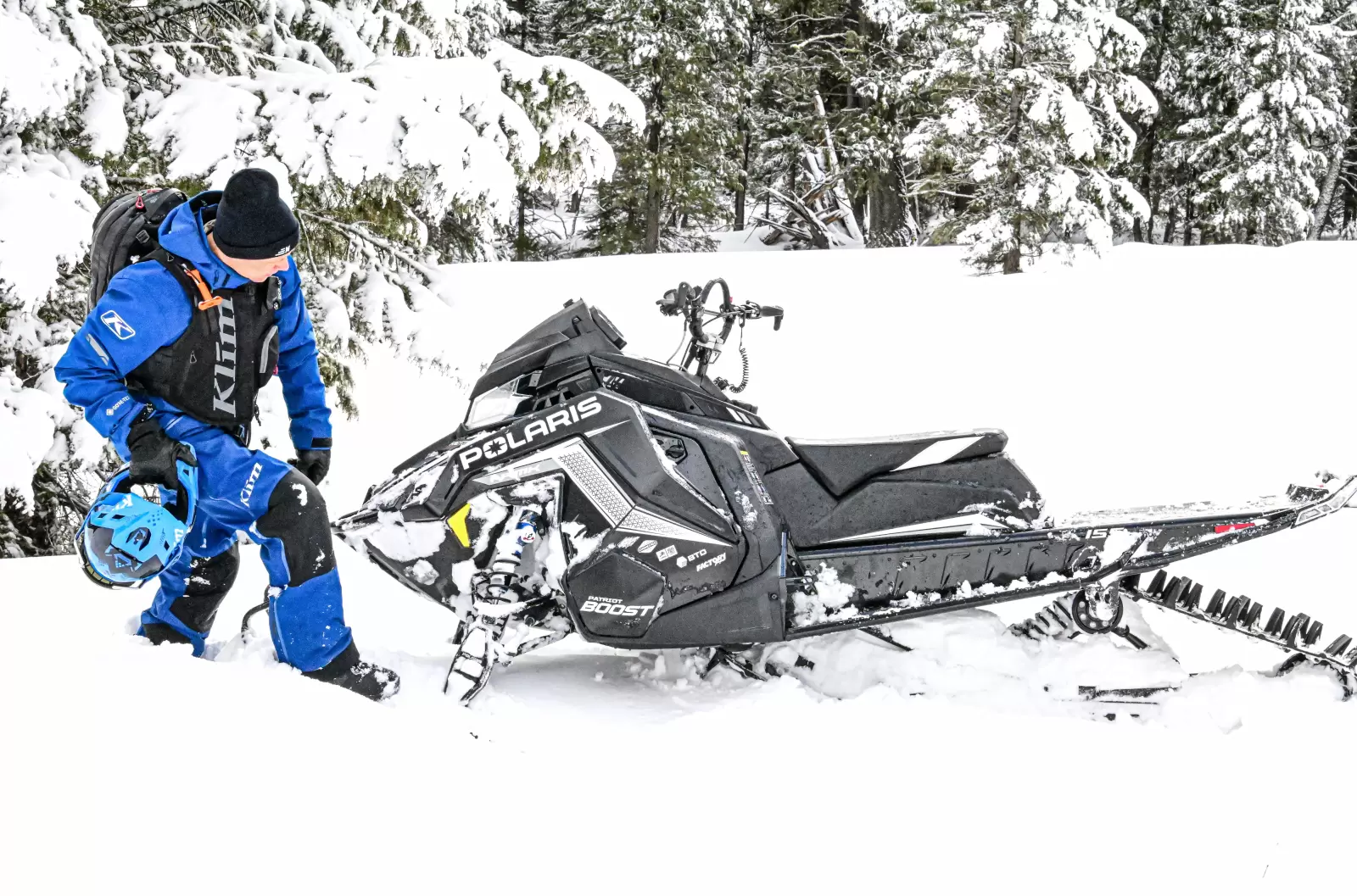
Technical Off-Trail Snowmobiles: Agility and Fast Direction Changes
Another segment of the off-trail market has become increasingly popular over the years: snowmobiles designed for technical riding.
These machines are optimized for quick weight transfer and rapid direction changes.
They are especially well suited for maintaining a line across a steep slope — commonly known as sidehilling — or for navigating wooded areas where precision is essential.
Representative models include:
Lynx: 2026 Lynx Shredder Review
Ski-Doo: Freeride 2024: A New Design and So Many Upgrades
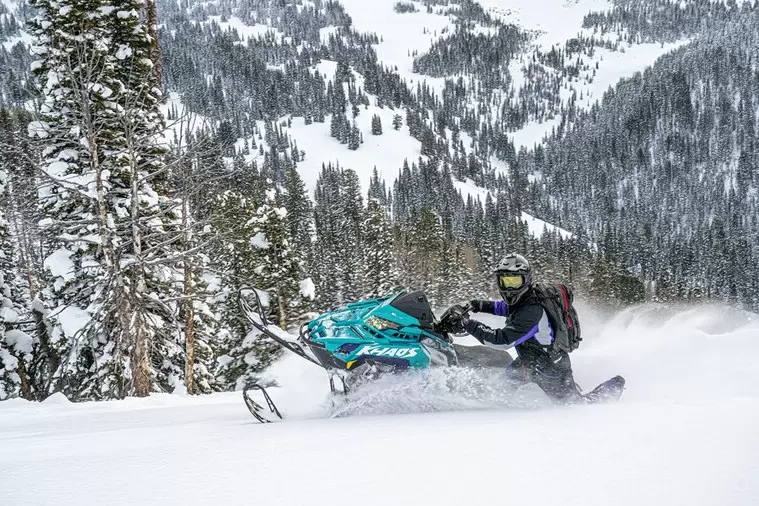
Polaris: 2025 RMK Khaos: I Finally Met My Dream Polaris Snowmobile
The engine and chassis may be similar to those used on more traditional mountain sleds, but suspension calibration and geometry often give these models a more playful and responsive character.
Entry-Level Off-Trail Snowmobiles: Deep Snow Without the Premium Price
The most advanced off-trail machines can become very expensive very quickly.
Fortunately, several manufacturers also offer more affordable options.
To lower the price, some premium equipment is left out: high-end shocks, turbocharged engines, premium displays or the latest-generation chassis.
That allows newer riders to discover deep-snow riding without immediately investing in the most sophisticated sled in the lineup.
Examples include models such as the Ski-Doo Summit Neo, Arctic Cat M400 Alpha One and Polaris 650 RMK SP.
Crossover Snowmobiles: A Versatile Compromise
What if you spend just as much time on groomed trails as you do exploring ungroomed snow?
This is where crossover snowmobiles, also called multi-segment sleds, become especially interesting.
They typically use a platform inspired by trail snowmobiles, but with a longer track and characteristics better suited to softer snow.
Front suspension width is usually a compromise: wide enough to provide stability on the trail, but narrow enough to remain manageable off-trail.
Well-known examples include:
Polaris: 2025 650 Switchback Assault: A Versatile Crossover Snowmobile
Lynx: Xterrain and Brutal RE
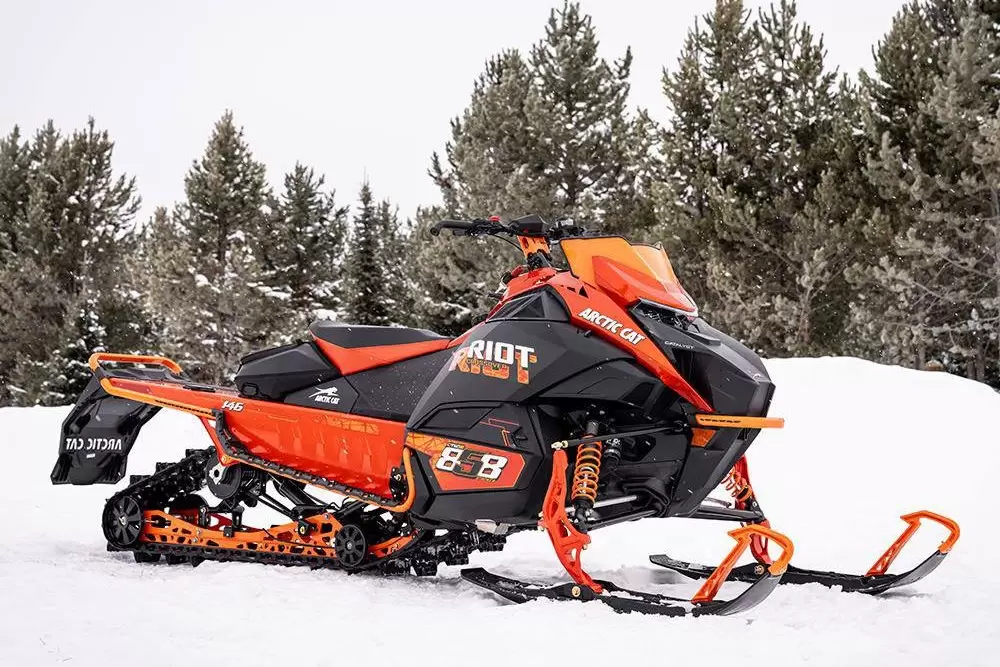
Arctic Cat: Riot
This versatility explains why crossover models remain extremely popular with riders who do not want to choose between trail and off-trail riding.
Utility Snowmobiles: True Working Machines
For some people, a snowmobile is not just a recreational vehicle.
It is a real transportation and work tool.
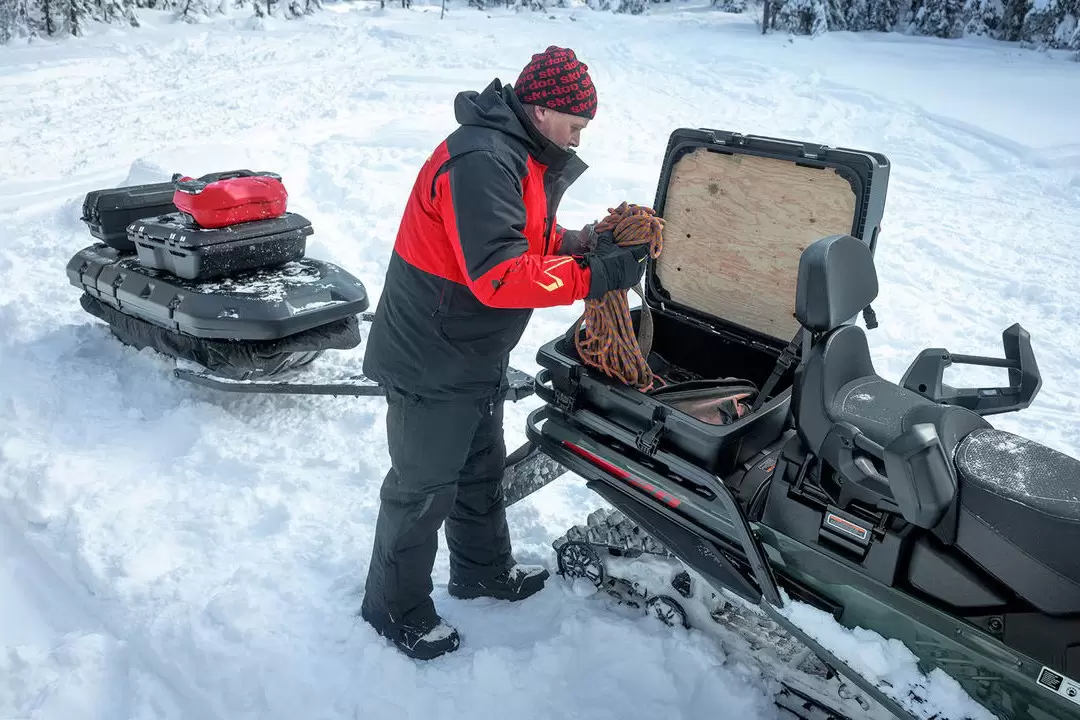
Utility snowmobiles are used to access remote cabins, transport ice-fishing equipment, haul tools or tow loads in areas that road vehicles simply cannot reach.
The priorities are therefore completely different.
Riders usually look for:
- high towing capacity;
- strong cargo capacity;
- a wide track with excellent flotation;
- dependable traction;
- rugged construction;
- long-term reliability.
Utility tracks can exceed 140 inches in length and can also be much wider than those found on trail sleds.
Models such as the Ski-Doo Expedition and Skandic or the Polaris TITAN are strong examples of this category.
Interestingly, the boundaries between categories can sometimes blur. A utility sled can also be comfortable on the trail, while certain crossover and Touring models can perform surprisingly well in deep snow.
The Polaris 650 TITAN Adventure, for example, has been tested by SledMagazine both on groomed trails and in off-trail conditions, illustrating just how versatile modern utility machines can be.
Which Type of Snowmobile Should You Choose?
The answer depends first and foremost on your actual needs.
If you ride almost exclusively on groomed trails, a trail snowmobile is probably the most logical choice.
If long-distance riding and passenger comfort are priorities, Touring models deserve serious consideration.
Deep-snow enthusiasts will naturally look toward off-trail and mountain machines, while riders who constantly move between groomed trails and ungroomed areas may prefer a crossover model.
Finally, anyone who regularly hauls equipment, transports cargo or tows loads should strongly consider a utility snowmobile.
There is no single “best snowmobile” for everyone.
There is simply a snowmobile that is better suited to your riding style, terrain and expectations.
There Is a Snowmobile for Almost Every Type of Rider
These categories are not absolute or final.
The snowmobile industry continues to evolve, and certain models intentionally blur the lines between segments.
A utility sled can be very enjoyable on the trail. A crossover can perform surprisingly well in powder. A mountain machine can still be used to reach remote areas.
The main purpose of this classification is simply to give buyers a starting point when comparing the many models available today.
Before making a purchase, ask yourself the right questions:
Where will you ride? With whom? How often? And what do you really expect from your snowmobile?
And whenever possible, try several models.
Because beyond specifications and marketing claims, the best way to know whether a snowmobile is right for you is still to get behind the handlebars and ride it.