

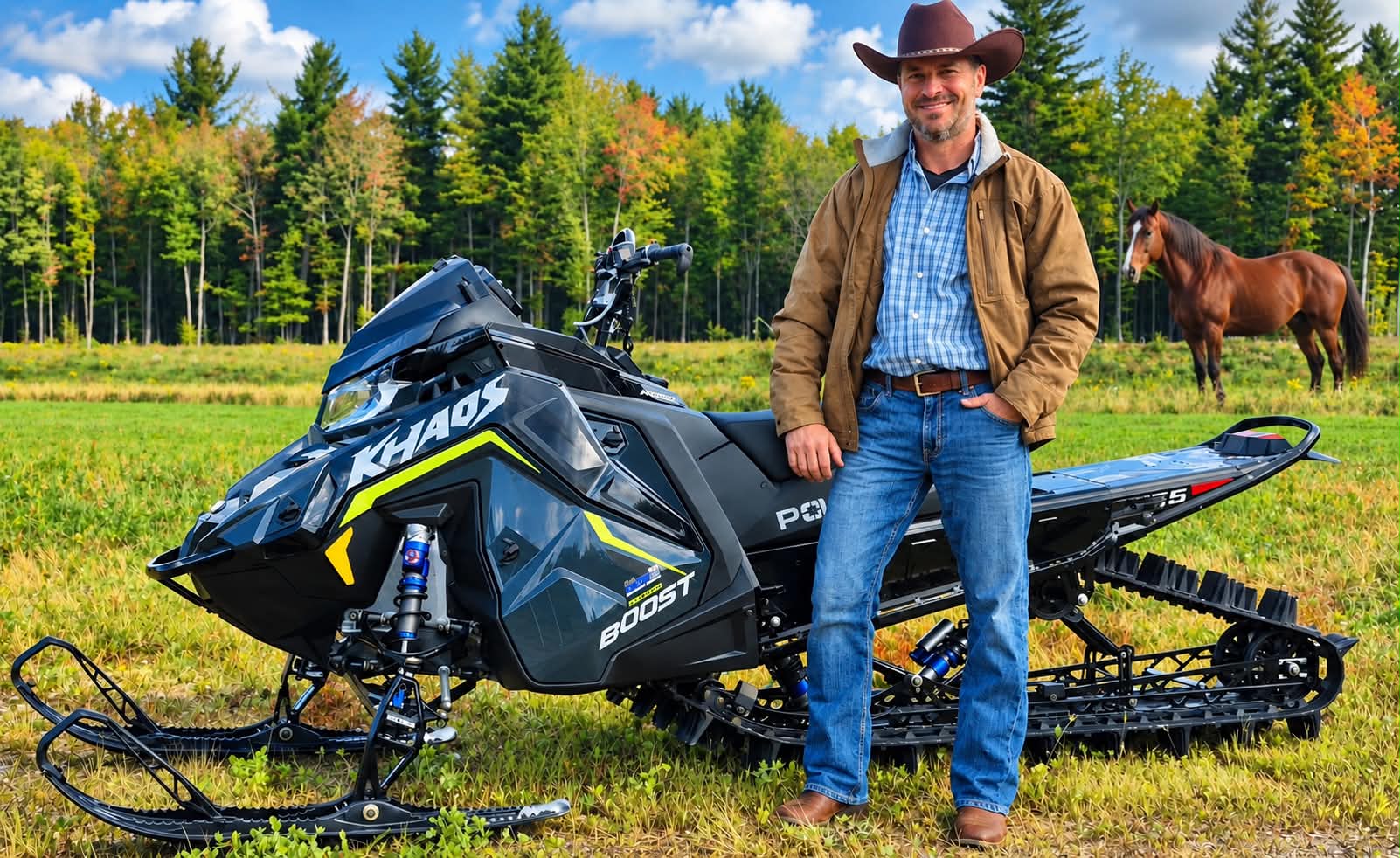

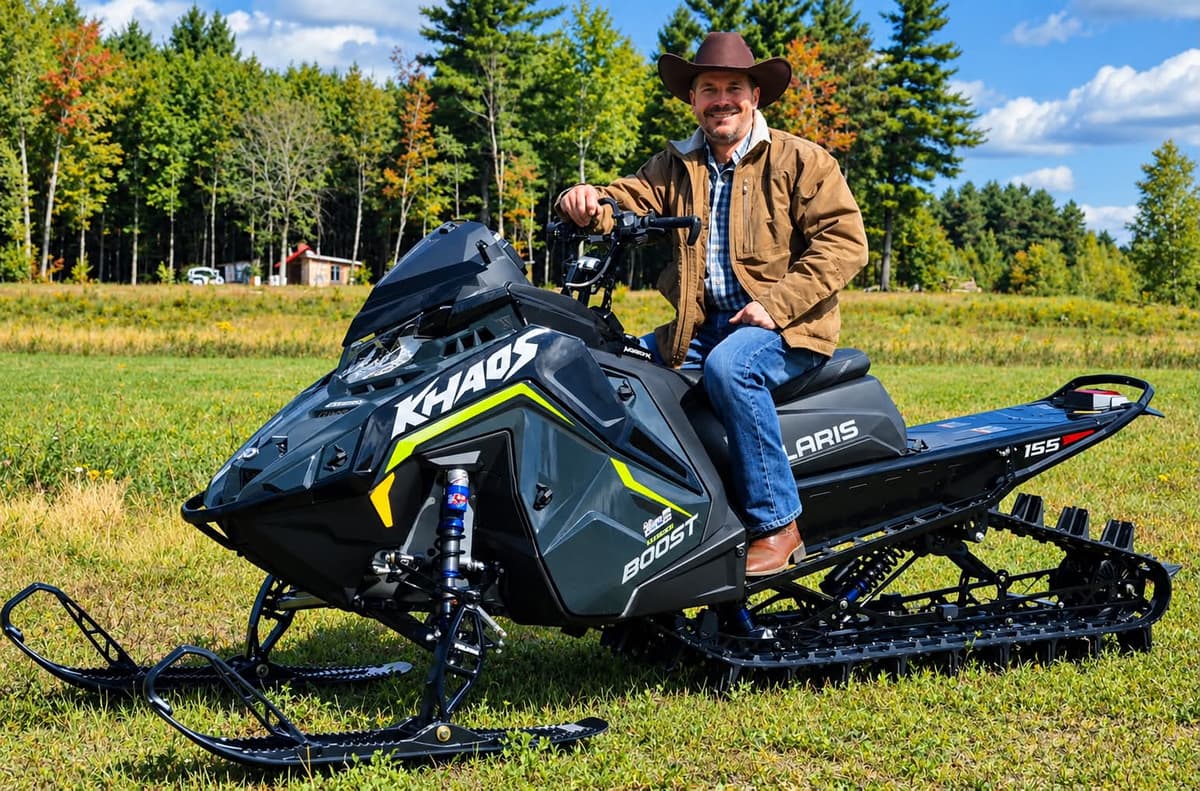
With the 2026–2027 winter season quickly approaching, I’m excited to share the reasons why I chose the 2027 Polaris Patriot Boost RMK Khaos 155 for a long-term test.
Now entering my sixth season of backcountry snowmobiling, I’ve spent the past three years falling in love with the high mountains of British Columbia. Among mountain snowmobilers worldwide, British Columbia is recognized as one of the premier destinations for backcountry riding.
This coming season, I’m planning to spend approximately 30 days there, putting this machine and its 840cc turbocharged Patriot Boost engine to the test.
Over my last four trips out West, I’ve had the opportunity to ride two Polaris RMK Khaos Patriot 9R 155s, a 2024 and a 2025, as part of long-term tests.
Based on those experiences, and considering my aggressive and playful riding style, I felt it was time to step things up and move into the Patriot Boost version of the 2027 RMK Khaos.
High Altitude: Where the Patriot Boost Comes Into Its Own
During my previous trips out West, I’ve experienced some incredible storms and massive snow accumulations—the kind of conditions that the mountains around Sicamous and Revelstoke can deliver to skiers, snowboarders and, of course, mountain snowmobilers.
It’s not unusual to see four to five feet of fresh snow accumulate over a four- or five-day period, with annual snowfall totals reaching several metres.
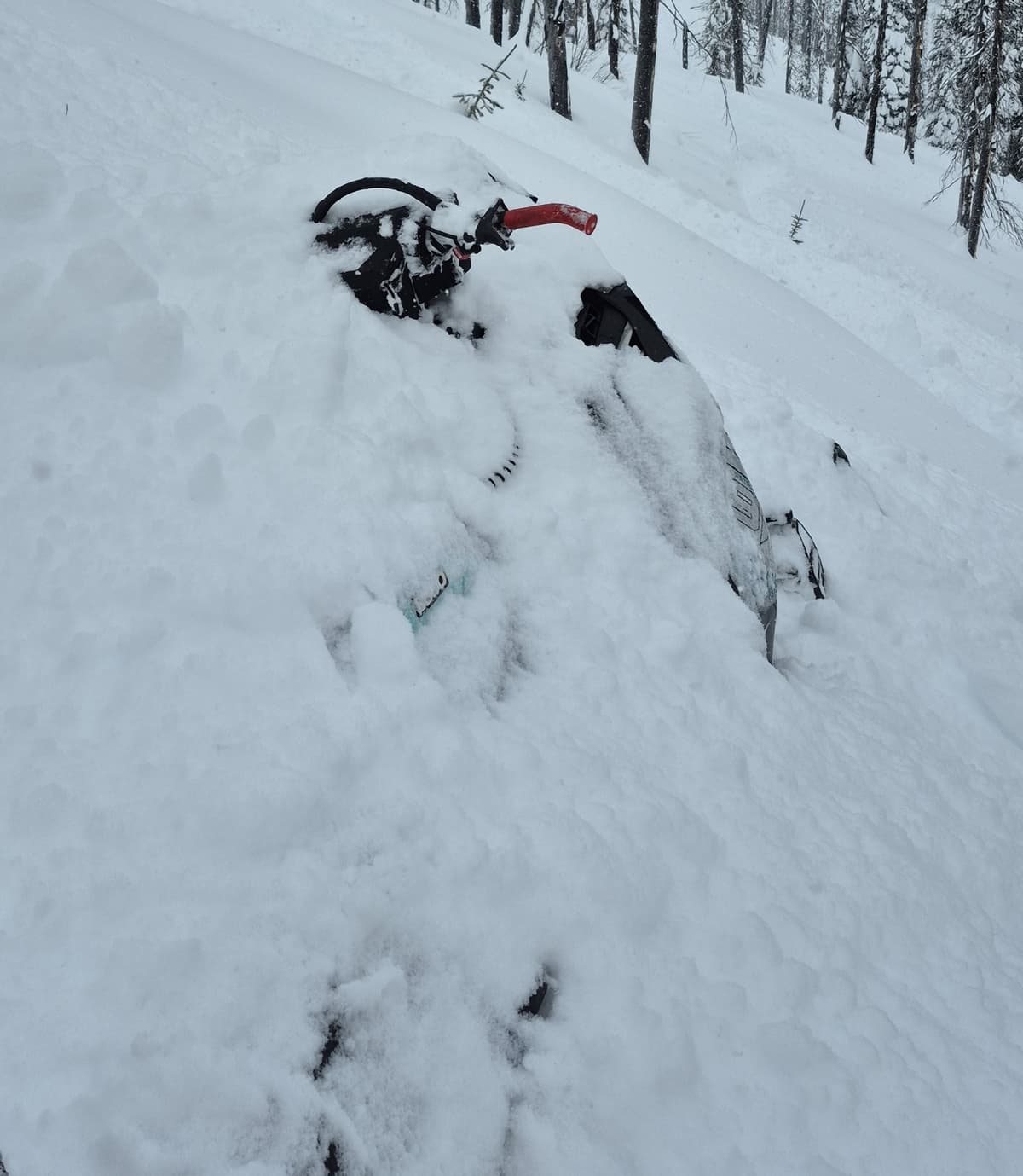
It’s also important to point out that snowmobilers in this region frequently ride at elevations ranging from approximately 1,600 to 2,100 metres. Snowfall is abundant and can remain exceptionally dry and light, creating outstanding conditions for backcountry snowmobiling.
At these elevations, naturally aspirated engines are inevitably affected by decreasing air density. The higher you climb, the harder it becomes for a non-turbocharged engine to maintain its full power output.
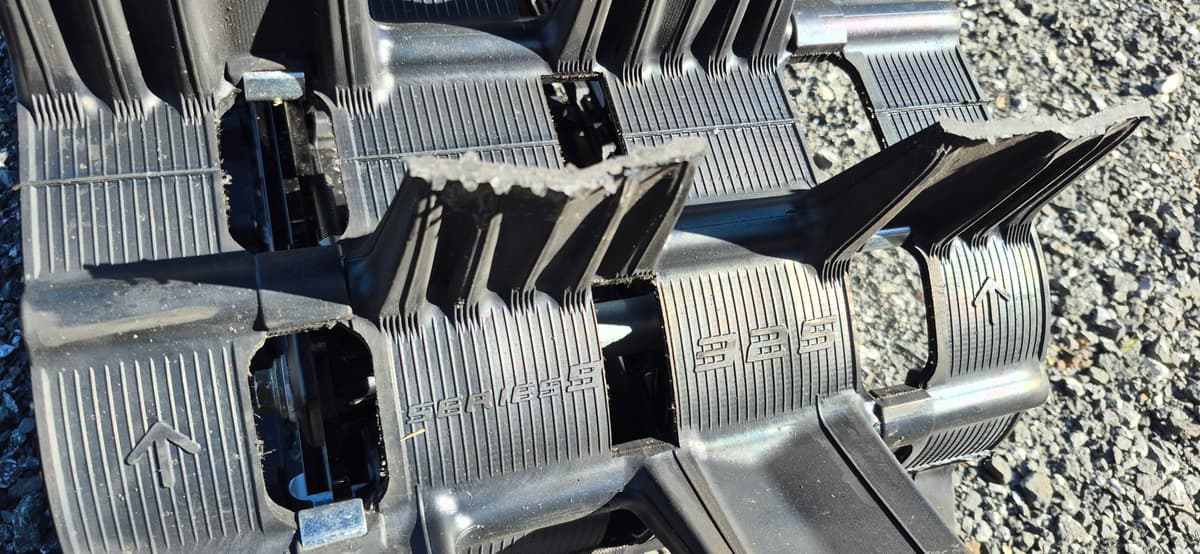
That reality was one of the main reasons behind my decision to choose the Patriot Boost, paired in my case with a 155-inch Series 9 track featuring 3.25-inch lugs.
Patriot 9R vs. Patriot Boost: Two Different Personalities
As mentioned earlier, much of my riding experience around Revelstoke has been aboard 2024 and 2025 RMK Khaos Patriot 9R 155 models.
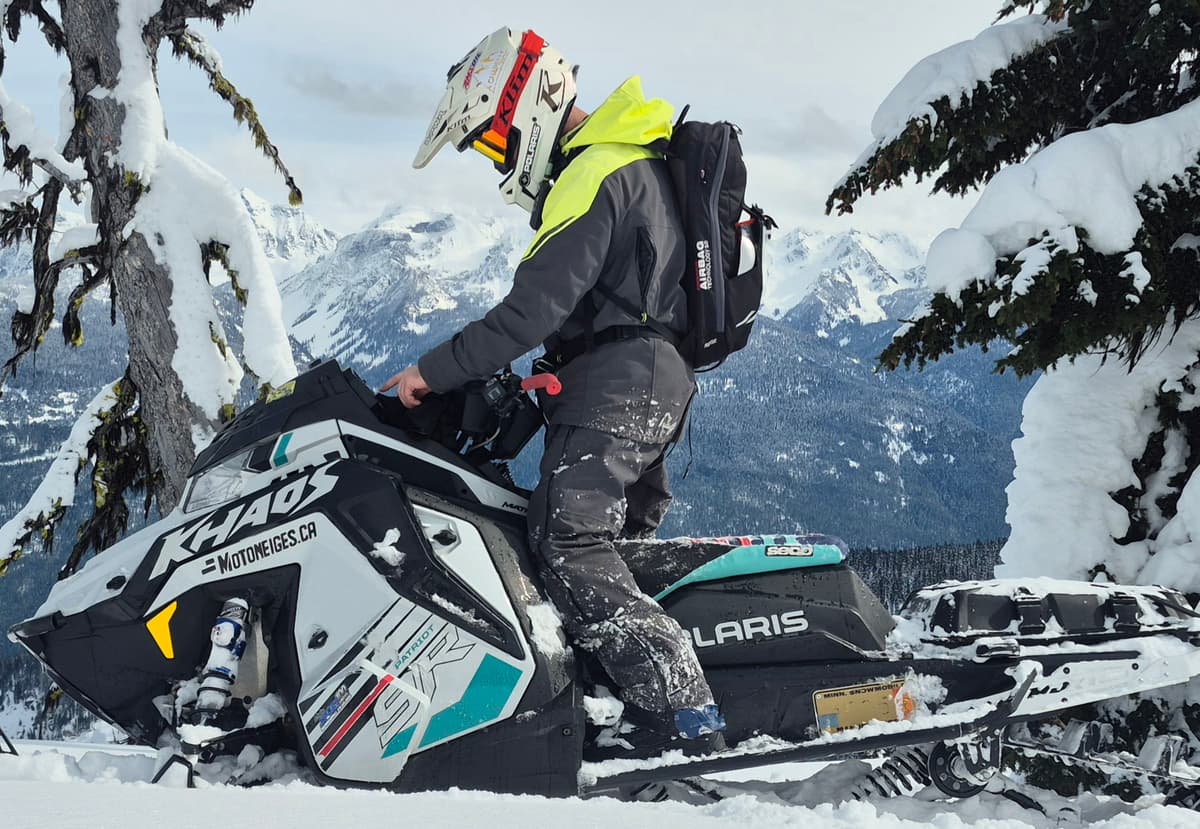
While there, however, I also had the opportunity to test the Patriot Boost powerplant.
It’s difficult to precisely compare these two engines based solely on seat-of-the-pants impressions. One thing becomes quickly apparent at higher elevations, though: the turbocharged engine’s ability to maintain an extremely strong response as altitude increases.
The Patriot Boost is specifically designed to maintain significantly more power at elevation compared with a naturally aspirated engine. This becomes particularly valuable when maintaining track speed through deep snow or tackling long, steep climbs.
The Patriot Boost’s performance in deep powder particularly impressed me. In these conditions, immediate throttle response and the ability to maintain power become valuable assets.
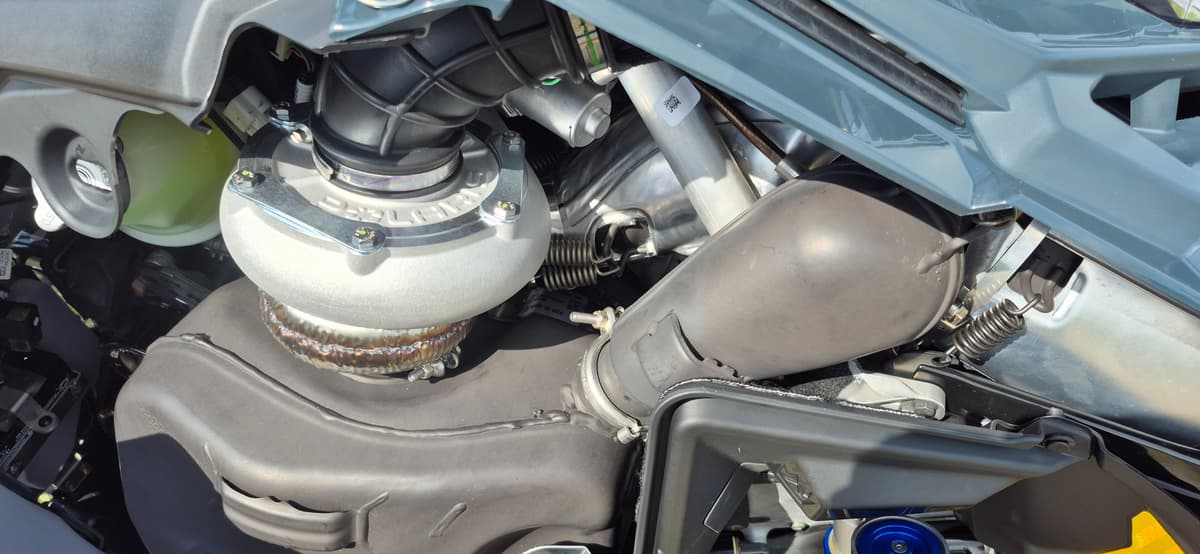
The SmartBoost system uses a reed valve in the boost box to allow air to enter the engine while the turbocharger builds boost pressure. The objective is to provide immediate response while taking advantage of turbocharged power.
According to Polaris, based on its internal testing, the Patriot Boost produces 10% more power at sea level and 50% more power at 10,000 feet compared with the 850 Patriot.
That gives a much clearer picture of why this powerplant becomes so interesting as elevation increases.
Weight: The Other Side of the Equation
Turbocharging does come with a trade-off: additional weight.
The 2027 Patriot Boost RMK Khaos 155 has an estimated dry weight of 442 lb (200.5 kg). The turbocharger and the various components required for the boost system inevitably add weight compared with certain naturally aspirated configurations.
For lighter or smaller riders, that difference may become noticeable during highly technical manoeuvres.
That’s one reason why the Patriot 9R remains such an attractive option. Its immediate response and excellent power-to-weight ratio make it particularly enjoyable in tight and technical terrain.
For riders who don’t require the Boost’s full high-altitude capabilities, the naturally aspirated engines in the Patriot family remain extremely compelling choices.
2027 Polaris Patriot Boost RMK Khaos 155: Key Highlights
What sets the 2027 model apart from its predecessors?
This isn’t a complete revolution. Instead, Polaris continues to refine an RMK Khaos platform already highly specialized for mountain riding.
The manufacturer continues to rely on a combination of a lightweight and rigid chassis, narrow bodywork, a short tapered tunnel and suspension geometry designed to deliver an exceptionally playful riding experience.
For my test sled, ordered through the SnowCheck program, these are some of the features that stand out the most.
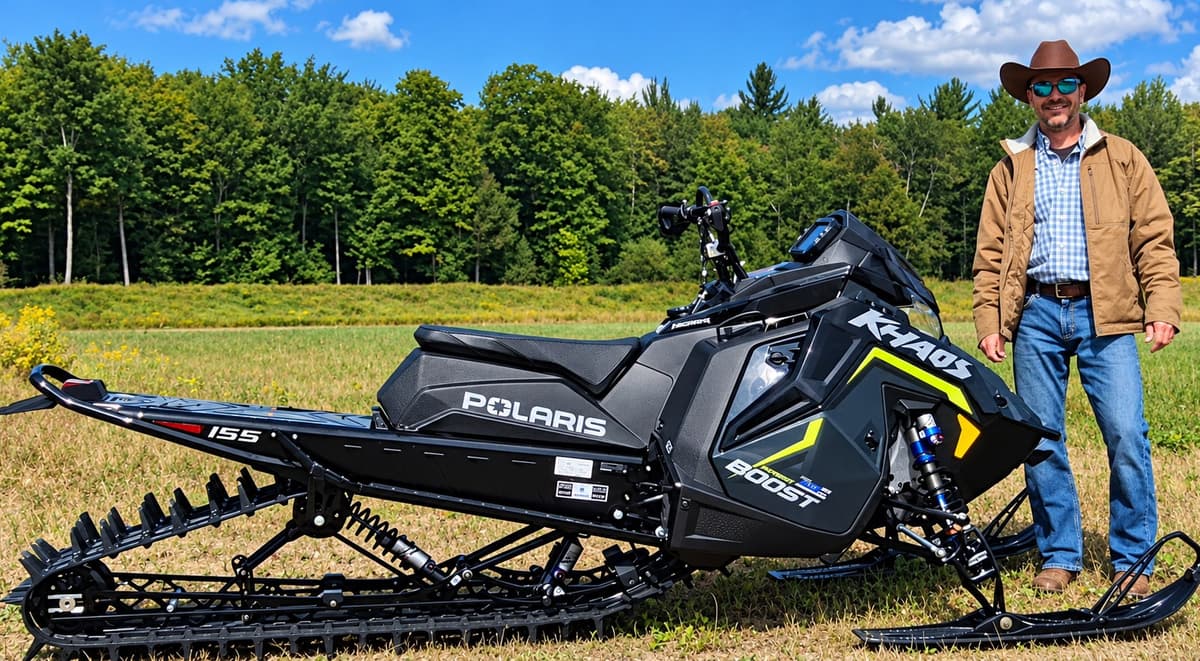
2027 Patriot Boost RMK Khaos 155 Specifications and Highlights
- 840cc turbocharged Patriot Boost engine
- P-22 primary clutch
- TEAM LWT secondary clutch
- QuickDrive / QuickDrive2 drive system, depending on configuration
- 7S Display standard
- Lightweight and rigid MATRYX RMK platform
- Short, tapered tunnel designed to improve clearance in deep snow
- RMK React front suspension
- RMK Khaos rear suspension
- Walker Evans Racing Velocity Hi-Lo shocks
- External reservoirs with high- and low-speed compression adjustment
- Adjustable 36- to 38-inch ski stance
- Series 8 2.75-inch or Series 9 3.25-inch track in the 155-inch configuration
- Narrow, raised running boards designed to improve rider mobility
- Integrated storage
- Reversible ice scratchers
- Estimated dry weight: 442 lb (200.5 kg)
- Fuel capacity: 11 U.S. gal (41.6 L)
Why I Chose the Patriot Boost RMK Khaos 155
From my perspective, the benefits of a turbocharged engine become particularly compelling for snowmobilers who regularly ride in the high mountains of Western North America.
That certainly doesn’t mean a Patriot 9R or 850 Patriot can’t perform at elevation. Quite the opposite. These engines offer several advantages of their own, including lower weight and exceptionally agile handling.
It’s when the snow gets extremely deep, elevation climbs and long ascents become part of the ride that the Patriot Boost truly begins to show its strengths.
Its ability to maintain more power at elevation can become a major advantage.
And that’s exactly what I want to discover during this long-term test: how far will the 2027 Patriot Boost RMK Khaos 155 allow me to push my limits in the mountains of British Columbia?
With Hay Days 2026 approaching, my excitement for the upcoming season is already at an all-time high. I’ve even moved up my physical training program to make sure I’m ready for a machine that promises to deliver one intense winter!
One thing is certain: I can’t wait to put this new RMK Khaos to the test where it truly belongs.
A huge thank you to Polaris and Motosport 100 Limites in Drummondville for giving me the opportunity to live out a childhood dream.